
حوّل رؤى الذكاء الاصطناعي إلى أفعال منسّقة

الرائج الآن
Categories
The $42 Million Engine Challenge: How a New Strategy is Beating Global Aviation Delays
The $42 Million Engine Challenge: How a New Strategy is Beating Global Aviation Delays
Air Astana’s Financial Strain Amid Global Engine Crisis
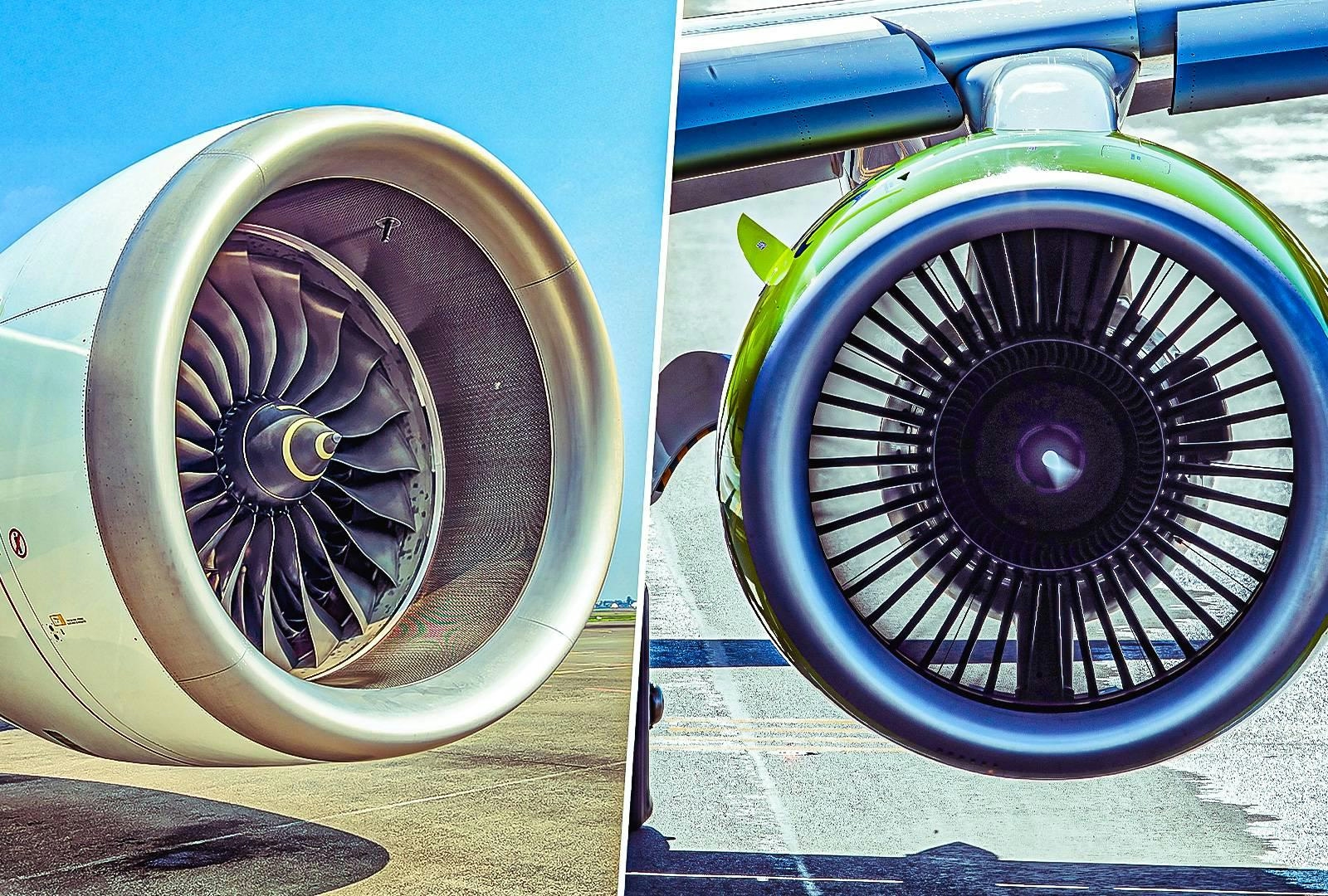
Kazakhstan’s national airline, Air Astana, has disclosed its full-year financial results for 2025, revealing the considerable challenges posed by the ongoing global engine crisis. The airline faced significant operational disruptions due to unscheduled engine removals (UERs) linked to Pratt & Whitney engine recalls. These issues forced 13 aircraft out of service during the peak travel season, resulting in engine replacement costs totaling $42.3 million.
Despite these setbacks, the Air Astana Group, which encompasses both the full-service Air Astana and its low-cost subsidiary FlyArystan, reported an 11% increase in revenue, reaching $1.4 billion. However, profit after tax declined sharply to $13.6 million. CEO Peter Foster attributed this downturn primarily to the grounding of aircraft at critical times, which limited growth opportunities and increased unit costs. He explained that the margin between revenue and costs was compressed throughout the year due to these operational constraints.
Industry-Wide Pressures and Strategic Responses
Air Astana’s difficulties reflect broader challenges facing the global aviation industry, where rising costs and supply chain delays have become pervasive. For example, Air New Zealand recently reported a $59 million interim loss, citing engine maintenance delays and escalating expenses as key factors. Meanwhile, other carriers such as Volaris remain cautiously optimistic about improvements in engine-related groundings. Brazilian airline Azul is pursuing strategic reviews and network expansions to counter structural barriers and capitalize on market growth.
During the financial results presentation, Foster was forthright about the persistent issues with Pratt & Whitney engines, a subject that has dominated discussions across the sector. Airbus CEO Guillaume Faury has also publicly criticized the situation, highlighting the strain it places on airline customers. Air Astana has been managing engine overhauls since mid-2023, with Foster previously describing the problem as a “chronic illness.” Nevertheless, he now observes signs of gradual improvement, stating, “We see the impact from UERs as diminishing over time.”
Pratt & Whitney’s Response and Air Astana’s Mitigation Strategy
Pratt & Whitney has emphasized that reducing aircraft-on-ground (AOG) incidents remains its highest priority. A company spokesperson reported a 26% increase in maintenance, repair, and overhaul (MRO) output for the PW1100G-JM engine in 2025 compared to the previous year, with similar growth anticipated in 2026. The engine manufacturer is investing heavily in its global MRO network, including a recent 25% expansion in annual capacity at its Columbus Engine Center in Georgia.
To mitigate the operational impact of the engine crisis, Air Astana has implemented a multi-faceted strategy. This includes leasing five additional A320 family aircraft, primarily older CEO models that are unaffected by the engine issues. The airline has also maintained a pool of 13 spare leased engines to enable rapid swaps and has introduced Dynamic Capacity Management to optimize fleet deployment and minimize service disruptions.
As the aviation sector continues to navigate the challenges posed by the engine crisis, Air Astana’s experience highlights both the difficulties and the innovative approaches emerging within the industry. While the financial toll remains substantial, the carrier’s proactive measures and cautious optimism exemplify a sector striving to overcome turbulence and restore reliability to global air travel.

Etihad Airways Suspends Airbus A380 Flights on Key Route

Aditya Birla Group Seeks Approval for Aircraft Leasing in GIFT City

Qatar Airways Highlights Innovation and Connectivity at Arabian Travel Market 2026

Hong Kong's Five-Year Plan Includes Andrew Fan's Aircraft Parts Processing Hub Proposal

ACIA Aero Leasing Delivers ATR72-600 to Air Nostrum

RTX Appoints Jill Albertelli as Head of Pratt & Whitney

TAT Technologies Joins Beyond Aero Hydrogen Aircraft Program

AURAK Study Highlights Barriers to Air Taxi Adoption in Emerging Economies

Xiamen Air Selects Altitude for 787 Maintenance at Heathrow

Etihad and Swissport Extend Global Partnership
