
حوّل رؤى الذكاء الاصطناعي إلى أفعال منسّقة

الرائج الآن
Categories
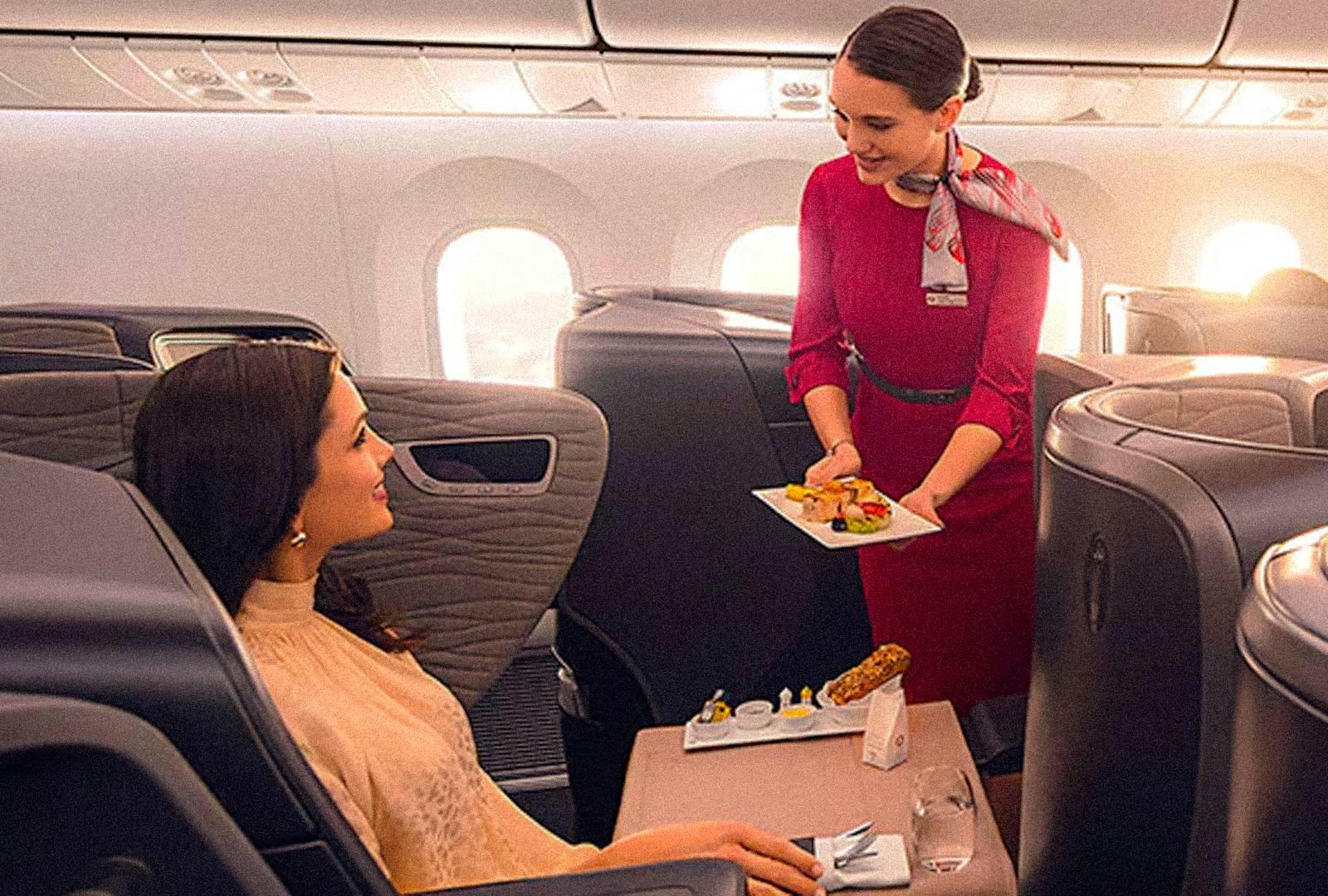
The Real Purpose Behind Airlines’ New Business Class Suites
The Real Purpose Behind Airlines’ New Business Class Suites
When airlines introduce their latest international business class cabins, the emphasis is often on luxury: high-thread-count bedding, curated champagne, and private suites with sliding doors. These enhancements are marketed as the pinnacle of passenger comfort and hospitality, particularly for frequent flyers. However, beneath this veneer of opulence lies a more pragmatic motivation—economic survival in an industry facing increasingly narrow profit margins.
The Shift Toward Premium Seating
The International Air Transport Association (IATA) projects that pure flight operations will yield a modest profit margin of just 3.9% in 2026, equating to a net profit of $7.90 per passenger. With volatile fuel prices and rising labor costs, airlines can no longer rely on economy class tickets to generate substantial returns. Consequently, the aircraft cabin has transformed into a critical asset management platform, with luxury business class suites serving as a key driver of high-margin revenue.
This shift is evident in the reconfiguration of modern twin-aisle aircraft. Airlines are removing standard economy rows to accommodate more premium suites, reversing the traditional strategy of maximizing passenger volume in the rear of the plane. International routes increasingly feature cabin layouts where premium seating occupies a significantly larger proportion of the space.
Delta Air Lines exemplifies this trend. Its newest long-haul aircraft allocate nearly 50% of cabin space to premium classes, a notable increase from 30% in older models. This strategic reallocation protects airlines from low-yield fare competition and ensures higher revenue generation per flight hour. The financial impact is tangible: in the first quarter of 2026, Delta reported a record $14.2 billion in revenue, with premium ticket sales rising 14% year-over-year to $5.4 billion—approaching parity with main cabin revenue. When combined with other high-yield segments such as cargo and maintenance, non-economy revenue now accounts for 62% of Delta’s total income.
Navigating Operational Challenges and Competitive Responses
Despite the clear financial incentives, the transition to premium cabins is not without challenges. Airlines face technical difficulties with new aircraft models, as demonstrated by United Airlines’ recent grounding of its 787 Dreamliner fleet due to technical issues. Such disruptions can delay the introduction of new business class products and negatively affect the passenger experience.
Competition within the industry is also intensifying. United Airlines, for instance, is launching a “Eurobusiness” configuration on its new Airbus A321XLR aircraft, which involves blocking middle seats in economy to provide additional space and blur the distinction between business and economy classes. This approach reflects a broader industry trend of experimenting with cabin layouts to capture premium revenue while mitigating operational risks.
At the same time, fluctuating profits and unpredictable fuel costs continue to complicate fare structures and strategic planning. Airlines must carefully balance the appeal of premium cabins against market demand and operational reliability.
Economic Imperatives Behind Luxury
Today’s ultra-premium business class suites are less a symbol of luxury for its own sake and more a strategic response to financial pressures. As airlines contend with thin margins and cost volatility, the front of the plane has become central to their business models. The evolution of business class cabins represents a calculated adaptation to economic realities, reshaping the aviation landscape one suite at a time.

Hong Kong's Five-Year Plan Includes Andrew Fan's Aircraft Parts Processing Hub Proposal

ACIA Aero Leasing Delivers ATR72-600 to Air Nostrum

RTX Appoints Jill Albertelli as Head of Pratt & Whitney

TAT Technologies Joins Beyond Aero Hydrogen Aircraft Program

AURAK Study Highlights Barriers to Air Taxi Adoption in Emerging Economies

Xiamen Air Selects Altitude for 787 Maintenance at Heathrow

Etihad and Swissport Extend Global Partnership

Sepehran Airlines B737 Returns to Mashhad After Tyre and Engine Issues

Etihad Deploys Widebody Fleet to Meet Strong Demand

Korean Air Finalizes $36.2 Billion Deal with Boeing
