صورة

أيروجيني — مساعدك الذكي للطيران.

اسأل عن أي شيء. قم بتحليل كل شيء. تصرف فورًا.

الرائج الآن

Categories

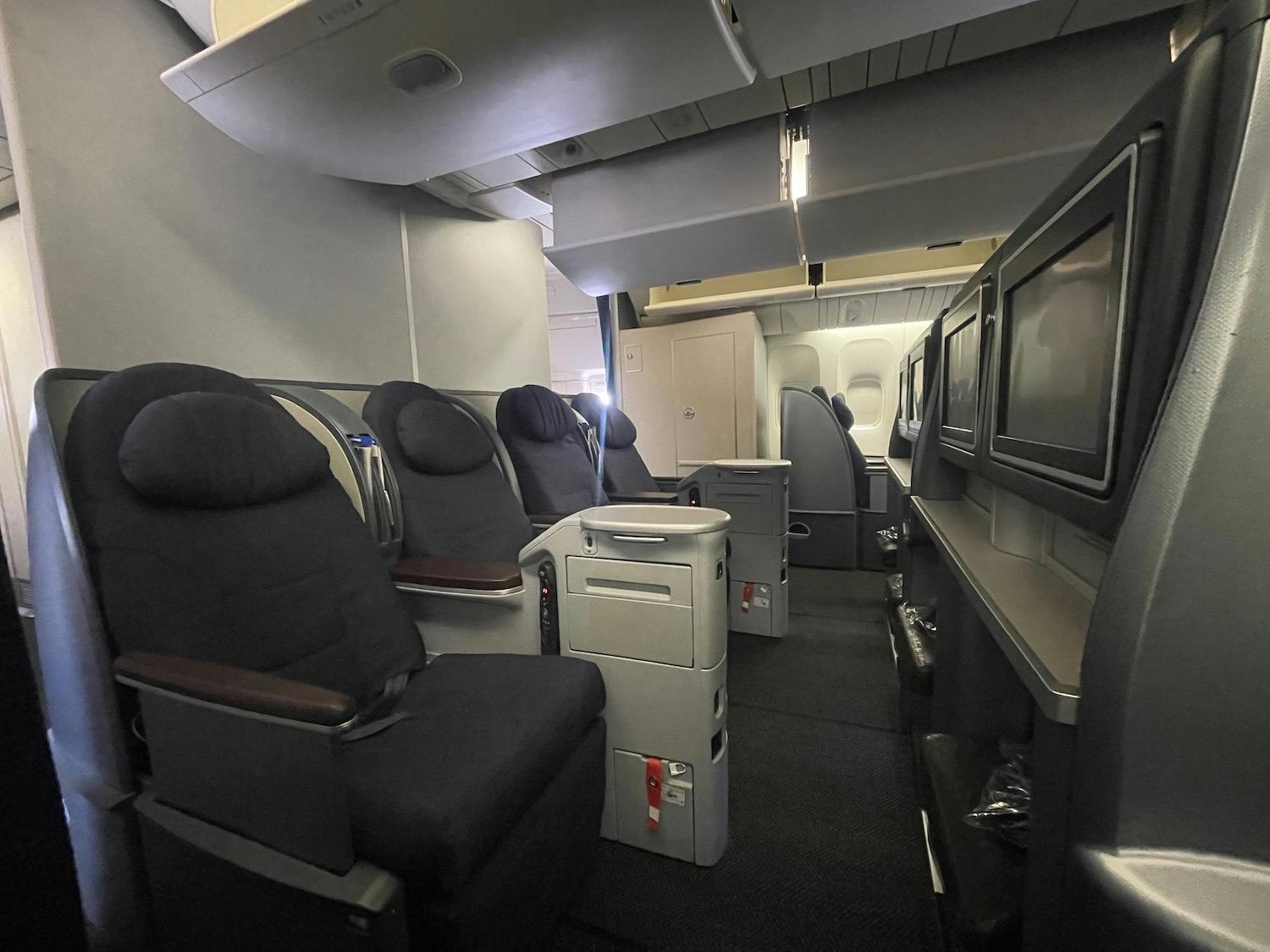
United Airlines to Retire Boeing 777-200 Fleet
January 14, 2026By ePlane AI
United Airlines to Retire Boeing 777-200 Fleet
0
0
United Airlines
Boeing 777-200
Fleet Retirement

United Airlines to Retire Boeing 777-200 Fleet

United Airlines has announced plans to retire its Boeing 777-200 fleet, marking a significant transition in the carrier’s long-haul operations. For many years, the 777-200 was a cornerstone of United’s international network, linking major U.S. hubs with key global destinations and serving high-density domestic routes. This decision reflects a wider industry trend toward adopting newer, more fuel-efficient aircraft that reduce operating costs while enhancing passenger experience.

The retirement comes amid growing pressure on airlines to modernize their fleets in response to evolving regulatory requirements and shifting market demands. Although the Boeing 777-200 was once a benchmark for widebody performance and reliability, it now falls short of the fuel efficiency standards set by newer aircraft models. This issue is particularly pressing as the aviation sector faces increasingly stringent emissions regulations. Boeing’s 777F freighter variant, for example, currently exceeds certain regulatory limits, leading the manufacturer to seek waivers while developing the more efficient 777-8F. These regulatory challenges have attracted close attention from investors and industry analysts, who are monitoring Boeing’s production rates alongside Federal Aviation Administration reviews, including those concerning the 777F emissions waiver and the 737 MAX 10.

United’s strategic shift in fleet composition may also influence competitive dynamics within the industry. Major competitors such as Delta Air Lines, as well as various low-cost carriers, could respond by adjusting their own widebody strategies or exploiting new market opportunities. This is especially relevant as economic pressures and evolving passenger expectations continue to intensify competition across the sector.

The Boeing 777-200: A Brief History and Legacy

The Boeing 777 program was launched in the early 1990s to fill the gap between the 767 and 747 aircraft, targeting high-capacity, long-range twin-engine operations. It was the first commercial airliner developed entirely through computer-aided design, enabling greater precision and efficiency in its construction. United Airlines played a pivotal role as a launch customer, collaborating closely with Boeing to shape the aircraft’s specifications.

The 777-200 completed its maiden flight in June 1994 and entered commercial service with United in June 1995. It quickly established new standards for twin-engine reliability and passenger comfort, featuring a wide, twin-aisle cabin, larger windows, higher ceilings, and improved pressurization. Certified under Extended-range Twin-engine Operational Performance Standards (ETOPS), the 777-200 enabled airlines to operate long overwater routes that were previously the domain of three- and four-engine jets.

Powered by high-thrust turbofan engines—either the Pratt & Whitney PW4000, General Electric GE90, or Rolls-Royce Trent 800—the 777-200 delivers approximately 77,000 pounds of thrust per engine and cruises at Mach 0.84. With a maximum takeoff weight near 545,000 pounds, it offers a full-payload range of about 5,200 nautical miles, making it well-suited for transcontinental, Hawaii, and select transatlantic flights. Its service ceiling of 43,100 feet allows for efficient operations that avoid adverse weather.

As United phases out the 777-200, the move underscores both the rapid pace of technological advancement in aviation and the airline’s commitment to maintaining a modern, sustainable widebody fleet. The retirement not only closes a significant chapter in United’s history but also highlights broader shifts in the competitive and regulatory environment shaping the future of commercial air travel.

More news
Sirika and Keyamo Unite to Advance CAMP 2045

Sirika and Keyamo Unite to Advance CAMP 2045

Sirika and Keyamo Unite to Advance CAMP 2045 The Nigerian aviation sector has embarked on a transformative journey with the formal handover of the 20-year Civil Aviation Master Plan (CAMP) from the International Civil Aviation Organisation (ICAO) to Minister Festus Keyamo in Marrakech. Covering the period from 2025 to 2045, CAMP represents the most significant regulatory advancement since the enactment of the 2022 Civil Aviation Act. The plan aims to transition the industry from short-term interventions to a sustainable and strategic framework designed to foster long-term growth. From Blueprint to Implementation While ICAO has provided a comprehensive blueprint, the transition from planning to execution presents considerable challenges. The success of CAMP depends heavily on the establishment of a dedicated Delivery Unit that incorporates private-sector stakeholders. Without such a mechanism, there is a risk that the plan will suffer the same fate as previous master plans—well-intentioned but ultimately sidelined. The formal receipt of CAMP signals the conclusion of the planning phase, but the critical next step involves a thorough stakeholder evaluation. Industry experts anticipate that the Ministry will convene a ‘Special Session’ or ‘National Aviation Summit’ to rigorously assess the plan’s provisions. Minister Keyamo has committed to soliciting feedback from both industry stakeholders and the public to refine the policy before its final adoption. This inclusive approach is expected to enhance the plan’s relevance and feasibility. Regulatory Alignment and Legislative Considerations Before CAMP can be codified into law, the Nigeria Civil Aviation Authority (NCAA) must ensure that the plan aligns with existing Nigerian Civil Aviation Regulations (Nig. CARs). The NCAA has been actively updating its Policy and Procedure Manuals, most recently in April 2026, and will conduct a formal gap analysis to identify areas requiring new legislation or amendments to the 2022 Civil Aviation Act. This process is essential to create a coherent regulatory environment that supports the plan’s objectives. The groundwork for CAMP was laid by former NCAA Director-General Capt. Musa Nuhu and his team, who secured funding amounting to $669,800. The agreement was signed in Montreal in June 2023 by Nuhu and ICAO Secretary-General Juan Carlos Salaazar, marking a pivotal moment for Nigeria’s aviation sector. Minister Keyamo and current NCAA Director-General Capt. Chris Najomo have since played key roles in advancing the initiative, ensuring continuity and sustained momentum. Challenges and the Road Ahead Despite these advances, significant challenges remain. Ministers Sirika and Keyamo face the dual task of securing additional funding and expanding production facilities to meet international standards. The implementation phase is expected to attract increased scrutiny from the market, with established aerospace and defense companies likely to intensify competition. These competitors may respond by developing comparable advanced technologies or enhancing their automation platforms to maintain market share. The true impact of CAMP will become evident during its initial three years of execution. Success will depend on effective stakeholder engagement, robust legislative alignment, and strategic investment. These elements are crucial to reposition Nigeria’s aviation industry for sustainable growth and enhanced global competitiveness.
The Stephens Group Acquires Florida Company to Enter Aviation Repair Sector

The Stephens Group Acquires Florida Company to Enter Aviation Repair Sector

The Stephens Group Enters Aviation Repair Sector with Florida Acquisition Private investment firm The Stephens Group LLC, based in Little Rock, has announced the establishment of Aptus Aero LLC, marking its strategic entry into the aviation maintenance, repair, and overhaul (MRO) industry. This development follows the acquisition of Atlas Aerospace Accessories LLC, a Doral, Florida-based company specializing in repair services for critical aircraft components including pneumatics, hydraulics, electromechanical systems, electronics, and fuel systems. Financial details of the transaction were not disclosed. Expanding Footprint in a Growing Market Founded in 1978, Atlas Aerospace serves a diverse global clientele spanning cargo, passenger, and military aviation sectors, supporting all major aircraft platforms. The acquisition provides Aptus Aero with an immediate presence in the competitive MRO market, which is currently experiencing unprecedented demand. This surge is driven by expanding global aircraft fleets, increased flight hours, and the extended operational lifespan of older aircraft. Industry projections from Airbus estimate the aviation services market will reach $311 billion by 2044, underscoring significant growth potential. To lead this new venture, The Stephens Group has appointed Dale Gabel as CEO of Aptus Aero. Gabel brings 15 years of experience in aviation maintenance, having previously held CEO positions at Aero Parts Group, Velocity Aerospace Group, and AirReady MRO Services. He will be responsible for shaping Aptus Aero’s strategic direction, overseeing operational initiatives, and guiding future acquisitions. Jack Nadal, managing director at The Stephens Group, emphasized the strength of the new platform, stating, “Bringing together the experience and leadership of Dale Gabel with the acquisition of a market leader such as Atlas Aerospace immediately provides a strong foundation for the Aptus Aero platform.” Challenges and Strategic Outlook While the acquisition positions The Stephens Group to capitalize on the expanding MRO sector, the integration of Atlas Aerospace presents several challenges. These include ensuring regulatory compliance, harmonizing business processes, and competing against well-established industry players. The entry of a well-capitalized new competitor like Aptus Aero may also prompt increased scrutiny from aviation authorities and encourage existing firms to enhance their service offerings or expand their market reach. The Stephens Group currently manages over $2 billion in private equity assets and has invested in more than 50 companies since 2006, with a focus on industrial products and services, specialty distribution, and vertical software. The launch of Aptus Aero represents a strategic expansion into the aviation services sector amid a dynamic and evolving market environment.
Air India Plans First Class Cabin on Airbus A350-1000

Air India Plans First Class Cabin on Airbus A350-1000

Air India to Introduce First Class Suites on Airbus A350-1000 Fleet Gurugram — Air India is preparing to launch a dedicated first class cabin on its forthcoming Airbus A350-1000 aircraft, marking a significant evolution in the airline’s premium service offerings. Owned by the Tata Group, the carrier has chosen a customized version of Airbus’s “First Class Experience” suite, departing from its initial plan to utilize the Safran Unity seating platform. This change was necessitated by persistent supply chain challenges affecting the availability of the Safran product. This strategic shift represents a considerable enhancement over Air India’s previous approach, which treated first class as a modest extension of business class rather than a distinct and luxurious product. The new first class suites will be introduced on the A350-1000s, part of a 20-aircraft order placed in 2023, with deliveries expected to commence in 2026. These aircraft are slated to serve key international routes, including flights from Delhi and Mumbai to London Heathrow and New York JFK. Partnership with Airbus and Cabin Configuration Air India’s original plan involved outfitting its long-haul fleet, including both the A350-1000 and Boeing 777-300ER, with the Safran Unity platform. Under that scheme, first class would have offered incremental improvements over business class seating. However, ongoing supply chain disruptions compelled the airline to reconsider this strategy. For business class, Air India has selected the Recaro R7 suite, a staggered, door-equipped seat already employed by carriers such as Iberia and LATAM. With the Safran platform no longer a viable option, Air India turned to Airbus for a premium first class solution. Aviation journalist Ajay Awtaney reported on April 14, 2026, that the airline will adopt a customized version of Airbus’s first class suite, based on the Airspace “First Class Experience” concept unveiled at the Aircraft Interiors Expo 2026 in Hamburg. The Airbus first class suite is specifically designed for the A350-1000 and features a 1-1-1 configuration, allowing three spacious suites per row without compromising revenue-generating cabin space. Airbus achieved this by relocating storage areas, lavatories, and the crew rest staircase to a centralized module behind Door 1. This innovative layout frees up floor space for passenger suites and reduces foot traffic within the premium cabin. Features and Industry Context The first class suite offers a range of luxury amenities, including a dedicated lavatory for each suite, a private dressing area, an integrated bar, and a full-size double bed. Center suites are equipped with panoramic virtual windows, while sculpted ceiling panels and ambient welcome lighting enhance the sense of space and exclusivity. As Air India prepares to introduce this new first class product, it faces several challenges, including optimizing the cabin layout to maximize comfort and managing the costs associated with retrofitting and integrating the suites into its fleet. The market response will be closely observed by passengers and industry analysts alike, as the airline seeks to establish a competitive position in the premium travel segment. This move coincides with similar initiatives by global competitors such as Delta and Qantas, which are also rolling out new first class suites on their A350-1000 aircraft. The introduction of these products is expected to intensify competition in the luxury air travel market, prompting airlines to enhance their offerings through upgrades, pricing strategies, and service improvements. With the arrival of its A350-1000 fleet, Air India aims to redefine its premium cabin experience and assert itself as a leader in luxury air travel.
Laila Odiņa Reappointed to Lead Riga International Airport Amid Sector Growth

Laila Odiņa Reappointed to Lead Riga International Airport Amid Sector Growth

Laila Odiņa Reappointed to Lead Riga International Airport Amid Sector Growth Riga International Airport has confirmed the reappointment of Laila Odiņa as Chairperson of the Board for a further five-year term, commencing on April 16, 2026. This decision reflects a strategic commitment to stable leadership as the airport navigates a period of significant growth and transformation within the aviation sector. Leadership and Strategic Vision As Latvia’s busiest airport and a critical gateway connecting the Baltic states to Europe and beyond, Riga International Airport has experienced notable progress under Odiņa’s stewardship since 2020. Her tenure has been marked by substantial advancements in infrastructure, service quality, and sustainability initiatives. The Supervisory Board’s decision to extend her mandate underscores confidence in her capacity to steer the airport through a rapidly evolving industry landscape characterized by recovery efforts and intensifying competition. Odiņa has emphasized aligning the airport’s long-term strategy with the interests of key stakeholders, including airline partners, passengers, and the local community. She has been a strong advocate for sustainability and innovation, spearheading projects that enhance passenger experience while promoting environmental responsibility in accordance with international standards. Challenges and Future Prospects Looking forward, Riga International Airport faces a complex mix of opportunities and challenges. As passenger traffic continues its recovery trajectory, managing infrastructure expansion will be essential to prevent overburdening existing facilities—a challenge common to airports worldwide. The airport’s ambitious development plans, notably the construction of a new passenger terminal and the creation of RIX Airport City, aim to increase capacity and strengthen its attractiveness to airlines and travelers alike. These initiatives are central to Riga’s broader vision of establishing itself as a leading travel hub in the Baltic region. The competitive environment is intensifying, with neighboring airports such as Vilnius International Airport and Tallinn Airport also investing in service and infrastructure enhancements. In response, Odiņa has prioritized revising the airport’s tariff policy and introducing new airline incentive programs designed to increase passenger volumes and sustain Riga’s competitive position. Market responses to these measures have been favorable, with expectations that expanded route networks and upgraded facilities will draw more travelers. Nonetheless, the global challenge of infrastructure limitations highlights the ongoing need for strategic investment and modernization at Riga International Airport. Odiņa’s reappointment ensures continuity in leadership as the airport pursues sustainable growth, operational excellence, and innovation, maintaining its status as a premier international hub in the Baltic region.
US Army Advances Black Hawk Engine Upgrade

US Army Advances Black Hawk Engine Upgrade

US Army Advances Black Hawk Engine Upgrade Continued Development of the T901 Engine The US Army is pressing ahead with the upgrade of the Sikorsky UH-60M Black Hawk helicopter by advancing the development of the GE Aerospace T901 Improved Turbine Engine (ITE). This move comes despite earlier indications in 2025 that the program might be discontinued due to budgetary constraints and a realignment of Army aviation priorities. At the previous year’s Army Aviation Association of America (Quad A) conference, senior military leaders announced the suspension of several procurement initiatives, including the T901, leaving the program’s future uncertain. General James Mingus, then-vice chief of staff, confirmed that while procurement was paused, testing would continue until allocated funds were depleted. Contrary to these earlier signals, GE Aerospace reaffirmed on April 15 that the T901 program remains active, with ongoing flight and factory testing. Thomas Champion, GE’s T901 executive program director, reported that the engine has logged 2,300 hours of ground runtime and completed multiple test flights. Speaking at this year’s Quad A conference in Nashville, Tennessee, Champion stated, “We’ve got quite a bit of hours under our belt and have demonstrated all the key performance parameters and basically validated the performance of the engine.” Testing and Performance Milestones To date, GE has delivered six T901 engines to the Army for flight testing, with additional units currently in assembly. Sikorsky initiated hover and horizontal flight tests of a T901-equipped UH-60M in May 2025 at its West Palm Beach, Florida development center. Initially conducted by Sikorsky pilots, these test flights have since transitioned to active-duty Army pilots who are now expanding the engine’s flight envelope. The T901 engine is engineered to provide a 50% increase in power, enhanced fuel efficiency, and improved durability compared to the existing GE T700 engines. Champion indicated that GE aims to complete all necessary testing and evaluation within the next 12 to 18 months. Following this phase, the Army will determine whether to proceed with low-rate initial production, known as Milestone C. Program Outlook and Strategic Considerations Despite earlier uncertainty, Champion emphasized that the program was never cancelled and remains ongoing, a message consistently communicated to GE’s T901 suppliers throughout 2025. In response to the previous doubts, GE engaged directly with Army leadership, including Secretary Dan Driscoll, to advocate for the program’s continuation. The Army continues to express interest in advancing the Black Hawk re-engining effort, though a definitive path forward has yet to be established. Challenges remain in ensuring the new engine’s compatibility with existing helicopter systems, managing fiscal limitations, and resolving technical issues that may arise during the upgrade process. The introduction of the MV-75, a new platform intended to replace or supplement the Black Hawk, further complicates the Army’s evaluation of its future aviation requirements. The progress of the T901 program is being closely monitored by defense analysts and industry stakeholders. Competitors are likely to respond by promoting advancements in their own helicopter propulsion technologies. As the Army weighs its options, the outcome of the T901 initiative will significantly influence the future composition and capabilities of its medium-lift helicopter fleet.
Airbus and Virgin Atlantic Collaborate to Cut Food Waste Using AI

Airbus and Virgin Atlantic Collaborate to Cut Food Waste Using AI

Airbus and Virgin Atlantic Collaborate to Cut Food Waste Using AI Airbus and Virgin Atlantic have announced a strategic partnership to address the persistent issue of food waste on long-haul flights through the development of an artificial intelligence (AI) tool named ‘Smart Catering.’ This initiative aims to significantly reduce preventable food and beverage waste, a challenge that has long affected both operational efficiency and environmental sustainability within the aviation sector. Tackling Food Waste with Smart Catering Food waste in airlines is a considerable problem, with estimates indicating that between 18% and 20% of meals and drinks served remain untouched. This not only inflates operational costs but also contributes to environmental degradation, conflicting with global sustainability goals such as the United Nations’ 2030 Agenda for Sustainable Development. With the worldwide economic impact of food waste projected to reach $3.4 trillion by 2030, the need for innovative and effective solutions is increasingly urgent. The Smart Catering system integrates AI software into the existing digital devices used by cabin crew, such as tablets and mobile phones. Utilizing the device’s camera, the AI analyzes meal trays as they are removed from catering trolleys during service. This data is then transmitted to an onboard inventory platform, which updates real-time consumption figures and monitors remaining stock levels for both food and beverages. Beyond inventory tracking, the application provides cabin crew with immediate access to detailed information on stock availability, galley locations, and passenger dietary requirements, including allergy and nutritional data. This real-time insight is designed to enhance service efficiency and ensure that passenger needs are met with greater precision. Once fully implemented, Smart Catering will incorporate a ‘ground cloud’ platform, enabling airlines to analyze consumption data at the route level. This capability will allow carriers to better align food provisioning with actual passenger demand, thereby reducing overstocking and minimizing waste based on historical consumption trends. Implications and Industry Response The collaboration between Airbus and Virgin Atlantic arrives amid growing emphasis on sustainability within the airline industry. The adoption of AI-driven waste management solutions is expected to be positively received by environmental advocates and may establish a new benchmark for industry practices. However, the deployment of such technology presents challenges, including ensuring the AI’s accuracy in waste identification and its seamless integration into existing operational workflows. Additionally, there may be resistance from staff accustomed to traditional waste management methods, necessitating comprehensive training and change management efforts. Market reactions are anticipated to be varied. While proponents of sustainability are likely to endorse the initiative, some stakeholders in traditional airline food services may express skepticism regarding the technology’s efficacy and its impact on established procedures. Competitors may respond by developing comparable AI tools or exploring alternative strategies to reduce waste, aiming to maintain their competitive positioning. Future Prospects As the aviation industry confronts increasing pressure to enhance sustainability, initiatives such as Smart Catering represent a forward-looking approach to reducing the environmental footprint of air travel. By leveraging AI to optimize food provisioning and minimize waste, Airbus and Virgin Atlantic are positioning themselves at the forefront of an industry-wide transformation. This shift holds the potential for substantial financial savings and environmental benefits, particularly as the global cost of food waste continues to escalate.
GE Aerospace’s 747 Flying Test Bed Arrives at Cincinnati Headquarters

GE Aerospace’s 747 Flying Test Bed Arrives at Cincinnati Headquarters

GE Aerospace’s 747 Flying Test Bed Arrives at Cincinnati Headquarters In early April, Cincinnati/Northern Kentucky International Airport (CVG) witnessed a rare and significant event as GE Aerospace’s renowned 747 Flying Test Bed made a special visit to the company’s headquarters. Normally stationed at the Flight Test Operations (FTO) center in Victorville, California, this unique airborne laboratory traveled eastward to commemorate GE Aerospace’s second anniversary as an independent entity. A Showcase of Innovation and Technology The aircraft, a former Japan Airlines Boeing 747-400 acquired by GE in 2010, was displayed inside a vast 100,000-square-foot hangar at CVG. Over the course of April 7 and 8, approximately 1,500 GE Aerospace employees toured the Flying Test Bed, gaining direct exposure to the advanced technology and rigorous testing processes that underpin the company’s engine development and innovation efforts. The visit culminated with a low-altitude flyover of the Evendale campus on April 9, underscoring the aircraft’s operational capabilities. One of the most visually striking aspects of the Flying Test Bed is its updated livery, which reflects GE Aerospace’s refreshed brand identity. The aircraft now features a clean white fuselage accented by a bold diagonal sweep of “Atmosphere Blue” across the tail, with the GE Monogram prominently displayed on the rudder. Chief Test Pilot Jon Ohman noted the enthusiasm this new look has generated among the FTO team, highlighting the symbolic importance of the aircraft’s appearance. Advancing Engine Technology Through Rigorous Testing Since its acquisition, the Flying Test Bed has logged over 1,500 flight hours, serving as a critical platform for advancing engine technology. It facilitates a broad spectrum of tests, ranging from fundamental performance evaluations such as fuel burn to more complex scenarios including stalls, air starts, zero-gravity operations, and sustained flight in icy conditions. These demanding tests are vital not only for initial engine certification but also for diagnosing and resolving issues that arise once engines are in service. Principal Flight Test Engineer Nate Kamps emphasized the value of these tests, explaining that unexpected engine behavior during testing provides essential data. “There’s two ways to look at that,” he said. “One is, well, the engine didn’t behave the way we thought it would. On the other hand, that’s why we run the tests. Those findings are valuable. That’s the work we need to do to certify our commercial products.” Industry Context and Future Challenges The arrival of the 747 Flying Test Bed in Cincinnati coincides with a pivotal period for GE Aerospace and the wider aerospace industry. As the company continues to drive innovation, it faces ongoing challenges in attracting and retaining talent—a concern highlighted in recent industry panels that stressed the importance of attitude and adaptability in recruiting for business aviation. Furthermore, GE Aerospace’s technological advancements may provoke strategic responses from competitors, potentially reshaping market dynamics within the sector. These developments unfold against a backdrop of sensitive geopolitical conditions. With ongoing U.S. diplomatic efforts aimed at resolving the conflict with Iran, investor sentiment in the aerospace industry remains cautious. Such global tensions could influence both recruitment strategies and broader corporate planning. As GE Aerospace marks its milestone and demonstrates its technological capabilities, the company remains focused on addressing these complex challenges while continuing to push the boundaries of aviation innovation.
Russia Cuts Commercial Aircraft Delivery Targets Amid Sanctions and Conflict

Russia Cuts Commercial Aircraft Delivery Targets Amid Sanctions and Conflict

Russia Cuts Commercial Aircraft Delivery Targets Amid Sanctions and Conflict Russia has announced a substantial reduction and delay in its commercial aircraft production targets, underscoring the mounting difficulties confronting its aviation industry amid Western sanctions and the ongoing conflict in Ukraine. The United Aircraft Corporation (UAC) now aims to deliver 570 domestically produced commercial aircraft by 2035, a decrease of 36 aircraft and a five-year extension from the original 2030 deadline. This revision marks a significant departure from the initial 2022 plan, which targeted 606 aircraft by 2030, itself a reduction from over 1,000 aircraft originally planned for delivery within that period. Revised Production Plans and Delivery Schedule The updated production plan includes 90 Russified MC-21 aircraft for Aeroflot, supplementing the 18 already contracted, alongside 100 modernized Tu-214s for S7 Airlines and 20 Il-114-300s for Aurora. Notably, the previous intention to produce 14 widebody Il-96-300s has been abandoned. The first delivery batch is expected to consist of 18 MC-21s, 42 SJ-100s, 11 Tu-214s, and three Il-114-300s, with Aeroflot scheduled to receive its MC-21s between 2026 and 2027. UAC also plans to deliver at least 100 import-substituted SJ-100s in the coming years, as older Superjets—originally built with now-sanctioned Western components—are gradually phased out. Russia’s commercial fleet is at a critical juncture, with many Soviet-era aircraft approaching the end of their operational lifespan and requiring urgent replacement. To address this gap, the Ural Civil Aviation Plant (UCAP) is developing new models, including the nine-seat Baikal, the 44-seat Ladoga, and the 15-19-seat Osvey. Challenges in Domestic Aircraft Production Despite these efforts, producing fully Russian-made aircraft remains a formidable challenge. Prior to the conflict, models such as the MC-21 and Superjet depended on 60 to 80 percent imported Western components, including engines. Even the Soviet-era Tu-214 incorporated approximately 13 percent Western parts. The domestically re-engineered MC-21 is heavier, has a reduced range, and its Russian engines are less powerful, less fuel-efficient, and more costly to operate and maintain. These technical difficulties are compounded by competition for limited industrial resources between the commercial aviation sector and the military, as the war in Ukraine continues to demand significant capacity. Market and Geopolitical Implications Broader market dynamics further complicate Russia’s aviation outlook. A potential slowdown in travel demand could alleviate aircraft shortages but may also prompt airlines to reduce capacity, resulting in decreased maintenance, repair, and overhaul (MRO) expenditures and accelerated aircraft retirements. The insurance sector is responding with policy cancellations and rising premiums, adding another layer of complexity. On the global stage, geopolitical tensions are reshaping the competitive environment. Persistent friction between the United States and China threatens Boeing’s delivery schedules and order books in the Asia-Pacific region, potentially altering market opportunities and challenges for all major aircraft manufacturers. As Russia navigates these multifaceted pressures, its capacity to modernize and sustain its commercial aviation sector remains uncertain, with sanctions, resource constraints, and shifting global dynamics all exerting significant influence.
China Airlines A350 Grounded in Melbourne After Cabin Door Damage

China Airlines A350 Grounded in Melbourne After Cabin Door Damage

China Airlines A350 Grounded in Melbourne Following Cabin Door Damage Incident Overview A China Airlines Airbus A350-900, registered B-18902 and operating flight CI57 from Taipei, has been grounded in Melbourne after sustaining significant damage to its forward passenger door during a ground-handling incident. The aircraft arrived at Melbourne Airport on April 14, where the event occurred while the plane was still connected to the jet bridge. Reports indicate that the aircraft unexpectedly rolled backward, causing the forward left (L1) door to be partially torn from its hinges. This resulted in substantial damage to both the door and the aerobridge. Fortunately, all passengers and crew had disembarked prior to the incident, and no injuries were reported. Technical and Safety Implications Preliminary investigations suggest that the aircraft’s unintended movement while docked placed considerable stress on the door assembly and adjacent fuselage. The jet bridge remained stationary as the aircraft shifted, leading to the door being pulled out of alignment and damaged at the hinge points. Given that passenger doors are critical components of the aircraft’s pressurized structure, the damage is classified as serious. Extensive inspections and certified repairs will be required before the aircraft can be cleared to return to service. Australia’s aviation safety authority has initiated a formal investigation focusing on ground-handling procedures, equipment use, and potential human error. Early indications point to the possibility that wheel chocks were not properly positioned in front of and behind the aircraft’s tires, which may have allowed the aircraft to roll backward while the forward door was still open and engaged with the jet bridge. Operational and Industry Impact The affected A350 remains out of service in Melbourne pending repairs and safety clearance. The temporary loss of this widebody aircraft is expected to have a limited but notable impact on China Airlines’ long-haul operations, particularly on routes connecting Asia with Australia and other international destinations. The Airbus A350-900 is a key asset in the airline’s long-haul fleet, supporting premium international routes across Europe, North America, and Oceania. This incident occurs amid China Airlines’ ongoing fleet adjustments, including a recent reduction in Airbus orders. It may prompt increased scrutiny of the airline’s maintenance and ground-handling protocols from both regulators and the market. Aviation authorities are likely to intensify oversight, while the event could affect passenger confidence in the short term. Competitor airlines may seize the opportunity to highlight their own safety and maintenance standards to reassure travelers and strengthen their market position. As the investigation proceeds, the primary focus remains on determining the root causes and ensuring that effective safety measures are implemented to prevent similar incidents in the future.
U.S. Defense Supply Chains Respond to Increased Demand for NSN-Certified Aircraft Parts

U.S. Defense Supply Chains Respond to Increased Demand for NSN-Certified Aircraft Parts

U.S. Defense Supply Chains Respond to Increased Demand for NSN-Certified Aircraft Parts The U.S. defense sector is experiencing a significant surge in demand for National Stock Number (NSN)-certified aircraft components, prompting a transformation in supply chain operations. These standardized and traceable parts are vital to ensuring that military aircraft systems adhere to stringent quality and performance standards. As global geopolitical tensions intensify and operational readiness becomes paramount, the reliance on NSN-certified components has become increasingly critical. The Importance of NSN-Certified Components in Defense Aviation NSN-certified parts differ fundamentally from ordinary components, as they are specifically approved for defense and aerospace applications, guaranteeing reliability and compliance with rigorous standards. In the aviation domain, where even minor component failures can have severe consequences, the use of verified parts is indispensable. The expansion of defense budgets and modernization initiatives has further amplified the demand for these certified components, particularly as aging aircraft fleets require more frequent maintenance to sustain mission readiness. Challenges Facing Supply Chains Amid Rising Demand The escalating need for NSN-certified parts is placing considerable strain on traditional supply chains. Industry analyses reveal that the rapid growth of the space sector is exacerbating these pressures, with demand outstripping supplier capacity. Reports from the Aerospace Industries Association and PwC indicate that supply chains are increasingly stretched, while findings from RELEX show that 89% of manufacturers are adversely affected by tariffs and evolving trade policies. These dynamics have resulted in extended lead times and more inflexible supply commitments, complicating efforts to maintain consistent availability of critical components. Military space programs, in particular, face additional challenges due to hidden supplier constraints and limited transparency in supply chain data, as highlighted by SpaceNews. This opacity underscores the urgent need for enhanced collaboration between defense agencies and industry partners to improve supply chain visibility and risk management. Modernization Efforts and Strategic Adaptations In response to these challenges, U.S. defense supply chains are adopting modernized procurement strategies. There is a discernible shift toward diversified sourcing to reduce reliance on single suppliers and mitigate the risk of delays. The integration of digital platforms and advanced search tools has enabled procurement teams to more efficiently identify and acquire certified components, thereby streamlining operations and reducing downtime. Strengthening supplier networks has also become a strategic priority. Defense organizations are cultivating closer partnerships with manufacturers and distributors known for delivering high-quality, certified parts consistently. Supplier evaluations now place greater emphasis on certification status, delivery reliability, and traceability, ensuring that only the most dependable partners are incorporated into the supply chain. Technological Investments and Inventory Management Leading industry players, including Boeing Global Services, are investing in artificial intelligence and sophisticated inventory management systems to alleviate ongoing supply chain constraints. The application of predictive analytics and data-driven demand forecasting is fostering a more proactive approach, enabling supply chains to anticipate requirements rather than merely respond to shortages. Nonetheless, experts caution that a full return to pre-pandemic supply chain performance levels is unlikely within this decade, reflecting the persistent nature of these challenges. Outlook for Defense Supply Chains As the U.S. defense sector continues to grapple with rising demand for NSN-certified aircraft parts, supply chains are evolving through diversification, technological innovation, and enhanced collaboration with industry partners. Despite enduring obstacles such as supplier capacity limitations and global trade uncertainties, these adaptive measures are essential to sustaining the readiness and reliability of the nation’s military aviation capabilities.
line










