
حوّل رؤى الذكاء الاصطناعي إلى أفعال منسّقة

الرائج الآن
Categories
US to Lift Engine Export Restrictions to Chinese Aircraft Maker COMAC
US to Lift Engine Export Restrictions on Chinese Aircraft Maker COMAC
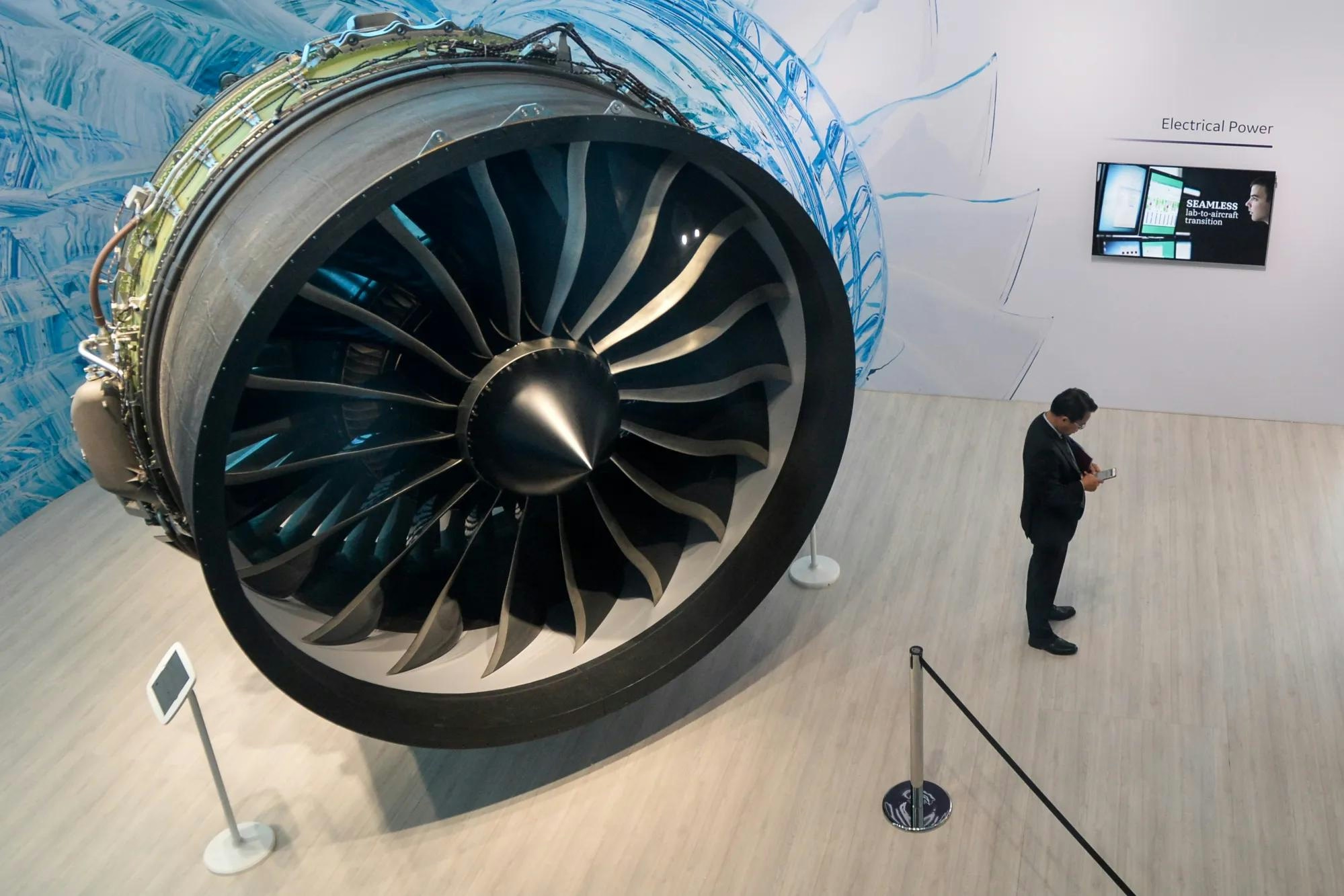
The United States government has announced the removal of export restrictions on General Electric (GE) engines destined for the Chinese aircraft manufacturer COMAC. This policy reversal, reported by Reuters, signals a possible easing of trade tensions between Washington and Beijing. The decision permits GE Aerospace to resume shipments of CF34 engines for the C909 and CFM International LEAP-1C engines for the C919, COMAC’s flagship narrow-body jet.
Background and Implications for the Aerospace Industry
The export embargo was originally imposed as a retaliatory measure following China’s restrictions on rare earth material exports, effectively halting the delivery of critical engine components to COMAC. Lifting the ban is expected to benefit GE Aerospace by allowing it to regain access to a significant segment of the Chinese aviation market. However, this development may also provoke competitive responses from established aerospace giants such as Airbus and Boeing, who are likely to intensify efforts to counter COMAC’s expanding international footprint.
Market reactions to this policy shift will be influenced by broader economic factors, including ongoing trade negotiations between the US and China and the potential ramifications for global aerospace supply chains. While the move could enhance commercial ties, it also raises important questions about the future competitive landscape of the global aviation sector.
Industry Context and Future Prospects
Neither COMAC nor General Electric has officially confirmed the resumption of engine deliveries, and both declined to comment when approached by ch-aviation. CFM International, the manufacturer of both the CF34 and LEAP-1C engines, is a joint venture equally owned by GE of the United States and France’s Safran Aircraft Engines. Headquartered in Cincinnati, Ohio, CFM produces engines in facilities located in both the US and France.
Although COMAC assembles its C909 and C919 aircraft domestically in China, many critical components, including engines, continue to be sourced from American and European suppliers. Concurrently, China’s state-owned Aero Engine Corporation is developing the CJ-1000A, a domestically produced engine expected to serve as an alternative powerplant for the C919 in the future.
The US decision to lift export restrictions represents a significant milestone in the evolving global aerospace industry, with far-reaching implications for competition, supply chain dynamics, and the broader trajectory of US-China trade relations.

Etihad Airways Suspends Airbus A380 Flights on Key Route

Aditya Birla Group Seeks Approval for Aircraft Leasing in GIFT City

Qatar Airways Highlights Innovation and Connectivity at Arabian Travel Market 2026

Hong Kong's Five-Year Plan Includes Andrew Fan's Aircraft Parts Processing Hub Proposal

ACIA Aero Leasing Delivers ATR72-600 to Air Nostrum

RTX Appoints Jill Albertelli as Head of Pratt & Whitney

TAT Technologies Joins Beyond Aero Hydrogen Aircraft Program

AURAK Study Highlights Barriers to Air Taxi Adoption in Emerging Economies

Xiamen Air Selects Altitude for 787 Maintenance at Heathrow

Etihad and Swissport Extend Global Partnership
