
حوّل رؤى الذكاء الاصطناعي إلى أفعال منسّقة

الرائج الآن
Categories
What Happens to a Boeing 747 After Retirement
What Happens to a Boeing 747 After Retirement
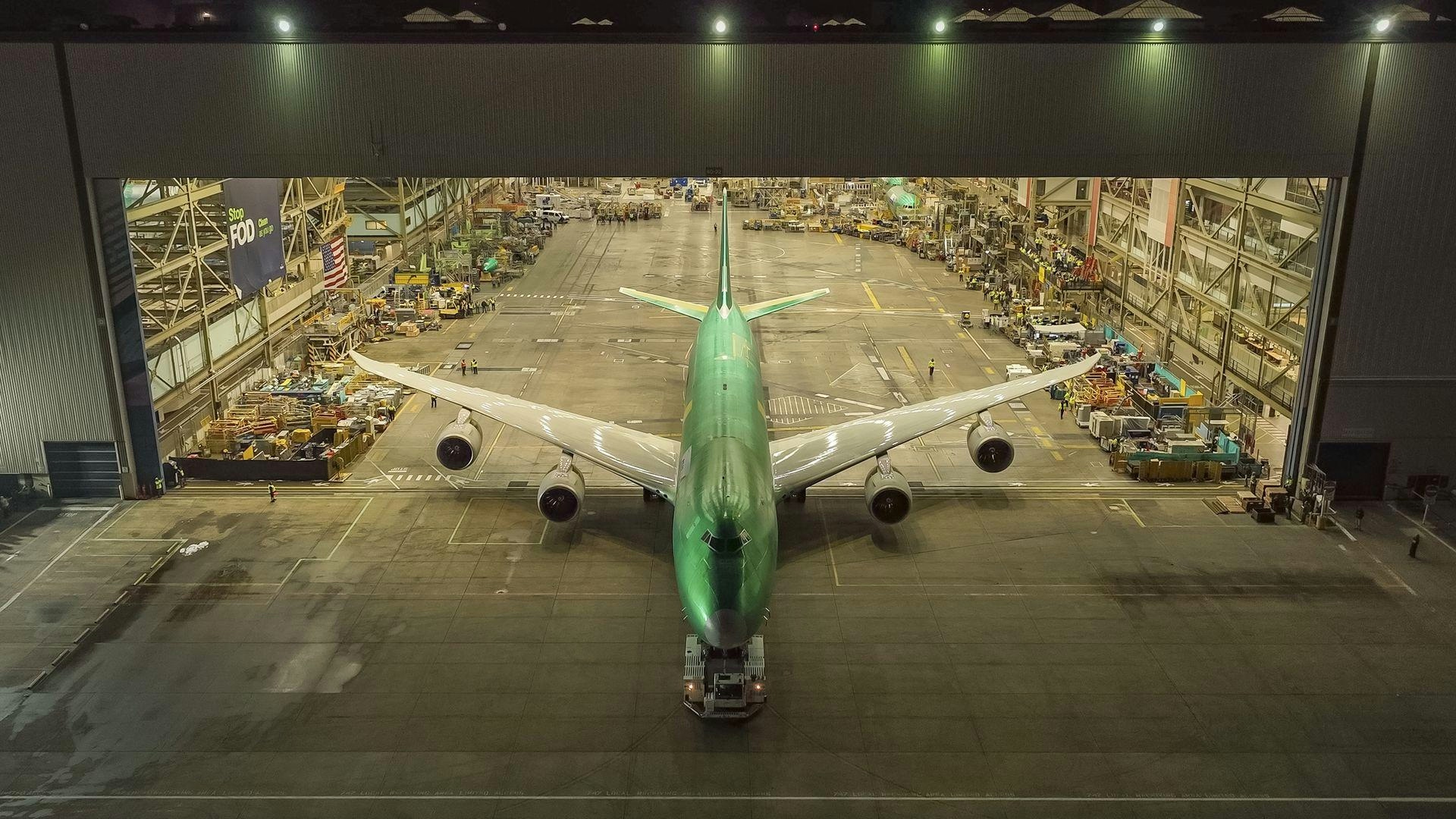
The Boeing 747, famously dubbed the "Queen of the Skies," transformed long-haul air travel upon its commercial debut in 1970. For decades, its distinctive humpbacked silhouette was synonymous with the jet age, enabling airlines to carry more passengers over greater distances than any other aircraft of its era. However, by the mid-2010s, the emergence of more fuel-efficient twin-engine widebodies began to undermine the economic viability of the 747, prompting many major carriers to retire their fleets.
Retirement from passenger service, however, rarely signals the end of a 747’s operational life. The subsequent fate of each aircraft varies depending on factors such as age, condition, and market demand. A significant number are converted into freighters, thereby extending their service life by up to two decades. Others are placed in long-term storage at desert facilities like those in the Mojave, awaiting potential buyers or further decisions. Many are dismantled for parts, with as much as 85 percent of the airframe recycled or repurposed. A select few find unconventional new roles, including architectural installations within office buildings.
Freighter Conversion: Extending Operational Life
The most common post-retirement path for Boeing 747s is conversion into cargo aircraft. This transformation is often the most economically viable option, frequently adding between 10 and 20 years to the aircraft’s operational lifespan. A distinctive design feature—the hinged nose door introduced in 1968—renders the 747 uniquely capable of handling outsized cargo. This nose-loading capability allows large items such as turbine engines, military vehicles, and industrial machinery to be loaded directly onto the main deck, a feature unmatched by any current production freighter.
As of early 2026, approximately 80 to 90 Boeing 747-400 freighters remain active worldwide, operated by carriers including Atlas Air, Cargolux, UPS, and National Airlines. Many of these aircraft began their service lives as passenger jets before undergoing conversion, while others were originally built as freighters. Their continued operation defies earlier forecasts about the 747’s obsolescence, sustained by a cargo market that still values the aircraft’s unique capabilities.
Economic Pressures and Fuel Costs
The trajectory of retired 747s is increasingly influenced by economic factors, particularly rising fuel prices and supply constraints. The global fuel crisis of 2026 has heightened concerns regarding the viability of older, less fuel-efficient aircraft. Escalating jet fuel costs have compelled airlines to accelerate the retirement of models such as the 747, as operating expenses become prohibitive. This trend is reflected in recent fleet adjustments by major carriers; for instance, Lufthansa has recently withdrawn additional Airbus A340-600s and Boeing 747-400s from service in response to shifting market conditions.
Across the industry, the emphasis on fuel efficiency and the adoption of newer aircraft models are reshaping competitive strategies. While the 747’s distinctive cargo capabilities have prolonged its relevance, the prevailing economic realities are increasingly challenging the competitiveness of older jets.
Storage and Dismantling: The Final Chapters
When a 747 is not immediately converted into a freighter, it often finds its way to desert storage facilities, colloquially known as "boneyards." These locations serve as holding areas where aircraft await potential buyers, further conversion, or eventual dismantling. Even in retirement, the Boeing 747’s legacy endures—whether as a vital component of global cargo operations, a source of valuable spare parts, or a lasting symbol of aviation’s golden era.

Etihad Airways Suspends Airbus A380 Flights on Key Route

Aditya Birla Group Seeks Approval for Aircraft Leasing in GIFT City

Qatar Airways Highlights Innovation and Connectivity at Arabian Travel Market 2026

Hong Kong's Five-Year Plan Includes Andrew Fan's Aircraft Parts Processing Hub Proposal

ACIA Aero Leasing Delivers ATR72-600 to Air Nostrum

RTX Appoints Jill Albertelli as Head of Pratt & Whitney

TAT Technologies Joins Beyond Aero Hydrogen Aircraft Program

AURAK Study Highlights Barriers to Air Taxi Adoption in Emerging Economies

Xiamen Air Selects Altitude for 787 Maintenance at Heathrow

Etihad and Swissport Extend Global Partnership
