
حوّل رؤى الذكاء الاصطناعي إلى أفعال منسّقة

الرائج الآن
Categories
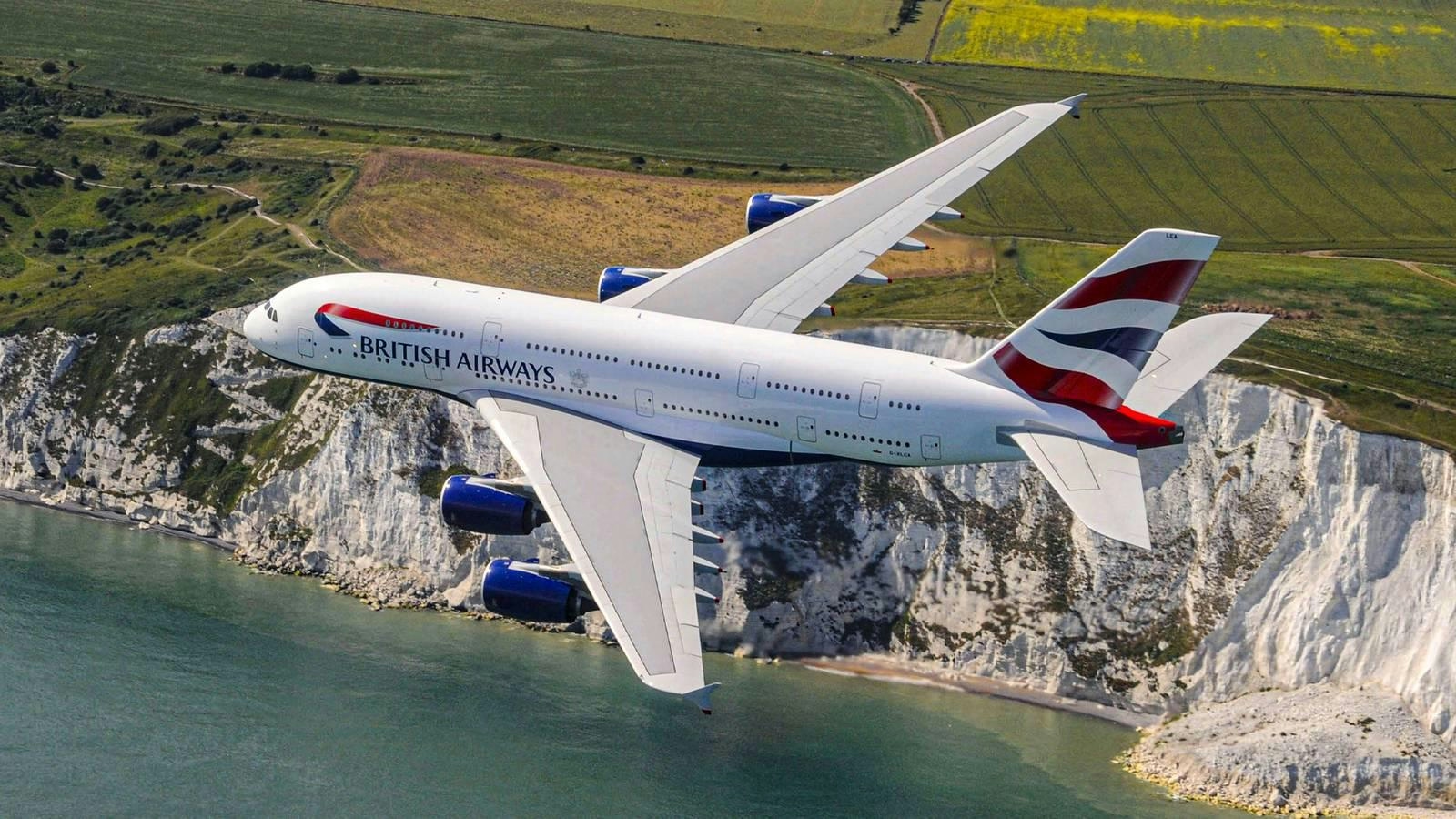
Why British Airways Chose the Airbus A380
Why British Airways Chose the Airbus A380
In September 2007, British Airways made a significant strategic decision regarding the modernization of its long-haul fleet by placing a split order between Boeing and Airbus. The airline committed to acquiring 24 Boeing 787 Dreamliners to ensure operational flexibility, alongside 12 Airbus A380s aimed at addressing capacity demands. This dual approach was intended to replace the aging Boeing 747-400s and 767s while supporting growth at the airline’s primary hub, London Heathrow. Given Heathrow’s severe slot constraints, the challenge was not to increase the number of flights but to maximize passenger volume per available slot, a factor that heavily influenced British Airways’ fleet strategy.
Strategic and Economic Considerations
British Airways’ investment in the Airbus A380 was driven by a combination of economic rationale and brand positioning. The A380, the world’s largest passenger aircraft and the only full-length double-deck jet in regular commercial service, offered significant per-seat cost advantages and a reduced noise footprint—critical benefits for operations at a congested airport like Heathrow. When British Airways received its first A380 in July 2013, the aircraft entered service that autumn configured to seat 469 passengers, a layout designed to optimize capacity on high-density routes. This configuration allowed the airline to maximize revenue potential within the constraints imposed by limited airport slots.
Despite these advantages, the decision to invest in the A380 was not without its challenges. The aircraft’s high operational and maintenance costs raised concerns within the industry, especially as the market increasingly favored smaller, more fuel-efficient twin-engine jets. The shift in airline preferences ultimately led Airbus to cease production of the A380 in 2021, reflecting a broader market trend toward aircraft that offer greater flexibility and lower operating expenses.
Market Dynamics and Competitive Pressures
The competitive environment surrounding British Airways also evolved during this period. The airline’s transition to a spend-based loyalty program prompted rivals such as Virgin Atlantic to launch status-match campaigns aimed at attracting British Airways’ mid-tier customers. Low-cost carriers like easyJet capitalized on passenger dissatisfaction with these loyalty changes, further intensifying competition. Meanwhile, the duopoly of Boeing and Airbus continued to dominate the commercial aircraft market, with airlines such as Lufthansa investing in retrofitting their A380 fleets to maintain competitiveness amid delays in the delivery of newer aircraft models.
The A380’s Role in British Airways’ Network
The fundamental design philosophy of the A380 remained relevant despite these headwinds: in an environment where airport slots are limited, growth is best achieved by increasing the number of seats per flight. The A380’s typical three-class layout accommodates just over 500 passengers, with certification for up to 853 in an all-economy configuration. Its immense size, characterized by wings wider than its length, combined with its long-haul range, positioned it as a flagship aircraft for airlines serving dense, high-demand routes. The spacious two-deck cabin also allowed for premium-heavy configurations and enhanced onboard amenities, reinforcing the aircraft’s role as a symbol of brand prestige.
Although the era of the A380 may be drawing to a close, British Airways’ investment in the aircraft underscores the airline’s ongoing efforts to optimize operations within the constraints of its Heathrow base. By leveraging large-capacity aircraft, British Airways has sought to maintain its status as a central network hub, adapting to operational realities, competitive pressures, and shifting market dynamics in the global aviation industry.

Etihad Airways Suspends Airbus A380 Flights on Key Route

Aditya Birla Group Seeks Approval for Aircraft Leasing in GIFT City

Qatar Airways Highlights Innovation and Connectivity at Arabian Travel Market 2026

Hong Kong's Five-Year Plan Includes Andrew Fan's Aircraft Parts Processing Hub Proposal

ACIA Aero Leasing Delivers ATR72-600 to Air Nostrum

RTX Appoints Jill Albertelli as Head of Pratt & Whitney

TAT Technologies Joins Beyond Aero Hydrogen Aircraft Program

AURAK Study Highlights Barriers to Air Taxi Adoption in Emerging Economies

Xiamen Air Selects Altitude for 787 Maintenance at Heathrow

Etihad and Swissport Extend Global Partnership
