
حوّل رؤى الذكاء الاصطناعي إلى أفعال منسّقة

الرائج الآن
Categories
Widebody Aircraft on U.S. Domestic Routes
Widebody Aircraft on U.S. Domestic Routes
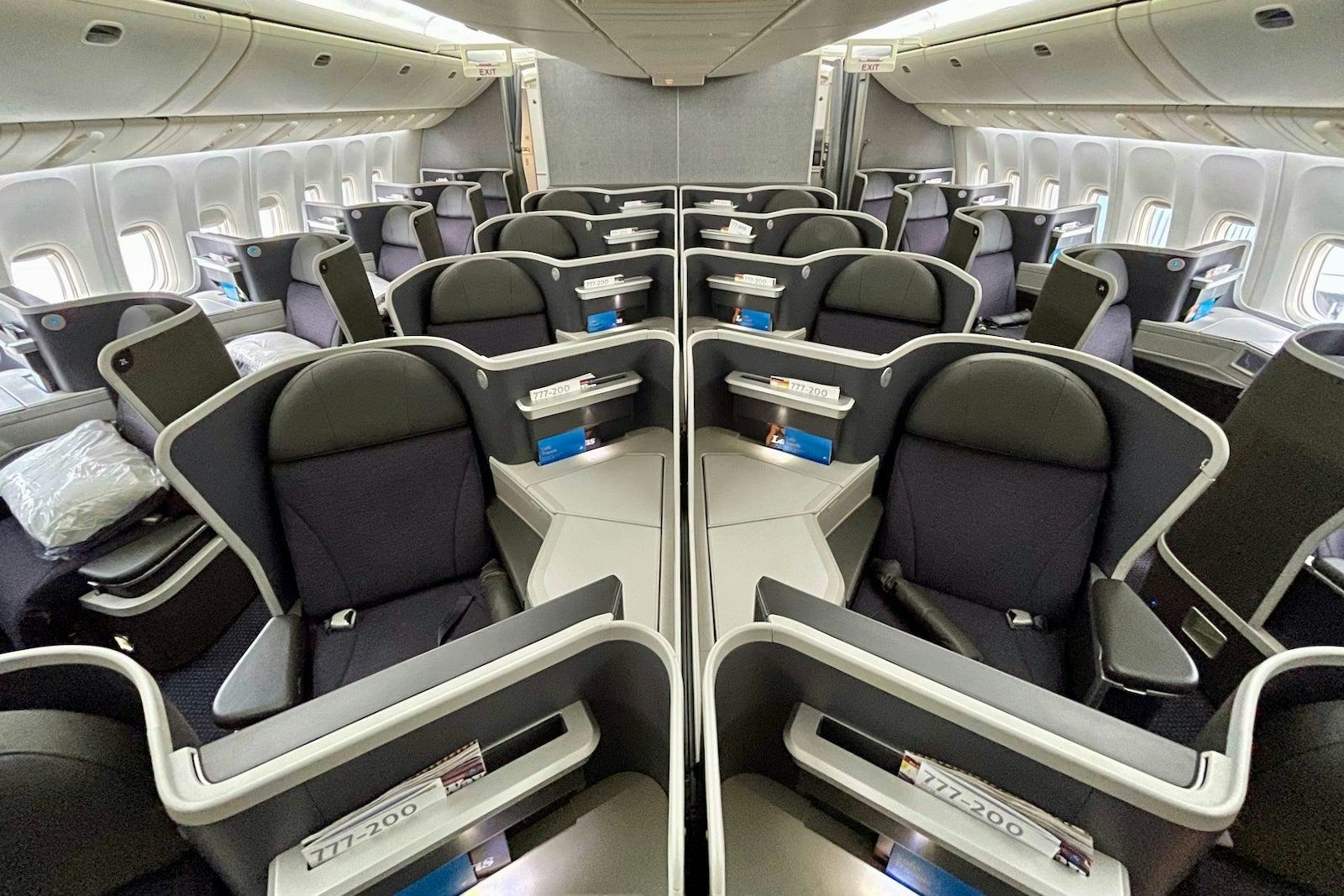
Widebody aircraft are traditionally associated with long-haul international travel, connecting continents and transporting hundreds of passengers across oceans. However, within the vast and dynamic U.S. domestic market, these larger jets also serve a crucial role on internal routes. Airlines frequently deploy widebody aircraft on flights that remain entirely within U.S. airspace, catering to premium transcontinental services and high-capacity leisure destinations alike.
Strategic Deployment and Market Dynamics
The use of widebody aircraft domestically is influenced by several factors, including slot constraints at major airports, robust passenger demand, and the imperative to optimize fleet utilization between international assignments. Data from Cirium on scheduled operations for 2026 reveals thousands of widebody flights planned along key domestic corridors, particularly between New York and California. Additionally, routes connecting the U.S. mainland to Hawaii—among the longest domestic sectors globally, often exceeding 2,500 miles—depend heavily on widebody jets to meet capacity and range requirements.
Leading carriers such as Delta Air Lines, United Airlines, and Hawaiian Airlines operate aircraft including the Boeing 767, Boeing 777, Boeing 787, and Airbus A330 on these routes. These deployments not only influence the passenger experience but also reflect evolving operational strategies shaped by market demands and industry challenges.
The New York–Los Angeles Corridor
The route between New York’s John F. Kennedy International Airport (JFK) and Los Angeles International Airport (LAX) stands out as one of the most competitive and high-profile domestic air corridors in the United States. Delta Air Lines, for instance, operates the Boeing 767-300ER on this route, scheduling 2,386 flights in each direction throughout 2026. These flights generate over 1.27 billion available seat miles (ASMs) per direction, with an average stage length approaching 4,000 kilometers.
While the 767-300ER is smaller than some newer widebodies, it offers a balance of capacity and range that allows Delta to provide a premium-heavy configuration tailored to business travelers and high-yield passengers, including professionals from the entertainment industry and corporate sectors. The use of widebody aircraft on domestic routes enables airlines to offer a competitive, premium-focused experience, featuring amenities such as lie-flat seating in premium cabins—a significant differentiator in markets where onboard product quality is paramount. High flight frequency, with multiple daily departures, further enhances flexibility for travelers while maintaining substantial seat capacity.
Industry Challenges and Adaptations
Despite their advantages, deploying widebody aircraft on domestic routes presents challenges. Industry-wide supply chain disruptions have affected freighter manufacturing and overall capacity, as highlighted by the International Air Transport Association’s (IATA) director general. Rising fuel costs have compelled airlines like United to reduce capacity and eliminate marginal flights. Meanwhile, JetBlue’s transatlantic expansion has slowed due to fleet limitations and intensifying competition. These pressures have prompted strategic adjustments across the industry, with some carriers redeploying capacity to more profitable routes or leasing additional aircraft to respond to shifting market conditions.
As airlines continue to navigate these complexities, the ongoing use of widebody aircraft on U.S. domestic routes underscores the adaptability and intricacy of the American aviation market, balancing operational efficiency, passenger demand, and evolving industry realities.

Etihad Airways Suspends Airbus A380 Flights on Key Route

Aditya Birla Group Seeks Approval for Aircraft Leasing in GIFT City

Qatar Airways Highlights Innovation and Connectivity at Arabian Travel Market 2026

Hong Kong's Five-Year Plan Includes Andrew Fan's Aircraft Parts Processing Hub Proposal

ACIA Aero Leasing Delivers ATR72-600 to Air Nostrum

RTX Appoints Jill Albertelli as Head of Pratt & Whitney

TAT Technologies Joins Beyond Aero Hydrogen Aircraft Program

AURAK Study Highlights Barriers to Air Taxi Adoption in Emerging Economies

Xiamen Air Selects Altitude for 787 Maintenance at Heathrow

Etihad and Swissport Extend Global Partnership
