
Orchestrate AI insights into action

Trending
Categories
United Airlines to Retire Boeing 777-200 Fleet
United Airlines to Retire Boeing 777-200 Fleet
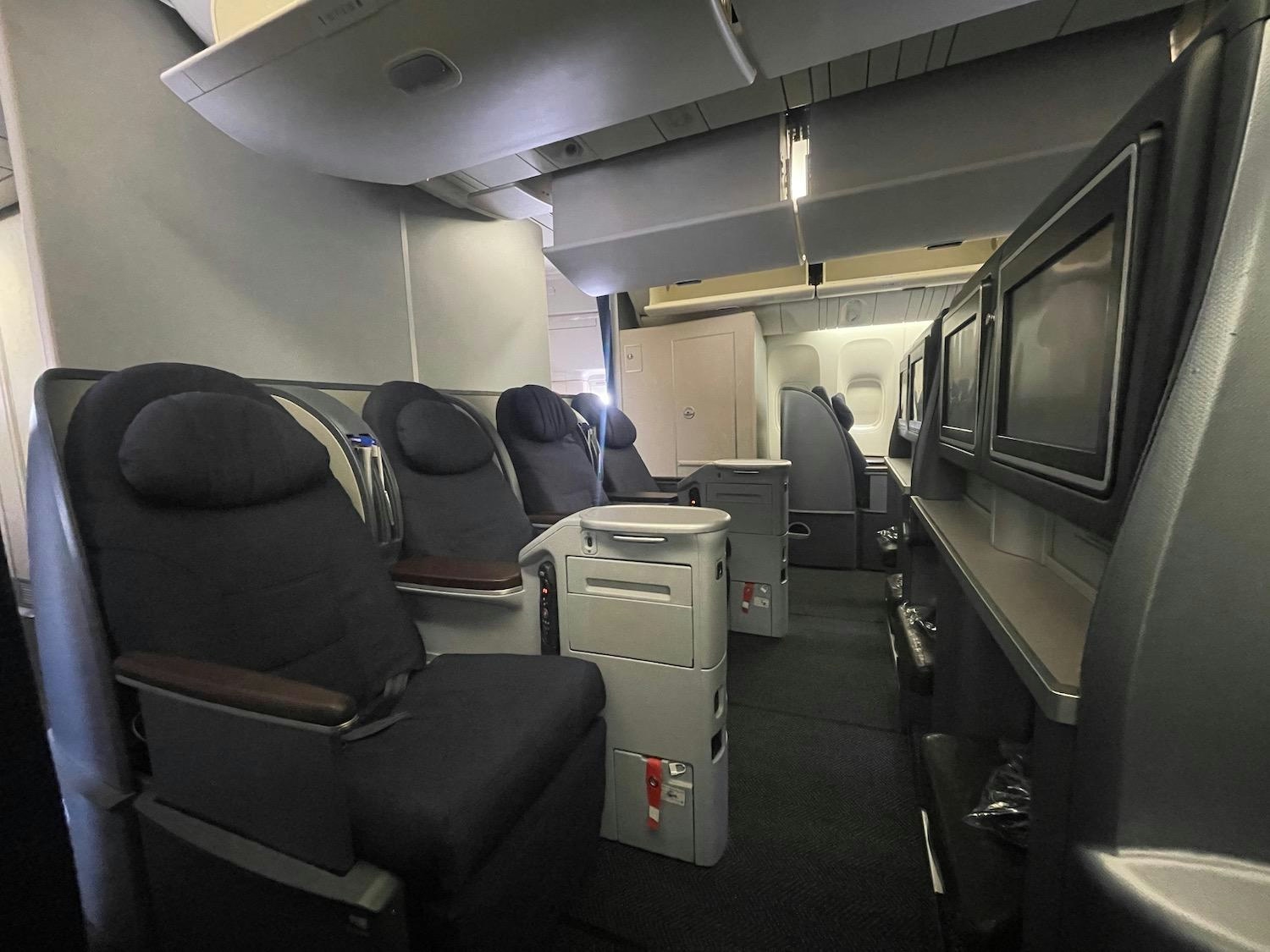
United Airlines has announced plans to retire its Boeing 777-200 fleet, marking a significant transition in the carrier’s long-haul operations. For many years, the 777-200 was a cornerstone of United’s international network, linking major U.S. hubs with key global destinations and serving high-density domestic routes. This decision reflects a wider industry trend toward adopting newer, more fuel-efficient aircraft that reduce operating costs while enhancing passenger experience.
The retirement comes amid growing pressure on airlines to modernize their fleets in response to evolving regulatory requirements and shifting market demands. Although the Boeing 777-200 was once a benchmark for widebody performance and reliability, it now falls short of the fuel efficiency standards set by newer aircraft models. This issue is particularly pressing as the aviation sector faces increasingly stringent emissions regulations. Boeing’s 777F freighter variant, for example, currently exceeds certain regulatory limits, leading the manufacturer to seek waivers while developing the more efficient 777-8F. These regulatory challenges have attracted close attention from investors and industry analysts, who are monitoring Boeing’s production rates alongside Federal Aviation Administration reviews, including those concerning the 777F emissions waiver and the 737 MAX 10.
United’s strategic shift in fleet composition may also influence competitive dynamics within the industry. Major competitors such as Delta Air Lines, as well as various low-cost carriers, could respond by adjusting their own widebody strategies or exploiting new market opportunities. This is especially relevant as economic pressures and evolving passenger expectations continue to intensify competition across the sector.
The Boeing 777-200: A Brief History and Legacy
The Boeing 777 program was launched in the early 1990s to fill the gap between the 767 and 747 aircraft, targeting high-capacity, long-range twin-engine operations. It was the first commercial airliner developed entirely through computer-aided design, enabling greater precision and efficiency in its construction. United Airlines played a pivotal role as a launch customer, collaborating closely with Boeing to shape the aircraft’s specifications.
The 777-200 completed its maiden flight in June 1994 and entered commercial service with United in June 1995. It quickly established new standards for twin-engine reliability and passenger comfort, featuring a wide, twin-aisle cabin, larger windows, higher ceilings, and improved pressurization. Certified under Extended-range Twin-engine Operational Performance Standards (ETOPS), the 777-200 enabled airlines to operate long overwater routes that were previously the domain of three- and four-engine jets.
Powered by high-thrust turbofan engines—either the Pratt & Whitney PW4000, General Electric GE90, or Rolls-Royce Trent 800—the 777-200 delivers approximately 77,000 pounds of thrust per engine and cruises at Mach 0.84. With a maximum takeoff weight near 545,000 pounds, it offers a full-payload range of about 5,200 nautical miles, making it well-suited for transcontinental, Hawaii, and select transatlantic flights. Its service ceiling of 43,100 feet allows for efficient operations that avoid adverse weather.
As United phases out the 777-200, the move underscores both the rapid pace of technological advancement in aviation and the airline’s commitment to maintaining a modern, sustainable widebody fleet. The retirement not only closes a significant chapter in United’s history but also highlights broader shifts in the competitive and regulatory environment shaping the future of commercial air travel.

Etihad Airways Suspends Airbus A380 Flights on Key Route

Aditya Birla Group Seeks Approval for Aircraft Leasing in GIFT City

Qatar Airways Highlights Innovation and Connectivity at Arabian Travel Market 2026

Hong Kong's Five-Year Plan Includes Andrew Fan's Aircraft Parts Processing Hub Proposal

ACIA Aero Leasing Delivers ATR72-600 to Air Nostrum

RTX Appoints Jill Albertelli as Head of Pratt & Whitney

TAT Technologies Joins Beyond Aero Hydrogen Aircraft Program

AURAK Study Highlights Barriers to Air Taxi Adoption in Emerging Economies

Xiamen Air Selects Altitude for 787 Maintenance at Heathrow

Etihad and Swissport Extend Global Partnership
