
image

AeroGenie — 您的智能副驾驶。

询问一切。分析一切。立即行动。

热门趋势

Categories

AELF Acquires Two Boeing 737-800 Aircraft from ICBC Aviation Leasing
December 17, 2025By ePlane AI
AELF Acquires Two Boeing 737-800 Aircraft from ICBC Aviation Leasing
0
0
AELF
Boeing 737-800
ICBC Aviation Leasing

AELF Acquires Two Boeing 737-800 Aircraft from ICBC Aviation Leasing

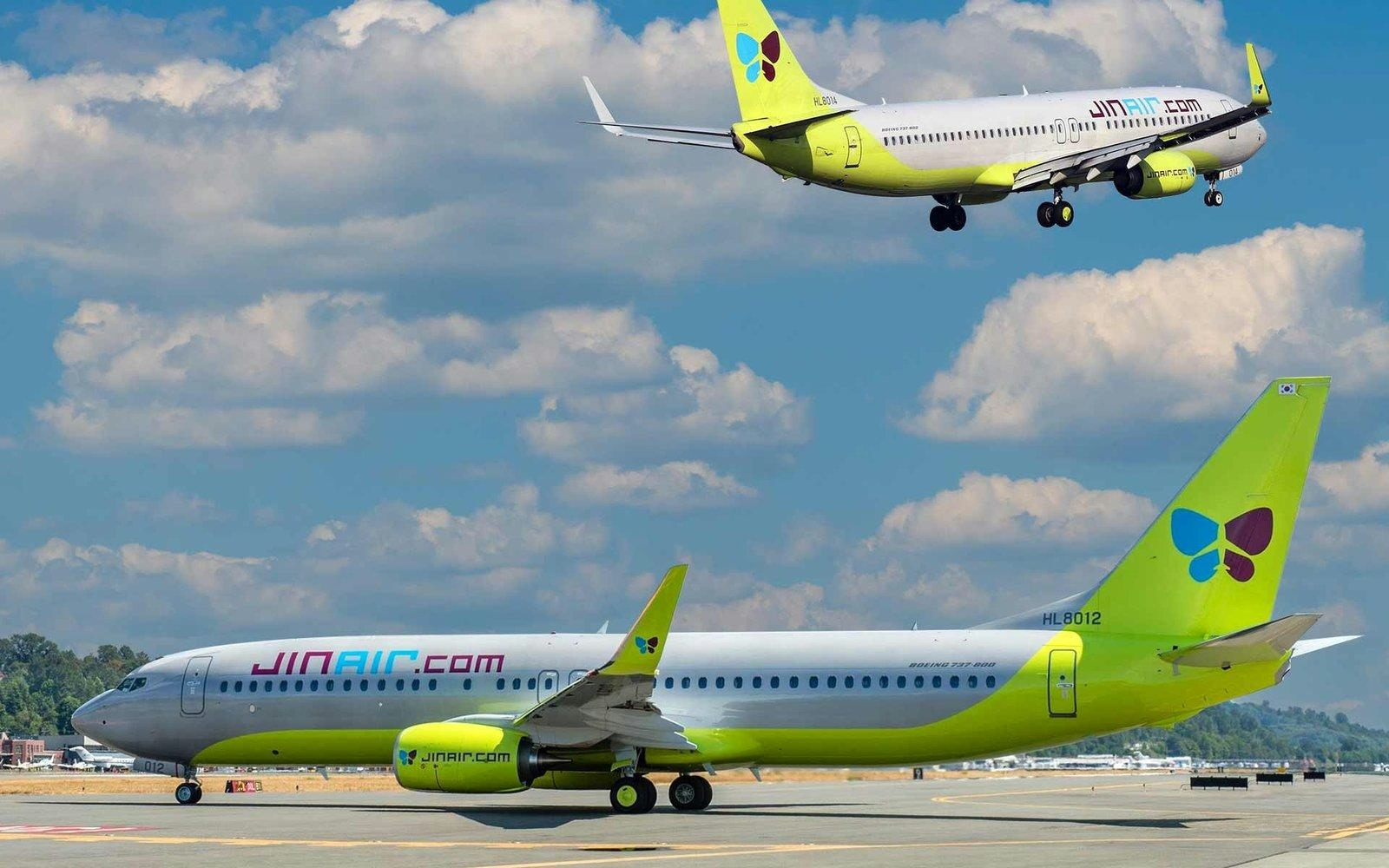
Aircraft Engine Lease Finance Inc. (AELF) has completed the acquisition of two Boeing 737-800 aircraft, both manufactured in 2015, from ICBC Aviation Leasing (ICBC). These aircraft are currently leased to Aerolíneas Argentinas, marking AELF’s first assets placed with the Argentine national carrier. This transaction also represents the inaugural collaboration between AELF and ICBC, underscoring the complementary nature of their business models. AELF’s focus on mid-life aircraft aligns with the objectives of large leasing platforms and Chinese counterparties, who seek to trade, recycle, or phase out assets at specific points in their lifecycle.

Industry Context and Strategic Implications

The acquisition occurs amid notable shifts within the aerospace sector. Boeing’s recent $4.7 billion purchase of Spirit AeroSystems has driven a surge in its stock price and signals a strategic push toward greater vertical integration. This move is expected to impact production timelines and costs across the industry, potentially intensifying competition among aircraft manufacturers as they adjust to evolving supply chain dynamics. For lessors such as AELF, these developments highlight the growing importance of supply chain resilience and production quality—critical factors for airlines when considering fleet expansion and renewal.

Market responses to these industry changes often depend on how effectively companies maintain operational flexibility and asset quality amid shifting conditions. Competitors may pursue strategic acquisitions or modify production approaches to safeguard their market positions. For AELF, vigilant monitoring of these trends and competitor strategies will be vital to sustaining growth and diversifying its portfolio.

AELF’s Position and Future Outlook

By incorporating two highly sought-after narrow-body aircraft with established operators, AELF continues to strengthen the resilience and adaptability of its leasing platform. Headquartered in the United States, AELF is a seasoned commercial aircraft lessor with over a decade of experience. The company offers tailored and flexible capital solutions to airlines, lessors, banks, and non-traditional aircraft owners. Its operations include acquiring aircraft and engines on long-term leases, as well as purchasing dormant or short-term leased assets, which it returns to service through targeted maintenance and remarketing initiatives.

This latest acquisition aligns with AELF’s ongoing strategy to expand a diversified portfolio of aircraft leased to airlines worldwide, positioning the company to navigate the evolving global aviation market.

More news
Forged in innovation: The Wright Brothers’ legacy and the rise of the Flying Tigers

Forged in innovation: The Wright Brothers’ legacy and the rise of the Flying Tigers

Forged in Innovation: The Wright Brothers’ Legacy and the Rise of the Flying Tigers The Dawn of Aviation and Its Military Implications More than 120 years ago, Orville and Wilbur Wright initiated a transformative chapter in human history with their brief but groundbreaking 12-second flight on the dunes of Kitty Hawk, North Carolina. This pioneering achievement not only marked the birth of powered flight but also established a foundation of innovation and relentless pursuit of knowledge that would influence generations of aviators. The Wright Brothers’ legacy extended beyond technological breakthroughs, shaping the strategic mindset of American airpower and setting the stage for the evolution of military aviation. As the 20th century progressed and global tensions intensified, the United States began to reassess the role of aircraft in warfare. The rapid development of aviation technology after World War I prompted significant expansion of the U.S. Army Air Corps throughout the 1930s. By the outbreak of World War II, airpower had become a central pillar of American military strategy, underscoring the importance of innovation and adaptability—principles deeply rooted in the Wright Brothers’ pioneering spirit. The Emergence of the Flying Tigers The escalating conflict in Asia during the early 1940s, particularly the mounting pressure on China from Japanese forces, highlighted the urgent need for new combat tactics and rigorous pilot training. The concept of air superiority as a decisive factor in warfare gained traction, leading to the development of a skilled cadre of aviators prepared to serve in critical theaters. In response to China’s request for assistance, retired U.S. Army Air Corps officer Claire Lee Chennault proposed the creation of an American fighter unit to support Chinese forces. This initiative gave rise to the American Volunteer Group (AVG), famously known as the Flying Tigers. Historian Mark Godwin of the 23d Wing emphasizes Chennault’s pivotal role in challenging the prevailing U.S. Army Air Forces doctrine, which at the time favored high-altitude bombers over pursuit aviation. Chennault’s fighter-centric strategy, initially dismissed by military leadership, advocated for the essential role of fighters in defending bases, protecting bombers, and attacking enemy airfields. His innovative approach ultimately reshaped combat tactics and proved instrumental in the success of the AVG. After his departure from the military in 1937, Chennault became a key advisor to Chiang Kai-shek, contributing to the modernization of the Chinese Air Force. Upon returning to Washington in 1939, he secured support for the AVG, which was equipped with 100 P-40 aircraft—considered by some to be outdated. Employing tactics overlooked by the Army Air Forces, Chennault trained both Chinese pilots and the AVG, achieving remarkable combat effectiveness that solidified the Flying Tigers’ legendary reputation. Enduring Influence on Modern Aviation The intertwined legacies of the Wright Brothers and the Flying Tigers highlight the lasting impact of early aviation pioneers on contemporary technological and military landscapes. Their shared emphasis on knowledge, innovation, and adaptability continues to inform modern aviation and strategic doctrines. In today’s competitive and rapidly evolving environment, organizations draw inspiration from these historical narratives to drive technological advancement and data-driven decision-making. The story of the Wright Brothers and the Flying Tigers remains not only a significant historical account but also a guiding framework for navigating the complexities of innovation in the modern world.
Lunar Blessing Airlines Enters Middle East Air Mobility Market

Lunar Blessing Airlines Enters Middle East Air Mobility Market

Lunar Blessing Airlines Enters Middle East Air Mobility Market Lunar Blessing Airlines, a Dubai-based startup, is preparing to enter the Middle East air mobility sector with a focus on light-aircraft charter flights and an on-demand air taxi service. Embracing a philosophy centered on elegance and reliability, the company aims to provide flexible, private flights catering to both sightseeing and urgent business travel across the UAE and neighboring regions. Operating under the motto inspired by a “Moon Blessing,” Lunar Blessing seeks to establish itself as a smart and dependable aircraft operator within Dubai’s competitive aviation landscape. Strategic Positioning and Fleet Composition Distinct from traditional commercial airlines, Lunar Blessing targets passengers who prioritize privacy, flexibility, and access to smaller or remote airfields often underserved by larger carriers. The airline will operate from Dubai Al Maktoum International Airport (DWC), initially deploying a fleet centered on the twin-engine Piper Seneca V PA-34-220T. This propeller-driven aircraft accommodates up to five passengers and offers a range of approximately 1,300 kilometers, enabling the airline to serve short- and mid-range routes, including destinations with limited infrastructure. This strategic choice allows Lunar Blessing to bridge the gap between ground transportation, scheduled airline services, and business aviation by offering the convenience and confidentiality of private jets at a cost closer to commercial flights. Regulatory and Market Challenges Despite its promising business model, Lunar Blessing faces significant challenges in entering the Middle East air mobility market. Securing the Air Operator Certificate (AOC) remains a critical hurdle, as this regulatory approval is essential for commercial flight operations. The company is actively progressing through the certification process, aiming to complete it by the first quarter of 2026. Achieving this milestone will confirm compliance with stringent safety and operational standards and enable the launch of full commercial services. The competitive environment is intensifying, with established players such as Archer and Sarla already operating in the region. These incumbents may respond to Lunar Blessing’s market entry by forming strategic partnerships or accelerating their own commercial deployments. Furthermore, the sector’s growth is closely linked to broader trends, including the expansion of the lunar space economy and increasing demand for advanced logistics and transport services. Market Reception and Future Prospects Market response to Lunar Blessing’s announcement has been largely positive. The recent Dubai Airshow underscored strong momentum for advanced air mobility, with industry stakeholders expressing optimism about new entrants like Lunar Blessing. The company’s planned participation in the 2025 Dubai Airshow is expected to enhance its visibility and attract potential partners. Looking forward, Lunar Blessing intends to expand its fleet by acquiring additional Piper Seneca V aircraft in the near term, with plans to introduce larger, potentially jet-powered models in the future. Negotiations with leasing companies are underway to support this growth strategy, positioning the airline for a broader role in business aviation and tourist charter services. As Lunar Blessing Airlines advances toward regulatory approval and fleet expansion, it emerges as a promising new entrant poised to reshape private air travel within the UAE and the wider Middle East region.
Spirit Unveils Restructuring Plans

Spirit Unveils Restructuring Plans

Spirit Airlines Secures Additional Financing Amid Restructuring Efforts Spirit Airlines has reached a revised agreement with its senior secured noteholders, resulting in an amendment to its debtor-in-possession (DIP) credit facility that unlocks a third tranche of incremental financing totaling $100 million. Of this amount, $50 million—net of the original issue discount—is immediately accessible, while the remaining funds are contingent upon further progress toward either a standalone reorganization plan or a strategic transaction. The airline is actively pursuing both options as it navigates a critical juncture in its restructuring process. The amended DIP agreement arrives as Spirit confronts a crucial financing deadline. Industry analysts warn that failure to secure the necessary funding could force the airline to shift from an operating reorganization to a rapid shutdown. Competitors have already begun preparing contingency flight schedules and rescue fares to accommodate potentially stranded Spirit passengers, highlighting the broader market implications of the airline’s financial difficulties. Operational Stability and Labor Agreements In response to these pressures, Spirit has abandoned plans to furlough up to 365 pilots and has reduced the scale of captain downgrades, signaling a commitment to maintaining operational stability. The airline also announced that its Pilot and Flight Attendant groups ratified new labor agreements last week, which are expected to support the company’s restructuring objectives. Spirit’s management emphasized that the continued support from lenders reflects confidence in the airline’s transformation and recent progress. Over the past two months, the company has repositioned its fleet and improved its cost structure while developing a diverse range of product offerings—from economical to premium—to enhance value for travelers. Market Impact and Future Outlook Despite these efforts, the airline’s future remains uncertain. Deutsche Bank analysts have noted that Spirit’s restructuring is likely to benefit competitors in most markets, as rivals stand ready to absorb Spirit’s market share should disruptions occur. Meanwhile, Spirit’s stock (SAVEQ) remains highly speculative and disconnected from the company’s legal recovery prospects. Under the proposed restructuring plan, existing equity holders are not expected to receive any recovery. Spirit reaffirmed its commitment to providing high-value travel options for American consumers and maintaining strong operational performance through the holiday season and beyond. The ongoing restructuring efforts, supported by the amended DIP financing, aim to secure the airline’s long-term viability amid a rapidly evolving competitive landscape.
Rolls-Royce Begins Engine Testing for U.S. Army MV-75 Aircraft

Rolls-Royce Begins Engine Testing for U.S. Army MV-75 Aircraft

Rolls-Royce Advances Engine Testing for U.S. Army MV-75 Aircraft Rolls-Royce has initiated testing of its AE 1107F engines at its Indianapolis facility, marking a pivotal development in the delivery of prototypes for the U.S. Army’s MV-75 Future Long Range Assault Aircraft (FLRAA) program. Each MV-75 FLRAA will be equipped with two AE 1107F engines, a next-generation propulsion system designed to significantly enhance speed, range, and combat effectiveness for Army aviation units. The AE 1107F Engine: A Proven Powerplant for Modern Warfare The AE 1107F represents the latest advancement in a family of engines that have reliably served the U.S. military for decades. Rolls-Royce highlights the engine’s high power density, cyber-compliant controls, and survivability features tailored to meet the demands of contemporary combat environments. The AE series has accumulated over 90 million flight hours across 16 commercial and military platforms, with approximately 80 percent of components standardized across variants. This common core architecture is intended to mitigate technical risks, accelerate development timelines, and simplify maintenance and supply chain logistics. Candice Bineyard, director of U.S. business development and future programs for Rolls-Royce Defense, underscored the significance of the current testing phase. She stated, “We continue working closely with the U.S. Army and our industry partners to deliver an ultra-modern propulsion solution with proven, low-risk AE 1107F engines and a fully integrated system design. Engine testing represents the next critical milestone in bringing this revolutionary capability to our service members.” Strategic Investment and Industry Implications Testing is being conducted at Rolls-Royce’s advanced manufacturing campus in Indianapolis, the company’s largest facility in the United States. Over the past decade, Rolls-Royce has invested more than $1 billion in technology upgrades, facility enhancements, and testing capabilities at this site to support key U.S. Department of Defense programs, including the MV-75 FLRAA. The AE 1107 engine family is already extensively deployed, powering multiple variants of the V-22 Osprey used by the U.S. Marine Corps, Navy, and Air Force. Additionally, a marinized version known as the MT7 powers the U.S. Navy’s Ship-to-Shore Connector landing craft. While the MV-75 FLRAA program aims to replace parts of the Army’s existing rotary-wing fleet with longer-range aircraft, Rolls-Royce faces ongoing challenges. The company must ensure the successful execution of upgrades and meet durability expectations across its Trent engine family. Nevertheless, market sentiment remains optimistic, supported by a recent £200 million share buyback and steady progress in defense engine testing. Competitors are closely monitoring Rolls-Royce’s developments, particularly as the company seeks to regain market share in the Boeing 787 segment by leveraging successful upgrades to the Trent 7000 engine. As testing of the AE 1107F advances, Rolls-Royce is positioning itself to strengthen its foothold in both military and commercial aerospace sectors.
SkyTeam Names Finalists for Aviation Challenge 2025

SkyTeam Names Finalists for Aviation Challenge 2025

SkyTeam Announces Finalists for Aviation Challenge 2025, Emphasizing Industry Sustainability SkyTeam has unveiled the finalists for its fourth annual Aviation Challenge (TAC), spotlighting a broad range of innovative efforts aimed at advancing sustainability within the aviation sector. The 2025 edition, themed “Impact,” underscores the alliance’s commitment to fostering measurable environmental progress through collaboration and innovation. Expanding Participation and Record Engagement This year’s challenge attracted participation from 22 airlines, including subsidiaries, affiliates, and non-SkyTeam members, reflecting the alliance’s ambition to extend its influence beyond its immediate network. Between September 26 and October 26, 2025, these airlines conducted over 80 showcase flights—the highest number since the program’s inception. These flights served as practical demonstrations of cutting-edge solutions designed to promote sustainability, encouraging long-term adoption across the industry. Collectively, participants submitted 224 initiatives addressing critical areas such as carbon emissions reduction, energy efficiency, and waste management. Patrick Roux, SkyTeam’s CEO, remarked on the significance of the event: “Each year, The Aviation Challenge provides participating airlines with a platform to turn innovation into action and take practical steps toward sustainability. This fourth edition has been especially inspiring, with participants demonstrating determination, ingenuity, and initiative throughout the Challenge. Their commitment was reflected in a record number of showcase flights. We congratulate all the airlines on their efforts to help shape a more responsible future for aviation.” Evaluation and Award Categories A panel of aviation and sustainability experts, including representatives from the Netherlands Aerospace Centre (NLR) and PA Consulting, assessed the entries using a rigorous set of technical criteria. Finalists were selected across four principal categories, each encompassing several subcategories. The Direct Impact Awards recognize effective solutions implemented in flight and ground operations, cargo handling, maintenance, catering, and inflight products. Noteworthy initiatives include AI-driven payload optimization, the elimination of single-use plastics in catering, and enhanced potable water management systems. The Organizational Transformation Awards celebrate progress in sustainability training, Sustainable Aviation Fuel (SAF) adoption, procurement strategies, and data-driven efficiency improvements. Highlights feature the scaling of SAF usage and the introduction of comprehensive training programs to elevate sustainability awareness among staff. Leadership Awards honor excellence in leadership, teamwork, and collaboration, with winners determined through peer voting. Shortlisted projects include national SAF roadmaps, emissions reduction strategies, and innovative approaches to converting aviation waste into opportunities for micro, small, and medium enterprises. Finally, the Inspiration Awards acknowledge exceptional showcase flights, storytelling, and knowledge-sharing initiatives. These include regional events and university partnerships focused on emissions reduction and waste management. Challenges and Industry Context While the Aviation Challenge reinforces SkyTeam’s dedication to sustainability, it also highlights ongoing challenges. The alliance faces the task of maintaining its competitive position against other global alliances and individual carriers, ensuring that sustainability efforts do not compromise operational efficiency. Financial and operational risks linked to innovation projects remain significant, particularly as scrutiny from investors and stakeholders intensifies. Competitors such as Star Alliance and Oneworld are expected to enhance their own sustainability programs in response. Recent leadership changes, including the departure of Kenya Airways CEO Allan Kilavuka, may also impact SkyTeam’s strategic direction and the implementation of future sustainability initiatives. The complete list of TAC 2025 finalists is available in the ‘Notes to Editors’ section.
Deutsche Aircraft Focuses on Supply Chain Resilience for Modern Production

Deutsche Aircraft Focuses on Supply Chain Resilience for Modern Production

Deutsche Aircraft Prioritizes Supply Chain Resilience Amid Industry Challenges As the aerospace sector continues to grapple with persistent supply chain disruptions, smaller original equipment manufacturers (OEMs) such as Deutsche Aircraft are confronting a complex landscape of challenges and opportunities. At the Hamburg Aviation Forum in December 2025, Deutsche Aircraft’s CEO Nico Neumann outlined the company’s strategic approach as it prepares to launch the redesigned D328eco regional turboprop. Neumann emphasized the pressing need to translate existing market demand into reliable delivery, stating, “The demand is there, but now we have to find ways to deliver.” The original D328, a 32-passenger aircraft last produced in the early 2000s, saw limited production with only 107 units built, alongside 110 D328Jets. Since acquiring the type certificate from Fairchild Dornier in 2006, Deutsche Aircraft has maintained a modest global fleet, with approximately 40 to 50 D328s and around two dozen D328Jets still in operation. Strategic Focus on Manufacturing and Supply Chain Resilience With the D328eco—a 40-passenger model—targeted for type certification and entry into service by 2027, Deutsche Aircraft is intensifying efforts to bolster manufacturing capabilities and supply chain resilience. This focus emerges amid heightened industry scrutiny of supply chain strategies, particularly as leadership instability has been identified as a significant risk factor undermining resilience, according to recent Gartner surveys. Such vulnerabilities have fueled skepticism regarding the effectiveness of new supply chain initiatives, especially among smaller OEMs. The competitive environment further complicates these challenges. Boeing’s recent acquisition of Spirit AeroSystems and its push toward greater vertical integration have set new standards for supply chain control and efficiency. This development exerts additional pressure on companies like Deutsche Aircraft to enhance their own supply chain robustness in order to remain competitive. Industry analysts highlight that future-proofing manufacturing operations requires not only resilient supplier networks but also enhanced data visibility throughout the supply chain. For Deutsche Aircraft, this translates into substantial investments in digital tools and transparent processes designed to anticipate disruptions and enable rapid response. These capabilities are critical to meeting delivery commitments for the D328eco. As Deutsche Aircraft moves closer to production, its capacity to adapt to evolving supply chain dynamics will be pivotal. The company’s initiatives to strengthen resilience and implement data-driven oversight are likely to play a decisive role in its ability to bring the D328eco to market on schedule, amid intensified industry scrutiny and competitive pressures.
United Airlines Integrates AI into Mobile App

United Airlines Integrates AI into Mobile App

United Airlines Integrates AI into Mobile App United Airlines has unveiled a significant update to its mobile application, incorporating artificial intelligence to enhance the overall travel experience. Launched on Tuesday, the revamped app introduces a range of AI-driven features designed to function as a comprehensive travel assistant. Among these are Virtual Gate, a tool that provides real-time boarding information, a locator for the nearest and most suitable United Club lounges, and live tracking of checked baggage. Enhancing the Traveler’s Journey with Predictive Navigation At the core of the update is a predictive navigation system that anticipates passengers’ needs throughout their journey. As departure time nears, the app automatically highlights boarding status and gate details. For travelers facing tight connections, it offers timely guidance to facilitate smooth transfers between flights. Upon arrival, the app delivers up-to-date local weather information and suggests ride-share options, aiming to simplify ground transportation arrangements. This initiative aligns with a broader industry movement toward integrating AI and mobile technologies to provide more personalized and efficient travel services. Airlines are increasingly investing in digital tools that reduce stress and improve convenience, and United’s latest enhancements are expected to prompt competitors to accelerate their own adoption of AI-driven solutions. Challenges and Regulatory Considerations Despite the potential benefits, the integration of AI into travel applications presents notable challenges. Automation errors, such as inaccuracies in navigation prompts or baggage tracking, could disrupt the customer experience. Furthermore, the expanded use of personal data to power these AI features has attracted heightened regulatory scrutiny. Authorities are closely examining issues related to AI-based pricing models, data transparency, and consumer protection, raising important questions about how airlines manage and safeguard sensitive customer information. United Airlines is positioning its AI-powered app as a new benchmark for digital travel assistance, aiming to deliver a smoother and more intuitive journey for its customers. As the airline industry continues to evolve, the interplay between technological innovation, operational reliability, and consumer trust will remain a critical focus.
Airinmar Renews Service Agreement with Air Methods

Airinmar Renews Service Agreement with Air Methods

Airinmar Renews Service Agreement with Air Methods Amid Industry Challenges Airinmar, a subsidiary of AAR and a prominent independent provider of component repair cycle management and aircraft warranty management solutions, has extended its multi-year support services agreement with Air Methods, one of the world’s largest civilian helicopter operators. This renewal continues a partnership that began in August 2020, under which Airinmar has been responsible for identifying, claiming, recovering, and reporting on rotorcraft and aircraft component warranties, as well as delivering value engineering services. Enhancing Warranty Management and Cost Efficiency Airinmar’s services are designed to complement Air Methods’ materials management operations, with a particular emphasis on maximizing warranty recoveries and reducing both component repair and overall maintenance costs. Jay Mahen, Air Methods’ Senior Vice President of Operations, highlighted the value of this collaboration, stating, “Since we implemented Airinmar’s services in 2020, Airinmar has been a trusted services provider. We appreciate their commitment to effective warranty management and value engineering, which have contributed to meeting Air Methods’ safety and efficiency goals.” He further emphasized the ongoing reliance on Airinmar’s engineering expertise to optimize the supply chain and support the delivery of safe and reliable emergency air medical care around the clock. Matt Davies, General Manager of Airinmar, expressed enthusiasm about the renewed partnership, noting, “We are thrilled to extend our successful relationship with Air Methods and continue working alongside their material management team to reduce maintenance costs across Air Methods’ multiple fleet types. We are proud to provide a tailored cost control service and support Air Methods’ fleet of over 450 helicopters and fixed-wing aircraft.” Navigating a Complex Industry Landscape The renewal comes at a time when the aviation industry is grappling with significant financial and regulatory pressures. Following the worst year for major aviation losses in a decade in 2025, analysts anticipate a substantial rise in aviation insurance rates beginning in 2026. This expected increase is likely to drive operators and service providers to scrutinize insurance expenses more closely, while competitors may seek to differentiate themselves through more competitive pricing or enhanced coverage options. In addition to insurance challenges, the sector faces broader difficulties, including opposition to proposed new taxes on business jet charter flights and recent modifications to air passenger duties in the United Kingdom. These developments contribute to a complex operating environment for both operators and their service partners. Despite these headwinds, Airinmar and Air Methods view their renewed partnership as a strategic initiative to control costs and maintain operational efficiency. By focusing on warranty recovery and value engineering, both companies aim to alleviate some of the financial pressures confronting the industry and ensure the continued provision of critical air medical services.
Jeppesen ForeFlight Names New Executives to Lead Aviation Initiatives

Jeppesen ForeFlight Names New Executives to Lead Aviation Initiatives

Jeppesen ForeFlight Names New Executives to Lead Aviation Initiatives Jeppesen ForeFlight, a prominent provider of aviation software solutions, has announced the appointment of three senior executives to its leadership team. This strategic move highlights the company’s commitment to growth, customer success, and innovation amid a rapidly evolving aviation industry. The new leadership appointments arrive at a critical juncture as Jeppesen ForeFlight seeks to reinforce its competitive position and respond to shifting market demands. Strategic Leadership Appointments Joe Ayers has been appointed Chief Financial Officer (CFO), bringing over 15 years of experience in enterprise software finance. He will be responsible for steering the company’s financial strategy and operations, with a focus on driving sustainable growth through disciplined financial management and strategic investment. Toya Del Valle assumes the role of Chief Customer Officer (CCO), leveraging her extensive background in customer success within major airlines and technology firms. Del Valle will oversee customer support, training, and engagement initiatives, aiming to enhance both customer experience and operational efficiency. Richa Gupta joins as Chief People Officer (CPO), where she will lead global talent strategy and employee experience. Her leadership in human resources is expected to foster a culture of innovation and transformation within the organization. Navigating a Competitive and Dynamic Market Jeppesen ForeFlight faces a competitive landscape dominated by established players such as Garmin and Honeywell. The company must maintain its innovative edge while adapting to rapidly changing customer needs and ensuring the seamless integration of emerging technologies into its product offerings. Industry analysts suggest that these leadership changes may intensify scrutiny from competitors and potentially influence strategic partnerships across the sector. In response, rivals are likely to accelerate their innovation and marketing efforts to protect market share and counter Jeppesen ForeFlight’s advancements. Advancing Innovation and Customer Experience Building on Jeppesen’s 90-year legacy in aeronautical data and ForeFlight’s cutting-edge technology, the company continues to expand its presence across commercial, business, military, and general aviation sectors. The integration of financial stewardship under Ayers, customer engagement led by Del Valle, and a forward-thinking workplace culture driven by Gupta positions Jeppesen ForeFlight to deliver the next generation of aviation technology solutions. The company aims to set new standards in safety, efficiency, and operational intelligence through these combined efforts. Reinforcing Industry Leadership These executive appointments underscore Jeppesen ForeFlight’s dedication to providing innovative software that enhances decision-making, improves safety, and increases operational efficiency. Serving a diverse client base that includes airlines, aviation fleets, military organizations, and business aviation operators, the company is well-positioned to navigate the opportunities and challenges presented by a rapidly transforming industry.
737 MAX Engine Shuts Down Mid-Flight After Cockpit Sun Visor Detaches

737 MAX Engine Shuts Down Mid-Flight After Cockpit Sun Visor Detaches

737 MAX Engine Shutdown Triggered by Detached Cockpit Sun Visor A Ryanair-branded Boeing 737-8 MAX encountered an unusual in-flight emergency on December 8, 2025, when a cockpit sun visor detached during climb-out from Krakow, Poland, resulting in the shutdown of one of its engines. The aircraft, registered 9H-VUE and operated by Malta Air under a wet-lease agreement, was conducting flight FR-3505 to Milan Bergamo at the time of the incident. Incident Overview and Flight Response The flight departed Krakow at approximately 06:25 local time and was ascending through 8,000 feet when the crew halted their climb and maintained level flight. According to reports from the Aviation Herald, the detached sun visor struck an engine start lever, causing the shutdown of a CFM LEAP-1B engine. In response, the flight crew issued a “PAN PAN” call, indicating an urgent but non-life-threatening situation, and began troubleshooting while holding their heading. After stabilizing at 10,000 feet, the crew successfully restarted the affected engine, canceled the PAN PAN alert, and proceeded to Milan Bergamo. The aircraft landed safely about 90 minutes later without further incident, and no injuries were reported among passengers or crew. The aircraft remained grounded in Milan for approximately 50 hours before returning to service. Investigation and Industry Context The Maltese Bureau of Air Accident Investigation (BAAI) has classified the event as an incident and initiated a formal investigation. No official report has yet been released, and the precise circumstances remain under review. Aviation experts have expressed skepticism regarding the likelihood of a sun visor—typically mounted high and forward near the windshield—dislodging and actuating an engine start lever, which is located low on the center pedestal and generally requires deliberate manipulation. Investigators are expected to analyze cockpit voice and flight data recorders, maintenance records, and hardware configurations to determine the sequence of events. This incident occurs amid ongoing scrutiny of Boeing and the 737 MAX series. The U.S. Federal Aviation Administration (FAA) is currently reviewing Boeing’s cockpit alerting system for the forthcoming MAX 10 model, focusing on potential safety enhancements. The event has drawn renewed attention from aviation regulators worldwide and may prompt legal or operational repercussions should systemic issues be identified. The aviation industry is also contending with broader challenges, including the need to retrofit thousands of passenger aircraft to mitigate pilot disorientation risks during solar storms—a vulnerability that could further disrupt flight operations. Wet-lease arrangements, such as the one involved in this case, are common during peak travel periods, with the marketing carrier selling tickets while another airline operates the flight under its own certificate. The aircraft’s Maltese registration (“9H”) and the use of CFM LEAP-1B engines are standard for the 737 MAX fleet. In-flight engine shutdowns remain rare, with certification standards requiring aircraft to safely continue flight and land on a single engine. The ongoing investigation will seek to establish whether the detached sun visor was the direct cause, a contributing factor, or incidental to the engine shutdown, and whether any maintenance or procedural shortcomings played a role. Ryanair has not issued a statement regarding the incident.
Ask AeroGenie









