
将人工智能洞察转化为可执行行动

热门趋势
Categories
Airbus Appoints MTU Aero Engines CEO to Lead Commercial Aircraft Division
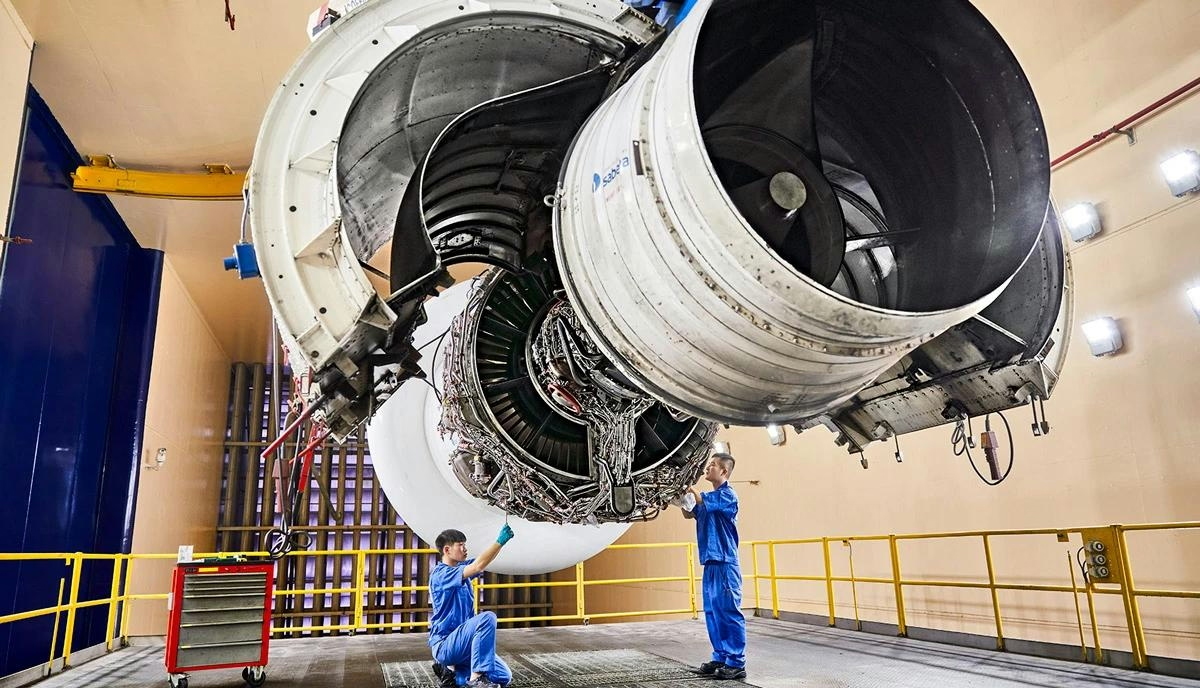
Airbus Appoints MTU Aero Engines CEO to Lead Commercial Aircraft Division
Airbus has named the CEO of MTU Aero Engines AG as the new head of its commercial aircraft division, signaling a strategic leadership shift amid evolving industry dynamics and persistent challenges within the global aerospace sector.
Background on MTU Aero Engines
MTU Aero Engines AG is a prominent manufacturer and supplier specializing in modules and components for both civil and military aircraft engines. The company also offers extensive engine maintenance, repair, and overhaul (MRO) services. Recent financial data indicate that MTU’s revenue is predominantly generated from MRO services for commercial aircraft engines and industrial gas turbines, which account for 67.9% of its net sales. The remaining 32.1% derives from the sale of modules and components for commercial and military aviation engines. Geographically, MTU’s sales are concentrated primarily in North America (70%), followed by Germany (10.3%), Asia (8.9%), Europe excluding Germany (6.2%), and other regions (4.6%).
Challenges Facing Airbus
This leadership change occurs as Airbus confronts significant operational challenges. Trade disruptions have recently overtaken supplier reliability as the foremost concern for the company, posing risks to its ability to meet ambitious delivery targets. Despite these obstacles, Airbus has maintained its production rate guidance. Market responses to the appointment have been mixed, reflecting uncertainty about whether the new leadership can effectively address ongoing supply chain bottlenecks and fulfill production commitments.
Strategic Implications and Industry Context
The appointment is also expected to impact the competitive landscape. Airbus and MTU Aero Engines are collaborating on next-generation propulsion technologies, including hydrogen fuel cell systems, as the aerospace industry increasingly prioritizes sustainable solutions. Meanwhile, Boeing continues to face its own difficulties, with delivery rates falling short of market demand.
The incoming head of Airbus’s commercial aircraft division will be responsible for navigating these multifaceted challenges. This role demands a careful balance between managing supply chain complexities, adapting to shifting trade conditions, and driving innovation in propulsion technology. As the aerospace sector evolves, the effectiveness of this leadership transition will be closely watched as a determinant of Airbus’s strategic direction and operational performance.

Etihad Airways Suspends Airbus A380 Flights on Key Route

Aditya Birla Group Seeks Approval for Aircraft Leasing in GIFT City

Qatar Airways Highlights Innovation and Connectivity at Arabian Travel Market 2026

Hong Kong's Five-Year Plan Includes Andrew Fan's Aircraft Parts Processing Hub Proposal

ACIA Aero Leasing Delivers ATR72-600 to Air Nostrum

RTX Appoints Jill Albertelli as Head of Pratt & Whitney

TAT Technologies Joins Beyond Aero Hydrogen Aircraft Program

AURAK Study Highlights Barriers to Air Taxi Adoption in Emerging Economies

Xiamen Air Selects Altitude for 787 Maintenance at Heathrow

Etihad and Swissport Extend Global Partnership
