
图像

AeroGenie — 您的智能副驾驶。

问任何问题。分析一切。立即行动。

热门趋势

Categories

Airbus Flight Academy Partners with Sevenair Academy to Expand Pilot Training
November 6, 2025By ePlane AI
Airbus Flight Academy Partners with Sevenair Academy to Expand Pilot Training
0
0
Airbus Flight Academy
Sevenair Academy
Pilot Training

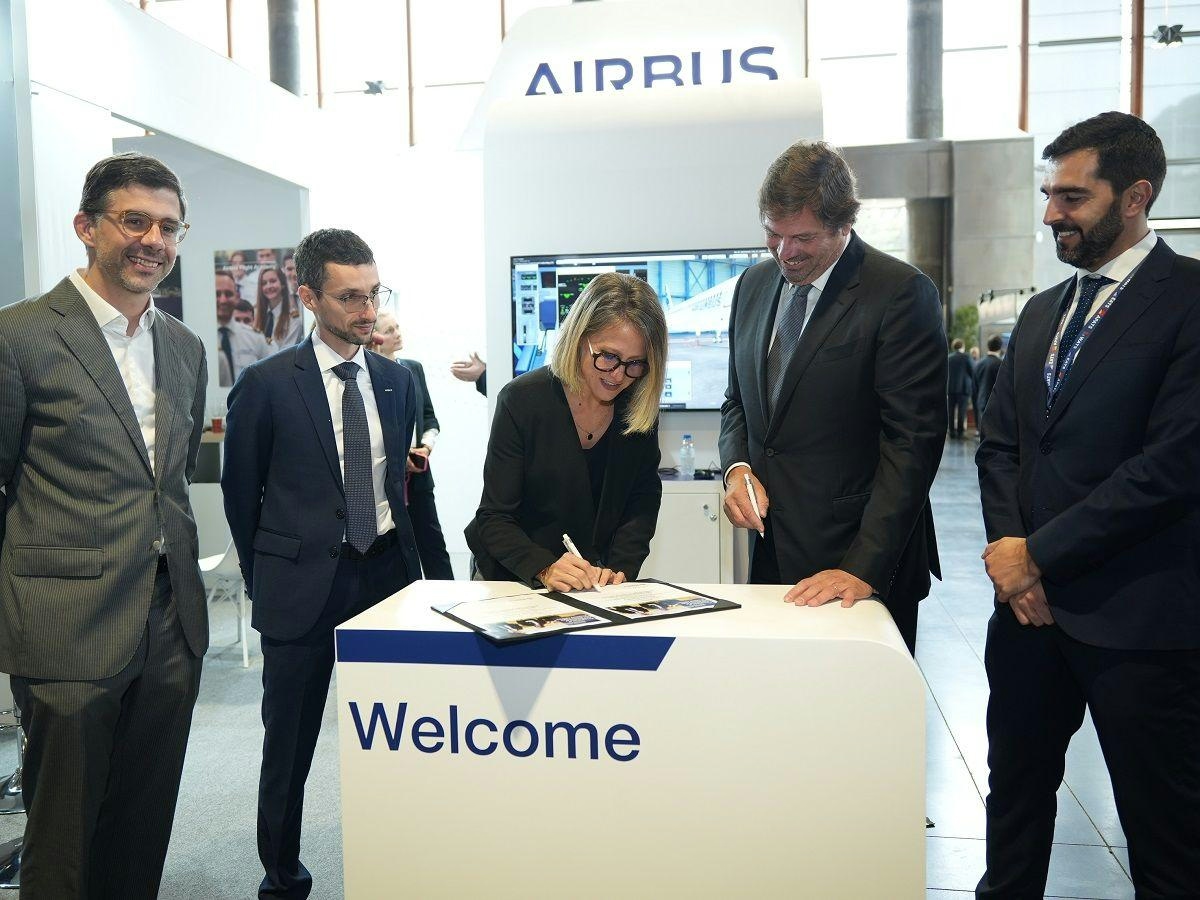
Airbus Flight Academy and Sevenair Academy Forge Strategic Partnership to Expand Pilot Training

Airbus Flight Academy has entered into a strategic partnership with Sevenair Academy, one of Europe’s largest flight training institutions, to address the escalating global demand for qualified pilots. The agreement, formalized at the European Airline Training Symposium (EATS) in Portugal, seeks to enhance Airbus’ international training network and support the development of future aviation professionals.

Expanding Training Capacity Amid Growing Pilot Demand

The aviation sector faces a significant pilot shortage, with the latest Airbus Global Services Forecast projecting a need for 633,000 new pilots worldwide over the next two decades, including 119,000 in Europe alone. This collaboration aims to expand Airbus’ Flight Academy network, ensuring a consistent pipeline of highly trained pilots equipped to meet the evolving needs of the industry.

By integrating Sevenair Academy into its global framework, Airbus positions Portugal as a pivotal training hub within its network, which currently encompasses 21 training sites worldwide. This alliance enables Airbus to offer comprehensive flight training closer to airline customers, providing a seamless pathway for students from initial flight experience through to pilot licensure. Graduates will emerge with the skills and confidence necessary to transition directly into airline operations.

Enhancing Training Quality and International Reach

Maïa Kuilenberg, Vice President of Training Services at Airbus, highlighted that the partnership capitalizes on Airbus’ expertise in flight safety, instructor development, and curriculum standardization to maintain high training standards. Sevenair Academy stands to benefit from Airbus’ continuous support and innovations, which are expected to elevate instructor quality and broaden opportunities for both airline-sponsored and self-funded cadets.

Currently training approximately 200 cadets annually, Sevenair plans to increase its intake in the coming years. The academy offers both modular and integrated pilot training programs tailored to diverse student requirements. This week marks a significant milestone as the first cohort of Royal Brunei Airlines cadets commences Airbus-endorsed training at Sevenair Academy, underscoring the partnership’s expanding international scope.

Navigating Industry Challenges and Competitive Dynamics

This partnership emerges amid a broader trend of strategic alliances within the aviation training sector, as providers strive to deliver internationally recognized programs and respond to shifting industry demands. While the collaboration is expected to attract increased interest from prospective students and industry stakeholders, it also introduces challenges such as intensified competition from other training providers, regulatory compliance complexities, and the imperative to uphold rigorous training standards. Competitors may respond by enhancing their own offerings to maintain relevance in a rapidly evolving market.

As the aviation industry continues its recovery and growth trajectory, the Airbus-Sevenair partnership highlights the vital role of experienced training academies and robust international collaborations in cultivating the next generation of pilots.

More news
Emirates Unveils Cabin Design for New Boeing 777X

Emirates Unveils Cabin Design for New Boeing 777X

Emirates Unveils Cabin Design for New Boeing 777X Emirates has long regarded cabin design as a defining feature of its brand, emphasizing the aircraft interior as central to the passenger experience, particularly on its signature ultra-long-haul routes. As the airline prepares to introduce the next generation of its widebody fleet, attention is increasingly focused on how future cabins will balance comfort, familiarity, and evolving passenger expectations. This emphasis is especially pertinent as Emirates prepares to integrate the Boeing 777X into its operations. The 777X, the latest iteration of Boeing’s successful 777 platform, promises enhanced efficiency, a wider and quieter cabin, and improved environmental comfort. It is poised to become a cornerstone of Emirates’ long-haul strategy for decades ahead. A Subtle Introduction to the New Cabin Emirates’ vision for the 777X cabin was first revealed not through a formal launch event but via a brief appearance in a tribute video honoring Tim Clark, the airline’s President and a pivotal figure in shaping its product philosophy. The short CGI sequence offered a stylized glimpse of the aircraft interior, which, while unmistakably Emirates, suggested a refined evolution rather than a radical redesign. The cabin layout, lighting, and seat architecture emphasized privacy, spaciousness, and tranquility—qualities increasingly sought after by premium travelers. Industry experts have observed that the new design builds upon Emirates’ legacy of innovation, from pioneering seatback entertainment systems to introducing onboard lounges and private suites. The 777X cabin represents a natural progression, incorporating new materials and spatial concepts while preserving the brand’s distinctive ambiance. Upgraded Business Class and Industry Reception The unveiling of the 777X cabin design has been met with positive industry response, particularly regarding the substantial enhancements in business class. Passengers can anticipate direct aisle access and fully flat beds, features now regarded as essential for long-haul comfort and competitive positioning. This aligns with broader trends in the aviation sector, where demand for premium-class seating continues to grow, making cabin design a critical driver of revenue. Program Challenges Amid Regional Momentum Despite the enthusiasm surrounding the new cabin, the 777X program faces significant challenges. A potential durability issue with the GE9X engine has caused delays and financial charges for Boeing, slowing the aircraft’s entry into service. Nonetheless, Boeing plans to conduct the first flight of the production 777X in April, signaling ongoing progress in the long-delayed program. Interest in the 777X remains robust, particularly within the Asia-Pacific region. The recent introduction of the region’s first 777X simulator in Singapore by CAE highlights the aircraft’s anticipated impact and the growing demand for pilot training in preparation for its deployment. Boeing’s Broader Recovery and Market Position The development of the 777X coincides with Boeing’s broader financial recovery, driven by a renewed focus on safety and increased production rates of the 737 MAX. This resurgence positions Boeing as a competitive force in the aerospace market, even as it navigates the complexities associated with bringing the 777X to service. Looking Ahead for Emirates For Emirates, the 777X embodies both continuity and innovation. The airline’s approach to cabin design—favoring evolutionary refinement over radical change—aims to deliver a passenger experience that is simultaneously familiar and modern. This strategy ensures that comfort and brand identity remain central to Emirates’ long-haul operations in the years to come.
Eighteen Years On, the Airbus A380 Remains Central to a $34 Billion Airline

Eighteen Years On, the Airbus A380 Remains Central to a $34 Billion Airline

Eighteen Years On, the Airbus A380 Remains Central to a $34 Billion Airline Emirates and the Enduring Legacy of the A380 Emirates has established itself as the foremost operator of the Airbus A380, with the iconic double-decker aircraft serving as the flagship of its fleet. Although Singapore Airlines was the launch customer for the A380, Emirates has become synonymous with the superjumbo, currently operating 118 of the aircraft—accounting for nearly half of its 280-strong fleet. The average age of Emirates’ A380s is just 11.2 years, with 97 still in active service, highlighting the airline’s sustained commitment to the model even as it incorporates newer aircraft such as the Boeing 777 and Airbus A350. The A380’s considerable size and operational efficiency have made it a cornerstone of Emirates’ business strategy. Despite the high operating costs, estimated at $30,000 per flight hour and fuel consumption of approximately 12,000 liters (3,170 gallons) per hour, Emirates continues to profitably deploy the aircraft on both ultra-long-haul and shorter regional routes. Notably, the airline operates the A380 on the Dubai–Bangkok–Hong Kong route, where the first leg lasts just over two hours, demonstrating the aircraft’s versatility beyond traditional long-haul flights. Strategic Importance of Dubai and the A380’s Role in Global Connectivity A critical factor underpinning the A380’s ongoing relevance is Emirates’ hub at Dubai International Airport (DXB). The airport’s infrastructure is specifically designed to accommodate the A380, and Dubai’s strategic geographic position at the nexus of Europe, Asia, and Africa enhances its role as a global transit hub. This advantageous location enables Emirates to fully leverage the A380’s large passenger capacity on high-demand routes to major cities such as London, New York, Sydney, and Tokyo. Moreover, Dubai serves as a vital connecting point for international travelers, reinforcing the aircraft’s importance in the airline’s network. Industry Context and Airbus’ Broader Challenges The significance of the A380 extends beyond Emirates. Lufthansa, for example, has integrated the superjumbo into its $34 billion fleet renewal program, recently investing in retrofitting its A380 business class cabins to maintain competitiveness. However, the aircraft faces challenges amid delays in next-generation jet deliveries and intensifying competition from Boeing. Boeing’s recent production ramp-up of the 737 MAX and renewed emphasis on safety have bolstered its market position, even as Airbus continues to lead in total aircraft deliveries. Airbus itself is confronting difficulties beyond the commercial aviation sector. The company has experienced delays and financial setbacks in its space division, prompting a strategic realignment that includes consolidating operations with other aerospace firms. In the helicopter market, Airbus is actively promoting its H160 model to challenge Leonardo’s dominance with the AW139, reflecting the broader competitive dynamics within the aerospace industry. Despite these evolving industry conditions, the A380 remains a potent symbol of ambition and scale in commercial aviation. For Emirates and other major carriers, the superjumbo continues to play a pivotal role in connecting continents and managing the complex logistics of global air travel, even as new aircraft models emerge and the sector undergoes transformation.
How a boom in luxury airline seats is slowing down jet deliveries

How a boom in luxury airline seats is slowing down jet deliveries

How a Boom in Luxury Airline Seats Is Slowing Down Jet Deliveries A rising demand for luxury airline seats has emerged as an unexpected contributor to persistent delays in new jet deliveries, adding to the existing supply chain challenges faced by major aircraft manufacturers. In January 2026, Airbus and Boeing collectively delivered 55 commercial narrowbody aircraft, eight fewer than during the same period in 2025. This decline reflects a multifaceted set of production difficulties, including ongoing supply disruptions, engine shortages, and increasingly, delays related to the certification and installation of bespoke business class seats. The Complexity of Luxury Seating and Certification Challenges The growing emphasis on more luxurious and innovative seating options—such as lie-flat beds, privacy doors, and diverse cabin configurations—has significantly increased the complexity of aircraft interiors. These premium seats are produced not by Airbus or Boeing themselves but by specialized suppliers like Safran and RECARO. After manufacturing, the seats must undergo a stringent two-step certification process: first as individual products and then for integration into specific aircraft models. Regulatory bodies, including the US Federal Aviation Administration (FAA), have tightened certification requirements in recent years, further prolonging approval timelines. Lufthansa’s new Allegris business class seating exemplifies these challenges, having encountered delays due to the extended FAA approval process. A Safran spokesperson noted that “the seat certification process, particularly for business class, has become significantly more complex and demanding in recent years due to innovation and the tightening of regulatory requirements.” In 2025, Safran delivered 2,600 business class seats—150 more than the previous year—while acknowledging the increasing difficulties involved. Industry Impact and Strategic Responses The ripple effects of these delays are being felt throughout the aviation sector. Although Australian airlines have largely avoided major disruptions to date, Qantas is closely monitoring the situation as it prepares to receive 49 new Airbus aircraft, including the highly customized A350-1000ULRs for its Project Sunrise initiative, scheduled for fiscal years 2026-2027. A Qantas Group spokesperson highlighted that “global supply chain challenges and evolving testing requirements are impacting aircraft deliveries for airlines,” adding that the company is collaborating closely with manufacturers, suppliers, and regulators to maintain its delivery schedule. The trend toward increasingly sophisticated business class products, such as American Airlines’ flagship suites featuring privacy doors—which required regulatory exemptions—has further strained the certification process. As airlines compete to enhance passenger comfort and privacy, the time needed to test and approve new seat designs continues to lengthen. In response, some competitors are adjusting their strategies. Embraer is focusing on sales of its E2 jets while expanding into defense and electric vertical takeoff and landing (eVTOL) markets. Meanwhile, ATR is targeting growth among regional airlines in the Asia-Pacific region. Despite the delivery setbacks, industry leaders remain cautiously optimistic, citing sustained strong demand and promising growth prospects in the region. As the race to offer luxury at the front of the plane intensifies, airlines and manufacturers face the challenge of balancing elevated passenger expectations with the realities of production complexities and regulatory oversight, rendering the path to new aircraft deliveries more intricate than ever before.
Navitaire Outage Attributed to Planned Maintenance

Navitaire Outage Attributed to Planned Maintenance

Navitaire Outage Attributed to Planned Maintenance Disrupts Air Travel Across Multiple Regions A major disruption to Navitaire’s airline technology systems on the morning of February 19, 2026, caused significant delays and operational challenges at airports across India, Europe, and the Asia-Pacific region. The outage, which commenced at 6:45 a.m. IST, incapacitated Navitaire’s booking, reservation, and departure-control systems simultaneously at numerous airports. As a result, airlines were compelled to revert to manual check-in and boarding processes, leading to long queues and passenger frustration. The disruption persisted for 43 minutes, with services restored by 7:28 a.m. Cause and Immediate Response According to a statement issued by Navitaire, a subsidiary of Amadeus, the outage stemmed from complications following a planned maintenance operation. The company acknowledged that the maintenance unexpectedly triggered network instability affecting airlines hosted on its platform. Technical teams responded promptly, resolving the issue within 50 minutes. Navitaire expressed regret for the inconvenience caused and confirmed that all systems had returned to normal operation. Impact on Airlines and Airports The outage had a pronounced effect on airlines heavily dependent on Navitaire’s technology, including IndiGo, Akasa Air, Air India Express, and SpiceJet. These carriers were unable to access automated tools essential for check-in, boarding, and reservations during the incident. The disruption was particularly acute at Delhi’s Indira Gandhi International Airport, where the ongoing AI Summit 2026 and heightened security protocols for VIP movements exacerbated operational difficulties. Beyond India, Navitaire-dependent airlines in Europe and the Asia-Pacific region also experienced delays in check-in and boarding procedures. The incident has drawn attention to the vulnerabilities inherent in airline IT systems, especially during planned maintenance activities. Industry data from Asian Business Review highlights the critical need for realistic maintenance scheduling and prompt availability of spare parts to mitigate the risk of widespread operational failures. Industry Repercussions and Future Considerations In the aftermath of the outage, several airlines are reportedly reassessing their reliance on Navitaire’s services. Some carriers are exploring alternative technology providers to reduce the risk of similar disruptions in the future. Industry analysts suggest that this event may influence market dynamics, as competitors evaluate Navitaire’s reliability and seek to capitalize on any erosion of client confidence. As normal operations resume, the incident underscores the essential role of resilient IT infrastructure in modern air travel and the extensive consequences that even brief system failures can impose on the aviation sector.
DigiYatra Debuts Outside Aviation at India AI Impact Summit

DigiYatra Debuts Outside Aviation at India AI Impact Summit

DigiYatra Expands Beyond Aviation at India AI Impact Summit Landmark Deployment of Facial Recognition Technology New Delhi witnessed a significant development in the application of facial recognition technology as DigiYatra, originally developed by the Ministry of Civil Aviation for airport passenger processing, was deployed outside the aviation sector for the first time during the India Artificial Intelligence Impact Summit 2026. Known primarily for expediting passenger entry and boarding at major Indian airports, DigiYatra’s use at the summit represents a pivotal step in broadening the technology’s scope. According to an informed source, DigiYatra was implemented at multiple entry points throughout the summit venue, effectively reducing congestion and facilitating a smoother flow of visitors. The source noted that this large-scale beta deployment outside an airport setting received an overwhelmingly positive response, significantly enhancing the speed and ease of entry for numerous attendees. Precise data on the number of delegates and visitors utilizing the system is expected to be compiled following the event’s conclusion. Industry Implications and Challenges The successful trial of DigiYatra at the summit has attracted considerable attention from industry stakeholders and market analysts alike. Its expansion into non-aviation environments underscores a growing appetite for AI-driven solutions tailored to managing large-scale events and public spaces. Early market reactions indicate a potential surge in investor interest toward facial recognition and AI-based access management technologies, as organizations seek to replicate the operational efficiencies demonstrated by DigiYatra in other sectors. Nonetheless, the rollout has highlighted several challenges inherent in adapting the technology beyond its original context. Integrating DigiYatra with existing event management and security infrastructures demands extensive technical coordination. Moreover, regulatory concerns, particularly those related to data privacy and surveillance, remain prominent as the technology transitions from the highly regulated aviation domain to broader public applications. The deployment also necessitates substantial investment in workforce training and upskilling to ensure effective management and operation of these advanced AI systems. Market Response and Future Prospects Competitors within the AI and event management industries are anticipated to accelerate their own development efforts in response to DigiYatra’s high-profile debut outside aviation. The government’s continued focus on upskilling and reskilling the IT workforce reflects a strategic approach to addressing the challenges posed by rapid AI adoption. This emphasis is expected to shape market dynamics and competitive strategies as the sector adapts to evolving technological demands. As the pilot deployment of DigiYatra beyond airports undergoes evaluation, stakeholders remain attentive to its potential for scaling and integration into other high-traffic environments. The outcome could establish a precedent for the broader adoption of AI-driven access management solutions across India’s diverse public and private sectors.
Vietnam Orders Strengthen Boeing’s Commercial Outlook

Vietnam Orders Strengthen Boeing’s Commercial Outlook

Vietnam Orders Strengthen Boeing’s Commercial Outlook Strategic Expansion in Vietnam’s Aviation Market Boeing secured a significant commercial victory this week with two major aircraft orders from Vietnamese airlines, collectively valued at over $30 billion at list prices. These agreements underscore Boeing’s strategic positioning in the rapidly expanding Asian aviation market, even as its European competitor, Airbus, encounters mounting challenges. Sun PhuQuoc Airways placed an order for 40 Boeing 787-9 Dreamliner wide-body jets, marking the largest wide-body aircraft purchase in Vietnam’s history. Valued at approximately $22.5 billion, this deal represents a landmark investment in the country’s aviation infrastructure. Concurrently, Vietnam Airlines, the national carrier, finalized an agreement to acquire 50 Boeing 737-8 MAX narrow-body aircraft, worth $8.1 billion. This order forms part of Vietnam Airlines’ broader plan to expand its fleet to 151 aircraft by 2030, with deliveries scheduled between 2030 and 2032. Despite the scale of these orders, the Vietnam Airlines deal may encounter obstacles. Industry experts caution that ongoing supply chain disruptions and production bottlenecks at Boeing could result in delivery delays. Such risks may temper the immediate positive impact on Boeing’s stock, as investors remain cautious about the company’s capacity to fulfill its commitments amid persistent manufacturing and logistical challenges. Competitive Dynamics and Program Developments Boeing’s recent momentum contrasts with difficulties faced by Airbus. On February 19, Airbus revised its 2026 delivery forecast downward to 870 aircraft, attributing the reduction to significant engine supply constraints from Pratt & Whitney. This announcement precipitated a nearly seven percent decline in Airbus shares, reflecting the sector’s volatility. Analysts suggest that Airbus may intensify efforts to reclaim market share, particularly in the narrow-body segment where Boeing has recently encountered challenges. This competitive environment could prompt regional airlines to reevaluate their fleet strategies and future aircraft acquisitions. In early February, Jefferies analyst Sheila Kahyaoglu reaffirmed a buy rating on Boeing stock, maintaining a price target of $295. This reflects cautious optimism regarding Boeing’s recovery trajectory and growth potential. Beyond sales, Boeing reported progress on critical programs. On February 20, both the U.S. Federal Aviation Administration (FAA) and the European Union Aviation Safety Agency (EASA) granted initial approval for Boeing 777-9 flight simulators developed in partnership with CAE. These simulators are essential for pilot certification ahead of the 777X program’s anticipated service entry. In a separate development, Boeing announced the relocation of its Defense, Space & Security division’s headquarters from Arlington back to St. Louis. This move aims to position leadership closer to the division’s more than 18,000 employees in the region, signaling a broader organizational realignment. Outlook While the Vietnamese orders highlight renewed commercial momentum for Boeing, the company continues to face challenges related to production and supply chain reliability. The evolving competition with Airbus, coupled with potential delivery delays, will remain focal points for investors and industry observers as both manufacturers compete for leadership in the global aviation market.
Airbus Signals Uncertainty Over Future A400M Orders

Airbus Signals Uncertainty Over Future A400M Orders

Airbus Signals Uncertainty Over Future A400M Orders Airbus has highlighted significant uncertainties regarding the future demand for its A400M military transport aircraft, casting doubt on the program’s long-term outlook despite its current financial stability. In its fiscal year 2025 report, the company acknowledged the possibility of a mid-term decline in orders, even as it continues to fulfill existing commitments, most recently advancing seven units for France and Spain. Transition Phase and Market Position Chief Executive Guillaume Faury characterized the current situation as a “classical” phase typical of major defense programs, marking a transition from initial launch contracts toward an anticipated second wave of export sales. The A400M remains a critical asset for its launch customers—Belgium, France, Germany, Luxembourg, Spain, Türkiye, and the United Kingdom—as well as for export clients including Malaysia, Kazakhstan, and Indonesia. To date, Airbus has delivered 137 of the 178 aircraft ordered. Despite the program’s relative stability, Airbus executives are closely monitoring how the uncertainty surrounding future orders may affect manufacturing operations. Program head Gerd Weber expressed a more optimistic outlook compared to the previous year, citing ongoing efforts to secure new contracts and expand the aircraft’s operational capabilities. Airbus is actively pursuing additional sales opportunities, including a renewed campaign in Saudi Arabia, while exploring enhancements such as increased payload capacity, standoff jamming capabilities, and the potential for the A400M to function as a “mother ship” for uncrewed air systems. Competitive and Geopolitical Challenges The market for military transport aircraft remains intensely competitive. Although Airbus did not secure any new A400M contracts in the past year, competitors have made notable advances. Embraer secured orders for eight C-390 Millennium aircraft from Sweden, Lithuania, and Portugal, while Lockheed Martin’s C-130 continues to attract upgrades and new customers, including recent acquisitions by the Royal Australian Air Force and Mexico. Airbus’s outlook is further complicated by shifting geopolitical dynamics. Faury warned that rising U.S. protectionism and escalating trade tensions between the United States and China present significant risks to the company’s logistical and financial operations. These developments could disrupt Airbus’s global supply chain and hinder its ability to secure future defense contracts. Prospects and Strategic Initiatives There are, however, potential opportunities on the horizon. The European Union’s initiative to establish a Military Mobility Transport Group could generate additional demand for the A400M, supporting the program as European nations seek to strengthen collective defense capabilities. As Airbus continues to navigate this evolving landscape, the company remains focused on broadening the A400M’s appeal and reinforcing its order backlog. The coming years will be pivotal in determining whether the aircraft can achieve a new wave of export success or face an extended period of uncertainty.
JobsOhio Awards $2 Million Grant to Hartzell Propeller for Innovation Center

JobsOhio Awards $2 Million Grant to Hartzell Propeller for Innovation Center

JobsOhio Awards $2 Million Grant to Hartzell Propeller for Innovation Center Investment in Aerospace Innovation Hartzell Propeller has been awarded a $2 million grant from JobsOhio to support the establishment of its new Innovation Center at the company’s headquarters in Piqua, Ohio. This investment is part of a strategic effort to bolster Ohio’s standing as a leader in aerospace and advanced air mobility (AAM), building upon the state’s longstanding aviation heritage. The Innovation Center, which officially opened on February 20, 2026, represents a significant expansion of Hartzell’s operations and commitment to advancing aerospace technology. The company plans to invest more than $10 million over the next five years into the project, which will focus on advanced materials manufacturing and aerospace innovation. The new facility will consolidate all carbon fiber propeller production, WhirlWind Propellers manufacturing, and serve as the headquarters for Hartzell’s Service Center and research and development activities. Currently employing over 350 people in Piqua, Hartzell has pledged to create additional jobs as the Innovation Center scales up its operations, aiming to attract further investment and skilled talent to the region. Strategic Significance and Challenges Ohio Governor Mike DeWine emphasized the importance of Hartzell Propeller’s continued evolution, noting the company’s deep roots in the state’s aerospace history dating back to the Wright Brothers. He highlighted the Innovation Center as a demonstration of how legacy suppliers are driving next-generation aviation technologies and reinforcing Ohio’s leadership in aerospace innovation and AAM. The grant from JobsOhio targets industries critical to the state’s economic growth and global reputation. By supporting Hartzell’s expansion, Ohio seeks to foster innovation in both general aviation and the emerging AAM market. However, the company faces several challenges, including maintaining a competitive edge against other advanced propeller technologies and securing additional funding to sustain ongoing development. Regulatory hurdles related to new aviation technologies also pose significant obstacles that could affect the pace of innovation and the long-term success of the Innovation Center. Market response to the opening has been largely positive, with increased investor interest in advanced air mobility and propeller technology. Competitors in the aerospace sector may accelerate their own research and development efforts or pursue strategic partnerships to keep pace with Hartzell’s advancements. Nonetheless, broader uncertainties in high-tech industries, such as fluctuating funding and shifting development timelines, remain factors that could influence the trajectory of both Hartzell and the wider aerospace sector. A Legacy of Aviation Innovation The launch of the Innovation Center builds on Hartzell Propeller’s more than a century-long legacy in Ohio’s aviation industry. Founded in 1917 at the suggestion of Orville Wright, the company has played a pivotal role in advancing propeller design and technology. The new facility positions Hartzell to continue this tradition, driving innovation for the next generation of aerospace technologies and reinforcing Ohio’s status as a hub of aerospace ingenuity.
Collins Aerospace Tests Sidekick Autonomy Software on YFQ-42A for U.S. Air Force CCA Program

Collins Aerospace Tests Sidekick Autonomy Software on YFQ-42A for U.S. Air Force CCA Program

Collins Aerospace Advances Autonomy Software Testing on YFQ-42A for U.S. Air Force CCA Program Collins Aerospace has successfully demonstrated its Sidekick mission autonomy software during a recent test flight of the YFQ-42A uncrewed jet, developed by General Atomics Aeronautical Systems, Inc., as part of the U.S. Air Force’s Collaborative Combat Aircraft (CCA) program. This milestone represents a significant step in integrating autonomous systems with crewed fighter jets to enhance operational capabilities. Flight Test Demonstrates Enhanced Mission Capabilities The test flight involved pairing the uncrewed YFQ-42A with manned fighter aircraft to extend sensor range, increase weapon effectiveness, and improve overall mission outcomes. Operating in autonomy mode for four hours, the YFQ-42A was remotely managed by a human operator, showcasing seamless integration between Collins Aerospace’s Sidekick software and the aircraft’s mission systems. This integration enabled precise piloting commands and underscored the adaptability of the software within complex combat environments. Ryan Bunge, vice president and general manager for Strategic Defense Solutions at Collins Aerospace, emphasized the significance of the demonstration, stating, “The rapid integration of Sidekick onto this platform to perform various combat-relevant tasks highlights the strength and adaptability of Collins’ open systems approach.” He further noted that the autonomy capabilities reflect nearly a decade of dedicated investment and close collaboration with customers to advance collaborative mission autonomy. Strategic Importance and Industry Implications Sidekick is specifically designed for combat-related air operations, with an intuitive interface that adapts to individual pilot working styles and mission requirements. Collins Aerospace was selected by the U.S. Air Force to support development and testing for the CCA Increment 1 program, with this recent flight underscoring ongoing progress in the initiative. Despite the successful demonstration, challenges remain in ensuring the software’s reliability and effectiveness in real-world combat scenarios. Equally important is the seamless integration of autonomy software with existing systems to avoid vendor lock-in and maintain operational flexibility. The Air Force’s adoption of an open systems architecture, including the Autonomy Government Reference Architecture (A-GRA), has been pivotal in enabling interoperability across diverse CCA platforms from multiple vendors. Market response to the demonstration has been largely positive, with stakeholders welcoming the Air Force’s commitment to fostering a competitive and innovative ecosystem. Industry competitors such as Anduril and Shield AI have expressed support for the open approach, signaling their readiness to integrate their own autonomy solutions—such as those planned for the YFQ-44A—into the broader CCA framework. The successful test of Sidekick, combined with the effective implementation of A-GRA, highlights the Air Force’s progress toward developing a more agile and adaptable force that leverages both human and autonomous capabilities for future air combat operations.
How the Airbus A350-1000 Compares to the Boeing 777

How the Airbus A350-1000 Compares to the Boeing 777

How the Airbus A350-1000 Compares to the Boeing 777 The question of whether the Airbus A350 is larger than the Boeing 777X is straightforward: the Boeing 777-9, the most prominent variant of the 777X family, surpasses all Airbus A350 models in size and is poised to become the largest twin-engine commercial aircraft in operation. However, the comparison becomes more intricate when focusing on the largest A350 variant, the A350-1000, against the smaller 777X model, the 777-8. This nuanced evaluation reveals areas where the A350-1000 may hold advantages over its Boeing counterpart. With the retirement of the Boeing 747-8 and the Airbus A380, both manufacturers have concentrated their efforts on their flagship widebody twin-engine aircraft: the Boeing 777 family and the Airbus A350 series. These aircraft now dominate the long-haul travel market, each offering two principal passenger variants. Airbus A350-900: The Smallest Contender Among the four aircraft under consideration, the Airbus A350-900 is the smallest. It has a maximum takeoff weight of 623,907 pounds and a maximum payload capacity of 141,096 pounds. Both the A350-900 and the larger A350-1000 share a wingspan of 212.43 feet and a height of 56.04 feet, but the A350-900 is the shortest in length at 219.16 feet. Its cabin length measures 167.45 feet with an internal width of 18.41 feet. The A350-900 is powered by Rolls-Royce Trent XWB-84 engines, each delivering 84,000 pounds of thrust. It typically accommodates between 300 and 350 passengers in a three-class configuration, with a maximum seating capacity of 440. Its range is rated at 8,500 nautical miles. Notably, the A350-900ULR (Ultra Long Range) variant, developed for Singapore Airlines, holds the record for the longest commercial range at 9,700 nautical miles—approximately 1,000 nautical miles more than any other A350 or 777X variant. Boeing 777-8: The Smaller 777X Variant The Boeing 777-8 is the smaller and longer-range member of the 777X family, although it has attracted fewer orders compared to the larger 777-9. The 777-8 stands taller than the A350 family at roughly 64 feet and features an extended wingspan of 235.4 feet. Both 777X variants are equipped with GE Aerospace GE9X engines, each producing 110,000 pounds of thrust—significantly more powerful than the engines on the A350. While the 777-8 is smaller than the A350-1000 in certain dimensions, it exceeds the Airbus model in wingspan and engine thrust. Designed for long-range missions, the 777-8 has yet to achieve the market traction enjoyed by the 777-9. A350-1000 Versus Boeing 777: Market Position and Competitive Factors The Airbus A350-1000 faces considerable challenges in competing with the Boeing 777, largely shaped by market dynamics and airline procurement strategies. Recent orders, such as Air Canada’s acquisition of eight A350-1000 aircraft, highlight the model’s extended range and operational flexibility, positioning it as a strong candidate to replace aging 777s on long-haul routes. The market response to the A350-1000 has been favorable, particularly with regard to its fuel efficiency and range capabilities. Nonetheless, Boeing’s sustained dominance in the widebody segment and its capacity to adapt to evolving airline requirements continue to present significant obstacles for Airbus. As both manufacturers respond to shifting market demands and operational challenges, competition between the A350-1000 and the 777 family is expected to intensify, especially as airlines make strategic fleet decisions approaching 2026. While the Boeing 777-9 remains the largest aircraft in this category, the A350-1000 offers notable advantages in range and efficiency, ensuring that the rivalry between these two widebody aircraft will continue to influence the future landscape of long-haul aviation.
line









