
image

AeroGenie — 您的智能副驾驶。

询问一切。分析一切。立即行动。

热门趋势

Categories

Boeing Awards Contract to AW Bell
November 10, 2025By ePlane AI
Boeing Awards Contract to AW Bell
0
0
Boeing
AW Bell
737 Program
777 Program
P-8 Poseidon

Boeing Awards Contract to AW Bell Amid Industry Challenges

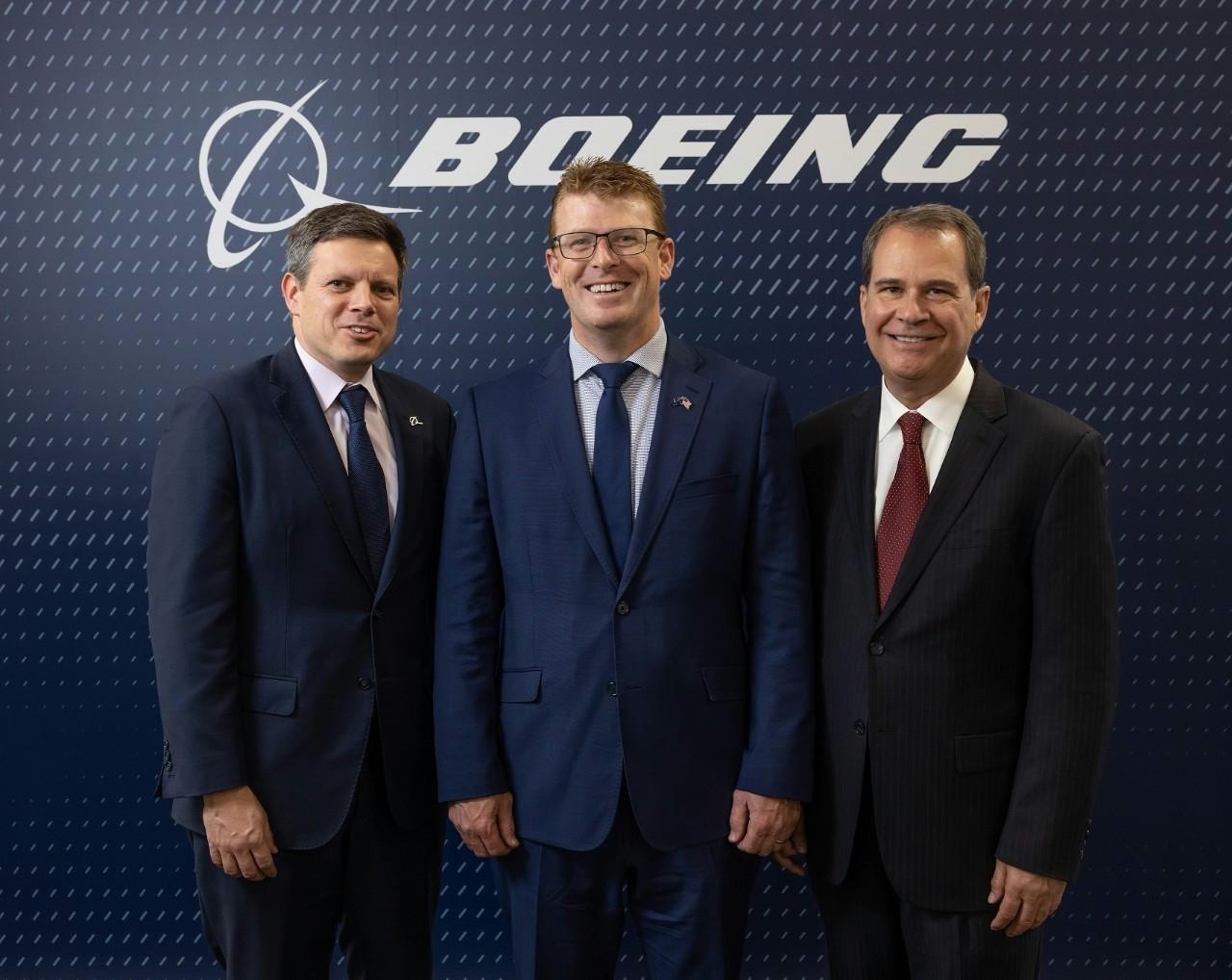
Boeing has awarded a new contract to Australian manufacturer AW Bell to supply castings for its 737 and 777 aircraft programs, reinforcing its collaboration with local suppliers through the Australian Government’s Global Supply Chain Program. The agreement also includes components for commercial derivatives such as the P-8 Poseidon maritime patrol aircraft. This partnership is anticipated to support high-technology employment and generate new export opportunities for Australian small and medium-sized enterprises (SMEs).

Strengthening Australian Industry Ties

Amy List, managing director of Boeing Defence Australia, emphasized the significance of the partnership with the Australian Government in creating substantial export opportunities for Australian companies. She highlighted that many of these companies are SMEs, which are becoming integral parts of Boeing’s global operations. List also noted the recent delivery of Australia’s thirteenth P-8 Poseidon aircraft, underscoring the ongoing collaboration between Boeing and the Australian aerospace sector.

Since joining the Global Supply Chain Program in 2007, Boeing has issued more than 1,700 bid opportunities and awarded over AU$967 million in export contracts to 105 Australian suppliers. The company is on course to exceed AU$1 billion in awarded export contracts, supporting not only commercial aircraft and defence products but also space systems, research and development, and Boeing’s Australia-based businesses.

Sam Bell, CEO of AW Bell, expressed pride in the partnership, stating that the contract to supply titanium and aluminium components for Boeing’s 737, 767, and 777 aircraft reflects the strength, innovation, and global competitiveness of Australian manufacturing. He described the agreement as the foundation of a trusted, long-term relationship between AW Bell and Boeing Commercial Airplanes (BCA).

Navigating Industry Challenges and Strategic Developments

The contract arrives at a critical juncture for Boeing, which is currently contending with several significant challenges. Over 3,200 Boeing employees remain on strike, with a union vote on a revised contract offer scheduled for October 26. This labour dispute compounds recent setbacks, including a nearly $5 billion charge related to delays in the 777X program, which has postponed the aircraft’s first delivery to 2027. These developments have attracted close scrutiny from investors and market analysts, who are monitoring Boeing’s capacity to maintain supply chain stability and meet production targets.

In parallel, the competitive landscape is evolving. AW Bell is reportedly engaged in discussions with Ukrainian government agencies concerning a potential Foreign Military Sale of AH-1Z and UH-1Y helicopters, indicating broader ambitions within the defence sector. Additionally, Boeing’s recent acquisition of Spirit AeroSystems has received approval from European competition regulators following the divestment of Airbus-related activities. This move is expected to further streamline Boeing’s global supply chain.

Boeing’s continued collaboration with Australian industry, as exemplified by the AW Bell contract, underscores the company’s commitment to international partnerships amid internal and external pressures. The outcome of the forthcoming labour vote and Boeing’s response to production delays will be closely observed as the company seeks to reinforce its position in the global aerospace market.

More news
FlyOnE Launches Air-Taxi Service to Rottnest Island

FlyOnE Launches Air-Taxi Service to Rottnest Island

FlyOnE Launches Air-Taxi Service to Rottnest Island FlyOnE is revolutionizing travel to Rottnest Island with the introduction of its new air-taxi service, providing a faster, quieter, and more luxurious alternative to the traditional ferry routes. As Australia’s leading electric aircraft provider, FlyOnE aims to address the increasing demand for flexible and efficient transportation to one of the nation’s most iconic destinations. A New Era in Travel to Rottnest Island For many years, ferries have served as the primary mode of transport to Rottnest Island, often resulting in crowded terminals, fixed schedules, and lengthy travel times, particularly during peak periods. FlyOnE’s air-taxi service directly confronts these challenges by reducing the flight time from Perth to Rottnest to just 12 minutes, a substantial improvement over the typical hour-long ferry journey. This expedited service enables passengers to maximize their time on the island while enjoying the comfort and convenience of private air travel. Unlike conventional ferry services, FlyOnE operates its air-taxi on a private charter basis. This approach allows individuals and small groups exclusive use of the aircraft, with the flexibility to select departure times tailored to their personal schedules. The result is a more personalized and hassle-free travel experience, free from crowded terminals and long queues. This combination of flexibility and exclusivity is particularly attractive to travelers seeking convenience and privacy. Challenges and Industry Context FlyOnE’s expansion into air-taxi services comes amid a complex landscape marked by regulatory challenges, safety considerations, and technological constraints inherent in the evolving electric aviation sector. While some investors express optimism about the future of advanced air mobility, others remain cautious given the industry’s nascent stage. The competitive environment is intensifying, with global companies such as Joby Aviation advancing their own electric vertical takeoff and landing (eVTOL) services. Notably, Joby has secured agreements with Dubai’s Roads and Transport Authority to commence air taxi operations in 2026. The broader electric aviation market is developing rapidly. Firms like Smartflyer are targeting the inaugural flight of their SF-1 electric aircraft in 2026, while platforms such as FL3XX have processed over $1 billion in operator revenue within just 18 months. As the sector matures, both established and emerging competitors are likely to accelerate their eVTOL deployments in response to FlyOnE’s initiatives. Despite these uncertainties, FlyOnE’s launch of its air-taxi service to Rottnest Island represents a significant advancement in regional travel. By offering a faster, more flexible, and premium alternative to ferry transport, the company is setting a new benchmark for how residents and visitors experience one of Western Australia’s most cherished destinations.
U.S. Plans to Resume Civil Supersonic Flights with Industry Support

U.S. Plans to Resume Civil Supersonic Flights with Industry Support

U.S. Moves to Reintroduce Civil Supersonic Flights with Industry Backing The United States is on the verge of a significant shift in aviation policy as lawmakers advance efforts to reestablish civil supersonic flight over domestic airspace. The House Transportation and Infrastructure Committee’s Subcommittee on Aviation has progressed H.R. 3410, known as the “Supersonic Aviation Modernization Act.” This legislation mandates the Federal Aviation Administration (FAA) to formulate regulations that would permit civil supersonic flights, contingent on the condition that no sonic boom is audible on the ground. This legislative initiative, strongly endorsed by the National Business Aviation Association (NBAA), signals a potential revival of supersonic travel in the U.S. for the first time since 1973, when the FAA prohibited such flights due to concerns over the disruptive noise generated by sonic booms. The NBAA, a prominent advocate for business aviation, has expressed support for the bill, emphasizing the prospects for faster, more efficient travel and the importance of sustaining American leadership in the global aviation industry. Balancing Innovation with Public Safety Ed Bolen, President and CEO of the NBAA, characterized the legislation as a prudent approach that harmonizes technological innovation with public safety considerations. He pointed to recent advancements that have significantly diminished the intensity of sonic booms to a near-imperceptible “thump,” thereby reducing disturbances to communities below flight paths. Bolen underscored that legalizing civil supersonic flight represents a vital step toward enabling rapid point-to-point connectivity and fostering transformative progress in aviation technology. Technological Advances and Industry Momentum In recent years, there has been notable progress in the design of supersonic aircraft, particularly in mitigating the impact of sonic booms. NASA’s successful inaugural flight of the Lockheed Martin X-59 QueSST, an experimental aircraft engineered to produce a sonic boom comparable in sound to a car door closing, exemplifies the feasibility of quieter supersonic travel. This milestone could establish a foundation for future commercial supersonic operations. Private sector innovation is also accelerating. Boom Supersonic, a leading manufacturer in the field, is applying its technology not only to aviation but also to support artificial intelligence data centers, generating revenue streams that help finance its supersonic projects. These developments highlight the growing momentum and investment driving the resurgence of supersonic flight. Regulatory and Market Challenges Despite the enthusiasm within the industry, considerable challenges remain. The FAA faces a demanding timeline, as the proposed legislation requires the agency to issue new regulations within one year. Addressing regulatory complexities will be essential to ensure safety, manage noise concerns, and establish clear operational standards for supersonic flights. Market responses are expected to be mixed. While some investors are optimistic about the potential for accelerated travel and emerging business opportunities, others remain cautious due to concerns over noise pollution and environmental impacts. Competitors in the aviation sector are closely monitoring these developments, with some exploring alternative funding strategies and technological collaborations to maintain competitiveness. As the United States moves closer to reinstating civil supersonic flight, the forthcoming months will be pivotal in shaping the regulatory framework and determining the pace and manner in which supersonic travel returns to American skies.
MIT Proposes Method to Reduce Airplane Contrails and Climate Effects

MIT Proposes Method to Reduce Airplane Contrails and Climate Effects

MIT Proposes Method to Reduce Airplane Contrails and Climate Effects Contrails and Their Role in Climate Change High above the Earth, airplanes often leave behind thin white streaks known as contrails, which play a subtle yet significant role in the planet’s climate system. These contrails form when hot exhaust gases from aircraft engines encounter cold, humid air at cruising altitudes, causing water vapor to condense and freeze around microscopic particles. The resulting ice-crystal clouds can persist for hours, trapping heat radiating from the Earth’s surface and thereby contributing to global warming. Research indicates that contrails may be responsible for approximately half of aviation’s total climate impact, underscoring their importance as a target for environmental mitigation efforts. One promising approach to reducing this impact involves rerouting flights to avoid atmospheric conditions conducive to contrail formation. Such a strategy could lower aviation’s climate footprint without necessitating changes to fuel composition or engine design. However, the success of this approach depends heavily on the ability to accurately detect when and where contrails form, a task that relies primarily on satellite observations. Challenges in Contrail Detection Satellite technology plays a crucial role in monitoring contrails, but current systems face significant limitations. Two main types of satellites are employed: geostationary satellites, which remain fixed over a specific region and provide frequent, broad coverage, and low Earth orbit satellites, which orbit closer to the planet and capture higher-resolution images but with less frequent revisits. Each type offers distinct advantages and drawbacks in contrail detection. A recent study conducted by engineers at the Massachusetts Institute of Technology (MIT) analyzed satellite imagery over the contiguous United States from December 2023 to November 2024, comparing data from both satellite types. Their findings revealed a substantial detection gap: geostationary satellites failed to identify approximately 80 percent of contrails that were visible to low Earth orbit satellites. This discrepancy indicates that many contrails remain unrecorded, complicating efforts to monitor and mitigate their climate effects effectively. Industry and Research Initiatives The limitations in current contrail detection capabilities have prompted increased attention within the aviation industry and research community. Airlines and aviation companies are exploring investments in enhanced satellite technologies to meet emerging climate regulations aimed at reducing contrail-induced warming. Concurrently, alternative mitigation strategies are under development, including the use of exhaust additives designed to shorten the lifespan of contrails—a concept recently proposed by a U.S.-based researcher. Collaborative efforts such as the A4CLIMATE initiative are also underway, investigating a broad spectrum of solutions ranging from optimized flight routing to the advancement of engine technologies. These initiatives seek to minimize both the formation and persistence of contrails, thereby reducing their overall climate impact. Future Prospects MIT’s research underscores the critical importance of improving contrail detection as part of broader efforts to address aviation’s contribution to climate change. As satellite monitoring techniques advance and airlines consider new operational and technological strategies, the industry confronts a complex array of technical and market challenges. Nevertheless, coordinated innovation and collaboration offer a pathway toward significantly reducing the climate effects associated with airplane contrails.
The Boeing 747-8: Why It’s Rare on U.S. Routes and How to Experience It Abroad

The Boeing 747-8: Why It’s Rare on U.S. Routes and How to Experience It Abroad

The Boeing 747-8: Why It’s Rare on U.S. Routes and How to Experience It Abroad The Boeing 747-8, often hailed as the “Queen of the Skies,” stands as one of aviation’s most iconic aircraft, renowned for its distinctive upper deck and spacious long-haul comfort. Despite its legendary status, the 747-8 has become increasingly rare on domestic routes within the United States. Understanding the factors behind its diminished presence can assist aviation enthusiasts in planning journeys to experience this jumbo jet beyond American borders. Decline of the 747-8 in U.S. Commercial Aviation U.S. airlines have largely retired the 747-8 in favor of more economical and versatile aircraft. The four-engine design of the 747-8 results in significantly higher fuel consumption compared to modern twin-engine jets, rendering it less competitive on shorter domestic flights where operational efficiency is critical. Additionally, regulatory agencies such as the Federal Aviation Administration (FAA) have intensified their focus on reducing emissions and promoting sustainable aviation practices. This regulatory environment has encouraged carriers to transition to newer, more environmentally friendly models like the Boeing 787 and Airbus A350. Market reception to the 747-8 has been mixed. While some international airlines, notably Lufthansa, continue to operate the aircraft on select long-haul routes, many carriers have opted to phase out their 747-8 fleets. The emergence of more fuel-efficient widebody jets from competitors has accelerated the decline of large, four-engine aircraft in commercial service. Operational Challenges and Airport Constraints The considerable size of the 747-8 imposes logistical limitations. Not all airports possess the infrastructure—such as specialized gates and extended runways—necessary to accommodate the aircraft, restricting the number of viable routes for U.S. airlines. Furthermore, airlines prioritize operational flexibility, favoring aircraft that can be easily redeployed during schedule disruptions or peak travel periods, a factor that disadvantages the 747-8. Experiencing the 747-8 Today Although the 747-8 is scarce on U.S. domestic flights, it remains in service on select international routes, particularly with carriers in Europe, Asia, and the Middle East. Travelers interested in flying aboard this iconic jet should consult airline schedules and utilize flight tracking tools to identify active 747-8 routes. These flights often provide premium amenities, including spacious seating and access to the upper deck, which is typically reserved for business or first-class passengers. The onboard experience of the 747-8 combines nostalgia with comfort. The upper deck offers a quieter, more private environment, while the aircraft’s double-aisle configuration provides generous space for relaxation. For many passengers, the journey itself becomes a memorable highlight due to the aircraft’s impressive scale and thoughtful design. Environmental Considerations and the 747-8’s Future Environmental concerns increasingly influence airline fleet decisions. Modern twin-engine jets emit fewer carbon emissions per passenger, aligning with global sustainability objectives. Consequently, eco-conscious travelers may prefer these newer aircraft, which balance comfort with a reduced environmental footprint. Despite its diminishing role in commercial aviation, the 747-8 is poised to maintain a significant presence in U.S. government service. The U.S. Air Force plans to acquire two 747-8 aircraft from Lufthansa to serve as the next generation of Air Force One. However, this program has encountered delays, with the first delivery now anticipated in mid-2028. Alternatives and Recommendations for Travelers For those unable to secure a flight on the 747-8, modern widebody jets such as the Boeing 787, Airbus A350, and Boeing 777 offer comparable comfort and advanced features. To increase the likelihood of flying on a 747-8, travelers are advised to book early due to limited route availability and to verify the aircraft type before purchasing tickets. Additionally, aviation museums and airshows often display retired 747s, providing opportunities for public tours and close-up experiences. While the 747-8’s presence on U.S. routes continues to wane, it remains a sought-after experience for global travelers willing to seek it out on international flights.
Why Aircraft Engines Lack Screens or Grills

Why Aircraft Engines Lack Screens or Grills

Why Aircraft Engines Lack Screens or Grills The absence of protective screens or grills on commercial aircraft engines may appear counterintuitive given the clear risks posed by birds, debris, and other foreign objects. However, this design choice is the result of careful consideration of safety, aerodynamic efficiency, and operational practicality within the aviation industry. Prioritizing Airflow Efficiency and Engine Safety Modern jet engines, especially high-bypass turbofans, are meticulously engineered to draw in vast quantities of air—often hundreds of kilograms per second—with minimal disruption. Any obstruction, including a seemingly minor grill or screen, would interfere with this delicate airflow, potentially reducing engine efficiency and increasing fuel consumption. More critically, such interference could induce compressor stalls or surges, jeopardizing engine performance and safety. Maintaining unobstructed, laminar airflow is therefore paramount. While foreign object damage (FOD) remains a recognized hazard, jet engines are rigorously certified to withstand bird strikes and small debris without catastrophic failure. Introducing a screen or grill could paradoxically increase risk: upon impact, fragments of the protective structure might break off and be ingested by the engine, causing more severe damage than the original object. This potential for secondary damage has led manufacturers to avoid such protective barriers. Operational and Maintenance Considerations Although permanent screens are absent, temporary protective measures are employed in specific contexts. During ground testing, engines may be fitted with screens, and intake covers are commonly used when aircraft are parked to prevent the ingress of ice, snow, or debris. In environments with high dust or sand concentrations, such as desert operations, helicopters often utilize screens or air particle separators to safeguard their turbines. Weight considerations also play a significant role. Even lightweight protective structures add mass, which negatively impacts fuel efficiency, range, and payload capacity. Over the lifespan of an aircraft, these incremental increases in fuel consumption translate into substantial operational costs and elevated emissions—factors the industry actively seeks to minimize. Maintenance challenges further discourage the use of grills. Jet engines operate under extreme conditions, including rapid temperature fluctuations and exposure to moisture and contaminants. A screen would require frequent inspection and cleaning to prevent blockages caused by ice, dust, or residue. Ice accumulation, in particular, could obstruct airflow or create dangerous imbalances, compromising engine reliability and safety. Industry Challenges and Mitigation Efforts The aviation sector continues to grapple with technical and operational challenges that underscore the importance of design decisions prioritizing efficiency and reliability. Airbus, for instance, is currently managing a software recall affecting approximately 6,000 A320 family aircraft alongside a quality issue involving metal panels on certain models. These developments have prompted notable market reactions, including a decline in Airbus’s stock value. The company is collaborating closely with airline customers and engine supplier Pratt & Whitney to address cold-weather takeoff restrictions. The heavy dependence on the A320 model has also been identified as a risk factor amid fluctuating delivery targets and financial forecasts. Airports contribute significantly to mitigating foreign object damage risks through rigorous runway inspections, debris removal protocols, and comprehensive staff training. These measures help maintain clear runways and taxiways, reducing the likelihood of engine ingestion incidents. The deliberate omission of screens or grills on commercial jet engines reflects a nuanced balance of aerodynamic performance, safety imperatives, weight management, and maintenance practicality. This design philosophy remains integral to the continued pursuit of safe and efficient air travel.
Porter Airlines Receives 50th Embraer E195-E2 Aircraft

Porter Airlines Receives 50th Embraer E195-E2 Aircraft

Porter Airlines Marks Fleet Milestone with 50th Embraer E195-E2 Delivery TORONTO — Porter Airlines has received its 50th Embraer E195-E2 aircraft, a milestone that highlights the airline’s rapid fleet expansion and evolving role in North American aviation. Since taking delivery of its first E195-E2 in December 2022, Porter has secured 75 firm orders for the model, along with purchase rights for an additional 25 aircraft. This positions the carrier to potentially operate a fleet of 100 E2 jets in the near future. Expanding Network and Operational Reach The Embraer E195-E2 has been instrumental in Porter’s aggressive network growth strategy, enabling the launch of new routes across Canada, the United States, Mexico, the Caribbean, and Central America. The airline recently introduced 13 leisure destinations, including Cancun, Puerto Vallarta, Nassau, Grand Cayman, and Liberia, Costa Rica. These routes operate from major Canadian hubs such as Toronto, Ottawa, Montreal, and Hamilton, reflecting Porter’s commitment to broadening its market presence. Powered by Pratt & Whitney GTF engines, the 132-seat E195-E2 delivers up to 29% lower fuel consumption compared to first-generation E-Jets, while offering a range of 3,000 nautical miles. This extended range allows Porter to operate nonstop flights on longer sectors, such as Toronto to Liberia, Costa Rica, pushing the operational limits of the aircraft in a manner comparable to JetBlue’s use of the Airbus A220 on transcontinental routes. Enhancing Passenger Experience and Market Position Porter’s fleet strategy emphasizes not only expansion but also an elevated passenger experience. The airline configures its E195-E2 aircraft with a two-by-two seating arrangement, eliminating middle seats to enhance comfort. Complementing this layout, Porter offers complimentary Wi-Fi, premium snacks, and beer and wine served in glassware, underscoring its focus on premium service. This approach aligns Porter with carriers such as KLM Cityhopper and LATAM Airlines Group, which are similarly investing in fleet modernization and upgraded onboard amenities to attract discerning travelers. As Porter continues to grow its E2 fleet, it faces both opportunities and challenges. The airline’s venture into longer-haul markets tests the aircraft’s range and operational efficiency, while intensifying competition with established North American carriers. Nevertheless, by prioritizing fuel-efficient, right-sized narrow-body jets and a differentiated onboard product, Porter aims to establish a distinctive position within a competitive landscape. The delivery of the 50th Embraer E195-E2 represents a significant step in Porter Airlines’ ambition to become a major force in North American aviation, leveraging modern aircraft and enhanced passenger services to fuel its ongoing expansion.
How Aircraft Engines Use Reverse Thrust During Landing

How Aircraft Engines Use Reverse Thrust During Landing

How Aircraft Engines Use Reverse Thrust During Landing From the moment an aircraft’s wheels touch down, passengers often witness a distinctive change: engine nacelles slide open, and the engines emit a deeper roar as the plane decelerates rapidly. This marks the activation of thrust reversers, a crucial system that enhances safety and efficiency during landing. The Role of Reverse Thrust in Safe Deceleration Jet engines are designed to deliver optimal power and efficiency throughout all flight phases, including the critical moments after touchdown. At landing speeds typically ranging from 125 to 145 knots, aircraft rely on multiple systems to slow down. While spoilers deploy and wheel brakes engage, reverse thrust provides a significant portion of the deceleration force in the initial seconds after landing. At higher speeds, thrust reversers can contribute up to 40% of the total braking effort, which helps conserve runway length and reduces brake wear. Pilots generally disengage reverse thrust once the aircraft slows to around 60 to 70 knots, although in emergency situations or rejected takeoffs, full reverse thrust is essential to prevent runway overruns. Mechanisms Behind Thrust Reversers The visible opening of engine panels during landing is more than a dramatic spectacle. Most modern jet engines employ a cascade thrust reverser system. In this design, the outer engine cowl slides backward to reveal cascade vanes, while blocker doors pivot into the bypass duct to redirect airflow forward. This process channels the cool bypass air in the opposite direction of travel, generating a powerful braking force. Importantly, only the bypass airflow is reversed; the hot core exhaust continues to flow rearward. This characteristic makes high-bypass engines—those with bypass ratios between 5:1 and 12:1—particularly effective at producing reverse thrust without risking engine damage. Different aircraft utilize alternative systems. Turboprop planes, such as the ATR series, reverse thrust by twisting their propeller blades to redirect airflow, providing strong braking without moving engine nacelles. Older jet models sometimes use clamshell doors at the rear of the engine to redirect exhaust forward, though this method has largely been supplanted by more efficient cascade systems. Technological Challenges and Industry Innovations The use of reverse thrust demands precise control to avoid structural damage and passenger discomfort. This requirement has driven significant advancements in engine design and thrust reverser technology. Leading manufacturers like Honeywell and GE Aerospace have introduced innovative systems that enhance both safety and operational efficiency. The positive reception of these innovations has intensified competition within the aerospace industry. Rolls-Royce is advancing its AE 110F engine for the U.S. Future Long-Range Assault Aircraft (FLRAA) program, while Pratt & Whitney is developing new engine designs focused on improved performance and sustainability. As the global commercial fleet grows and the industry increasingly prioritizes greener propulsion technologies, reverse thrust systems continue to evolve, balancing operational demands with environmental considerations. Importance in Challenging Landing Conditions Reverse thrust is particularly valuable in demanding environments, such as the United Kingdom’s frequently damp, short, and crosswind-affected runways. Depending on the aircraft type, the use of reverse thrust can reduce landing distances by 300 to 700 meters, a critical advantage at airports like London City where runway length and weather conditions pose operational challenges. Reverse thrust remains a sophisticated and evolving technology that plays an indispensable role in modern aviation, ensuring safe landings, enhancing operational efficiency, and driving continuous innovation in aircraft engine design.
AI-Powered Air Traffic Control Integrated into Home Flight Simulators

AI-Powered Air Traffic Control Integrated into Home Flight Simulators

AI-Powered Air Traffic Control Integrated into Home Flight Simulators Last year, Microsoft unveiled its latest iteration of the renowned flight simulation software, Microsoft Flight Simulator 2024 (MSFS2024), at a media event near the Grand Canyon National Park Airport (KGCN) in Arizona. Building on the success of Microsoft Flight Simulator 2020, which attracted over 15 million unique users within five years, MSFS2024 arrives with considerable anticipation from the global flight simulation community. Immersive Launch Experience and Technological Advancements The launch event brought together a diverse assembly of content creators, journalists, and industry experts from around the world. Microsoft curated a series of immersive activities, including a sunrise tour along the Grand Canyon’s southern rim and a helicopter flight over the iconic landscape. These experiences allowed attendees to directly compare the real-world environment with its digital recreation in MSFS2024. Cirrus Aircraft contributed to the event by providing flights in the Vision Jet G2+, lending further authenticity and industry relevance. A standout feature of MSFS2024 is the integration of an advanced AI-powered air traffic control (ATC) system. Utilizing satellite data, high-resolution aerial imagery, photogrammetry, and machine learning, the development team has achieved an unprecedented level of detail in replicating complex terrains such as the Grand Canyon. The AI-driven ATC system is designed to simulate real-world airspace management and communication, significantly enhancing the realism of home flight simulation. Challenges and Industry Implications Despite its promise, the incorporation of AI-powered ATC into consumer flight simulators presents significant challenges. Ensuring the system’s reliability and safety is critical, as users demand seamless and accurate air traffic management. Regulatory compliance remains a complex issue, with aviation authorities closely scrutinizing the deployment of AI technologies in both simulated and operational contexts. Additionally, concerns have been raised about the potential impact on traditional air traffic controllers, especially amid ongoing staffing shortages and the Federal Aviation Administration’s recent admission of difficulties in maintaining full staffing levels under current frameworks. Reactions within the market have been mixed. While many flight simulation enthusiasts embrace the innovation, some traditional aviation sectors and regulatory bodies remain cautious about the technology’s maturity and its long-term effects. Competitors in the simulation and aviation technology space are responding by developing their own AI-driven solutions or forming strategic partnerships with specialized firms to remain competitive with Microsoft’s advancements. Following the launch, the opportunity to replicate a flight between Flagstaff (KFLG) and Grand Canyon Airport (KGCN) from a home simulator underscored the transformative potential of AI-enhanced ATC. Although updates to the software have been awaited, the promise of a more immersive and authentic air traffic control experience highlights a significant evolution for both flight simulation enthusiasts and the broader aviation industry. As MSFS2024 approaches its official release, its AI-powered air traffic control system stands as a notable technical achievement and a catalyst for ongoing discussions about the future of air traffic management in both virtual and real-world skies.
Autonomous Flying Taxis Prepare to Enter U.S. Airspace

Autonomous Flying Taxis Prepare to Enter U.S. Airspace

Autonomous Flying Taxis Set to Enter U.S. Airspace Electric, autonomous flying taxis are on the verge of revolutionizing transportation across the United States. Industry leaders anticipate that these quiet, pilotless aircraft will soon ferry passengers and cargo through both urban centers and rural areas. Known as advanced air mobility (AAM) vehicles, these aircraft are capable of vertical takeoff and landing, and are rapidly transitioning from conceptual designs to operational models as companies and regulators work to integrate them into the national airspace system. Industry Developments and Global Competition Kyle Clark, CEO of Vermont-based Beta Technologies, emphasized the reality of this technological shift during a recent congressional hearing, stating, “Aviation is moving to all-electric, advanced air mobility.” Beta Technologies is among numerous U.S. firms, including Archer and Joby, competing to develop and deploy electric, self-flying vehicles. This domestic competition is further intensified by international players such as China’s EHang, highlighting a global race to dominate the emerging AAM market. Wisk Aero, a Boeing subsidiary headquartered in California, is positioning itself to be the first company to design and manufacture FAA-certified, pilotless passenger air taxis. Tyler Painter, Wisk’s Chief Financial Officer, described autonomy not as a radical innovation but as a natural evolution of existing aviation technologies during the same congressional session. Regulatory Support and Safety Innovations The Federal Aviation Administration (FAA) and Congress have demonstrated strong support for the advancement of AAM technology. In September, the FAA initiated a pilot program aimed at integrating vertical takeoff and landing aircraft—including unmanned models—into the National Airspace System. This program will oversee the introduction of passenger air taxis, short-runway electric flights, and advanced aircraft designed for medical transport and cargo delivery. The FAA has characterized this initiative as ushering in a “new era of aviation,” introducing “powered lift” as the first new civil aircraft category in nearly five decades. AAM vehicles are typically highly automated and electrically powered, designed specifically for vertical takeoff and landing. The FAA’s pilot program will also assess the enhanced safety features of these aircraft, which utilize advanced sensors, automation, and detect-and-avoid technologies to minimize human error and prevent collisions. Industry experts contend that automation significantly improves safety compared to traditional crewed aircraft. Reliable Robotics, a California-based company, has developed flight control systems that fully automate taxiing, takeoff, flight, and landing procedures. CEO Robert W. Rose highlighted that these technologies aim to eliminate the most common causes of fatal aviation accidents and save lives, with plans to expand remotely piloted air cargo operations to small towns and rural communities. Challenges and Market Outlook Despite rapid advancements, several challenges remain before autonomous flying taxis can achieve widespread adoption. Regulatory complexities, safety concerns, and technological limitations must be addressed. The previous administration introduced a new regulatory framework designed to accelerate the integration of flying taxis, emphasizing the importance of maintaining competitiveness with China’s progress in this sector. Market reactions to these developments are mixed. While some investors express optimism due to strong government support and high-profile industry partnerships, others remain cautious, pointing to the difficulties of certification processes and public acceptance. As competition intensifies, the effort to bring autonomous flying taxis into U.S. airspace is entering a pivotal stage that could fundamentally reshape the future of transportation.
Aviation Ministry Approves Two New Indian Airlines Following IndiGo Crisis

Aviation Ministry Approves Two New Indian Airlines Following IndiGo Crisis

Aviation Ministry Approves Two New Indian Airlines Following IndiGo Crisis Government Endorses New Carriers to Enhance Competition India’s Ministry of Civil Aviation has granted initial approval to two new airlines, Al Hind Air and Fly Express, in a strategic move to strengthen competition within the domestic aviation sector. This decision follows a recent operational crisis at IndiGo, the country’s dominant carrier, which exposed vulnerabilities in the market due to its overwhelming share and operational challenges. Minister Ram Mohan Naidu announced that both airlines received their “no-objection certificates” (NOCs) this week, signaling the government’s intent to diversify the aviation landscape. The announcement came amid widespread disruptions caused by IndiGo’s cancellation of approximately 4,500 flights earlier this month, an event that left thousands of passengers stranded and intensified scrutiny over the risks associated with limited competition in one of the world’s fastest-growing aviation markets. Naidu also noted that Uttar Pradesh-based Shankh Air, which had previously secured its NOC, is expected to commence operations in 2026. New Entrants and Market Dynamics Al Hind Air, backed by the Kerala-based alhind Group, plans to focus on regional operations in southern India, deploying a fleet of ATR turboprop aircraft while currently pursuing its Air Operator Certificate. Fly Express is anticipated to target underserved routes, aiming to fill gaps left by existing carriers. These new entrants are poised to challenge the market dominance of IndiGo, which currently controls around 65% of domestic air travel. The Indian aviation sector is already competitive, with established players such as the Air India Group holding a 27% market share, alongside Akasa Air, SpiceJet, Star Air, Fly91, and IndiaOne Air. Industry experts caution that while the arrival of new airlines may drive down fares and improve service quality, these carriers will face significant challenges. Operational complexities, regulatory compliance, and the need to build brand recognition in a crowded market will test their resilience. Established competitors are likely to respond with aggressive pricing strategies and enhanced customer service to maintain their market positions. Challenges Highlighted by the IndiGo Crisis The recent IndiGo disruptions brought to light critical issues such as pilot fatigue and the necessity for stringent regulatory oversight. These challenges underscore the importance of robust operational management, which new entrants must prioritize to avoid similar setbacks. The crisis has also intensified calls for regulatory reforms to ensure greater stability and reliability across the sector. Since 2020, India has issued permits to six new air operators, including several regional carriers, as part of a broader effort to diversify and strengthen the aviation industry. The Directorate General of Civil Aviation (DGCA) currently oversees a range of scheduled carriers, including Air India, Air India Express, IndiGo, and the state-owned Alliance Air. As Al Hind Air, Fly Express, and Shankh Air prepare to enter the market, the industry will closely monitor whether increased competition translates into improved service and operational stability or introduces further volatility into India’s dynamic aviation environment.
Ask AeroGenie









