
将人工智能洞察转化为可执行行动

热门趋势
Categories
Boeing Deliveries Rise 69% as Airbus Faces Supply Chain Challenges
Boeing Deliveries Rise 69% Amid Airbus Supply Chain Challenges
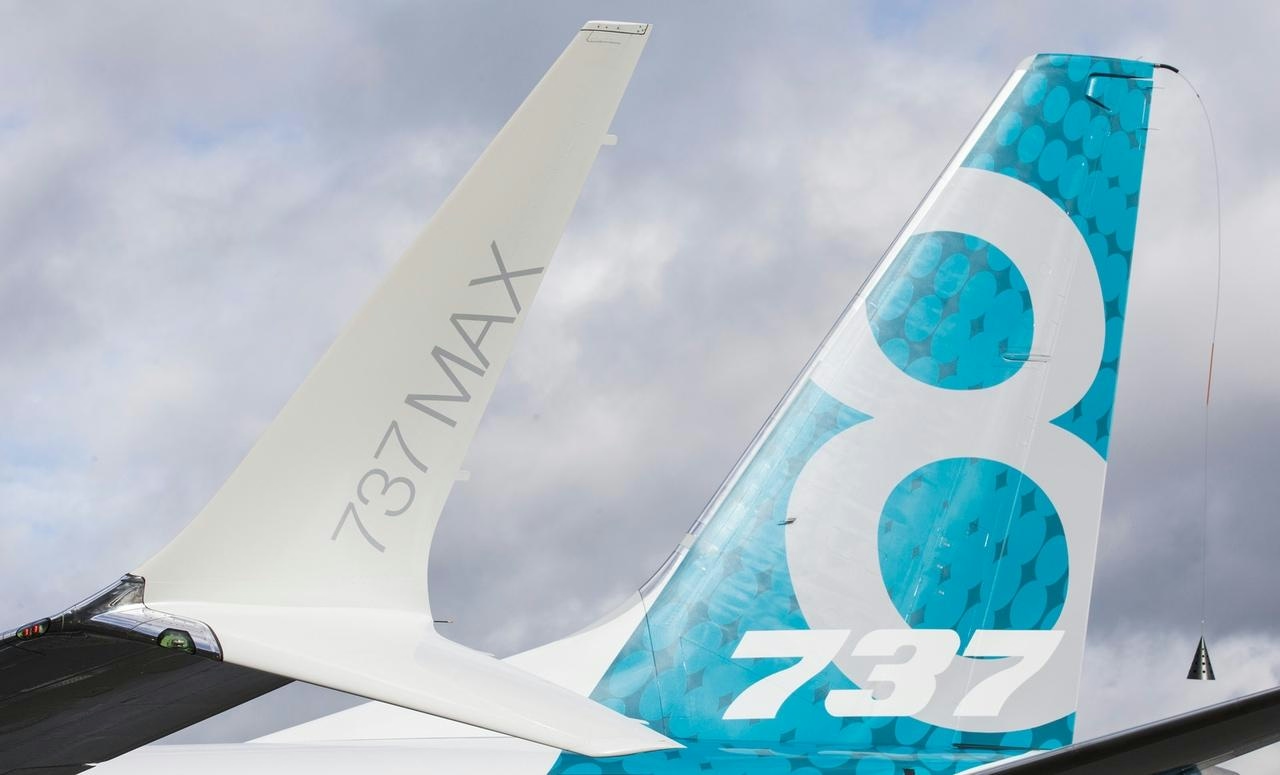
Boeing has demonstrated a remarkable recovery in 2025, with aircraft deliveries increasing by 69% year-on-year. According to data from aviation intelligence platform IBA Insight, Boeing delivered 537 aircraft through the end of November, compared to 318 during the same period last year. This figure also represents a 16% increase over 2023 levels, signaling a significant improvement in the US manufacturer’s production and delivery processes after several years of disruption.
The surge in Boeing’s deliveries is attributed not only to enhanced factory output but also to the company’s efforts to clear parked inventory and expedite the delivery timeline. The average interval from an aircraft’s first flight to final delivery shortened to 37 days in 2025, down from 47 days in 2024. Boeing’s long-term backlog—aircraft delayed for over a year—has been reduced to just 27 units, substantially improving the company’s cash flow. The outlook remains positive, bolstered by the US Federal Aviation Administration’s recent approval to increase the 737 MAX production rate from 38 to 42 units per month.
Boeing’s strong performance has been further supported by robust demand for its 787 model and the advantageous timing of certain orders amid ongoing trade and tariff negotiations. Reflecting investor confidence, Boeing’s shares closed at $204.38, marking a 1.2% increase week-over-week.
Airbus Faces Delivery Setbacks as Industry Production Stabilizes
While Airbus continues to lead in total aircraft volume, the company has been compelled to lower its 2025 delivery target by 4%, reducing it to 790 jets due to persistent supply chain disruptions. These challenges include shortages of Buyer Furnished Equipment (BFE), engine delays, and fuselage quality issues. Through early December, the France-based manufacturer delivered 662 aircraft, but ongoing bottlenecks have forced a revision of its full-year goal from 820 to 790 units.
Other manufacturers reported mixed results in 2025. Brazilian regional jet maker Embraer improved its output, delivering 66 aircraft compared to 55 in the previous year. Conversely, China’s COMAC and the Franco-Italian turboprop specialist ATR experienced declines, delivering 29 and 18 aircraft respectively, as they struggled to convert large backlogs into active deliveries.
Global aircraft production for 2025 is projected to reach between 1,520 and 1,530 units, aligning with 2014 levels but remaining below the 2018 peak of 1,770 units. Despite ongoing supply chain pressures, industry analysts remain optimistic. IBA Insight notes that while overall production remains below historical highs, disciplined delivery schedules and sustained demand continue to support a firm market outlook across both narrowbody and widebody segments.
Looking ahead, global airlines are forecast to achieve a record net profit of $41 billion in 2026, underscoring the resilience of the aviation sector as manufacturers navigate persistent supply chain challenges.

Etihad Airways Suspends Airbus A380 Flights on Key Route

Aditya Birla Group Seeks Approval for Aircraft Leasing in GIFT City

Qatar Airways Highlights Innovation and Connectivity at Arabian Travel Market 2026

Hong Kong's Five-Year Plan Includes Andrew Fan's Aircraft Parts Processing Hub Proposal

ACIA Aero Leasing Delivers ATR72-600 to Air Nostrum

RTX Appoints Jill Albertelli as Head of Pratt & Whitney

TAT Technologies Joins Beyond Aero Hydrogen Aircraft Program

AURAK Study Highlights Barriers to Air Taxi Adoption in Emerging Economies

Xiamen Air Selects Altitude for 787 Maintenance at Heathrow

Etihad and Swissport Extend Global Partnership
