
图像

将人工智能洞察转化为可执行行动

立即加入 AeroGenie 候补名单!

热门趋势

Categories

Boeing Placed Executive Inside Rolls-Royce Factory to Address 787 Engine Issues
August 17, 2026By ePlane AI
Boeing Placed Executive Inside Rolls-Royce Factory to Address 787 Engine Issues
0
0
Boeing 787 Dreamliner
Rolls-Royce Trent 1000
Engine Durability Issues

Boeing Places Executive Inside Rolls-Royce Factory to Tackle 787 Engine Crisis

Unprecedented Intervention Amid Engine Failures

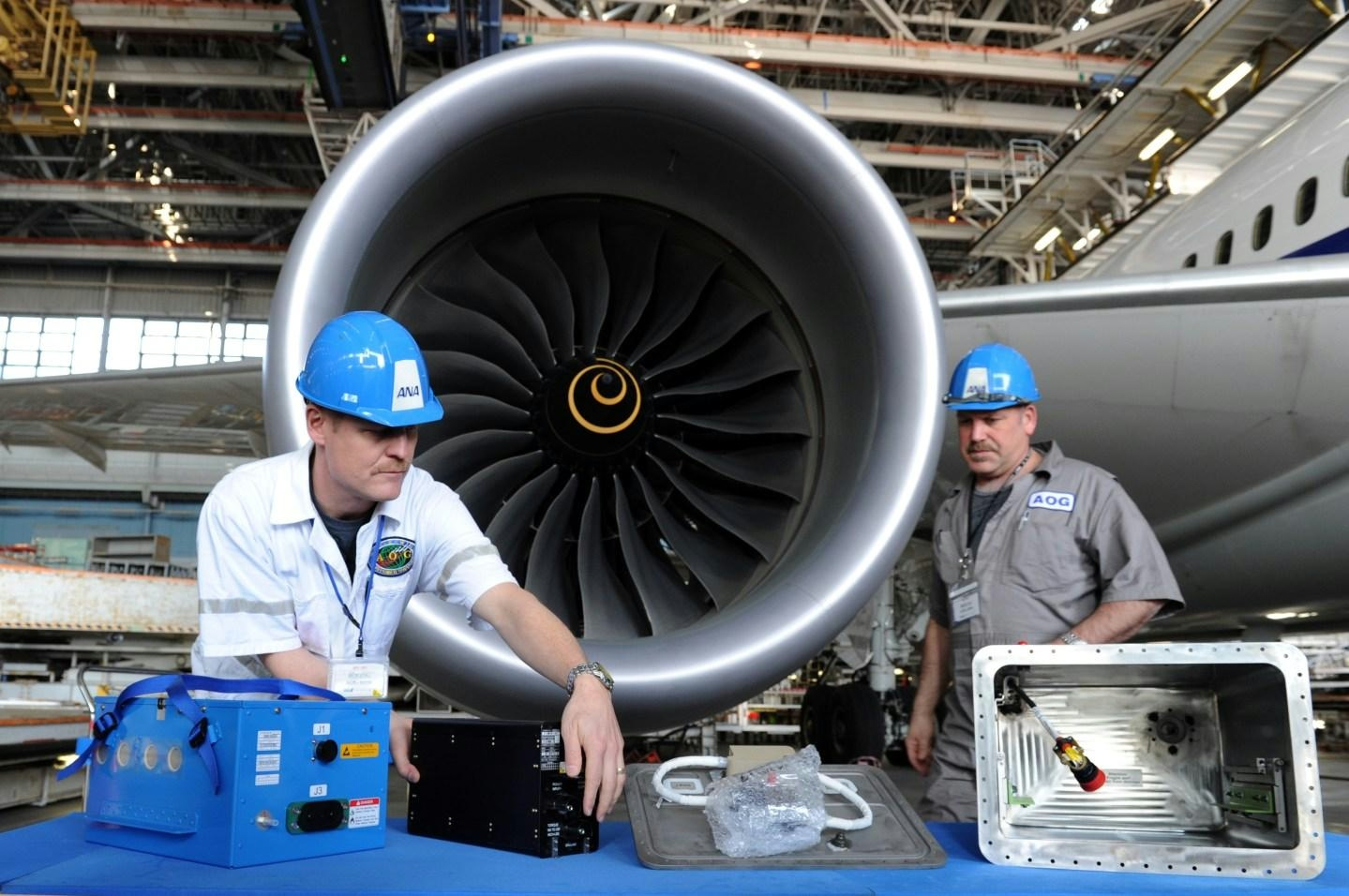
In an unusual and significant departure from industry norms, Boeing has embedded a senior executive—previously the head of the 737 MAX program—directly within Rolls-Royce’s Derby manufacturing facility. This unprecedented move highlights the gravity of the ongoing crisis affecting the 787 Dreamliner, Boeing’s flagship widebody aircraft. The decision reflects the urgency to address persistent technical failures in the Rolls-Royce Trent 1000 engines that power the aircraft.

The intervention was triggered by a series of inflight engine failures, notably consecutive turbine damage incidents on Air New Zealand flights. Investigations revealed critical durability issues within the engine’s core, specifically severe structural cracking on the intermediate pressure compressor blades. These components were deteriorating at an accelerated rate, raising the risk of uncontained engine shutdowns during long-haul operations. The severity of these defects prompted immediate regulatory and operational responses worldwide.

Operational and Regulatory Impact

The technical problems rapidly escalated into a global operational challenge. Inspections found that nearly 30 percent of the engines examined exhibited blade cracking severe enough to necessitate immediate removal from service. The scale of the issue required a comprehensive retrofit program involving 383 engines, with repair timelines extending up to four years. Airlines faced increasing engine removals, overwhelmed maintenance facilities, and significant disruptions to flight schedules.

In response, aviation safety authorities imposed stringent operational restrictions. Inspection intervals were drastically shortened, and the 787’s ETOPS (Extended-range Twin-engine Operational Performance Standards) rating was downgraded from 330 minutes to 140 minutes. This reduction forced airlines to reroute transoceanic flights, eroding the Dreamliner’s competitive advantage by turning profitable routes into costly detours.

Strategic and Market Implications

Boeing’s decision to station an executive within Rolls-Royce’s operations serves both as a crisis management measure and a strategic effort to regain control over the repair process. With approximately one-quarter of the global 787 fleet affected, Boeing aims to accelerate repair schedules, enhance quality oversight, and restore confidence among its airline customers. This approach underscores the complexities of managing large-scale technical failures within a highly integrated aerospace supply chain.

Market reactions have been varied. Some analysts commend Boeing’s proactive stance as essential to stabilizing production timelines and reassuring operators. Conversely, others interpret the move as indicative of deeper systemic challenges in Boeing’s supply chain coordination and partner management. The situation continues to attract close regulatory scrutiny, particularly from the Federal Aviation Administration (FAA), as ongoing engine safety concerns weigh on Boeing’s reputation and financial performance.

Competitors and industry observers remain attentive to developments, recognizing the critical importance of the 787 program to Boeing’s commercial success. The outcome of Boeing’s embedded oversight at Rolls-Royce will be pivotal in determining the company’s operational recovery and its position within the global aviation market.

More news
AAR Expands Maintenance Facility at Miami International Airport
AAR Expands Maintenance Facility at Miami International Airport

AAR Expands Maintenance Facility at Miami International Airport Miami International Airport (MIA), recognized as the busiest U.S. airport for international freight and the second busiest for international passengers, is poised to benefit from a substantial expansion by AAR, a prominent aviation services provider. This development forms part of MIA’s ambitious $14 billion program dedicated to capital improvements and maintenance upgrades aimed at enhancing the airport’s infrastructure and operational capacity. Economic Impact and Job Creation The enlargement of AAR’s maintenance facility is projected to generate 200 new full-time positions, offering a significant boost to the local economy. This expansion underscores MIA’s vital role as an economic driver for Miami-Dade County and the state of Florida. Currently, the airport supports $212 billion in business revenue and accommodates nearly 60 percent of all international visitors to Florida annually, highlighting its importance as a gateway for global travel and commerce. Challenges and Competitive Landscape Despite the promising outlook, AAR faces considerable challenges in executing the expansion. The high costs associated with facility growth, coupled with the necessity to comply with rigorous regulatory standards, present potential obstacles. Furthermore, the expansion is expected to intensify competition among maintenance providers in the region, potentially prompting strategic responses from rivals aiming to protect or expand their market share. Strategic Importance of MIA MIA maintains its position as the leading U.S. airport for flights to Latin America and the Caribbean, reinforcing its status as a critical hub for international travel and trade. The ongoing capital improvements, including AAR’s facility expansion, are anticipated to enhance the airport’s capacity and service quality, benefiting both passenger and cargo operations. Accessibility Information To ensure inclusive participation in Miami-Dade Aviation Department (MDAD) public meetings and events, accommodations such as materials in accessible formats, sign language interpreters, and CART services are available upon request. Requests should be submitted at least five days in advance by contacting the ADA Office via email at ADAcoordinator@miami-airport.com or by phone at 305-869-1859. Individuals who are deaf or hard of hearing may also access services through the Florida Relay Service by dialing 711.
Can Archer Aviation Transform Urban Air Mobility With Boeing’s Support?

Can Archer Aviation Transform Urban Air Mobility With Boeing’s Support?

Can Archer Aviation Transform Urban Air Mobility With Boeing’s Support? Archer Aviation Inc. (NYSE: ACHR) is advancing its position in the urban air mobility sector through a comprehensive new partnership with aerospace leader Boeing. This collaboration, encompassing autonomous aviation, unmanned systems, and next-generation aircraft software, represents a strategic expansion for Archer beyond its primary focus on electric vertical takeoff and landing (eVTOL) passenger aircraft. Strategic Acquisition and Industry Implications A central component of the agreement involves Archer’s planned acquisition of Boeing’s Wisk, Insitu, and SkyGrid businesses, a transaction expected to conclude by the end of 2026, subject to regulatory approval. These acquisitions will provide Archer with significant technological capabilities and extensive flight-test experience, accelerating the development of its flagship Halo and Thunder eVTOL programs. Boeing’s decision to take an equity stake in Archer highlights a growing trend within the aerospace industry, where established manufacturers increasingly collaborate with innovative, software-centric aviation startups rather than pursuing competing technologies independently. Progress in Certification and Technological Innovation Archer has recently demonstrated progress with a piloted flight of its Midnight eVTOL aircraft between two California communities, conducted in coordination with federal aviation regulators as part of its ongoing certification efforts. These point-to-point demonstration flights are critical in proving operational readiness beyond controlled test environments, as the company works toward achieving full civil certification—a milestone yet to be reached by the urban air mobility sector at large. At the core of Archer’s approach is its aviation-focused artificial intelligence platform, Zee, which enhances flight operations and airspace management by predicting aircraft movement patterns. This initiative aligns with a broader industry shift toward software-driven aviation systems. Concurrently, Archer is expanding its manufacturing capabilities to move beyond prototype production and is establishing partnerships to develop essential vertiport infrastructure, charging networks, and passenger facilities necessary for commercial eVTOL services. Market Response and Sector Outlook The market has reacted favorably to Archer’s recent developments, with the company’s stock experiencing a double-digit increase following the announcement of the Boeing partnership. This positive momentum is supported by a broader market environment characterized by easing inflation and a softer dollar, which have buoyed growth-oriented aerospace and technology stocks. Nevertheless, the urban air mobility sector remains capital-intensive and pre-commercial, with regulatory certification and the commencement of commercial passenger flights still pending. The consolidation exemplified by Archer’s acquisition of Boeing’s unmanned and autonomous aviation assets reflects a strategic effort to secure near-term revenue streams while navigating the protracted certification process. Although competitor responses have yet to fully emerge, the industry landscape is clearly evolving as companies position themselves for the eventual deployment of urban air mobility services. As Archer leverages Boeing’s technological assets and support, the company is well-positioned to advance the urban air mobility agenda. However, significant regulatory and operational challenges remain before commercial passenger flights can become a reality. The coming years will be pivotal in determining whether Archer—and the broader sector—can fulfill the promise of transforming urban transportation.
Google Acquires Spirit Airlines Data for AI Research
Google Acquires Spirit Airlines Data for AI Research

Google Acquires Spirit Airlines Data for AI Research Amid Privacy and Antitrust Concerns Google has secured a $10 million agreement to acquire extensive corporate data from Spirit Airlines, the low-cost carrier that filed for bankruptcy earlier this year. The acquisition, revealed through recent Chapter 11 court filings, followed a competitive auction in which Google outbid AI training startup Mercor, whose highest offer stood at $7.5 million. Details of the Acquisition and Data Scope A spokesperson for Google confirmed the purchase, stating that the data "can be helpful in improving our products and AI models." The company clarified that the acquisition includes Spirit Airlines’ internal data and custom software but explicitly excludes customer information and credit card details. The dataset reportedly comprises millions of emails, Microsoft Teams chats, and comprehensive records related to revenue, operations, and employee productivity. Importantly, all personally identifiable information has been rigorously removed to address privacy concerns. This transaction reflects a broader trend among major technology firms, which, having largely exhausted publicly available internet data for AI training, are increasingly turning to proprietary corporate data. Such data is prized for its potential to enhance AI systems’ capabilities in customer service, operational optimization, and software debugging. Industry Implications and Regulatory Scrutiny Google’s acquisition has ignited debate over data privacy and antitrust issues. Market analysts caution that the deal may raise concerns among competitors regarding Google’s strategic positioning in the AI sector. This could prompt rival companies to pursue their own data partnerships or develop alternative strategies to maintain competitiveness in a rapidly evolving market. The auction process itself was notably competitive. Google initially bid $5 million, which Mercor countered with $5.2 million. Mercor also expressed willingness to increase its offer to $7 million contingent upon access to anonymize the raw data first. Ultimately, Google’s $10 million bid prevailed. Spirit Airlines declined to comment beyond the court documents, and Mercor did not respond to requests for comment. The Growing Race for Corporate Data in AI Development The pursuit of high-quality training data has driven tech companies to explore unconventional acquisition methods. Earlier this year, AI startup Micro1 launched a program offering midsize companies between $100,000 and $2 million in exchange for access to anonymized corporate data. Meanwhile, Meta briefly experimented with monitoring employees’ keystrokes and mouse movements to enhance its AI’s interaction capabilities but suspended the initiative following internal backlash and a data exposure incident. As competition intensifies for valuable training data, Google’s latest acquisition highlights both the opportunities and challenges facing technology giants. Regulatory authorities and industry observers are expected to closely monitor how companies balance innovation with data privacy and competitive fairness in this complex landscape.
Engine Failure Forces Alaska Airlines 737 MAX 9 to Divert to O’Hare
Engine Failure Forces Alaska Airlines 737 MAX 9 to Divert to O’Hare

Engine Failure Forces Alaska Airlines 737 MAX 9 to Divert to O’Hare On August 16, 2026, an Alaska Airlines Boeing 737 MAX 9 was compelled to divert to Chicago O’Hare International Airport following an engine shutdown prompted by a low oil-pressure warning. Flight AS274, operating from Cleveland to Seattle, encountered the issue approximately 40 miles southeast of Chicago while cruising at 34,000 feet. The aircraft, registered as N978AK, safely landed on O’Hare’s Runway 27C roughly 35 minutes after the engine was shut down. Incident Details and Crew Response The incident occurred as the aircraft maintained flight level 340. The flight crew detected a low oil-pressure alert in the right-hand CFM International LEAP engine and responded by shutting down the affected engine. Oil pressure is a critical parameter in turbofan engines, as it ensures proper lubrication of moving parts and heat dissipation. A significant drop in oil pressure can indicate a potentially serious malfunction, necessitating immediate engine shutdown to prevent further damage. The crew’s actions underscore the rigorous safety protocols embedded in commercial aviation operations. The 737 MAX 9, equipped with two engines, is engineered to sustain safe flight and controlled diversion even after losing one engine. There were no signs of an uncontrolled emergency or difficulty in maintaining altitude and course. The pilots adhered to established procedures by diverting to the nearest suitable airport. Diversion to Chicago O’Hare and Aftermath Given the aircraft’s proximity to Chicago—approximately 40 miles at the time of the alert—O’Hare was the logical diversion point. Aviation protocols prioritize landing at the closest appropriate airport following an engine failure, regardless of the aircraft’s ability to continue on a single engine. O’Hare’s comprehensive maintenance facilities and airline support infrastructure enabled immediate inspection and investigation of the oil-pressure anomaly. The official incident report did not identify a specific mechanical cause for the low oil pressure, emphasizing that the engine shutdown was a precautionary measure triggered by the warning rather than confirmation of a component failure. Broader Context and Industry Implications This event occurs amid ongoing scrutiny of Boeing’s 737 MAX series, which has faced regulatory reviews and public concern following previous incidents. Such developments can influence market dynamics, as seen in past fluctuations of Boeing’s stock following FAA certification milestones, including the notable surge after the 737 MAX-7’s approval. Competitors may leverage these moments to highlight their own safety records and reliability, aiming to capture market share amid renewed apprehension. Regulatory authorities may also undertake further investigations, potentially impacting Boeing’s production schedules and delivery commitments. As inquiries into this latest incident continue, both Alaska Airlines and Boeing confront intensified pressure to affirm the safety and dependability of their aircraft. A replacement aircraft was dispatched to complete the journey to Seattle, while the affected 737 MAX 9 remained at O’Hare for thorough inspection and maintenance.
Google Acquires Spirit Airlines Data to Enhance AI Capabilities
Google Acquires Spirit Airlines Data to Enhance AI Capabilities

Google Acquires Spirit Airlines Data to Enhance AI Capabilities Acquisition Details and Scope Google LLC has emerged as the winning bidder in a bankruptcy auction for a significant collection of deidentified business data, software code, and operational records from the now-defunct Spirit Aviation Holdings Inc. The acquisition, valued at $10 million and approved by the US Bankruptcy Court for the Southern District of New York, is aimed at bolstering Google’s artificial intelligence (AI) capabilities. The dataset encompasses an extensive range of Spirit Airlines’ enterprise information, including 100 million emails, 500 million Microsoft Teams chats and collaboration records, as well as detailed data on revenue, aircraft operations, employee productivity, audits, and fraud investigations. In addition to operational data, the purchase includes marketing campaign materials, human resources files, strategic planning documents, and project management records. Of particular note are pricing data from 7.2 billion competitor flights and 7.5 billion passenger transaction records dating back to 2008, alongside pricing curve analytics. Google will also acquire approximately 30 million lines of code, development metadata, software models, algorithms, and over 175,000 employee records spanning back to 1986. Privacy Measures and Legal Context Google has emphasized that the acquisition explicitly excludes personal data and privileged materials, such as Spirit’s 97.5 million passenger profiles and 50.2 million records from the Free Spirit loyalty program. According to court filings, all data will undergo rigorous deidentification by a third party to remove personally identifiable information before transfer to Google. In a statement, Google affirmed that the dataset will be used to improve its products and AI models while maintaining a strong commitment to data privacy. Spirit Airlines, headquartered in Florida, ceased operations on May 2 following its second Chapter 11 bankruptcy filing within two years. The airline cited rising fuel costs and unsuccessful financing efforts as key factors leading to its insolvency. At the time of bankruptcy, Spirit carried approximately $8.1 billion in debt and had laid off around 17,000 employees. Recently, the airline received court approval to sell its 22 takeoff and landing slots at New York’s LaGuardia Airport to JetBlue Airways Corp. for $58.5 million. Industry Implications and Regulatory Considerations Google’s winning bid surpassed a $7.5 million offer from AI talent recruiting firm Mercor.io Corp., which remains the backup buyer should the Google deal fail to close. The sale hearing is scheduled for August 19 before Judge Sean Lane. The acquisition has ignited debate within the industry and may attract regulatory scrutiny, particularly concerning data privacy and potential antitrust issues. Market analysts suggest that Google’s move could raise concerns among competitors about the company’s strategic intentions and may accelerate the airline sector’s increasing reliance on cloud-based services. In response, rival firms might pursue their own data partnerships or develop countermeasures in AI to preserve competitive positioning. Legal representation in the case includes Davis Polk & Wardwell LLP for Spirit, Cleary Gottlieb Steen & Hamilton LLP for Google, and Orrick, Herrington & Sutcliffe LLP for Mercor.io. The bankruptcy case is registered as Spirit Aviation Holdings, Bankr. S.D.N.Y., No. 25-11897.
Air Canada Selects 16 Airbus A350-1000s to Replace Aging 777-300ERs Amid Boeing 777X Delays
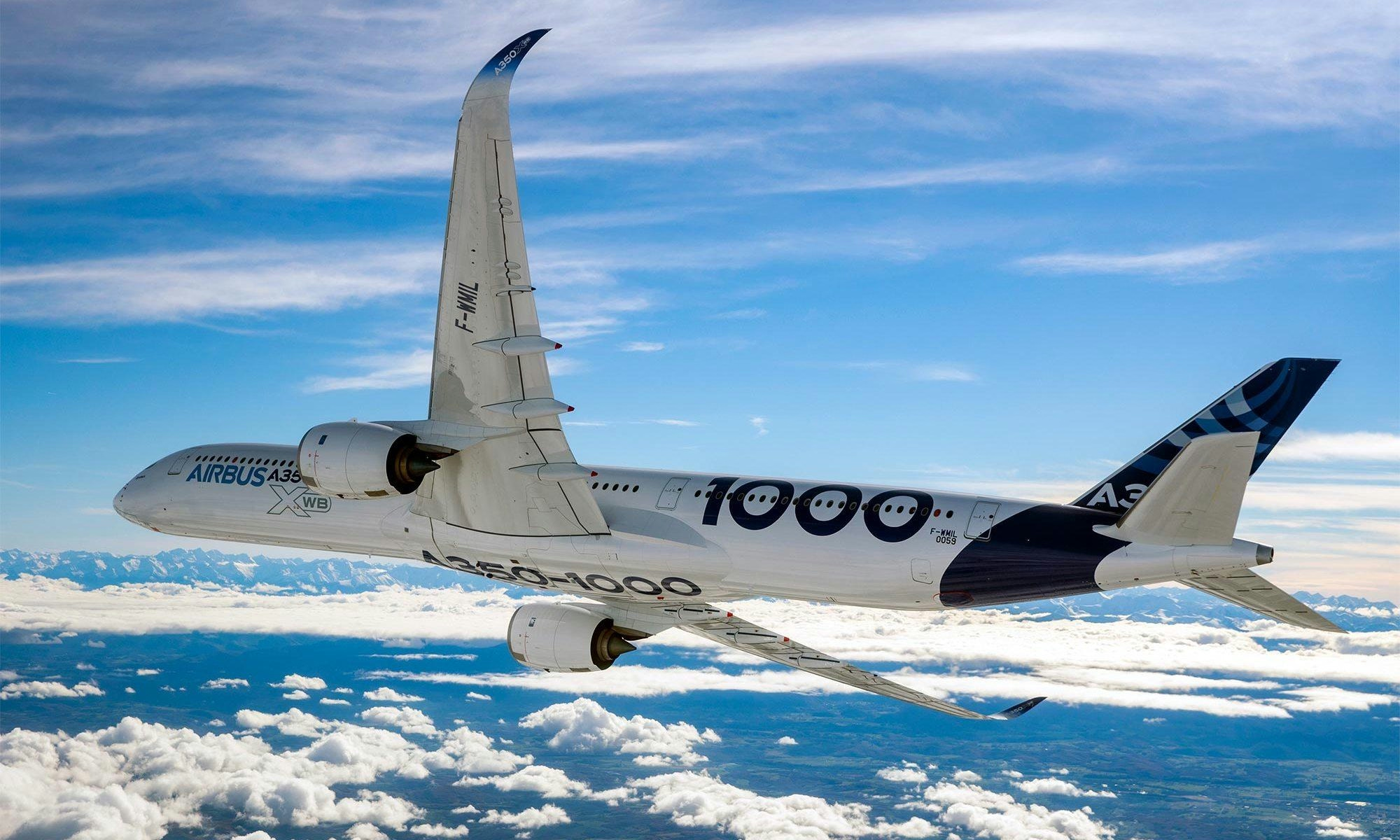
Air Canada Selects 16 Airbus A350-1000s to Replace Aging 777-300ERs Amid Boeing 777X Delays

Air Canada Selects Airbus A350-1000s to Replace Aging Boeing 777-300ERs Amid 777X Delays For nearly twenty years, Air Canada’s long-haul operations have been anchored by the Boeing 777-300ER, a workhorse on transatlantic and transpacific routes departing from Toronto and Vancouver. As this flagship widebody fleet nears retirement, the airline has announced a strategic shift by committing to 16 Airbus A350-1000 aircraft—comprising eight firm orders and purchase rights for an additional eight. This marks a significant departure from Air Canada’s longstanding reliance on Boeing’s twin-aisle jets. Addressing Fleet Aging and Boeing 777X Delays The decision comes amid persistent delays and cost overruns in Boeing’s 777X program, which has pushed initial deliveries to late 2026 or 2027, approximately six to seven years behind the original schedule. Air Canada’s current fleet includes 19 Boeing 777-300ERs averaging over 16 years in service, alongside six older 777-200LRs. Extending the operational life of these aging aluminum airframes would entail escalating maintenance costs and diminishing returns in fuel efficiency and reliability. Meanwhile, international competitors are increasingly adopting lighter, next-generation aircraft, intensifying the financial and operational pressures on carriers maintaining older fleets. Air Canada’s senior leadership, including Executive Vice President and Chief Commercial Officer Mark Galardo and Chief Financial Officer John Di Bert, emphasized delivery certainty and operational efficiency as key priorities in their fleet renewal strategy. The Airbus A350-1000, with its advanced composite materials and fuel-efficient design, offers a modern and reliable solution for the airline’s long-haul requirements. Deliveries are scheduled to commence in the second half of 2030, providing a clear timeline that Boeing has been unable to guarantee. Industry Implications and Market Response This move aligns with broader industry trends, as the Airbus A350-1000 has gained traction as a formidable competitor to the delayed 777X. Other major carriers, such as Korean Air, have also expressed interest in the A350-1000 as an alternative amid Boeing’s setbacks. The aircraft’s strong order book and steady production momentum underscore its growing prominence in long-range and ultra-long-range passenger and cargo operations. Nonetheless, Airbus faces its own challenges, including production ramp-up constraints that may impact delivery schedules as demand surges from airlines seeking fleet modernization. Market reactions to Air Canada’s order reflect a shifting competitive landscape. With the future of the 777X uncertain, the A350-1000 is increasingly regarded as a dependable and technologically advanced option, prompting other airlines to reconsider their fleet strategies. As more carriers pivot toward Airbus, the A350-1000’s role as a cornerstone of next-generation long-haul aviation appears poised to expand. By bypassing Boeing’s delayed program, Air Canada is not only addressing its immediate operational needs but also signaling a broader industry transition toward proven, next-generation aircraft. This decision highlights the critical importance of delivery certainty and technological innovation in an era marked by rapid change and intense competition within global aviation.
UPS Boeing 767 Lands Safely in Denver After Instrument Failure

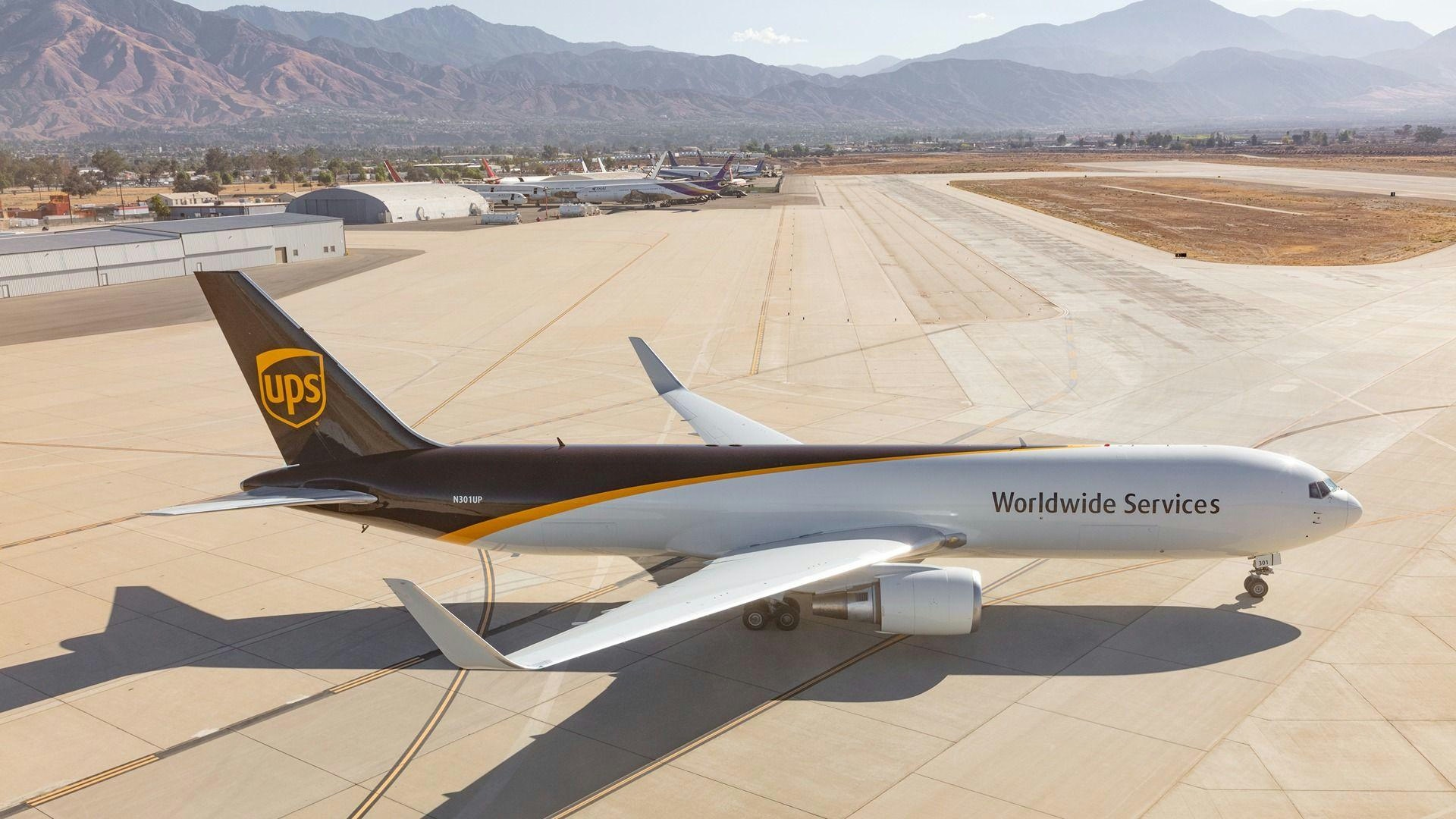
UPS Boeing 767 Lands Safely in Denver After Instrument Failure

UPS Boeing 767 Lands Safely in Denver Following Instrument Failure A UPS Airlines Boeing 767-300 Freighter successfully landed at Denver International Airport after experiencing a complete failure of its primary flight instruments during approach. The incident, which occurred on the evening of August 15, 2026, underscores both the proficiency of the flight crew and raises important considerations for safety within the cargo aviation sector. Incident Overview and Flight Details The aircraft, registered as N312UP, was operating flight 5X5806 from Will Rogers International Airport in Oklahoma City to Denver. Departing at 8:19 PM, the flight arrived at 8:59 PM after following a longer-than-usual routing. As the aircraft neared Denver, all primary display systems—including the Primary Flight Display, Navigation Display, and Engine Indicating and Crew Alerting System—ceased functioning. The pilots were compelled to rely exclusively on standby instruments to guide the aircraft safely to the ground. Despite the loss of critical avionics, the crew managed a controlled landing on runway 35L without incident. Aircraft Status and Operational Context Following the event, the Boeing 767 remains grounded in Denver pending thorough inspection, reflecting the gravity of the instrument failure. Prior to the incident, the aircraft had completed three flights that day, consistent with UPS’s typical operational tempo. Although the 767-300 Freighter is among the older aircraft in UPS’s cargo fleet, it remains one of the newer models within the carrier’s overall inventory, which continues to receive ongoing deliveries. Industry Implications and Safety Considerations This episode highlights the vital importance of human factors, pilot training, and safety protocols in the demanding environment of cargo aviation, where operations run continuously around the clock. The crew’s ability to manage a high-pressure situation without primary flight displays demonstrates the effectiveness of rigorous training, adherence to crew rest policies, and the necessity of robust cross-checking procedures. The incident is likely to prompt increased scrutiny from regulatory authorities and industry stakeholders regarding airline safety standards. It may accelerate efforts to enhance fatigue management and training programs aimed at mitigating risks associated with instrument failures. Competitors within the cargo sector may also respond by emphasizing their safety records and investing in new technologies or operational procedures to improve reliability. Within the broader aviation community, this event is expected to stimulate discussions on strengthening safety culture and operational resilience, potentially leading to industry-wide reforms. Investigation Status UPS Airlines has yet to issue an official statement concerning the incident. The aircraft remains out of service as investigations and inspections continue. Further updates will be provided as additional information becomes available.
SkyMatch Group Expands into eVTOL Air Taxis and Vertical Mobility
SkyMatch Group Expands into eVTOL Air Taxis and Vertical Mobility

SkyMatch Group Expands into eVTOL Air Taxis and Vertical Mobility SkyMatch Group is poised to redefine private aviation by extending its established concierge model beyond helicopters to encompass electric vertical takeoff and landing (eVTOL) air taxis and advanced air mobility services. The company’s vision centers on providing travelers with a seamless, single point of access to a variety of vertical flight options. Currently focused on helicopter services, SkyMatch Group plans to integrate eVTOL air taxis as commercial operations become viable. Strategic Integration of eVTOL Technology This expansion reflects the broader transformation underway in private aviation, driven by emerging aircraft technologies, innovative operational frameworks, and the development of vertiport infrastructure. SkyMatch Group is actively preparing for the integration of eVTOL air taxis by conducting comprehensive market evaluations, planning routes, tracking certification progress, and identifying suitable operators and vertiport partners. The company is also ensuring that its platform is equipped to meet the evolving demands of future passengers. Despite the promising outlook, significant challenges remain. Regulatory approval processes, high development costs, and the establishment of adequate infrastructure continue to pose obstacles. SkyMatch Group has emphasized its commitment to safety and compliance, stating that it will only offer eVTOL services once aircraft are fully certified, operators are licensed, and local aviation regulations and infrastructure are firmly in place. At present, the company does not provide flights on uncertified eVTOL aircraft. Complementary Roles of Helicopters and eVTOL Air Taxis SkyMatch Group envisions eVTOL aircraft as a complement to helicopters rather than a replacement. Helicopters will maintain their role in longer-range missions, servicing remote locations, yacht transfers, executive travel, and airport connections, particularly in areas lacking dedicated eVTOL infrastructure. Conversely, electric air taxis are expected to unlock new opportunities for shorter urban and regional journeys, such as airport-to-city transfers and connections between key business or leisure hubs. The company’s long-term approach prioritizes the journey itself over any specific aircraft type, offering a unified concierge service that simplifies access to a complex and fragmented market. Private helicopter charters are typically localized, with operators serving distinct regions and fleets. The emerging eVTOL sector is anticipated to exhibit similar complexity, with varying aircraft, operators, vertiports, and regulatory environments across cities. SkyMatch Group’s model aims to streamline this landscape, providing travelers and businesses with a single access point to diverse vertical aviation options. Expanding Market Applications and Industry Response SkyMatch Group’s future network is designed to serve both private individuals and corporate clients arranging transportation for executives, employees, and customers. Potential applications include airport-to-city and airport-to-resort transfers, executive and corporate travel, luxury hotel and yacht connections, transportation for major sporting and international events, VIP services, and time-sensitive regional travel. Luxury hotels, concierge firms, yacht managers, travel advisors, and destination management companies stand to benefit from access to both helicopter and eVTOL services through a single relationship with SkyMatch Group. Corporate travel departments may also gain a valuable new option for executive and delegation transport in markets where commercial eVTOL operations are authorized. Industry reaction to SkyMatch Group’s expansion has been largely positive, with forecasts projecting exponential growth in the Advanced Air Mobility (AAM) sector—from billions to tens of billions of dollars over the coming decade. Competitors are responding with increased investments in research and development, alongside strategic partnerships aimed at advancing technology and infrastructure. As SkyMatch Group continues to expand its international helicopter charter network, it is positioning itself at the forefront of next-generation private aviation, prepared to deliver seamless vertical mobility solutions as soon as market conditions and regulatory frameworks permit.
Faster Diagnostics Essential for Aircraft Heavy Maintenance
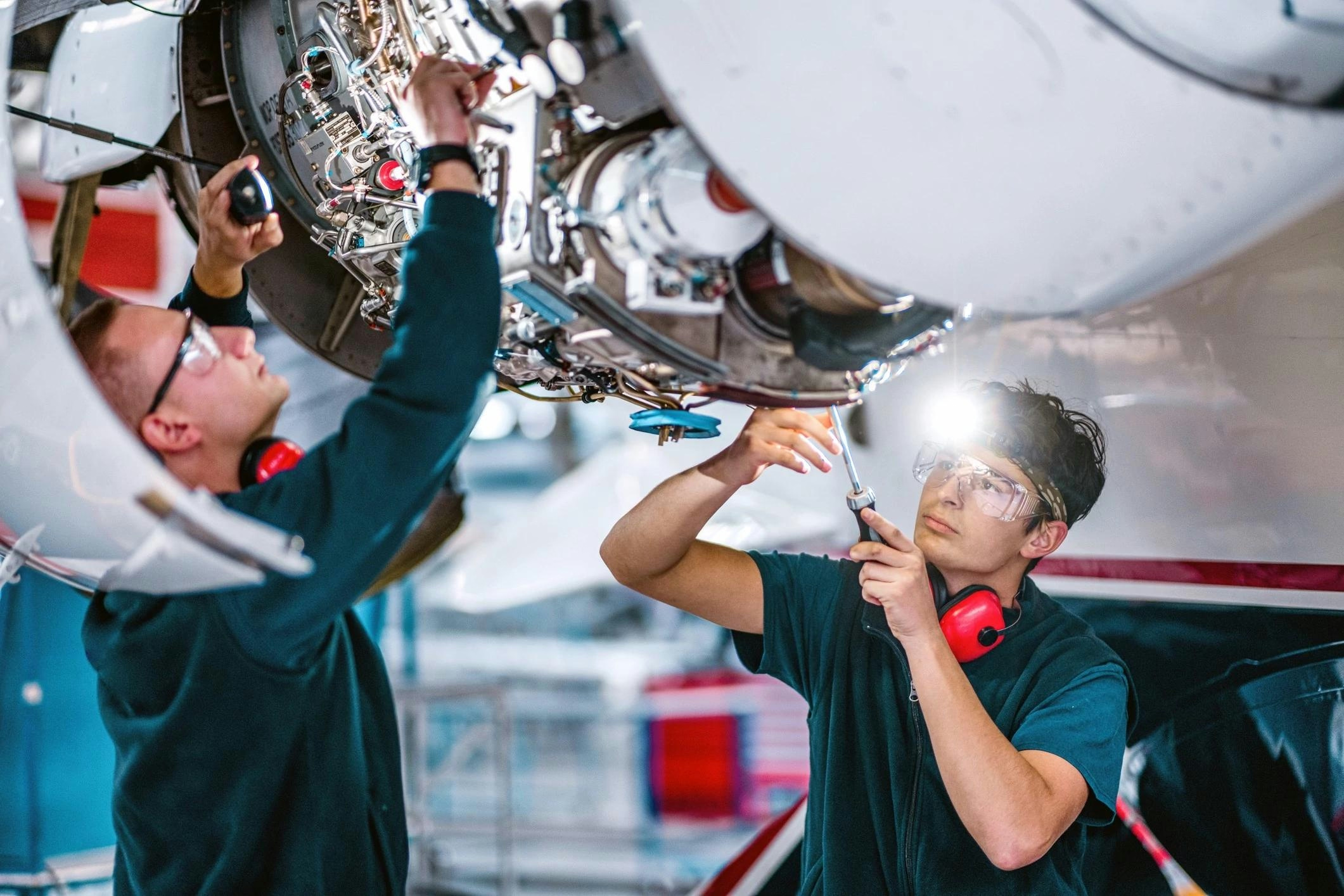
Faster Diagnostics Essential for Aircraft Heavy Maintenance

Faster Diagnostics Essential for Aircraft Heavy Maintenance For airlines, every additional day an aircraft remains grounded during heavy maintenance significantly disrupts operations, schedules, and revenue streams. As maintenance workloads become increasingly complex and turnaround time (TAT) pressures intensify across the aviation sector, maintenance, repair, and overhaul (MRO) providers face escalating demands to complete inspections and repairs more rapidly—without compromising safety or quality standards. The Cost and Complexity of Aircraft Grounding Aviation consultancy IBA estimates that aircraft grounding costs can reach as high as $150,000 per day, depending on the aircraft type and the scale of operational disruption. While planned C and D checks are already among the most costly maintenance events in an aircraft’s lifecycle, unforeseen issues such as unexpected findings, delayed inspections, material shortages, or additional repair requirements can quickly extend downtime and inflate expenses. Juozas Lapeika, chief base maintenance officer at FL Technics, underscores that reducing maintenance downtime depends largely on how swiftly MRO providers can diagnose problems, make informed technical decisions, and complete repairs without unnecessary interruptions. He explains, “Today, airlines are not only looking for maintenance quality—they are looking for predictability and speed. Every unnecessary delay during heavy maintenance creates operational pressure for the customer. That is why investment in inspection and diagnostic capabilities has become a critical part of maintaining predictable turnaround times.” Innovations in Inspection and Diagnostic Techniques Fuel system inspections and repairs represent one of the most time-sensitive aspects of base maintenance. Fuel leaks discovered late in the process—often during final maintenance testing after refueling—can cause significant delays. Addressing such leaks requires draining, ventilating, and drying the tanks before repeating repairs and tests, potentially extending turnaround times by several days. To mitigate this risk, some MRO providers are implementing helium-based fuel leak detection methods earlier in the maintenance cycle, prior to refueling and final testing. This approach allows technicians to identify potential leak points sooner, thereby avoiding repeated maintenance cycles. Lapeika notes, “The biggest advantage is avoiding repeated maintenance cycles. In the past, leaks discovered only after refueling could extend maintenance timelines by several additional days. Earlier detection helps avoid that disruption and, in certain maintenance scenarios, can reduce turnaround time by four to five days.” Structural inspections also play a critical role early in the maintenance process. Radiographic testing is often necessary to detect hidden defects or internal damage. When such capabilities are not available in-house, additional time is lost coordinating equipment, transportation, or external support. Lapeika highlights that “non-routine findings are one of the biggest variables affecting heavy maintenance timelines. The faster you can inspect, assess, and make repair decisions, the better control you maintain over turnaround time.” Challenges and Technological Advances Despite the clear benefits of faster diagnostics, challenges remain. The 2026 Global Fleet & MRO Market Forecast by Oliver Wyman Vector points to ongoing supply chain disruptions, unexpected maintenance demands, and slower aircraft retirements caused by manufacturer production delays. These factors complicate efforts to reduce turnaround times. In response, airlines are scrutinizing repair station costs more closely, while MRO competitors are investing heavily in advanced diagnostic technologies to enhance predictability and minimize operational disruptions. Artificial intelligence is also transforming the maintenance landscape. AI-powered predictive maintenance is shifting the industry from reactive to proactive strategies, providing a competitive advantage by enabling earlier detection of issues and more efficient allocation of resources. As airlines and MRO providers confront these evolving challenges, investment in faster, more accurate diagnostic capabilities remains vital to sustaining operational efficiency and controlling costs during heavy maintenance.
M1 Awarded $10 Billion U.S. Army Flight Training Contract

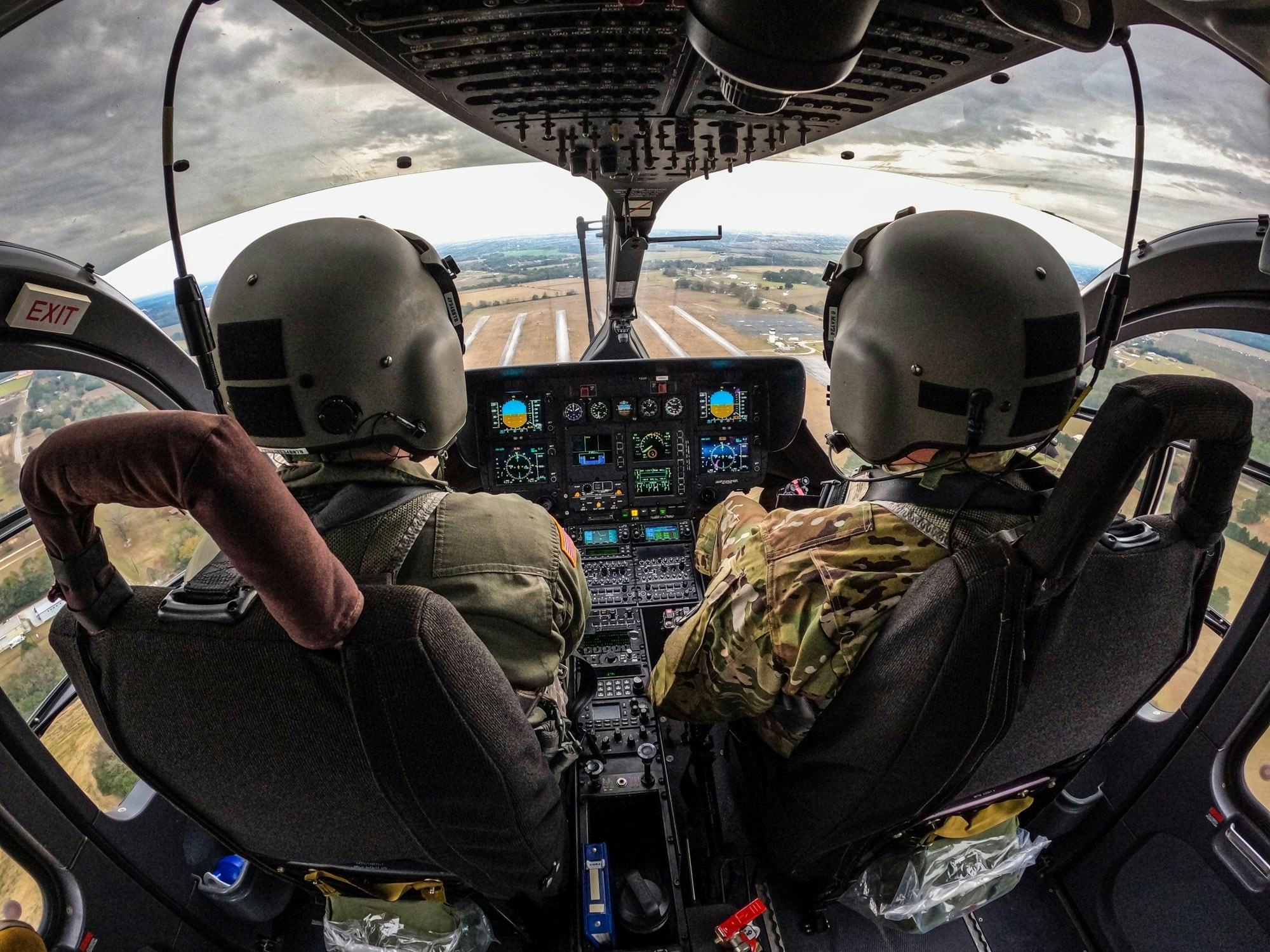
M1 Awarded $10 Billion U.S. Army Flight Training Contract

M1 Awarded $10 Billion U.S. Army Flight Training Contract M1 Support Services (M1) has secured a significant single-award indefinite-delivery, indefinite-quantity (IDIQ) contract valued at up to $10 billion to provide Initial Entry Rotary Wing (IERW) training for the U.S. Army under the Flight School Next (FSN) program. This 26-year agreement represents a pivotal element in the Army’s efforts to modernize rotary-wing pilot training, with the dual objectives of enhancing pilot proficiency and reducing long-term operational costs. Modernizing Army Flight Training Under the terms of the contract, M1 will deliver a contractor-owned, contractor-operated (COCO) turnkey solution through its Flight School First platform. This innovative system incorporates an AI-enabled adaptive learning environment, advanced simulation technologies, immersive virtual training, and proficiency-based instruction, all centered around the use of Robinson R66 helicopters. To support this comprehensive approach, M1 has formed a consortium of partners that includes Robinson Helicopter Company, Quantum Helicopters, General Dynamics Information Technology, and the University of North Dakota Aerospace Foundation. This collaboration draws on a wide range of expertise spanning flight training, simulation, aircraft manufacturing, civil aviation, and academic research. Challenges and Industry Impact Despite the contract’s promise, M1 faces considerable challenges in integrating advanced AI-driven adaptive learning technologies and ensuring the operational reliability of the Robinson R66 helicopters. The complexity of combining cutting-edge simulation with real-world flight training environments will test both technological capabilities and operational processes. Success will depend on M1’s ability to seamlessly merge these elements while maintaining rigorous training standards. The award has also generated notable market interest, with investors responding positively to the scale and duration of the contract. For industry competitors, the decision marks a setback, particularly for Bell, a key rival in military flight training. Bell is expected to respond by enhancing its product offerings and pursuing future contracts with increased vigor. Observers anticipate that this development will spur intensified innovation, more competitive pricing, and accelerated advancement of training technologies across the sector. The Army’s selection of M1 highlights a broader strategic shift toward harnessing private sector innovation and technology to modernize military training programs. The long-term success of the Flight School Next initiative will hinge on M1’s capacity to fulfill its commitments and adapt to evolving training demands and technological progress.
line