
将人工智能洞察转化为可执行行动

热门趋势
Categories
Can the A321XLR Replace Widebody Aircraft?
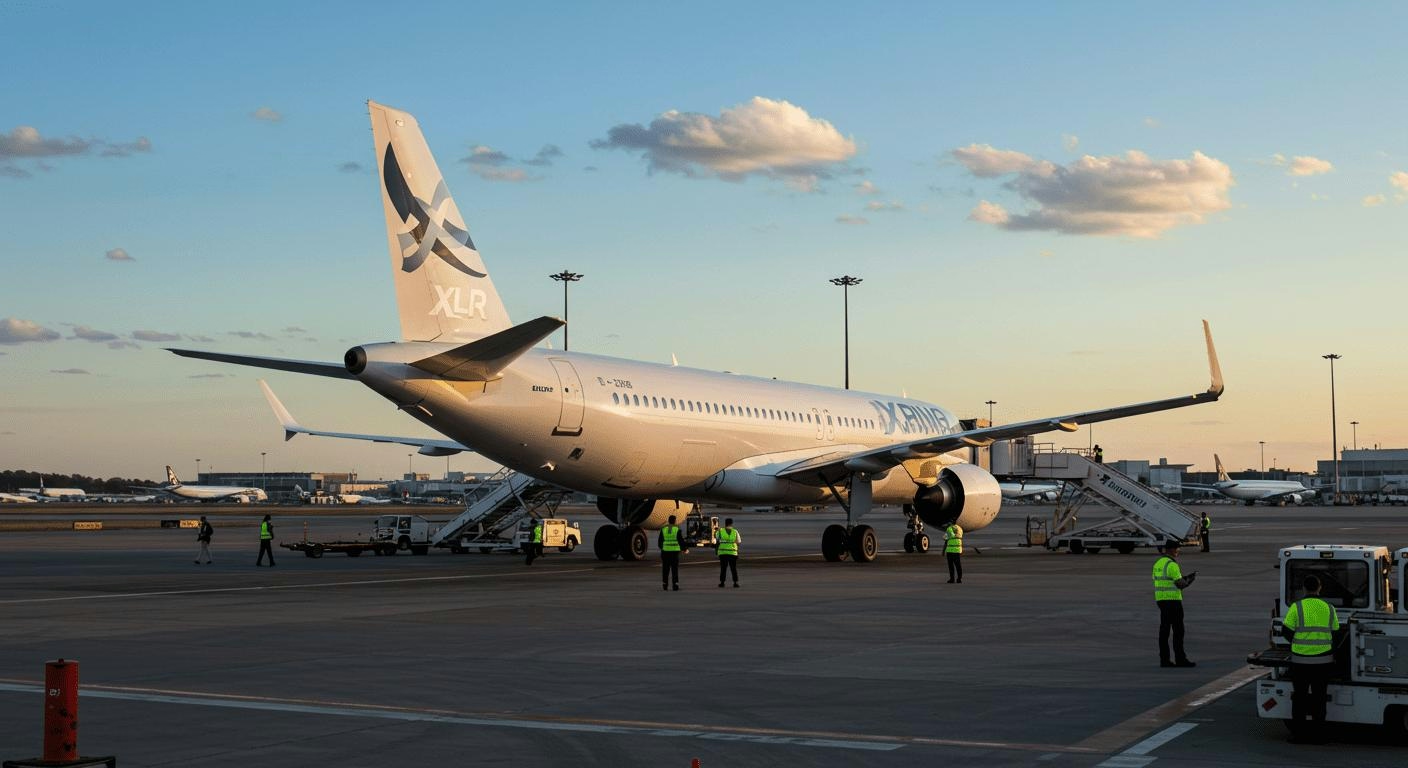
Can the A321XLR Replace Widebody Aircraft?
The Airbus A321XLR has ignited considerable discussion within the aviation industry even before its widespread deployment. Since its introduction, the aircraft has been perceived in two primary ways: as a natural progression in the development of narrowbody jets and as a potential challenger to the entrenched role of widebody aircraft on international routes. Central to this debate is the question of whether the A321XLR can supplant widebody aircraft.
Redefining Long-Haul Narrowbody Operations
The straightforward answer is that the A321XLR will not replace widebody aircraft across all long-haul operations. Rather, it provides airlines with a new operational model, enabling profitable service on long-haul routes with fewer passengers. This capability removes the previous necessity to deploy widebodies on routes where their size and capacity were not the most efficient choice. This nuance explains both the enthusiasm and the uncertainty surrounding the aircraft’s potential impact.
In practical terms, the A321XLR allows airlines to maintain nonstop service on routes that attract between 180 and 220 passengers, depending on cabin layout. Widebody aircraft, by contrast, generally require a minimum of 250 to 300 daily travelers to justify their deployment. Although this difference may appear marginal, it can be decisive in determining whether a route is commercially viable or remains unserved. Historically, airlines often operated widebodies on routes with insufficient demand, constrained more by aircraft range limitations than by passenger numbers. The A321XLR alleviates this constraint, facilitating more direct flights between secondary cities and unlocking new market opportunities.
Limitations and Market Positioning
Despite its advantages, the A321XLR’s ability to replace widebodies is constrained by several factors. Its range, while exceptional for a narrowbody, does not match that of traditional widebody jets such as the Boeing 777 or Airbus A350. Consequently, the A321XLR is primarily suited to medium-haul and select transatlantic routes rather than the longest intercontinental sectors. Cargo capacity also remains a significant differentiator. Widebodies like the Airbus A330, Boeing 787, and Boeing 777 generate substantial belly cargo revenue, which is often critical to the profitability of long-haul routes—an area where the A321XLR cannot compete.
The adoption of the A321XLR by American Airlines for transcontinental and transatlantic services reflects a strategic shift toward more premium seating configurations and operational flexibility. Nonetheless, market responses have been cautious amid ongoing economic uncertainties and subdued international travel demand. Competitor reactions have been measured, as the A321XLR’s strengths are concentrated in medium-haul markets, leaving widebodies to retain dominance on high-demand, long-haul routes.
Ultimately, the A321XLR does not render widebody aircraft obsolete. Instead, it reshapes the economics of long-haul air travel by enabling airlines to better align capacity with demand and to inaugurate nonstop routes that were previously unfeasible. The aircraft’s true significance lies in its role as a complement to widebody operations, expanding the strategic options available to airlines as they navigate evolving market dynamics.

Eight Aboard Twin-Engine Cessna Crash in Remote Alaska
American Airlines Plans to Receive New Aircraft Deliveries in 2026
Delta Flight Returns to Atlanta Airport Due to Engine Trouble

Samoa Airways Recovers Damaged DHC-6-300 Aircraft
Man Ingested by Frontier Airlines Engine Marks Denver’s Sixth Airfield Security Breach in Three Years
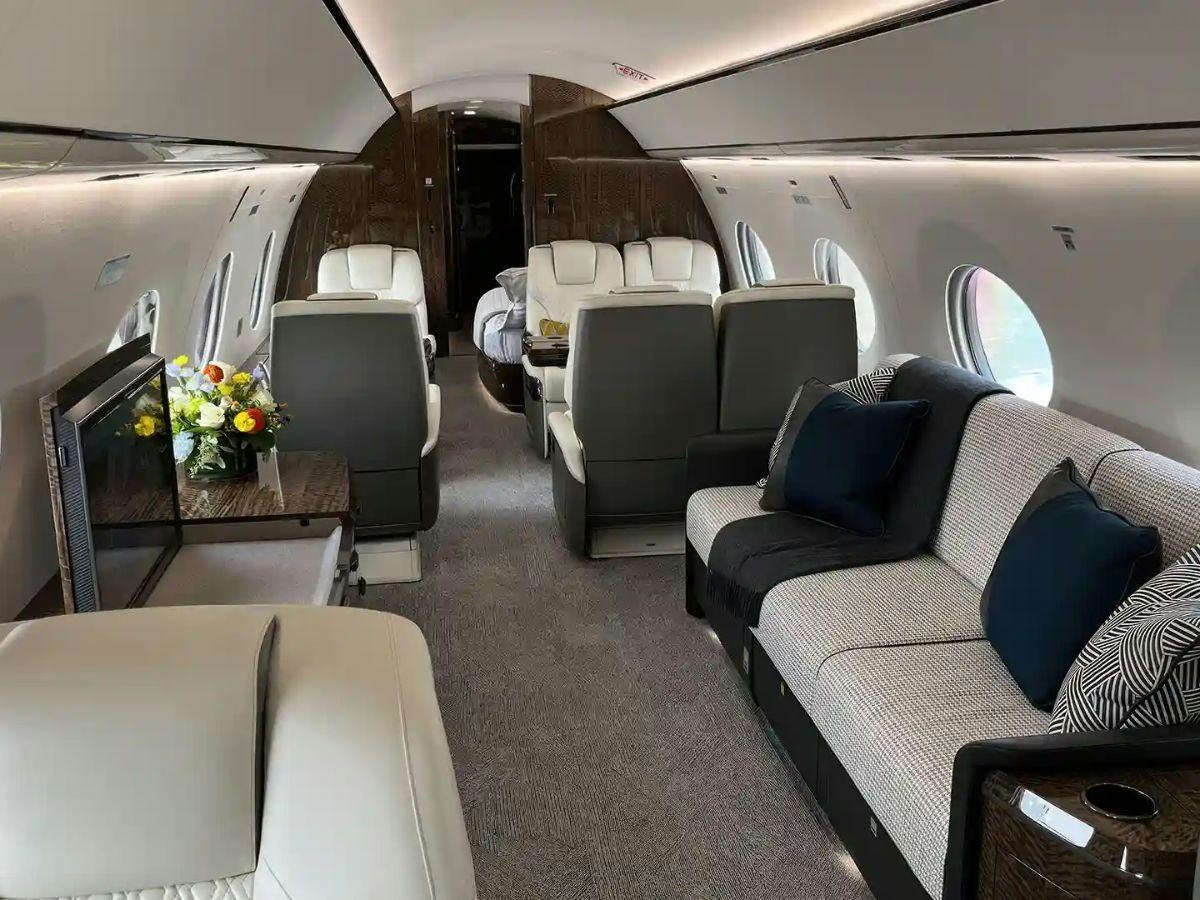
The Advantages and Disadvantages of Owning Versus Leasing a Private Jet
Former Spirit Employees Express Concerns Over AI Partnership With Google
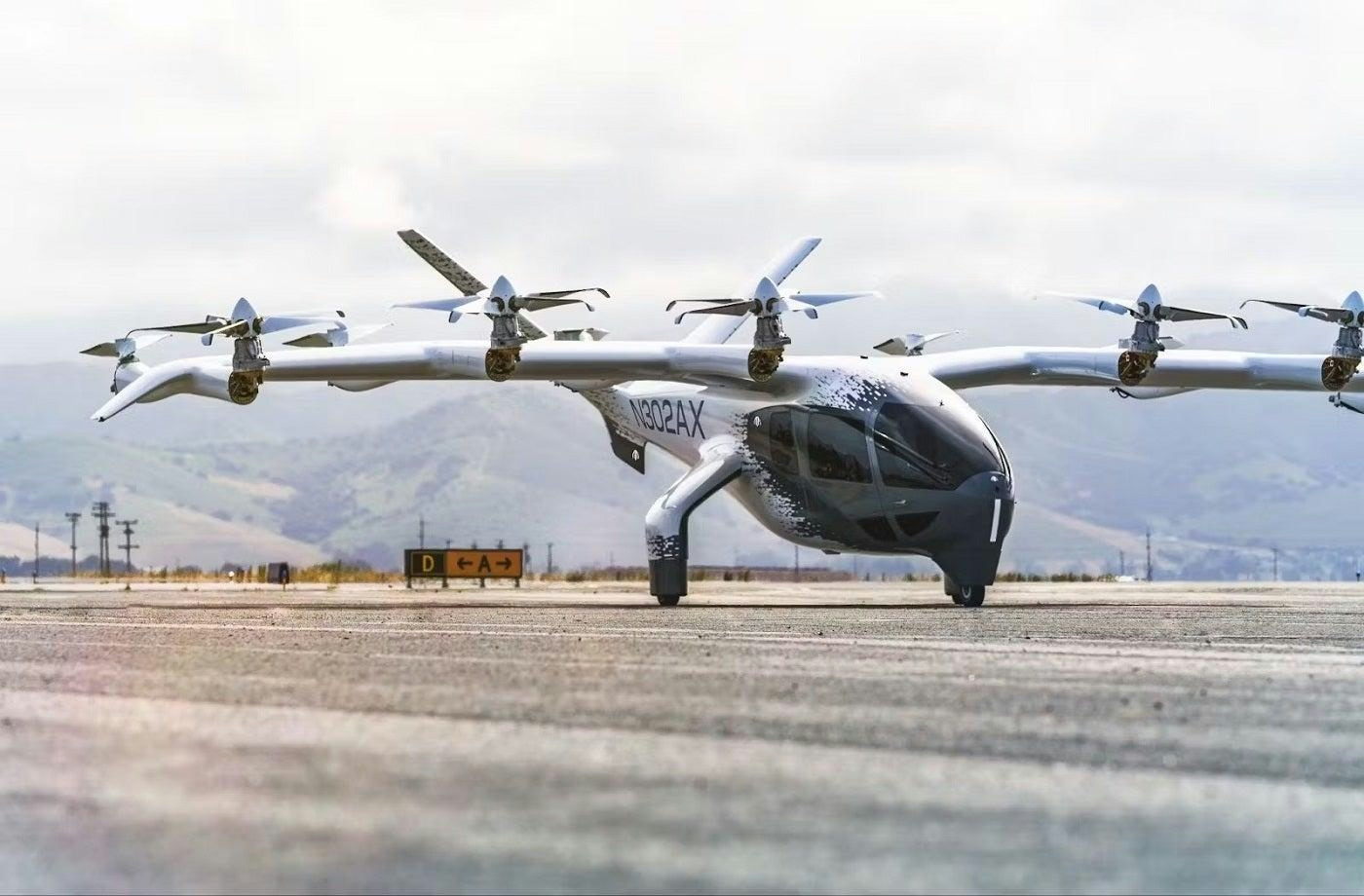
China Certifies Pilotless Air Taxi for Export; Sri Lanka First Buyer

US Pilot Hourly Pay Ranges from $90 for Regional to $465 for Widebody Flights

NASA Chooses University Teams to Support Aviation Research
