
image

AeroGenie — 您的智能副驾驶。

询问一切。分析一切。立即行动。

热门趋势

Categories

Delta Airlines Partnership with AI Firm Prompts Privacy Concerns
September 17, 2025By ePlane AI
Delta Airlines Partnership with AI Firm Prompts Privacy Concerns
0
0
Delta Air Lines
Artificial Intelligence
Data Privacy

Delta Airlines’ AI Partnership Sparks Privacy Debate

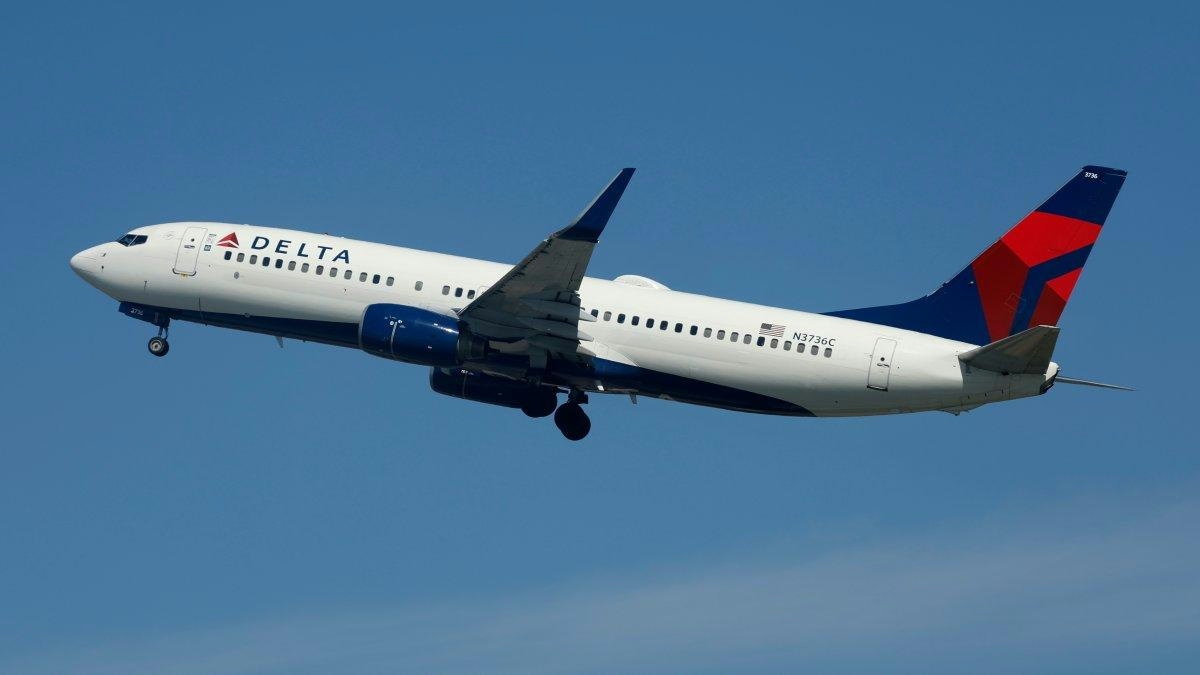
Delta Airlines’ recent collaboration with artificial intelligence firm Fetcherr has ignited concerns among lawmakers and privacy advocates regarding the use of personal data in airfare pricing. The partnership, aimed at leveraging AI to optimize ticket prices, has raised questions about the extent to which customer information is collected and utilized, prompting scrutiny from multiple stakeholders.

Privacy Concerns and Legislative Inquiry

While travelers typically focus on safeguarding sensitive data such as Social Security numbers or financial details, experts warn that a broader range of publicly accessible information could be exploited through AI technologies. Angela Zutavern, head of the AI and Data practice at consulting firm AlixPartners, highlighted the potential risks, noting that data points like home values, purchase histories, and browsing behaviors might be aggregated to influence marketing strategies or pricing models, including those for airline tickets.

In response to these concerns, three U.S. senators have formally requested clarification from Delta regarding its data practices. This inquiry followed statements from Delta’s leadership in late 2023, when the airline’s president disclosed experiments with AI to gauge customers’ willingness to pay for premium services. More recently, Delta’s CEO emphasized the partnership with Fetcherr as a means to implement AI-driven pricing solutions.

Senator Mark Warner (D-VA), a co-author of the letter to Delta, questioned the nature and scope of data collection, urging transparency about the types of information gathered and assurances that pricing would not be personalized based on individual circumstances. Delta responded by affirming that it does not, and has no plans to, employ individualized pricing strategies based on personal data. The airline clarified that Fetcherr’s AI aggregates purchasing data by route, forecasts demand, adapts to market conditions, and analyzes thousands of variables to optimize pricing. Additionally, Delta utilizes AI in other operational areas such as reservation support, technical maintenance, and crew scheduling.

Industry Implications and Consumer Reactions

Despite these reassurances, skepticism persists among privacy experts and consumers alike. The prospect of AI-driven pricing models incorporating personal data raises significant ethical and regulatory questions, especially as airlines and other sectors increasingly adopt advanced analytics. Public reaction to Delta’s AI initiative has been mixed, with some customers expressing apprehension about data privacy, while others acknowledge potential benefits in fare efficiency and market responsiveness.

Competitors are closely monitoring Delta’s approach, with some expected to reevaluate their own AI strategies to remain competitive. Meanwhile, Delta faces additional challenges, including the recent termination of its partnership with Aeromexico amid fairness concerns in Mexico. This development may divert attention from its AI efforts and influence investor confidence.

For consumers wary of privacy risks, experts recommend proactive measures such as regularly clearing browser cookies and utilizing private or incognito browsing modes. Zutavern advises caution in sharing information online, particularly avoiding inputting data into search engines or generative AI tools that one would not publicly disclose on social media.

As the airline industry continues to integrate AI technologies, the debate over data privacy and equitable pricing is expected to intensify, drawing close attention from regulators, consumers, and market participants alike.

More news
China Airlines places firm order for five additional Airbus A350-1000s

China Airlines places firm order for five additional Airbus A350-1000s

China Airlines Expands Airbus A350-1000 Fleet with Firm Order for Five Additional Jets Taiwan’s China Airlines has confirmed a firm order for five additional Airbus A350-1000 aircraft, increasing its total commitment for this model to 15 widebody jets. Announced on December 18, the acquisition forms a key part of the airline’s ongoing strategy to modernize its long-haul fleet, which currently includes 15 A350-900s. Strategic Fleet Modernization and Efficiency Gains Kao Shing-Hwang, Chairman of China Airlines, emphasized the significance of expanding the A350-1000 fleet as a critical step in the airline’s long-term growth plan. He highlighted the aircraft’s exceptional fuel efficiency and passenger comfort as central to enhancing the airline’s competitiveness on long-haul routes and delivering an improved travel experience. The Airbus A350-1000 boasts a maximum range of approximately 9,800 nautical miles (18,000 kilometers) and incorporates advanced aerodynamics, lightweight composite materials, and Rolls-Royce engines. These features collectively contribute to a 25% improvement in fuel efficiency, operating costs, and CO2 emissions compared to earlier-generation aircraft. Airbus has also committed to enabling its A350 fleet to operate on up to 100% Sustainable Aviation Fuel (SAF) by 2030, aligning with the broader industry’s shift toward environmental sustainability. Challenges and Market Implications Despite the positive outlook, China Airlines faces potential challenges related to global supply chain disruptions and possible production delays, which may affect the timely delivery of the new aircraft. The integration of the A350-1000s will also necessitate substantial investments in pilot training and ground infrastructure to ensure operational readiness. This latest order intensifies competition between Airbus and Boeing, particularly as China Airlines simultaneously plans to acquire 10 Boeing 777-9s and four 777-8 freighters, part of a broader $11.8 billion deal announced earlier in December 2024. The airline is also scheduled to receive five Boeing 777-9s, underscoring its strategy to diversify its widebody fleet. This move is likely to prompt rival carriers to reassess their fleet strategies and service offerings in response to evolving market dynamics. Regional Impact and Industry Outlook China Airlines’ fleet expansion occurs amid shifting travel demand and strategic uncertainties in the Asia-Pacific region. Diplomatic tensions between China and Japan add complexity to airline planning and route development, potentially influencing travel patterns. The airline’s modernization efforts are expected to have significant ripple effects across the regional aviation landscape, shaping competitive dynamics and advancing the industry’s broader commitment to sustainable aviation practices.
Ramco Systems to Provide Aviation Software to Powerhouse Engines in the US

Ramco Systems to Provide Aviation Software to Powerhouse Engines in the US

Ramco Systems to Provide Aviation Software to Powerhouse Engines in the US Partnership to Enhance MRO Operations Powerhouse Engines, a prominent US-based engine maintenance provider, has selected Ramco Systems to deploy an integrated aviation software suite designed to advance its maintenance, repair, and overhaul (MRO) operations. This collaboration will see Powerhouse implement a comprehensive range of modules encompassing Engineering and CAMO, engine and shop maintenance, MRO contracting, finance, and quality management. The initiative aims to deliver enhanced visibility and seamless integration across the company’s core business functions, thereby improving operational coherence. The adoption of Ramco’s platform is anticipated to bolster Powerhouse’s inventory management, purchasing, and cost tracking capabilities, while also streamlining subcontracting and third-party repair workflows. The software’s advanced digital tools, including Ramco’s Anywhere mobile applications, Hubs, and BInGO dashboards, will facilitate the company’s transition to paperless operations. These solutions enable real-time tracking of parts, inventory, repair orders, and purchase orders, accelerating engine overhaul and maintenance processes and enhancing overall efficiency. Strategic Importance Amid Industry Challenges Eric Engdahl, CEO of Powerhouse Engines, highlighted the critical role of technology in the company’s growth strategy. He noted that the rapidly evolving aviation industry necessitated a partner capable of supporting scalable expansion. Engdahl praised Ramco Systems for combining cutting-edge technology with a proven track record in aviation MRO, describing the partnership as essential to transforming Powerhouse’s processes and maintaining high service standards during its expansion. This announcement arrives amid increased scrutiny of aviation software reliability. A recent recall involving software on approximately 6,000 Airbus A320 aircraft has raised concerns about the resilience of aviation software systems. The recall has affected market sentiment, causing volatility in Airbus SE shares and prompting airlines such as American Airlines to anticipate operational delays. In response, industry competitors have emphasized the reliability and advanced features of their own software solutions, while regulatory authorities like the Federal Aviation Administration (FAA) are preparing to enforce stricter software update requirements, following the lead of the European Aviation Safety Agency (EASA). Commitment to Safety and Innovation In this context, Powerhouse’s investment in Ramco’s next-generation aviation software underscores its dedication to safety, regulatory compliance, and operational excellence. Manoj Kumar Singh, Chief Customer Officer – Aviation, Aerospace & Defence at Ramco Systems, expressed honor at being selected by Powerhouse Engines, viewing the partnership as a validation of Ramco’s leadership in aviation engine MRO solutions. Singh emphasized that Ramco’s software, built on industry best practices, enables organizations to minimize downtime, maximize asset utilization, and scale operations without compromising safety or quality. As the aviation sector intensifies its focus on software safety and regulatory adherence, the collaboration between Powerhouse Engines and Ramco Systems positions the company at the forefront of technology-driven MRO practices, aiming to establish new standards for agility, precision, and reliability.
Boeing Deliveries Rise 69% as Airbus Faces Supply Chain Challenges

Boeing Deliveries Rise 69% as Airbus Faces Supply Chain Challenges

Boeing Deliveries Rise 69% Amid Airbus Supply Chain Challenges Boeing has demonstrated a remarkable recovery in 2025, with aircraft deliveries increasing by 69% year-on-year. According to data from aviation intelligence platform IBA Insight, Boeing delivered 537 aircraft through the end of November, compared to 318 during the same period last year. This figure also represents a 16% increase over 2023 levels, signaling a significant improvement in the US manufacturer’s production and delivery processes after several years of disruption. The surge in Boeing’s deliveries is attributed not only to enhanced factory output but also to the company’s efforts to clear parked inventory and expedite the delivery timeline. The average interval from an aircraft’s first flight to final delivery shortened to 37 days in 2025, down from 47 days in 2024. Boeing’s long-term backlog—aircraft delayed for over a year—has been reduced to just 27 units, substantially improving the company’s cash flow. The outlook remains positive, bolstered by the US Federal Aviation Administration’s recent approval to increase the 737 MAX production rate from 38 to 42 units per month. Boeing’s strong performance has been further supported by robust demand for its 787 model and the advantageous timing of certain orders amid ongoing trade and tariff negotiations. Reflecting investor confidence, Boeing’s shares closed at $204.38, marking a 1.2% increase week-over-week. Airbus Faces Delivery Setbacks as Industry Production Stabilizes While Airbus continues to lead in total aircraft volume, the company has been compelled to lower its 2025 delivery target by 4%, reducing it to 790 jets due to persistent supply chain disruptions. These challenges include shortages of Buyer Furnished Equipment (BFE), engine delays, and fuselage quality issues. Through early December, the France-based manufacturer delivered 662 aircraft, but ongoing bottlenecks have forced a revision of its full-year goal from 820 to 790 units. Other manufacturers reported mixed results in 2025. Brazilian regional jet maker Embraer improved its output, delivering 66 aircraft compared to 55 in the previous year. Conversely, China’s COMAC and the Franco-Italian turboprop specialist ATR experienced declines, delivering 29 and 18 aircraft respectively, as they struggled to convert large backlogs into active deliveries. Global aircraft production for 2025 is projected to reach between 1,520 and 1,530 units, aligning with 2014 levels but remaining below the 2018 peak of 1,770 units. Despite ongoing supply chain pressures, industry analysts remain optimistic. IBA Insight notes that while overall production remains below historical highs, disciplined delivery schedules and sustained demand continue to support a firm market outlook across both narrowbody and widebody segments. Looking ahead, global airlines are forecast to achieve a record net profit of $41 billion in 2026, underscoring the resilience of the aviation sector as manufacturers navigate persistent supply chain challenges.
CT7-2E1 Engine Surpasses 500,000 Flight Hours

CT7-2E1 Engine Surpasses 500,000 Flight Hours

CT7-2E1 Engine Surpasses 500,000 Flight Hours GE Aerospace’s CT7-2E1 engine has reached a significant milestone, surpassing 500,000 in-service flight hours. This achievement highlights the engine’s durability and reliability, particularly as it powers the Leonardo AW149 and AW189 helicopter fleets. The CT7-2E1 is built on the established CT7/T700 engine family platform, which collectively has accumulated over 100 million flight hours. Designed for long-range and high-speed performance, the engine incorporates Full Authority Digital Engine Control (FADEC), advanced materials, and a lighter construction that reduces fuel consumption and maintenance costs relative to competing models. Additionally, the CT7-2E1 is certified to operate on select Sustainable Aviation Fuel (SAF) blends, aligning with the aviation sector’s increasing focus on sustainability. Industry Context and Challenges This milestone arrives amid growing scrutiny of engine durability and reliability across the aviation industry. Competitors such as Rolls-Royce have been actively working to restore operator confidence in engine longevity, particularly in the widebody market segment where the Trent 7000 DE package has notably extended time-on-wing intervals by a factor of three. Meanwhile, the General Electric CF34 engine faces an impending maintenance surge, raising concerns about potential service slot shortages and longer turnaround times. With the global commercial fleet projected to double by 2044, a full replacement cycle is anticipated, intensifying competition among engine manufacturers. Supply chain constraints and ongoing durability challenges remain pressing issues. The Engine Lease Finance Corporation has identified time-on-wing intervals for Pratt & Whitney’s GTF and CFM International’s Leap engines as critical concerns for operators and lessors. Against this backdrop, the CT7-2E1’s milestone underscores the value of dependable engine performance in an increasingly demanding operational environment. Elissa Lee, executive director for commercial turboshaft engines at GE Aerospace, emphasized the significance of this achievement, stating, “Crossing half a million flight hours is a testament to the CT7-2E1 engine’s performance, and we’re proud of the close partnerships we’ve built with customers around the globe that rely on this engine to power their helicopters to execute critical missions every day. The CT7-2E1 engine continues to deliver the dependability our customers need.” As the aviation industry adapts to evolving operational pressures and sustainability goals, milestones such as the CT7-2E1’s flight hour achievement highlight the essential role of engine reliability and innovation in supporting both current and future fleet demands.
GATES Expands Engine MRO Operations in Asia

GATES Expands Engine MRO Operations in Asia

GATES Expands Engine MRO Operations in Asia GA Telesis Engine Services (GATES), the maintenance, repair, and overhaul (MRO) division of GA Telesis LLC, has announced significant developments to enhance its footprint in Asia and solidify its role as an independent engine maintenance provider. These milestones underscore the company’s strategic commitment to expanding its service capabilities in a region marked by growing demand for engine MRO solutions. Certification and Market Access in South Korea GATES recently obtained Approved Maintenance Organisation (AMO) certification from South Korea’s Ministry of Land, Infrastructure and Transport. This certification covers the CFM56-5B, CFM56-7B, and CF6-80C2 engine models, authorizing GATES to conduct comprehensive engine overhaul services for South Korean operators. The certification opens access to a market with a substantial and expanding fleet of these engines, offering airlines a credible independent alternative to the traditionally OEM-affiliated MRO providers. This development not only enhances competitive options for operators but also promises potential cost efficiencies and improved fleet reliability. Moreover, it affirms GATES’ adherence to stringent international regulatory and quality standards, reinforcing its reputation in the region. Strategic Partnership with MIAT Mongolian Airlines In conjunction with its certification, GATES has secured an engine maintenance agreement with MIAT Mongolian Airlines to overhaul the carrier’s CFM56-7B engines. This contract marks a significant step in GATES’ expansion across the Asia-Pacific region and reflects increasing confidence in the company’s technical expertise and operational capabilities. The partnership exemplifies GATES’ growing influence and its ability to meet the evolving needs of regional carriers. Market Challenges and Industry Outlook The Asia-Pacific engine MRO sector faces a complex set of challenges, including constrained powerplant market dynamics, limited availability of used serviceable materials and parts, and restricted manufacturer approvals for critical components such as blades. These factors contribute to rising engine MRO costs, which may affect airline operational budgets and fleet management strategies. In response, some carriers are exploring the development of in-house MRO capabilities to enhance operational resilience and cost control. Despite these obstacles, the outlook for engine MRO services remains positive. Market conditions for engine manufacturers are strong, and global demand for engine MRO is expected to increase through 2026. This trend indicates a sustained need for reliable maintenance solutions and is likely to shape competitive strategies within the region. Independent providers like GATES, alongside airline operators, will need to adapt to shifting supply dynamics and growing demand to maintain their market positions. With its recent certification and new regional partnerships, GATES is well-positioned to leverage emerging opportunities while addressing the sector’s ongoing challenges. The company aims to deliver enhanced choice and value to airlines across the Asia-Pacific, reinforcing its role as a key player in the independent engine MRO market.
Global Flight Simulator Market Outlook and Risk Assessment, 2026–2036

Global Flight Simulator Market Outlook and Risk Assessment, 2026–2036

Global Flight Simulator Market Outlook and Risk Assessment, 2026–2036 The global flight simulator market is poised for substantial growth over the next decade, driven by increasing demand for advanced pilot training across commercial, military, and general aviation sectors. Market valuation is expected to more than double, rising from an estimated USD 5.6 billion in 2026 to USD 12.4 billion by 2036, reflecting a robust compound annual growth rate (CAGR) of 8.3%. Market Drivers and Segment Analysis The primary catalyst for this expansion is the growing need for skilled pilots, propelled by rising global air traffic and continuous fleet expansions among major airlines. Regulatory mandates and stringent safety standards are accelerating the adoption of simulator-based training for pilot certification and recurrent proficiency assessments. Flight simulators offer a cost-effective and risk-free alternative to in-aircraft training, making them indispensable tools for airlines, training organizations, and defense agencies seeking to enhance operational readiness while reducing actual flight hours. Within the simulator market, full flight simulators are anticipated to command the largest share, accounting for approximately 42.8% in 2026. Their capacity to accurately replicate aircraft systems, cockpit environments, and flight dynamics renders them essential for advanced pilot and crew training. Commercial aviation remains the dominant application segment, projected to represent about 61.7% of the market in 2026, driven by rigorous certification cycles and the expanding size of airline fleets worldwide. Regional Market Outlook Regionally, North America, Asia Pacific, and Europe emerge as key growth areas. The Asia Pacific region, particularly China and India, is expected to outpace more mature markets due to rapid aviation sector expansion, increased pilot recruitment, and government initiatives supporting localized training infrastructure. China’s flight simulator market is forecast to grow at a CAGR of 9.7%, while India is projected to expand at 9.2% through 2036. The United States maintains a significant market presence, underpinned by well-established aviation infrastructure and high levels of simulator integration, with a projected CAGR of 7.1%. European markets, including Germany and the United Kingdom, also demonstrate steady growth, supported by stringent training regulations and sophisticated training ecosystems. Technological Advancements and Market Challenges The evolution of the flight simulator market is closely linked to rapid technological progress. Advances in computing power, immersive visual systems, and sophisticated motion platforms are enhancing simulation realism and training effectiveness. Emerging innovations such as artificial intelligence for adaptive scenario generation, virtual and augmented reality for immersive training experiences, and cloud-based platforms enabling remote training and analytics are becoming key differentiators among leading providers. Despite these opportunities, the market faces several challenges. Regulatory changes, technological disruptions, and broader economic factors could influence growth trajectories. For example, recent Supreme Court rulings on tariffs may affect supply chains and operational costs. In response, industry players are pursuing strategic innovations, including the adoption of self-healing polyurethane topcoats for aircraft exteriors, to maintain competitiveness and adapt to evolving market conditions. Competitive Landscape and Future Outlook Leading companies such as CAE Inc., L3Harris Technologies, Boeing Company, Thales Group, and FlightSafety International are investing heavily in enhancing simulation fidelity and expanding service networks. The market outlook remains cautiously optimistic, with a strong emphasis on innovation and regulatory compliance as these firms navigate emerging risks and opportunities throughout the coming decade.
Joby Supports U.S. DOT’s Plan for Air Taxi Deployment

Joby Supports U.S. DOT’s Plan for Air Taxi Deployment

Joby Aviation Endorses U.S. Department of Transportation’s Advanced Air Mobility Strategy Joby Aviation has expressed strong support for the U.S. Department of Transportation’s (DOT) recently unveiled Advanced Air Mobility (AAM) National Strategy, describing it as a clear and actionable framework for integrating electric air taxis into commercial service. The company plans to actively engage with the strategy’s key recommendations as it prepares to initiate early operations in American cities. Framework for Air Taxi Integration The AAM National Strategy presents a coordinated policy roadmap that emphasizes workforce development, infrastructure enhancement, safety protocols, and data sharing. These elements are designed to facilitate the large-scale deployment of advanced air mobility services. For Joby, the strategy arrives at a critical juncture as the company accelerates efforts to launch initial air taxi operations through the Electric Vertical Take-off and Landing Integration Pilot Programme (eIPP), which was established by executive order earlier this year. JoeBen Bevirt, Joby’s founder and CEO, highlighted that the strategy reflects strong federal recognition of the AAM sector’s potential and underscores the United States’ commitment to leading the next generation of aviation. He also stressed the importance of collaboration among federal, state, local, and tribal authorities to ensure the safe and effective introduction of air taxi services. The strategy builds upon the Advanced Air Mobility Coordination Act passed by Congress in 2022, which mandated greater alignment across federal agencies to support the AAM ecosystem. Under the leadership of Transportation Secretary Sean Duffy, the DOT convened at least 19 federal departments and agencies to develop the strategy, aiming to foster innovation, maintain rigorous safety standards, and ensure a unified approach to policy and investment. Joby’s Expansion and Industry Context Joby’s endorsement of the DOT’s plan coincides with the company’s significant investments to scale production capacity. The firm aims to double its U.S. manufacturing capabilities and produce four aircraft per month by 2027. This expansion reflects Joby’s commitment to meeting anticipated market demand but also presents challenges, as the Federal Aviation Administration (FAA) certification process remains ongoing and could introduce regulatory complexities. Market analysts have responded positively to Joby’s progress, projecting the company as a potential leader in the electric vertical take-off and landing (eVTOL) sector by 2026. Nevertheless, competition is intensifying domestically, with rivals such as Archer Aviation and Beta Technologies advancing their own eVTOL programs. On the international front, Chinese companies like EHang are making significant advances, increasing pressure on the U.S. to maintain its competitive edge in flying taxi technology. Beyond its commercial ambitions, Joby is also pursuing opportunities within the defense sector, developing military VTOL aircraft as part of a broader strategy to diversify its market presence. The release of the AAM National Strategy coincides with preparations by the FAA and DOT to launch the eIPP in 2026. This pilot program is intended to support early eVTOL operations ahead of full FAA type certification, including the validation of routes and operational concepts. Together, the strategy and the eIPP aim to enable regulators, communities, and industry stakeholders to advance in tandem, reducing uncertainty and accelerating the path toward commercial advanced air mobility services.
Singapore Airshow 2026 Highlights Advances in Aerospace and Space Technology

Singapore Airshow 2026 Highlights Advances in Aerospace and Space Technology

Singapore Airshow 2026 Highlights Advances in Aerospace and Space Technology The Singapore Airshow is set to return for its landmark 10th edition from February 3 to 8, 2026, at the Changi Exhibition Centre, celebrating two decades as a premier platform for aerospace and defense innovation in the Asia-Pacific region. Since its inception in 2008, the biennial event has evolved into a critical convergence point for industry leaders, military delegations, and technology innovators seeking new opportunities and partnerships within a rapidly transforming sector. This year, the event expects participation from over 1,000 companies representing more than 50 countries. Major industry players such as Airbus, Boeing, Lockheed Martin, and Rolls-Royce will be present alongside emerging defense technology firms including Shield AI and Helsing. National pavilions from Australia, the United States, Germany, Japan, and expanded showcases from Italy and China will feature prominently, highlighting the latest advancements in aerospace technology. Mr. Leck Chet Lam, Managing Director of Experia Events, the show’s organizer, remarked, “Celebrating our 10th edition marks a significant achievement for the Singapore Airshow. As we evolve with the industry, we aim to expand our impact by introducing new features and partnerships that reflect the ever-changing landscape of aerospace and defense.” Expanding Horizons: Space Summit 2026 A notable addition to this year’s programme is the inaugural Space Summit 2026, scheduled for February 2–3 at Marina Bay Sands. Supported by Singapore’s Office for Space Technology & Industry (OSTIn) and the Economic Development Board (EDB), the summit will bring together global space industry leaders, innovators, and policymakers. Discussions will focus on sustainability, investment, infrastructure, and the rapidly growing in-space economy, which McKinsey projects could reach $1.8 trillion by 2035. This initiative underscores Singapore’s ambition to establish itself as a regional hub for space exploration and cross-sector collaboration. Sustainability and Net-Zero Aviation in Focus Sustainability will be a central theme throughout the airshow, with particular emphasis on Sustainable Aviation Fuel (SAF) and net-zero initiatives. Industry leaders such as Neste, a pioneer in renewable fuels, will provide insights into SAF adoption and its transformative potential for aviation supply chains. Attendees will also have the opportunity to offset their travel emissions through the CarbonClick counter, reinforcing the event’s commitment to responsible travel and environmental stewardship. Innovation and Emerging Technologies The airshow’s “What’s Next” startup showcase will spotlight emerging aerospace and defense technologies, featuring expanded zones dedicated to digital aviation, sustainable propulsion, and advanced defense systems. These platforms are designed to foster collaboration between established manufacturers and innovative startups, driving the next wave of industry transformation. Navigating Challenges and Global Competition Despite its established prominence, the Singapore Airshow faces increasing competition from other global aerospace events and must continuously adapt to maintain its relevance amid rapid technological advancements. Regulatory challenges, particularly those related to satellite deployment and space exploration, present additional obstacles. The event’s strong focus on sustainability is expected to attract significant market attention, while competitors may respond by highlighting breakthroughs in electric aircraft and in-orbit refueling technologies. Furthermore, increased investment from European governments and the European Space Agency in space companies is likely to intensify the competitive landscape. As the Singapore Airshow 2026 approaches, it remains poised to shape the future of aerospace and space technology, reinforcing its role as a vital hub for innovation, collaboration, and sustainable growth within the industry.
Engine and Aircraft Shortages Expected to Boost US Aviation ABS in 2026

Engine and Aircraft Shortages Expected to Boost US Aviation ABS in 2026

Engine and Aircraft Shortages Set to Propel US Aviation ABS Market in 2026 The US aviation asset-backed securities (ABS) market is poised for significant growth in 2026, with issuance projected to reach between $10 billion and $15 billion, potentially eclipsing the record levels seen in 2019. This surge is largely driven by ongoing global shortages of commercial aircraft and engines, which are expected to persist through 2030. These supply constraints are intensifying demand and elevating prices for both aviation assets and their securitized financial instruments. Market Resilience Amid Supply Challenges All three primary segments of the aviation ABS market—lease, loan, and engine securitizations—are anticipated to expand in the coming year. The sector has demonstrated notable resilience, having navigated multiple disruptions in recent years. These include the manufacturing slowdowns caused by the Covid-19 pandemic, the immobilization of aircraft in Russia following the 2022 invasion of Ukraine, and the impact of rising interest rates that have increased the cost of financing. Ian Flood, director of aviation ABS at Deutsche Bank, emphasized the potential for a robust issuance environment in 2026. He noted that if market conditions remain stable or tighten slightly, and absent any major geopolitical disruptions, debt-only issuers could drive aviation ABS issuance to $15 billion. Flood also highlighted the likelihood of a significant wave of issuance early in the year as investors respond to the availability of residual ABS products. Return of Public Leasing Companies and Production Constraints Publicly listed aircraft leasing firms, which have been largely absent from the ABS market since 2018 and 2019, are expected to re-enter in 2026. These companies plan to refinance existing obligations and issue new equity note (e-note) tranches. Ankush Chowdhury, global head of aviation at BNP Paribas, pointed to a substantial production lag from major manufacturers Airbus and Boeing, which will continue to influence market dynamics. Boeing’s annual output has declined sharply from approximately 800 commercial aircraft pre-pandemic to around 450 in 2025, while maintenance, repair, and overhaul (MRO) capacities remain under considerable strain. The persistent shortages of aircraft and engines are compounding operational challenges. Supply chain disruptions for critical components have led to delays in both production and maintenance schedules. Additionally, the increased risk of unavailability has driven aviation insurance premiums higher. In response, industry players are accelerating investments in new technologies and forming strategic partnerships to secure future engine supplies. Airbus, for instance, is exploring ultra-high bypass engines and innovative wing designs to meet long-term capacity demands. There is also a growing emphasis on localized production and maintenance to reduce vulnerability to global supply chain disruptions. Financial Implications and Market Trends As lessors command premium prices for scarce aircraft and engines, and as investor participation intensifies, spreads are tightening. This environment is expected to push returns further down the capital structure, enhancing the appeal of e-notes. However, since 2022, higher interest rates and reduced advance rates on ABS transactions have led issuers to retain mezzanine, junior, and e-note tranches in recent deals. Chowdhury observed that the ability to sell residual interests in aircraft ABS pools offers leasing companies an alternative to traditional asset sales, providing a valuable risk mitigation tool. For these firms, placing $500 million or more in the financial markets through ABS transactions represents a significant strategic advantage. Looking ahead, industry participants anticipate that issuers active in 2025 will return to the market, with larger public lessors likely to pursue portfolio sale transactions to third-party equity investors in 2026. This activity is expected to further fuel the projected surge in aviation ABS issuance.
Air-Taxi Service Planned for Martin County: Key Details

Air-Taxi Service Planned for Martin County: Key Details

Air-Taxi Service Planned for Martin County: Key Details A pioneering air-taxi network is set to transform regional travel by connecting Martin County with major South Florida cities. Archer Aviation, the company spearheading this initiative, aims to commence passenger flights over the Treasure Coast as early as 2026. This development promises a swift and innovative alternative to conventional transportation, though it faces several regulatory and infrastructural challenges. Proposed Service and Route Network Archer Aviation plans to establish two key stops within Martin County: one at Atlantic Aviation’s hub located at Witham Field in Stuart, a county-owned airport, and another at Apogee Golf Club in Hobe Sound, an exclusive facility owned by billionaire Stephen Ross. These locations will serve as critical nodes in the broader air-taxi network, which is designed to link Martin County with prominent South Florida urban centers including Miami, West Palm Beach, Boca Raton, and Fort Lauderdale. The introduction of these routes is expected to significantly reduce travel times for both residents and visitors navigating between the Treasure Coast and the metropolitan areas to the south. The Aircraft and Technological Innovation Central to the service is Archer’s “Midnight,” an electric vertical takeoff-and-landing (eVTOL) aircraft engineered to carry up to four passengers. The company highlights the aircraft’s quiet operation and zero-emission capabilities as essential features that align with the demands of urban and suburban environments. This technology represents a notable advancement in sustainable aviation, aiming to minimize noise pollution and environmental impact while enhancing mobility. Regulatory, Infrastructure, and Market Challenges Before the air-taxi service can launch, Archer must obtain approval from the Federal Aviation Administration (FAA), which is still in the process of establishing comprehensive safety and operational standards for eVTOL aircraft. The regulatory landscape presents significant hurdles that will influence the project’s timeline. In addition to regulatory clearance, the development of necessary infrastructure—such as landing pads and charging stations—is critical to operational success. Public acceptance remains a vital factor, with concerns over noise, safety, and visual impact potentially affecting the rollout. The air-taxi industry is rapidly evolving, with competitors like Joby Aviation developing similar networks in other regions. Archer’s entry into Martin County may intensify competition, prompting rivals to accelerate innovation and expand their service offerings. This dynamic environment could lead to strategic partnerships, broader route expansions, and expedited deployment schedules as companies vie for market leadership. Policy Influence and Industry Outlook Federal policy has historically played a role in shaping the trajectory of the air-taxi sector. Previous administrations, including the Trump administration, have supported the industry through strategic recommendations and infrastructure initiatives, which may continue to influence market conditions and competitive strategies as the sector matures. Archer Aviation’s target to launch the Martin County air-taxi service by 2026 remains contingent on regulatory approvals and infrastructure readiness. If realized, this project could represent a significant advancement in regional transportation, enhancing connectivity across the Treasure Coast and beyond.
Ask AeroGenie









