
将人工智能洞察转化为可执行行动

热门趋势
Categories
Delta Introduces Delta One Service on Key Domestic Route
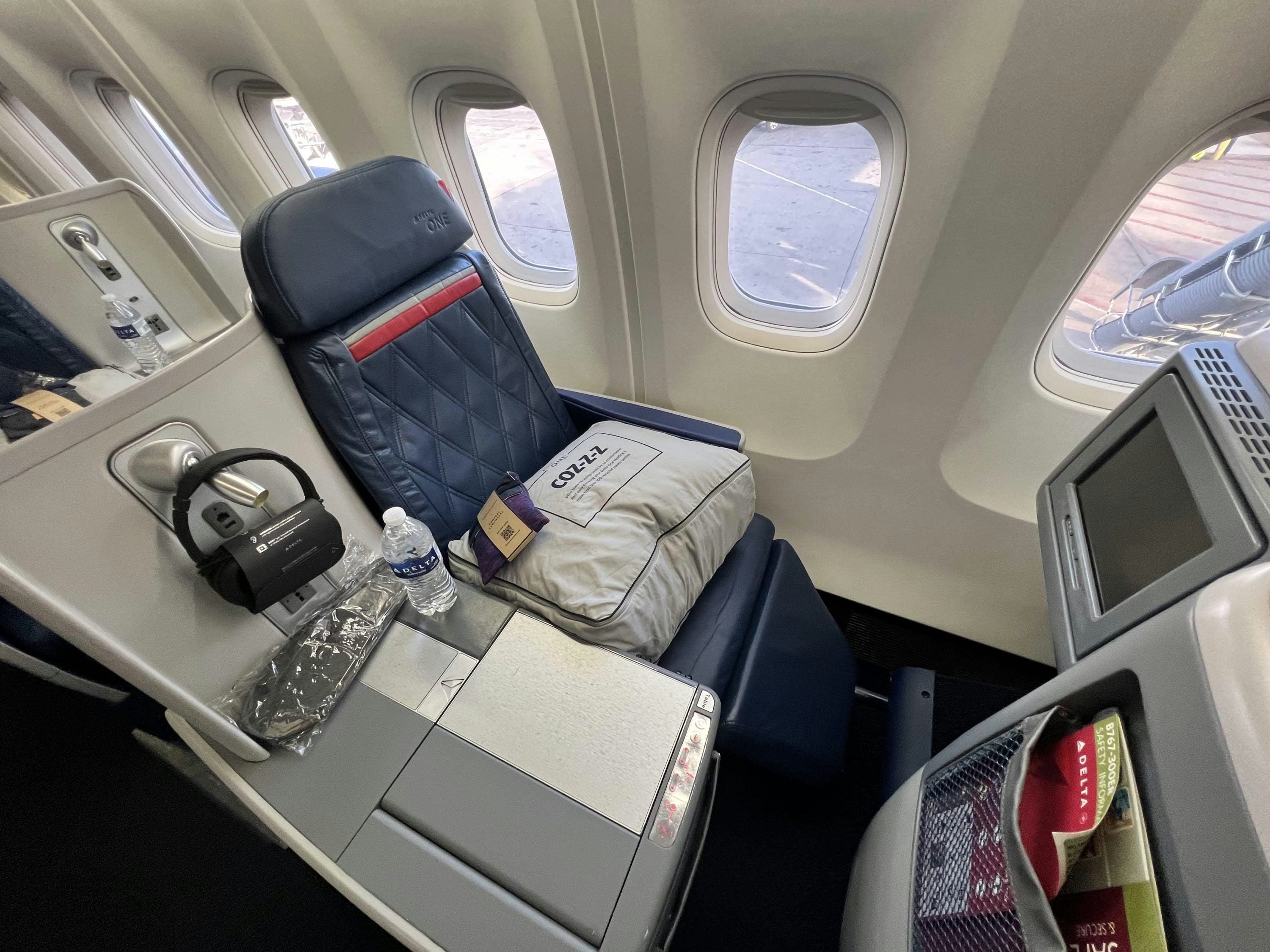
Delta Introduces Delta One Service on Key Domestic Route
Elevating the Atlanta–Los Angeles Corridor
Delta Air Lines is set to enhance its premium offering on one of its most significant domestic routes by introducing Delta One business class service on select widebody flights between Atlanta and Los Angeles. Effective March 29, 2026, the airline will rebrand the forward cabin on these flights from First Class to Delta One. This strategic move targets the high-traffic corridor connecting two of Delta’s largest hubs: Hartsfield-Jackson Atlanta International Airport (ATL) and Los Angeles International Airport (LAX).
Currently, Delta operates up to three daily widebody flights on this route, deploying aircraft such as the Airbus A350 and Boeing 767. While the physical product—including lie-flat seats and enhanced onboard amenities—will remain unchanged, the rebranding to Delta One introduces new pricing structures, benefits, and adjustments to frequent flyer upgrade policies.
Passenger Experience and Pricing Adjustments
The transition to Delta One will bring notable changes for travelers. Fares for Delta One on this route are expected to increase by approximately $100 to $400 one-way compared to previous First Class prices, even within the lowest premium fare categories. Additionally, Medallion elite members will experience a shift in upgrade policies, with upgrades clearing only on the day of departure rather than during advance windows.
In terms of ground services, eligible Delta One passengers will gain access to the Delta One Lounge at LAX. However, the absence of a dedicated Delta One Lounge in Atlanta may limit the premium ground experience for eastbound travelers. Although the Delta One designation typically implies an enhanced soft product—such as upgraded dining and service—the core seat and cabin features on these widebody jets are already consistent with Delta’s premium standards.
Market Context and Industry Implications
Delta’s introduction of Delta One on the Atlanta–Los Angeles route aligns with its broader strategy to increase premium revenue amid strong travel demand. This initiative comes at a time when the airline is managing external challenges, including the U.S. government shutdown and operational disruptions at Detroit. While the rebranding aims to improve yields on a high-demand corridor, industry analysts remain cautious about the potential revenue impact, given that the hard product remains unchanged.
Competitors are closely monitoring Delta’s move. JetBlue, for instance, has underscored the difficulties smaller carriers face due to regulatory and airport authority decisions that often favor larger airlines like Delta. These competitive dynamics may influence how other airlines approach premium offerings on similar transcontinental routes.
Furthermore, Delta’s use of artificial intelligence in pricing—currently applied to about 3% of its domestic flights—has attracted regulatory scrutiny. Consumer advocates and regulators have expressed concerns regarding transparency and the fairness of fare structures, adding complexity to Delta’s efforts to optimize returns from its premium products.
As Delta prepares to implement Delta One service on this key domestic route, the airline is wagering that robust demand for premium travel will offset potential resistance to higher fares and revised upgrade policies. This rollout will serve as a critical test for Delta’s broader domestic premium strategy in a highly competitive market.

Etihad Airways Suspends Airbus A380 Flights on Key Route

Aditya Birla Group Seeks Approval for Aircraft Leasing in GIFT City

Qatar Airways Highlights Innovation and Connectivity at Arabian Travel Market 2026

Hong Kong's Five-Year Plan Includes Andrew Fan's Aircraft Parts Processing Hub Proposal

ACIA Aero Leasing Delivers ATR72-600 to Air Nostrum

RTX Appoints Jill Albertelli as Head of Pratt & Whitney

TAT Technologies Joins Beyond Aero Hydrogen Aircraft Program

AURAK Study Highlights Barriers to Air Taxi Adoption in Emerging Economies

Xiamen Air Selects Altitude for 787 Maintenance at Heathrow

Etihad and Swissport Extend Global Partnership
