
将人工智能洞察转化为可执行行动

热门趋势
Categories
FAA Issues Airworthiness Directive for GE90 Engines After Powder Metal Contamination Found
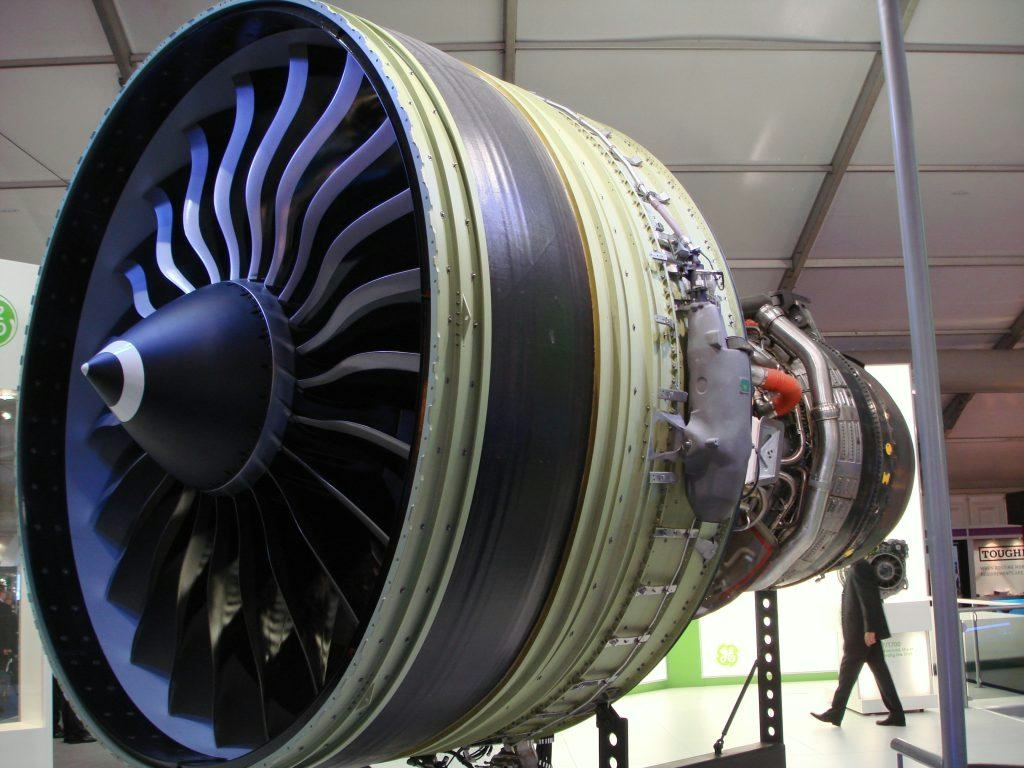
FAA Issues Airworthiness Directive for GE90 Engines Following Discovery of Powder Metal Contamination
Washington, D.C. – The Federal Aviation Administration (FAA) has issued a critical airworthiness directive (AD) targeting General Electric’s GE90 engines, which power the Boeing 777 fleet. Published on January 2, 2026, the directive addresses a significant manufacturing defect involving iron contamination in powder metal components, a flaw that could precipitate uncontained engine failures.
This directive follows an extensive investigation by GE Aerospace, which revealed that certain high-pressure turbine (HPT) disks were manufactured using powder metal material containing iron inclusions. These microscopic impurities compromise the fatigue life of the engine components, heightening the risk of premature fractures that could jeopardize engine integrity.
Technical Implications and Safety Concerns
The contamination originates from deficiencies in the powder metal manufacturing process. Within the extreme conditions of a jet engine—characterized by high stress and elevated temperatures—these iron inclusions act as focal points for stress concentration, accelerating the initiation and propagation of cracks. Should a turbine disk fracture during flight, the resulting uncontained failure could eject debris beyond the engine casing, posing a severe threat to critical aircraft structures.
Although no premature fractures have been reported in GE90 engines to date, the FAA has underscored the necessity of proactive measures. Risk assessments conducted by the agency mandate the removal and replacement of affected disks to ensure continued airworthiness and flight safety.
Compliance Requirements and Industry Response
Designated as AD 2025-25-07, the directive becomes effective on February 6, 2026, and applies to GE90-90B, GE90-94B, GE90-110B1, and GE90-115B engine models. Operators are required to replace the affected HPT Stage 1 and Stage 2 disks based on specific usage thresholds. The HPT Stage 1 disk must be replaced before reaching 4,650 cycles since new (CSN), with an estimated replacement cost of $932,816 per engine. The HPT Stage 2 disk requires replacement before 11,300 CSN, at an estimated cost of $187,086 per engine. Disks identified with high-risk serial numbers must be removed from service prior to further flight operations.
While the FAA estimates that only a limited number of U.S.-registered engines are affected, the directive carries global implications. Major operators such as American Airlines, United Airlines, and FedEx Express have already initiated collaboration with GE Aerospace to phase out the non-compliant components. The directive garnered strong support from Boeing, FedEx, and the Air Line Pilots Association (ALPA) during the public comment period. GE Aerospace has supplemented the directive with Service Bulletins to assist airlines in conducting inspections and managing the replacement process.
Market and Regulatory Impact
The FAA’s directive has elicited notable responses within the industry and financial markets. Following the announcement, GE Aerospace’s stock experienced a modest after-hours movement on December 12, 2025, as investors balanced the directive’s implications against Citi’s new Buy rating and a $386 price target. This action coincides with heightened regulatory scrutiny, including expanded FAA inspections of CFM LEAP engines in South Asia due to dust-related durability concerns, which may increase maintenance demands amid constrained global aircraft deliveries.
Analysts are closely monitoring the 2026 outlook, anticipating elevated maintenance requirements and associated costs for operators. Additionally, the directive aligns with recent U.S. Department of Transportation guidance that exempts airlines from passenger compensation obligations for cancellations or delays resulting from aircraft recalls mandated by airworthiness directives. This policy shift could influence future passenger claims related to operational disruptions.
The FAA’s directive on the GE90 engine highlights the aviation industry’s ongoing commitment to manufacturing quality and operational safety, while also reflecting the evolving regulatory and financial environment confronting airlines and manufacturers alike.

Etihad Airways Suspends Airbus A380 Flights on Key Route

Aditya Birla Group Seeks Approval for Aircraft Leasing in GIFT City

Qatar Airways Highlights Innovation and Connectivity at Arabian Travel Market 2026

Hong Kong's Five-Year Plan Includes Andrew Fan's Aircraft Parts Processing Hub Proposal

ACIA Aero Leasing Delivers ATR72-600 to Air Nostrum

RTX Appoints Jill Albertelli as Head of Pratt & Whitney

TAT Technologies Joins Beyond Aero Hydrogen Aircraft Program

AURAK Study Highlights Barriers to Air Taxi Adoption in Emerging Economies

Xiamen Air Selects Altitude for 787 Maintenance at Heathrow

Etihad and Swissport Extend Global Partnership
