
将人工智能洞察转化为可执行行动

热门趋势
Categories
FAA Mandates Software Update for Airbus A350 to Prevent Control Surface Failures
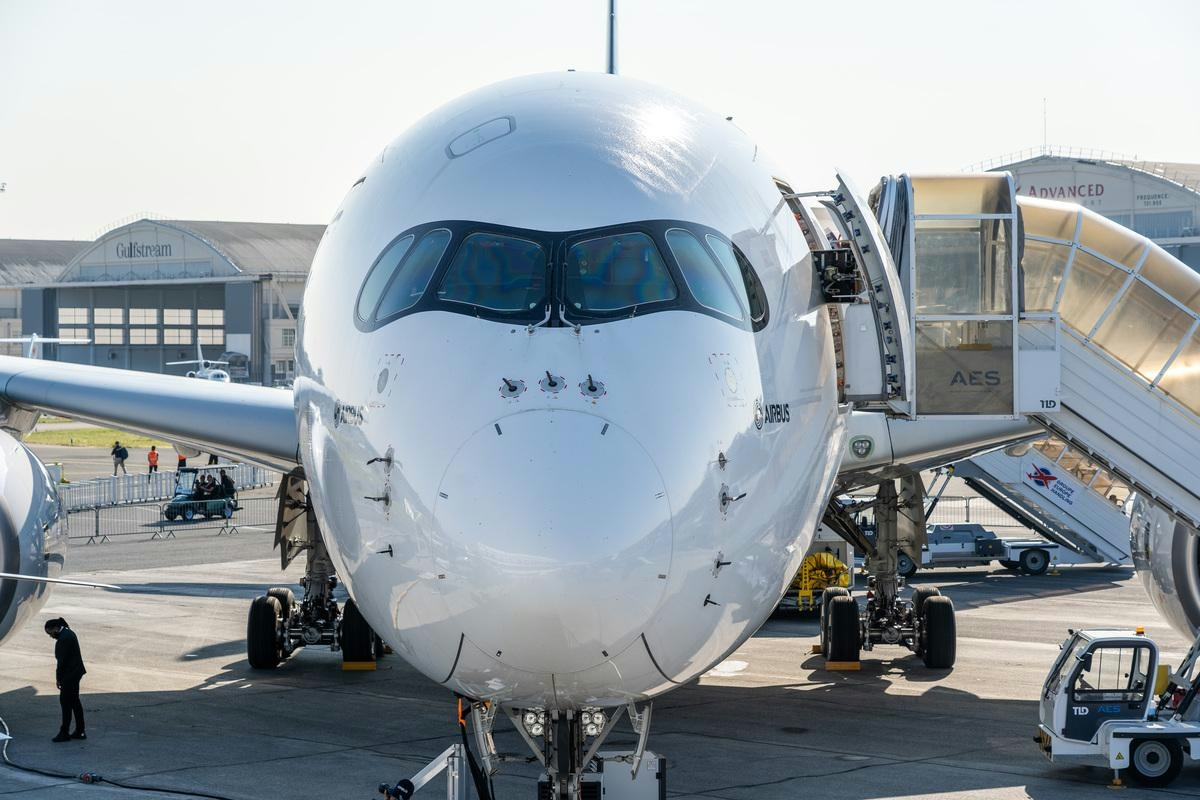
FAA Mandates Software Update for Airbus A350 to Prevent Control Surface Failures
The Federal Aviation Administration (FAA) has issued Airworthiness Directive (AD) 2025-25-12, mandating that all operators of Airbus A350 aircraft install updated flight-control software by January 13, 2026. This directive addresses a significant safety concern involving hydraulic fluid contamination in critical electronic modules, which has the potential to cause uncommanded movements of flight control surfaces and, in extreme cases, lead to loss of aircraft control.
Background and Safety Concerns
The directive follows an incident earlier in 2025 when an Airbus A350 experienced a loss of control over an outboard aileron. Investigations determined that hydraulic fluid leaks had contaminated electronic cards within the Flight Control Remote Modules (FCRMs), which are responsible for managing the aircraft’s ailerons, elevators, and rudders. Due to design similarities across these modules, contamination could trigger a “runaway” scenario affecting multiple control surfaces simultaneously, posing a risk of catastrophic failure. The root cause was traced to servocontrols exposed to contamination during manufacturing or prior to delivery, revealing vulnerabilities in the hydraulic system’s integrity.
This new directive supersedes the interim AD 2025-13-12, issued in July 2025, which required inspections and hardware replacements of affected FCRMs. While the earlier directive focused on hardware interventions—such as replacing contaminated elevator FCRMs and prohibiting module swaps between control surfaces—the latest update introduces a software-based solution as a permanent fix. Operators are now required to install the Flight Control and Guidance System (FCGS) software standards PRIM P14.1.3 and SEC S14.1.2. These updates enhance system resilience against contamination-induced malfunctions and eliminate the need for ongoing hardware replacements.
Scope and Industry Response
The directive applies to all Airbus SAS Model A350-941 and A350-1041 aircraft, encompassing the entire A350-900 and A350-1000 fleets. In the United States, approximately 39 aircraft are affected, with the FAA estimating compliance costs at $2,234 per airplane for the software installation. Additional expenses related to addressing hydraulic leaks or further hardware replacements could reach up to $27,819 per affected unit. Globally, the A350 fleet exceeds 600 aircraft, operated by major carriers including Delta Air Lines, Qatar Airways, and Singapore Airlines.
The FAA’s mandate has prompted a rapid operational response from airlines worldwide, particularly as the directive coincides with a busy holiday travel season. United Airlines reported that six of its A350 aircraft are affected, anticipating only minor disruptions to a few flights. American Airlines has already completed updates on approximately 60 of its 209 affected jets and expects to finish the remainder imminently. Airlines have worked diligently to install the software update to avoid grounding their fleets, with minimal flight delays or cancellations reported, thereby ensuring compliance while maintaining flight schedules.
Regulatory Coordination and Implementation
Compliance timelines align with the European Union Aviation Safety Agency (EASA) AD 2025-0197R1, with the FAA incorporating its provisions by reference, subject to minor exceptions. U.S. operators must utilize FAA-approved methods for software modifications and are exempt from certain reporting requirements to Airbus. The urgency of the issue prompted immediate adoption of the directive, although public comments will be accepted until February 12, 2026.
Airbus has collaborated closely with regulators, issuing service bulletins and operator alerts to facilitate smooth implementation of the software update. As global air travel demand rebounds following the pandemic, these measures are critical to maintaining the A350’s strong safety record. To date, no accidents have resulted from the contamination issue, but the directive aims to ensure the continued safe operation of one of the world’s most advanced long-haul aircraft.

Etihad Airways Suspends Airbus A380 Flights on Key Route

Aditya Birla Group Seeks Approval for Aircraft Leasing in GIFT City

Qatar Airways Highlights Innovation and Connectivity at Arabian Travel Market 2026

Hong Kong's Five-Year Plan Includes Andrew Fan's Aircraft Parts Processing Hub Proposal

ACIA Aero Leasing Delivers ATR72-600 to Air Nostrum

RTX Appoints Jill Albertelli as Head of Pratt & Whitney

TAT Technologies Joins Beyond Aero Hydrogen Aircraft Program

AURAK Study Highlights Barriers to Air Taxi Adoption in Emerging Economies

Xiamen Air Selects Altitude for 787 Maintenance at Heathrow

Etihad and Swissport Extend Global Partnership
