
图像

AeroGenie — 您的智能副驾驶。

问任何问题。分析一切。立即行动。

热门趋势

Categories

Fraport Reports January 2026 Traffic Figures
February 16, 2026By ePlane AI
Fraport Reports January 2026 Traffic Figures
0
0
Fraport AG
Airport Traffic Statistics
Frankfurt Airport

Fraport Reports Growth in January 2026 Traffic Amid Market Shifts

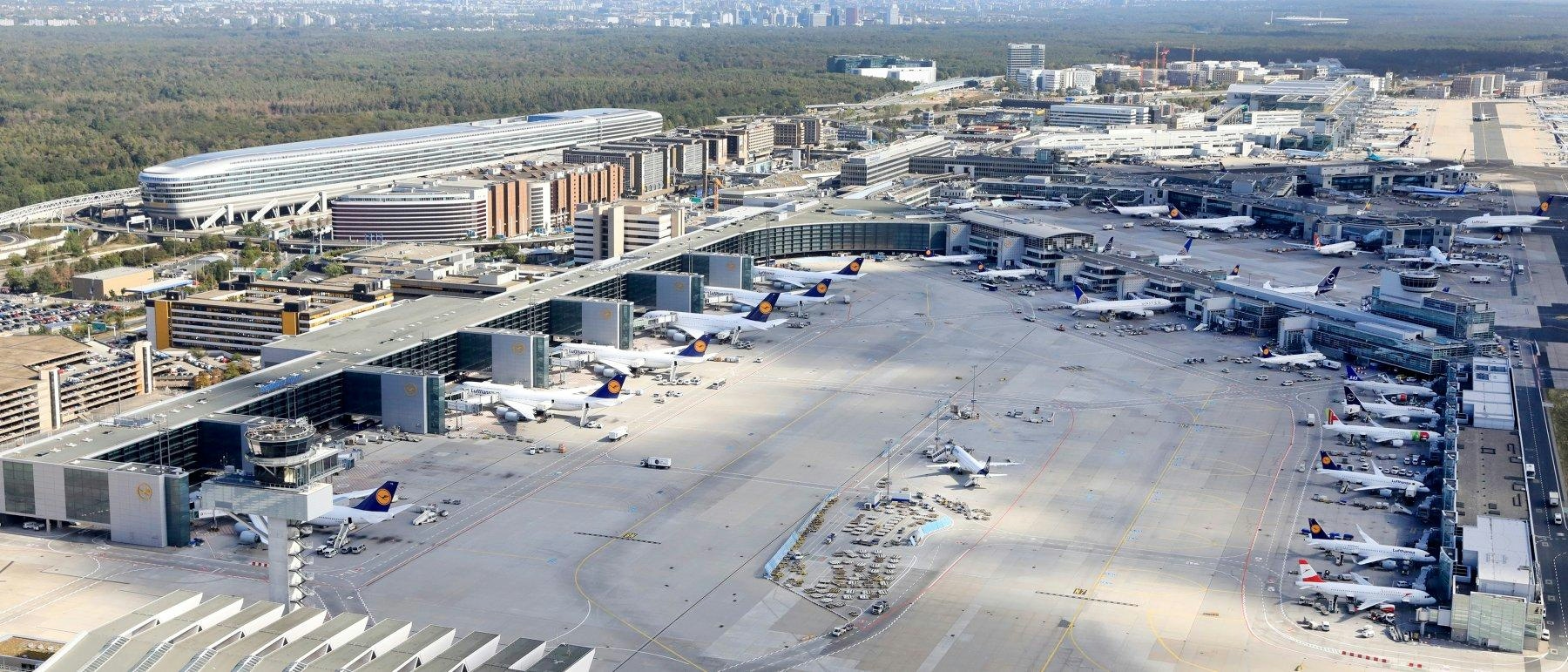
Frankfurt Airport (FRA) recorded a notable increase in passenger traffic in January 2026, welcoming 4.1 million travelers, a 4.9% rise compared to the same period last year, according to data released by Fraport AG. Cargo throughput experienced a modest growth of 1.2%, reaching 150,044 metric tonnes. Aircraft movements also saw a slight uptick of 1.1%, totaling 31,284 take-offs and landings, while the total maximum take-off weight increased by 0.6% year-on-year to approximately 2.0 million metric tonnes.

International Portfolio Shows Broad-Based Passenger Growth

Fraport’s international airports demonstrated strong performance across all regions. Ljubljana Airport (LJU) in Slovenia reported a significant 20.8% increase in passenger numbers, reaching 87,672. In Brazil, the combined traffic at Fortaleza (FOR) and Porto Alegre (POA) airports rose by 24.9%, handling a total of 1.3 million passengers. Lima Airport (LIM) in Peru experienced a more modest growth of 1.3%, with 2.2 million travelers passing through. The group’s 14 Greek airports collectively served 717,808 passengers, reflecting an 8.1% increase. Bulgaria’s coastal airports, Burgas (BOJ) and Varna (VAR), saw passenger numbers climb by 16.2% to 92,263. Antalya Airport (AYT) in Turkey recorded a 7.4% rise, reaching 1.1 million passengers. Overall, Fraport-managed airports handled approximately 9.6 million passengers in January, marking a 7.1% year-on-year increase.

Navigating a Dynamic and Competitive Aviation Environment

These positive results emerge amid a complex and evolving aviation landscape. Airlines such as Ryanair have revised their fiscal 2026 forecasts upward, driven by strong demand, which has led to capacity adjustments across the sector. Conversely, some competitors are anticipating declines; Vienna Airport, for example, projects a reduction in passenger numbers for 2026, attributing this to decreased capacity from low-cost carriers including Ryanair and Wizz Air. Such developments may affect passenger flows at Fraport’s airports, particularly if capacity cuts extend to routes within its network.

Regulatory factors are also influencing market conditions. Recent legal rulings at Dublin Airport, where authorities have imposed a passenger cap, highlight the potential for regulatory constraints to impact airport traffic and capacity management. Fraport, alongside other airport operators, faces the challenge of balancing growth prospects with the uncertainties posed by shifting demand patterns, competitor strategies, and regulatory pressures.

Despite these challenges, Fraport’s January traffic figures underscore the group’s ongoing recovery and resilience, positioning it to adapt effectively to the changing dynamics of the global aviation sector.

More news
West Star Names Brian Howell Chief Commercial Officer

West Star Names Brian Howell Chief Commercial Officer

West Star Aviation Appoints Brian Howell as Chief Commercial Officer West Star Aviation has announced the appointment of Brian Howell as its new Chief Commercial Officer, a strategic move designed to strengthen the company’s commercial operations amid increasing competition in the aerospace industry. Reporting directly to CEO Stephen Maiden, Howell will be responsible for refining sales and marketing strategies, conducting a comprehensive review of current commercial practices, and fostering enhanced collaboration across departments. Additionally, he will lead an evaluation of talent within the commercial division to ensure alignment with West Star’s long-term growth objectives. Extensive Industry Experience and Strategic Focus Howell brings a wealth of experience from senior leadership roles at prominent aviation firms, including Honeywell Aerospace and Textron Aviation. In his new capacity, he will set targets and key performance indicators (KPIs) that support West Star’s ambitions, while acting as a key resource for the sales team. His portfolio of responsibilities also includes cultivating and maintaining strong relationships with major vendors, original equipment manufacturers (OEMs), and customers, thereby reinforcing the company’s market position. The appointment comes at a pivotal moment for the aerospace sector, which is undergoing significant shifts. Competitors such as Embraer are prioritizing sales of their E2 aircraft over launching new airliner programs, reflecting a strategic emphasis on existing product lines. Meanwhile, industry leaders Airbus and Boeing face challenges in 2026 that may prompt adjustments in production rates and aircraft strategies as they compete to maintain or expand market share. Within this context, West Star’s leadership changes are viewed as a proactive effort to respond effectively to evolving market dynamics. Reflecting on his new role, Howell remarked, “I am honoured to join West Star Aviation, a company that values exceptional customer service and operational excellence. I’m excited to leverage my experience to further enhance our capabilities and ensure we meet the evolving needs of our clients in the business aviation sector.” Howell holds dual bachelor’s degrees in Entrepreneurship and Marketing, as well as an MBA from Wichita State University. Leadership Strengthened Across Functions CEO Stephen Maiden expressed strong confidence in Howell’s appointment, stating, “Brian’s extensive experience and strategic mindset will be pivotal as we work to elevate our service offerings and achieve our growth ambitions. We are thrilled to have him on board and look forward to seeing how his vision will help shape the future of West Star Aviation.” Howell’s appointment follows the recent hiring of William Morris as general counsel. Morris, an industry veteran with over 20 years of legal experience in aviation, will oversee West Star’s legal and risk management functions. The company emphasized that his role will enhance operational efficiency while ensuring compliance and safety. Maiden added, “William’s background in business law within the aerospace sector aligns well with our strategic objectives. His leadership will be critical in advancing our mission to support our customers effectively.” With these key leadership appointments, West Star Aviation positions itself to navigate a rapidly evolving aerospace landscape while reinforcing its commitment to growth and exceptional customer service.
Norwegian Group Reports Record Year

Norwegian Group Reports Record Year

Norwegian Group Reports Record Operating Profit Amid Market Challenges The Norwegian Group has announced a historic financial performance, achieving its highest-ever operating profit (EBIT) of NOK 3,732 million for the full year. This milestone underscores the company’s strong position despite an increasingly competitive market environment. In the fourth quarter alone, the Group recorded an operating profit of NOK 21 million, a significant improvement from the negative result reported in the same period of 2024. Reflecting this robust performance, the Board of Directors intends to propose a dividend of NOK 0.80 per share for 2025, amounting to NOK 844 million, subject to approval at the upcoming Annual General Meeting. Passenger Growth and Operational Highlights Passenger traffic demonstrated notable growth during the year. In the fourth quarter, the Group transported 6.2 million passengers, with Norwegian accounting for 5.2 million and Widerøe for 1.0 million. Both airlines experienced increases compared to the previous year. Norwegian adjusted its available seat kilometers (ASK) downward by 3% to accommodate seasonal demand fluctuations, while Widerøe increased production by 2%. Norwegian’s load factor rose to 86.0%, an improvement of 1.8 percentage points year-on-year, and Widerøe reported a load factor of 70.5%. For the full year 2025, the Group carried 27.3 million passengers, up from 26.4 million in 2024. The operating margin reached a record 9.9%, highlighting the Group’s strong financial health and operational efficiency. Geir Karlsen, CEO of Norwegian, commented on the results, stating, “I am pleased to report the best full-year result in Norwegian’s history, to which Widerøe also made a significant contribution. This demonstrates that our customers value our product and the service we provide. The strong performance enables us to continue paying a dividend to our shareholders, while also investing for the future, including in one of Europe’s most modern aircraft fleets.” Challenges and Market Outlook Despite these achievements, the Norwegian Group continues to face significant challenges. Rising operational costs remain a critical concern, particularly as the company seeks to address losses within its offshore division. The competitive landscape is intensifying, with key rivals in both the seafood and airline sectors—such as Mowi and Norwegian Air—expected to respond by enhancing their market share and operational efficiency. Market analysts suggest that the Group’s record profits and optimistic outlook for 2026 may strengthen investor confidence. However, sustaining this momentum will require careful management of cost pressures and competitive dynamics in the coming months.
Romeo, Europe’s Largest eVTOL, Makes Maiden Flight in Germany

Romeo, Europe’s Largest eVTOL, Makes Maiden Flight in Germany

Romeo, Europe’s Largest eVTOL, Completes Maiden Flight in Germany Munich-based startup ERC Systems has marked a significant milestone in Europe’s advanced air mobility sector with the successful maiden flight of its full-scale electric vertical takeoff and landing (eVTOL) aircraft, Romeo. Conducted at the former Erding airbase in Bavaria, now a Bundeswehr innovation centre, the remotely piloted aircraft lifted to just under 10 metres, executed a brief figure-eight maneuver, and landed after a flight lasting less than five minutes. At 2.7 tonnes, Romeo is the heaviest eVTOL ever flown within the European Union, according to publicly available data. Design and Operational Focus Distinct from many eVTOL developers concentrating on urban air taxi services, ERC Systems is targeting applications such as inter-hospital patient transfers, logistics, and defense. The company believes these missions present clearer operational demand and more predictable economic models. CEO David Lobl emphasized that mastering stable hover remains the primary technical challenge at this stage, with forward flight expected to follow once propulsion and control systems are fully validated. Romeo features a 16-metre wingspan and eight boom-mounted rotors arranged in a lift-plus configuration. Currently, the aircraft is limited to hover and low-speed maneuvers. However, ERC plans to introduce a second demonstrator in the coming months that will attempt a full transition to wing-borne cruise flight. Romeo builds upon the company’s earlier Echo demonstrator, which first flew in 2023 to test distributed electric propulsion and battery redundancy. The new aircraft incorporates supplier hardware and production-style build practices, advancing toward an industrial prototype. Future Development and Industry Challenges Data gathered from Romeo’s test program will inform the development of ERC’s planned production model, Charlie. Originally conceived as a fully electric aircraft, Charlie has been redesigned as a hybrid-electric platform in response to slower-than-anticipated improvements in battery energy density and the operational challenges posed by charging infrastructure. Co-founder and chief commercial officer Maximilian Oligschlager noted that purely battery-electric range proved insufficient for the inter-hospital mission profile. The hybrid configuration will maintain electric propulsion while adding a fuel-powered generator as a range extender, aiming for a maximum range of 800 kilometres. Charlie is expected to have a 15-metre wingspan, a maximum takeoff weight of 3,300 kilograms, and a useful load capacity of 500 kilograms. ERC targets certification by the European Union Aviation Safety Agency (EASA) by 2031 under the Special Condition VTOL framework, which enforces rigorous safety standards comparable to those for commercial transport aircraft. Despite these technical advances, ERC faces considerable challenges ahead. Securing adequate funding to cover the substantial costs of certification and industrialization remains a critical hurdle. Industry observers note mixed market reactions: while some investors express optimism about the technology’s potential, others remain cautious due to financial risks and the protracted certification process. Competitors such as Volocopter are intensifying efforts to obtain regulatory approval, highlighting the competitive and uncertain environment confronting eVTOL developers. The broader sector continues to wrestle with regulatory complexities and the imperative to demonstrate commercial viability as the race toward next-generation air mobility accelerates.
Delhi Airport Advises Metro Use Ahead of India AI Summit Traffic Disruptions

Delhi Airport Advises Metro Use Ahead of India AI Summit Traffic Disruptions

Delhi Airport Advises Metro Use Amid Anticipated Traffic Disruptions for India AI Summit Delhi’s Indira Gandhi International (IGI) Airport has issued an advisory urging passengers to utilize the Delhi Metro system in light of expected traffic congestion associated with the India AI Summit at Bharat Mandapam. With thousands of delegates and visitors anticipated for the high-profile event, airport authorities emphasize the importance of alternative public transportation to facilitate smoother access to and from the airport. In a statement posted on X, Delhi International Airport Limited (DIAL) highlighted that major events in the city could significantly impact travel times. Passengers are advised to plan their journeys accordingly and consider the Magenta Line for Terminal 1 and the Airport Express Line for Terminals 2 and 3 to avoid road traffic delays. This guidance aims to mitigate the challenges posed by increased vehicular movement during the summit. The India AI Impact Summit: A Landmark Event for Technology The India AI Impact Summit 2026, commencing today at Bharat Mandapam, represents a significant milestone for the country’s technology sector. The summit, themed “Sarvajana Hitaya, Sarvajana Sukhaya,” will be inaugurated by Prime Minister Narendra Modi and will run concurrently with the India AI Impact Expo from February 16 to 20. Spanning over 70,000 square metres across ten arenas, the expo brings together a diverse array of participants, including global technology companies, startups, academic institutions, research bodies, government agencies, and international partners. Thirteen country pavilions, featuring nations such as Australia, Japan, Russia, the United Kingdom, France, Germany, Italy, the Netherlands, Switzerland, Serbia, Estonia, Tajikistan, and several African countries, underscore the event’s emphasis on international collaboration in artificial intelligence. The expo will host more than 300 curated exhibition pavilions and live demonstrations organized around three thematic “chakras”: People, Planet, and Progress, reflecting AI’s expansive influence across various sectors. Over 600 high-potential startups are expected to participate, many showcasing AI solutions already deployed at scale. The event anticipates attracting more than 250,000 visitors, including international delegates, and aims to foster global partnerships and business opportunities within the AI ecosystem. Additionally, the summit will feature over 500 sessions with more than 3,250 speakers and panellists, providing a comprehensive platform for knowledge exchange and innovation. India’s Ambition in AI and Global Engagement Marking the first international AI gathering hosted in the Global South, the summit highlights New Delhi’s ambition to shape an inclusive, responsible, and impactful AI future. Under the IndiaAI Mission, the country plans to unveil twelve indigenous foundation models developed by local startups and consortia. These models, trained on extensive Indian datasets and tailored to the nation’s 22 official languages, will be showcased alongside practical AI applications ranging from precision agriculture to accessible education. The scale and scope of the summit have attracted considerable attention from global technology companies, with market analysts anticipating strategic initiatives aimed at leveraging India’s expanding AI talent pool and market potential. While prominent figures such as Google CEO Sundar Pichai are in attendance, the absence of Nvidia CEO Jensen Huang due to unforeseen circumstances may influence the event’s dynamics. The summit is widely regarded as a pivotal moment for India to harness AI’s benefits, with international leaders, including the UK Deputy Prime Minister, emphasizing the necessity of global collaboration and stringent safety standards in AI development. In view of the expected crowds and potential traffic disruptions, the advisory from Delhi Airport serves as a crucial reminder for travelers to plan their journeys carefully and consider metro travel to ensure a seamless experience during this major international event.
Shipping Industry Developments in Cyprus

Shipping Industry Developments in Cyprus

Shipping Industry Developments in Cyprus Regional Advances in Fuel Supply and Infrastructure Over the weekend, the Port of Riga marked a significant milestone with the arrival of the first Latvian-bound vessel carrying aviation fuel from the United States. The tanker DAS, escorted through icy waters by the icebreaker Varma, delivered 20,000 tons of aviation fuel—sufficient to meet Riga Airport’s requirements for approximately two winter months. This event coincided with the inauguration of SIA “NAFTIMPEKS”’s new fuel filling and discharging ramp, now the most advanced facility of its kind in the Baltic States. The ramp, capable of handling up to 200,000 tons of fuel monthly, will supply both Riga Airport and gas stations across Latvia. Ivars Blumbergs, Board Chairman of SIA “NAFTIMPEKS,” described the development as a pivotal moment for the company. Historically focused on transit, the firm has adapted to shifting market realities through substantial investment and transformation. The new infrastructure, which cost over two million euros, is expected to manage about 10,000 tons of aviation fuel per month and will also accommodate diesel and other fuel types. Latvia’s Minister of Economics, Viktors Valainis, underscored the broader implications of this advancement, emphasizing the diversification of the fuel market. He noted that just a few years ago, the prospect of supplying various fuel types from the United States seemed unlikely, but today it is a tangible reality. This diversification fosters competition and expands options for both entrepreneurs and consumers, while reinforcing Latvia’s transatlantic economic and energy ties. Parliamentary Secretary of the Ministry of Transport, Kristaps Zaļais, highlighted the positive impact on the national airline AirBaltic and Riga Airport, pointing to enhanced competitiveness and sustainability within the transport sector. Emerging Trends and Challenges in Cyprus Shipping While Latvia celebrates these developments, Cyprus’s shipping industry is navigating its own set of challenges amid a transforming global environment. The anticipated reduction in the sanctioned tanker fleet presents potential operational difficulties for local maritime businesses. Shifts in global oil flows—driven by increased Venezuelan production and declining Russian crude output—are expected to influence shipping demand and freight rates, creating a complex landscape for Cypriot operators. In response to these evolving market conditions, competitors such as Sallaum Lines have relocated their headquarters to Limassol, Cyprus. This strategic move aims to leverage the island’s advantageous geographic position and favorable regulatory framework, positioning Cyprus as a competitive hub in the Mediterranean shipping sector. Looking forward, the global maritime industry’s increasing emphasis on decarbonization and innovation, exemplified by forthcoming events like CMA Shipping 2026, presents both opportunities and challenges for Cypriot shipping companies. As the sector adapts to new sustainability standards and shifting market dynamics, Cyprus remains poised to maintain its role as a key player in the evolving maritime landscape, balancing regulatory adaptation with ambitions for growth and competitiveness.
A*STAR, SIA, and SIAEC Sign Agreements on Cabin and AI Technologies

A*STAR, SIA, and SIAEC Sign Agreements on Cabin and AI Technologies

A*STAR, SIA, and SIAEC Sign Agreements on Cabin and AI Technologies The Agency for Science, Technology and Research (A*STAR), Singapore Airlines (SIA), and SIA Engineering Company (SIAEC) have formalized two new joint laboratory agreements, marking the commencement of a second phase in their ongoing collaboration to advance smart manufacturing and artificial intelligence (AI) applications within the aerospace sector. Progress and Achievements from Phase One The initial partnership, spanning from 2019 to 2024, yielded significant advancements in local aircraft cabin component manufacturing. Over 100,000 parts were developed and produced domestically, resulting in a reduction of lead times by 30 to 50 percent. This improvement played a crucial role in mitigating supply chain disruptions. The collaboration also introduced sustainable repair processes that extended the lifespan of cabin components while minimizing material waste. AI-driven solutions were implemented across SIA and SIAEC operations, facilitating earlier detection of potential delays and reducing unplanned disruptions, thereby enhancing fleet reliability. Moreover, the initiative successfully integrated 28 local small and medium enterprises (SMEs) into the aerospace supply chain, bolstering local industrial capabilities and fostering ecosystem growth. Advancing Manufacturing and AI Integration in Phase Two The forthcoming phase will see A*STAR’s Singapore Institute of Manufacturing Technology (SIMTech), SIA, and SIAEC inaugurate a new joint laboratory in September 2025, with operations extending through 2030. This facility will focus on the production of larger and more complex cabin components, including business class seat parts and aerospace-grade laminate sheets, employing cutting-edge manufacturing technologies. The collaboration will also emphasize automation and digitalization within maintenance, repair, and overhaul (MRO) processes, incorporating innovations such as intelligent wheel bearing inspections, robotic brake cleaning, and enhanced capacity planning. In parallel, a second joint laboratory, operational since October 2025 and scheduled to continue until 2028, will concentrate on the integration of generative AI (GenAI) technologies. This initiative aims to transform airline operations and maintenance planning by leveraging advanced analytics and GenAI for early disruption detection, workflow optimization, and improved operational resilience. Responding to Market Dynamics and Competitive Challenges These technological developments emerge amid heightened market volatility influenced by rapid AI advancements. The recent decline in software stock valuations following the launch of Anthropic’s AI tool highlights the unpredictable effects of AI on industry performance. In anticipation of potential disruptions, airlines are pursuing strategic partnerships to enhance competitiveness, exemplified by SIA’s commercial cooperation with Air India. Market analysts remain divided on the outlook, with some predicting gains in major stock indexes despite ongoing volatility driven by geopolitical tensions and uncertainties surrounding AI’s return on investment. Strengthening Singapore’s Aerospace Innovation Ecosystem Prof Lim Keng Hui, Assistant Chief Executive of A*STAR’s Science and Engineering Research Council, emphasized the strategic importance of the collaboration. He stated, “A*STAR is Singapore’s strategic innovation engine, where we turn research into industry-ready solutions through our world-class talent, infrastructure, and technological expertise. Our collaboration with SIA and SIAEC is the perfect example of how co-innovation in smart and sustainable advanced manufacturing and AI is future-proofing Singapore’s aerospace ecosystem.”
Largest Air Force Confirms Delivery of 17 F-35 Jets with Installed Radars

Largest Air Force Confirms Delivery of 17 F-35 Jets with Installed Radars

US Air Force Confirms Delivery of 17 F-35A Jets Equipped with Operational Radars The United States Air Force has officially confirmed that all 17 F-35A Joint Strike Fighters delivered under Lot 17 are equipped with fully operational radar systems. This announcement directly addresses earlier reports suggesting that some of these aircraft arrived without radars amid the transition to Northrop Grumman’s new AN/APG-85 radar system. A spokesperson clarified that the Lot 17 jets are fitted with the existing APG-81 radars, dismissing claims that certain aircraft operated without radar and relied solely on data links for targeting. The Air Force also emphasized that details regarding the integration of the APG-85 radar remain classified due to security concerns. Block 4 Modernization and Technical Challenges The APG-85 radar is a central element of the F-35’s Block 4 modernization program, which encompasses a suite of upgrades including the replacement of the AN/AAQ-37 Distributed Aperture System, enhancements to the Electro-Optical Targeting System, a new electronic warfare suite, and expanded computing and sensor capabilities. While the Air Force has identified the electronic warfare improvements as a high-priority objective, the Block 4 program continues to face significant schedule delays and escalating costs. The integration of these advanced systems demands increased electrical power and improved thermal management, both of which depend on engine upgrades that are currently behind schedule. Despite assurances from the Air Force, uncertainties persist regarding the compatibility between the existing APG-81 radar and the forthcoming APG-85 system. Defense analysts have noted that aircraft configured for the APG-85 may not be able to temporarily accommodate the APG-81 without structural modifications, potentially requiring a redesign of the forward fuselage. Program officials have refrained from providing further technical details, citing operational security. Strategic Context and Regional Implications The delivery of radar-equipped F-35As occurs amid escalating regional tensions, particularly in the Asia-Pacific region, where China’s expanding military capabilities and the development of advanced stealth fighters such as the J-20 have raised concerns among US allies. Concurrently, Russia’s efforts to deploy next-generation fighter aircraft contribute to an increasingly competitive global military environment. The enhanced capabilities of the F-35 are expected to influence defense spending and strategic planning across the region, potentially accelerating the development of rival stealth fighter programs. This development also renews discussions about the future of legacy platforms like the AV-8B Harrier II, which the US Marine Corps plans to retire by 2026 as it expands its fleet of F-35B aircraft. Delivery Schedule and Future Outlook Initial projections anticipated the arrival of F-35s equipped with the full Block 4 upgrade suite by 2025. However, a recent Government Accountability Office report indicates that only a limited subset of these upgrades will be delivered initially, with full Block 4 capabilities delayed by at least five years. This revised timeline underscores ongoing challenges in integrating advanced radar, sensor, and power systems, even as the Air Force strives to maintain technological superiority in the face of evolving global threats.
The Twin-Engine L-1011 Prototype That Never Flew

The Twin-Engine L-1011 Prototype That Never Flew

The Twin-Engine L-1011 Prototype That Never Flew The Lockheed L-1011 TriStar is widely recognized as one of the most technologically advanced widebody airliners of the 1970s and 1980s. Celebrated for its quiet cabin, pioneering autoland system, and distinctive S-duct design, the TriStar’s development history is less well known for its initial twin-engine concept—a design that ultimately never progressed beyond the planning stage. Origins and Early Development In 1966, American Airlines issued a request for a widebody domestic airliner, prompting responses from both Lockheed and McDonnell Douglas. While McDonnell Douglas proceeded with what would become the DC-10, Lockheed initially pursued a twin-engine design internally designated as the CL-1011, with “CL” standing for California Lockheed. This early concept envisioned a short- to medium-haul, twin-aisle aircraft powered by two high-bypass turbofan engines. However, the technological and regulatory environment of the late 1960s posed significant obstacles. Engine technology at the time was still maturing, with limitations in thrust capacity and reliability. Regulatory restrictions, particularly the Federal Aviation Administration’s “60-minute rule,” confined twin-engine aircraft to routes within one hour of a suitable diversion airport. This constraint severely limited operational flexibility, especially for overwater and transcontinental flights. Furthermore, performance requirements for operations at hot-and-high airports and shorter runways added complexity to the twin-engine approach. Confronted with these challenges, Lockheed abandoned the twinjet concept in favor of a trijet configuration, incorporating the now-iconic tail-mounted engine and S-duct that became hallmarks of the TriStar. Revisiting the Twin-Engine Concept in the 1970s By the early 1970s, advances in engine performance and evolving airline economics led Lockheed to reconsider the twin-engine design. The CL-1600 or Model 1600 study examined the possibility of removing the center engine from the TriStar airframe to reduce operating costs and simplify maintenance. Although there are reports of informal discussions with carriers such as Air Canada, no formal proposals or detailed documentation have surfaced publicly. Despite the potential economic benefits, the engineering challenges of modifying an airframe originally optimized for three engines proved substantial. The project did not progress to the prototype stage or flight testing, and the twin-engine variant remained unrealized. Market Impact and Industry Context The failure to bring the twin-engine L-1011 prototype to fruition had significant repercussions for Lockheed. Beyond the direct financial and reputational costs associated with an unflown design, the company ceded competitive ground to rivals. Airbus, for instance, capitalized on this opportunity by introducing the A300—the world’s first twin-engine, twin-aisle widebody airliner—which first flew in 1971 and entered commercial service in 1974. The A300’s success validated the twin-engine widebody concept and established a new industry benchmark. Both Boeing and Airbus leveraged Lockheed’s setbacks to consolidate their positions in the widebody market. Although initial airline skepticism regarding twin-engine widebodies may have slowed early adoption, competitive pressures ultimately accelerated advancements in engine reliability and aircraft safety standards across the industry. While the twin-engine L-1011 never took to the skies, its development narrative underscores the complex interplay of technological innovation, regulatory frameworks, and market dynamics that have shaped the trajectory of modern commercial aviation.
Clark International showcases investment opportunities at Singapore Airshow 2026

Clark International showcases investment opportunities at Singapore Airshow 2026

Clark International Showcases Investment Opportunities at Singapore Airshow 2026 Promoting Clark Aviation Capital on the Global Stage Clark International Airport Corporation (CIAC) took center stage at the Singapore Airshow 2026, held at the Changi Exhibition Centre, to highlight investment prospects within Clark Aviation Capital. Recognized as one of Asia’s premier aerospace and defense gatherings, the event convened global industry leaders, government officials, and corporate executives to explore advancements in aviation and related technologies. CIAC’s participation was in collaboration with the Bases Conversion and Development Authority (BCDA), the Department of Transportation, and private sector partners Lipad and Bertaphil, all represented at the Philippine Pavilion. Key figures such as CIAC Board Director and Civil Aviation Authority of the Philippines Director General Raul del Rosario, alongside BCDA Vice President Kenneth Peralta, engaged directly with prospective investors, underscoring the Philippines’ commitment to expanding its aerospace footprint. CIAC President and CEO Jojit Alcazar emphasized the agency’s strategic focus on attracting investments in aircraft maintenance, repair, and overhaul (MRO), as well as other aerospace-related sectors. He highlighted that discussions with international aviation stakeholders opened avenues for partnerships, particularly in helicopter maintenance and specialized MRO services. Several global companies expressed keen interest in exploring business opportunities within Clark, signaling growing confidence in the region’s aerospace potential. Alcazar remarked that CIAC’s presence at the airshow reinforced investment ties and showcased Clark’s preparedness to meet the increasing demands of the global aerospace industry. The event also provided valuable insights into international best practices concerning aviation operations, safety protocols, technology integration, and workforce development—critical elements for Clark Aviation Capital’s ambition to emerge as a competitive hub in the Asia-Pacific. Navigating Industry Challenges Amid Growth Prospects The Singapore Airshow unfolded against a backdrop of significant challenges confronting the aviation sector. Industry reports indicate that supply chain disruptions, coupled with surging demand from key markets such as China and India, are exerting pressure on manufacturers and service providers. Leading aerospace companies like Airbus and Boeing are grappling with the rapid expansion of air travel across the Asia-Pacific region. While the business jet segment shows signs of recovery, the commercial aviation market remains uneven, eliciting mixed responses from participants at the event. Competitors are adopting varied strategies to address these dynamics. Embraer is concentrating on fleet modernization initiatives, while the Royal Australian Air Force attracted attention with the debut of its F-35A fighter jet. Meanwhile, the Singapore Airshow organizers are adjusting to evolving market demands, reflecting the broader transformation within the aerospace industry. Alcazar referenced the 2024 Philippine Aerospace Industry Roadmap, which forecasts the country’s aerospace sector as one of the fastest-growing in the region. He underscored Clark’s strategic positioning to satisfy the rising need for dependable MRO services, essential for maintaining the safety and efficiency of expanding global aircraft fleets. Clark’s growing stature in the MRO sector is evidenced by the presence of major providers such as SIA Engineering and Metrojet Engineering. CIAC envisions Clark Aviation Capital evolving into a dynamic business and logistics hub, ultimately establishing itself as the Philippines’ premier global aviation center. As the principal land and aviation development arm of the BCDA, CIAC is charged with transforming Clark Aviation Capital into a comprehensive aerotropolis. The agency manages the Clark aviation complex, which accommodates firms engaged in industrial, commercial, mixed-use, warehousing, and manufacturing activities, reflecting Clark’s ongoing evolution into a vibrant, aviation-driven economic hub.
Taiwan and U.S. Reach Trade Agreement Covering Aircraft and Engines

Taiwan and U.S. Reach Trade Agreement Covering Aircraft and Engines

Taiwan and U.S. Reach Trade Agreement Covering Aircraft and Engines The United States and Taiwan have formalized a landmark bilateral trade framework known as the “U.S.–Taiwan Agreement on Reciprocal Trade,” representing a significant advancement in their economic and strategic relationship. The agreement was finalized under the oversight of U.S. Trade Representative Jamieson Greer, as announced by the Office of the United States Trade Representative (USTR) on February 12, 2026. Provisions and Strategic Emphasis The agreement aims to reduce and eliminate both tariff and non-tariff barriers that have historically impeded bilateral trade. It seeks to enhance market access for U.S. goods and services within Taiwan, while fostering regulatory cooperation and strengthening supply-chain resilience. Central to the framework is a focus on commercial aircraft, aircraft engines, and related aerospace equipment. Although the USTR has not released a detailed sector-by-sector financial breakdown, official briefings indicate Taiwan’s commitment to purchasing substantial volumes of U.S. commercial aviation products, potentially amounting to approximately $15.2 billion as part of a broader trade package. Beyond aerospace, Taiwan has pledged to remove or reduce tariffs on 99% of U.S. goods. In exchange, the United States will lower tariffs on Taiwanese exports to 15%, aligning these rates with those extended to other key Asian partners such as Japan and South Korea. The overall agreement is projected to increase American exports—including energy, aviation, and agricultural products—by more than $84 billion. Economic Impact and Market Response The trade deal has been met with largely positive reactions from various sectors. U.S. agricultural groups and cattle producers have welcomed the duty-free access for beef and dairy products, anticipating expanded opportunities in the Taiwanese market. Additionally, the agreement includes significant Taiwanese investments in U.S. industries such as semiconductor manufacturing and artificial intelligence, which could have far-reaching implications for the global technology landscape. This framework arrives as Taiwan seeks to diversify and secure its supply chains, particularly in high-technology and transportation sectors. Concurrently, the United States aims to bolster exports in strategic industries including aerospace, energy, and advanced manufacturing. The commitments related to commercial aviation align with Taiwan’s long-term objectives for fleet renewal and expanded air-transport capacity, while simultaneously supporting U.S. manufacturers and suppliers. Despite these advances, challenges remain. Taiwan has resisted U.S. proposals to relocate 40% of its semiconductor supply chain to American soil, describing such demands as “impossible.” Nevertheless, the agreement’s provisions on investment and cooperation in advanced technologies signal a notable shift in the competitive dynamics of the sector, potentially increasing pressure on global rivals to adapt. Nature and Scope of the Agreement The U.S.–Taiwan Agreement on Reciprocal Trade constitutes an officially signed, government-to-government framework designed to facilitate large-scale commercial transactions, particularly within the aerospace sector. It does not represent a single procurement contract or detailed purchase order from manufacturers, and specific information regarding companies, aircraft types, or engine models has not been disclosed. As implementation proceeds, the agreement is poised to reshape trade relations across multiple industries, reinforcing the strategic partnership between the United States and Taiwan.
line









