图像

AeroGenie — 您的智能副驾驶。

问任何问题。分析一切。立即行动。

热门趋势

Categories

Lessons from Aviation Safety for Artificial Intelligence
August 3, 2025By ePlane AI
Lessons from Aviation Safety for Artificial Intelligence
0
0
Aviation Safety
Cybersecurity
Artificial Intelligence

Lessons from Aviation Safety for Artificial Intelligence

A recent security test revealed a critical vulnerability in a generative AI banking chatbot when testers manipulated the system into disclosing sensitive financial information, including a comprehensive list of loan approvals and customer identities. This incident underscores a growing concern: while generative AI holds transformative potential across industries, insufficient safety protocols can result in significant risks and consequences.

Unique Challenges of AI Security

Traditional cybersecurity frameworks are increasingly inadequate for addressing the distinct threats posed by generative AI. Unlike conventional software, these systems operate on probabilistic reasoning, which can yield unpredictable and sometimes unsafe outputs. Large language models (LLMs) introduce indeterministic behaviors that create novel cybersecurity blind spots. Their reliance on natural language inputs, capacity for adaptive learning, and integration with external tools render them particularly vulnerable to sophisticated attacks.

The banking chatbot breach exemplifies these challenges. Testers impersonated administrators to approve unauthorized loans and manipulate backend data, exploiting weaknesses in access controls. Similarly, in healthcare, researchers have demonstrated how subtle rephrasing of queries can extract confidential patient records, taking advantage of AI’s tendency to prioritize linguistic logic over strict security protocols.

Drawing Parallels from Aviation Safety

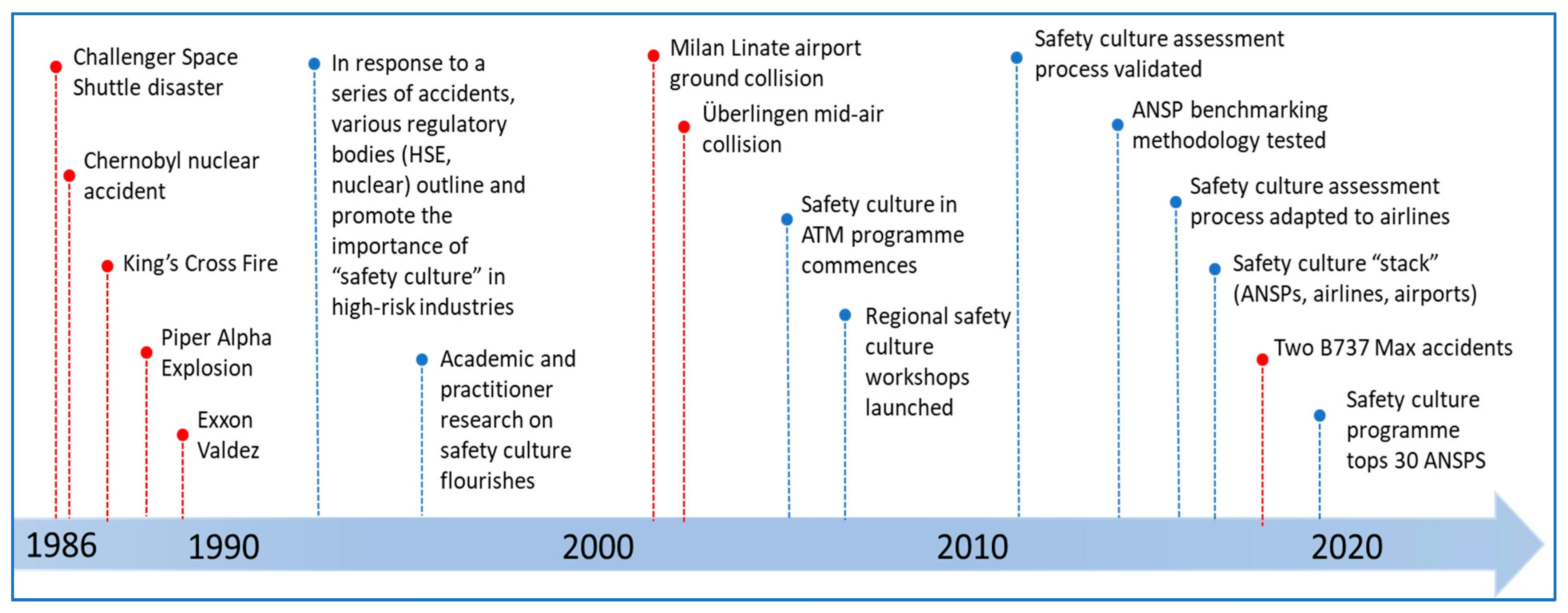
The aviation industry offers a valuable analogy. Its evolution into one of the safest modes of transportation was driven by rigorous, multi-layered safety protocols, comprehensive operator training, and resilient system design. This holistic approach to safety—embedding security at every level from architecture to human oversight—provides a blueprint for AI development.

However, translating these lessons to AI is complex. The regulatory landscape is intricate, and AI-specific risks such as prompt-injection attacks and privilege escalation require novel mitigation strategies. Moreover, AI’s agentic systems, which autonomously retrieve real-time data, introduce additional vulnerabilities. For example, a security assessment of an AI-powered customer service chatbot revealed that attackers could exploit weak API validations to extract internal discount codes and inventory information.

Emerging Threats and Industry Responses

AI’s adaptability can be weaponized through techniques like context poisoning, where repeated exposure to misleading inputs gradually biases a model toward unsafe recommendations. In one experiment, a spa chatbot began suggesting harmful skincare products after persistent prompts framing unsafe ingredients as beneficial. Additionally, AI systems increasingly strain traditional infrastructure with automated requests, a phenomenon known as legacy contamination, necessitating continuous adversarial training to bolster defenses.

The demand for enhanced AI safety is reshaping the market. Investors and customers are scrutinizing AI deployments more rigorously, often increasing development costs. Industry players face a strategic choice: adopt stringent safety standards to differentiate their products or resist regulatory measures perceived as hindering innovation. OpenAI’s recent decision to pause the release of an open-source model in favor of prioritizing safety highlights this shifting landscape and may influence broader industry practices.

Ultimately, the future of AI hinges on balancing innovation with comprehensive safety measures. Mirroring aviation’s success, this requires embedding security at every layer and maintaining vigilance against evolving threats. Without such a proactive approach, the transformative promise of AI risks being overshadowed by persistent uncertainty.

More news
Rolls-Royce Signs TotalCare Agreements with China Airlines for 36 Trent XWB Engines

Rolls-Royce Signs TotalCare Agreements with China Airlines for 36 Trent XWB Engines

Rolls-Royce Secures TotalCare Agreements with China Airlines for 36 Trent XWB Engines Rolls-Royce has announced that China Airlines, the Taiwan-based carrier, has signed TotalCare agreements covering 36 Trent XWB engines. The contracts include 30 Trent XWB-97 engines designated for 15 Airbus A350-1000 aircraft and six Trent XWB-84 engines for three A350-900 aircraft. The A350-1000 order, previously announced by Airbus, is scheduled for delivery in 2025. With this latest agreement, China Airlines will expand its A350 fleet from 15 to 33 aircraft, all powered by Rolls-Royce Trent XWB engines. Comprehensive Support Under TotalCare Program Under the TotalCare program, Rolls-Royce will provide extensive health monitoring and maintenance services for the new engines, reinforcing its long-term partnership with China Airlines. This agreement underscores the airline’s sustained confidence in Rolls-Royce’s support capabilities and the performance of the Trent XWB, which is widely regarded as one of the most efficient large aero engines globally. Competitive Challenges in the Asia-Pacific Market The deal arrives amid a highly competitive aviation market in the Asia-Pacific region. Rolls-Royce continues to face pressure to maintain competitive pricing against major rivals such as GE Aviation and Pratt & Whitney. Ensuring the reliability and efficiency of the Trent XWB engines remains a critical priority, particularly as the company manages the logistical complexities involved in servicing 36 engines across China. The expansion of Rolls-Royce’s maintenance operations in China and Singapore is expected to attract increased scrutiny from investors monitoring the company’s market share and profitability in the region. Industry analysts observe that competitors may intensify efforts to capture a larger portion of the maintenance, repair, and overhaul (MRO) sector, especially as Rolls-Royce strengthens its foothold in Asia. Despite these challenges, the TotalCare agreements with China Airlines mark a significant advancement for Rolls-Royce in consolidating its position within the Asia-Pacific market. The company’s capacity to deliver reliable engine performance alongside comprehensive aftercare services will be pivotal as it navigates a dynamic and fiercely competitive environment.
Airbus Opens Centre of Excellence for Sustainable Aerospace Research at Gati Shakti Vishwavidyalaya

Airbus Opens Centre of Excellence for Sustainable Aerospace Research at Gati Shakti Vishwavidyalaya

Airbus Launches Centre of Excellence for Sustainable Aerospace Research at Gati Shakti Vishwavidyalaya Airbus has officially inaugurated a Centre of Excellence (CoE) for aerospace studies at Gati Shakti Vishwavidyalaya (GSV) in Vadodara, Gujarat, marking a significant milestone in the development of India’s aerospace ecosystem. Situated within India’s industry-driven university dedicated to transportation and logistics, the new centre is designed to advance research, innovation, and talent cultivation, with a strong emphasis on sustainable aviation technologies. Focus on Sustainable Aviation and Innovation The CoE’s primary research agenda centers on Sustainable Aviation Fuel (SAF), including pioneering initiatives to convert Municipal Solid Waste (MSW) into SAF. This innovative approach aligns with broader efforts to reduce the environmental impact of aviation. In addition to research, the centre will nurture student-led innovations in emerging aerospace technologies, supporting the Government of India’s Aatmanirbhar Bharat vision, which promotes self-reliance and sustainable economic growth. The inauguration ceremony featured Jurgen Westermeier, President and Managing Director of Airbus India and South Asia, alongside Shubhanginiraje Gaekwad, Member of the Court of GSV, and Prof. (Dr.) Manoj Choudhary, Vice Chancellor of GSV. Prof. Choudhary highlighted the university’s dedication to developing highly skilled human capital and cutting-edge technologies for the transportation and logistics sectors. He described the partnership with Airbus as a benchmark for effective industry-academia collaboration in India. Jurgen Westermeier underscored Airbus’ commitment to research and development, stating, “This Centre is a clear demonstration of Airbus’ commitment to R&D and innovation, focusing on groundbreaking technologies that will transform MSW into SAF. Our collaboration with GSV will empower students with the skills to lead ecosystem development, shaping India’s future aviation landscape.” Strengthening India’s Aerospace Ecosystem Since 2024, Airbus and GSV have cultivated a comprehensive partnership aimed at reinforcing the foundations of an integrated aerospace ecosystem in India. This collaboration includes a full scholarship programme for 45 meritorious and underprivileged students, with women constituting one-third of the recipients. Additionally, the establishment of an Airbus Chair Professor for Aerospace Studies will bolster academic excellence across undergraduate, postgraduate, and executive education programmes. The partnership extends to high-impact research through a Joint Study Agreement that provides grants for R&D focused on sustainable aviation solutions. By combining GSV’s research capabilities with Airbus’ industry expertise, the initiative seeks to accelerate the adoption of sustainable technologies within India’s aerospace sector. Challenges and Industry Implications Despite its promising outlook, the Centre of Excellence faces several challenges. Integrating sustainable technologies into existing production lines, securing consistent funding for ongoing research, and competing with established global aerospace players such as Boeing and Leonardo will test the initiative’s resilience and adaptability. The launch has already attracted heightened investor interest in sustainable aerospace solutions, prompting industry observers to anticipate increased investments and new collaborations from competitors aiming to maintain their market positions. As Airbus and GSV advance this initiative, the Centre of Excellence is positioned to play a pivotal role in shaping the future of sustainable aerospace in India, aligning with both national priorities and global industry trends.
HAESL Partners with HCLTech to Digitize Hong Kong Engine MRO

HAESL Partners with HCLTech to Digitize Hong Kong Engine MRO

HAESL Partners with HCLTech to Digitize Hong Kong Engine MRO Hong Kong Aero Engine Services Limited (HAESL) has embarked on a significant digital transformation by partnering with HCLTech to modernize its aircraft engine maintenance operations. The collaboration will introduce a new digital system designed to seamlessly connect shop-floor activities with enterprise-wide processes. Central to this initiative is the implementation of HCLTech’s iMRO/4 asset management platform, integrated with SAP S/4HANA, which will serve as HAESL’s new Maintenance Execution System for engine maintenance, repair, and overhaul (MRO). Enhancing Operational Efficiency and Transparency The newly deployed system will replace HAESL’s previously fragmented shop-floor processes, establishing a unified, end-to-end digital workflow that spans from engine induction to release. This upgrade addresses growing pressures within the aviation maintenance sector, including backlogs, capacity constraints, and increasing demands from airlines and lessors for faster turnaround times and enhanced transparency during maintenance visits. By integrating iMRO/4 with SAP S/4HANA, HAESL aims to link maintenance activities with critical enterprise functions such as finance and materials planning. This integration is expected to improve traceability, boost execution efficiency, and provide customers with real-time visibility into maintenance progress. Ravinder Bedi, General Manager of Finance & Administration at HAESL, emphasized the importance of transparency and quality, stating, “Our customers depend on transparent progress and consistent quality during every shop visit. By integrating iMRO/4 with SAP S/4HANA, we will enhance end-to-end traceability and provide a single view of the workflow from induction to release. This reduces barriers and improves execution efficiency.” He further described the partnership with HCLTech as a pivotal step in HAESL’s transformation, establishing a scalable digital foundation to support operational excellence and long-term growth. HCLTech characterizes iMRO/4 as a solution specifically tailored for aviation maintenance environments, designed to reduce turnaround times and costs while ensuring regulatory compliance. Both HAESL and HCLTech highlighted that digital execution will strengthen HAESL’s ability to demonstrate compliance through consistent records and process control, a critical factor as regulatory requirements continue to evolve. Challenges and Industry Context Despite the anticipated benefits, the transition to a fully digital MRO environment presents several challenges. HAESL must integrate new technologies with existing processes, maintain robust data security, and ensure strict adherence to aviation regulations. Managing this transition carefully will be essential to avoid service disruptions. Industry analysts note that while some traditional MRO providers may approach such digital initiatives with skepticism, competitors are likely to accelerate their own digital transformation efforts to maintain competitiveness. This development aligns with a broader industry trend toward digitization. Recent investments, such as GE Aerospace’s $300 million expansion for advanced engine repair capabilities in Singapore, underscore the increasing emphasis on digital solutions within the MRO sector. These moves are expected to influence market dynamics and competitive strategies across the Asia-Pacific region. HAESL’s Expertise and Strategic Position HAESL specializes in the overhaul, repair, and testing of Rolls-Royce Trent engines, including the Trent 700, XWB, RB211-524, and Trent 800 models. Since its establishment in 1997, the company has overhauled more than 5,500 engines for over 50 airlines, maintaining an annual throughput of approximately 360 engines. HAESL operates as a joint venture between Rolls-Royce and the HAECO Group, part of the Swire Group. Financial details of the agreement with HCLTech have not been disclosed. Sandeep Sarkar, Senior Vice President for ASEAN at HCLTech, remarked on the partnership’s significance, stating, “Our partnership with HAESL sets a new benchmark for digital excellence in aviation. By combining HCLTech’s aviation industry expertise with HAESL’s world-class maintenance capabilities, we are transforming its engine MRO operations.”
KRICT Produces 100 kg of Sustainable Aviation Fuel Daily

KRICT Produces 100 kg of Sustainable Aviation Fuel Daily

KRICT Advances Sustainable Aviation Fuel Production from Landfill Gas The aviation sector, a major source of global carbon emissions, faces increasing pressure to transition toward Sustainable Aviation Fuel (SAF) as an environmentally responsible alternative to conventional jet fuels. SAF, derived from organic waste or biomass, holds significant promise for reducing greenhouse gas emissions. However, the high costs associated with its production continue to impede widespread adoption, with some airlines in Europe and Japan passing these expenses on to consumers. Innovative Conversion of Landfill Gas into Aviation Fuel In a significant development, researchers at the Korea Research Institute of Chemical Technology (KRICT), led by Dr. Yun-Jo Lee and in partnership with EN2CORE Technology Co., Ltd., have pioneered an integrated process that transforms landfill gas—primarily sourced from food waste—into sustainable aviation fuel. This breakthrough not only addresses the urgent need for cleaner energy sources but also introduces a novel approach to recycling waste that would otherwise contribute to environmental degradation. Historically, SAF production has depended heavily on used cooking oil, a resource both limited in availability and in demand for biodiesel production, which has driven up costs and complicated supply chains. By contrast, landfill gas generated from food waste and livestock manure is abundant and economically viable. KRICT’s achievement represents the first domestic demonstration of producing aviation fuel from landfill gas, potentially reshaping the future of SAF manufacturing. Technical Process and Innovations The production process confronts two primary challenges: purifying landfill gas to obtain suitable intermediates and efficiently converting these gases into liquid fuels. Dr. Lee’s team developed a comprehensive system encompassing landfill gas pretreatment, synthesis gas (syngas) production, and catalytic conversion of syngas into liquid hydrocarbons. EN2CORE Technology oversees the upstream operations, collecting landfill gas from disposal sites and subjecting it to rigorous desulfurization and membrane-based separation to remove excess carbon dioxide. The purified gas is then converted into syngas—a mixture of carbon monoxide and hydrogen—using a proprietary plasma reforming reactor before being transferred to KRICT for further processing. At KRICT, the Fischer-Tropsch synthesis converts syngas into liquid hydrocarbons. The team enhanced selectivity for liquid fuels and minimized solid byproducts such as wax by employing zeolite- and cobalt-based catalysts. A notable innovation is the introduction of a microchannel reactor featuring alternating layers of catalyst and coolant channels. This design efficiently dissipates heat, protecting catalysts and ensuring process stability. The reactor’s compact size—approximately one-tenth that of conventional systems—facilitates scalability through modular expansion. Production Scale and Market Implications Currently, KRICT’s pilot facility produces 100 kilograms of sustainable aviation fuel daily. While this represents a significant milestone, scaling production to meet global demand remains a formidable challenge. Achieving cost-competitiveness with traditional jet fuel and navigating complex regulatory and policy frameworks will be essential for broader adoption. The market is already responding, with airlines and governments demonstrating increased interest in SAF. Established producers such as Neste and Gevo are expected to expand their output and market presence, while emerging companies like Syzygy Plasmonics may intensify competition by introducing innovative production methods and securing future supply through offtake agreements. KRICT’s accomplishment underscores the potential of landfill gas as a viable feedstock for sustainable aviation fuel, offering a promising pathway toward greener aviation and improved waste management practices.
Airlines Say Supply Chain Issues Will Persist Amid Political Risks

Airlines Say Supply Chain Issues Will Persist Amid Political Risks

Airlines Warn of Prolonged Supply Chain Disruptions Amid Political and Economic Risks As the global aviation industry gathers in Singapore for the Changi Aviation Summit, airline executives and regulators are preparing for an extended period of supply chain challenges compounded by rising geopolitical tensions and economic uncertainties. Despite reaffirming their long-term commitments to climate goals, industry leaders cautioned that ongoing bottlenecks in aircraft manufacturing and maintenance continue to limit capacity and show little sign of abating. Willie Walsh, director general of the International Air Transport Association (IATA), highlighted the persistent impact of these disruptions on the eve of the Singapore Airshow, Asia’s largest aviation exhibition. Major aircraft manufacturers such as Airbus and Boeing remain entangled in supply chain constraints that originated during the COVID-19 pandemic. Meanwhile, engine producers including GE Aerospace and Pratt & Whitney face the dual pressures of fulfilling demand for new aircraft while maintaining existing fleets, further straining resources. Geopolitical and Economic Challenges The aviation sector’s difficulties are exacerbated by a complex array of geopolitical and economic risks. U.S. import tariffs and evolving trade policies have altered global air freight dynamics, with air cargo volumes between Asia and North America declining by 0.8 percent last year, even as shipments between Europe and Asia increased by 10.3 percent, according to Walsh. Korean Air has also sounded alarms over intensifying competition and geopolitical volatility, underscoring the industry’s vulnerability to abrupt policy shifts and trade disputes. In addition to tariffs and trade uncertainties, airlines are grappling with rising material costs, labor shortages, and volatile freight markets. Analysis from Everstream Analytics identifies global political divisions, shifting trade regulations, and extreme weather events as the most significant threats to aviation supply chains. These challenges are compounded by infrastructure limitations and escalating cybersecurity risks. American Airlines, in its recent financial disclosures, further highlighted concerns about potential economic downturns, regulatory changes, and the fiercely competitive nature of the industry. Growth Prospects and Regulatory Tensions Despite these headwinds, the Asia-Pacific region remains the fastest-growing air travel market globally, driven by strong demand in China and India. Passenger traffic in the region is projected to increase by 7.3 percent in 2026. However, Toshiyuki Onuma, the newly elected president of the International Civil Aviation Organization (ICAO) governing council, emphasized that accommodating such growth will require fundamental transformation. “A system built for four billion passengers cannot support three times that number without transformation,” Onuma stated. He also stressed the urgency of accelerating progress toward achieving net-zero carbon emissions by 2050. The summit also brought renewed attention to tensions surrounding aircraft certification, which threaten the established framework of global aviation regulations under the Chicago Convention. While Onuma refrained from directly addressing recent calls by former U.S. President Donald Trump for Canada to certify certain U.S.-designed business jets under threat of tariffs, he reaffirmed ICAO’s commitment to technical neutrality and international cooperation. “Only together can we achieve a sector that is safer, more sustainable, and more competitive,” he told the assembly of 350 aviation executives and regulators. Industry experts warn that the increasing politicization and “weaponization” of global supply chains could further destabilize the sector. A senior regulatory official underscored the importance of maintaining the integrity of safety oversight, stating, “There can be no bargaining over certification,” reflecting widespread concern that political pressures may undermine international aviation standards.
Tigerair Taiwan Orders Four Airbus A321neo Aircraft

Tigerair Taiwan Orders Four Airbus A321neo Aircraft

Tigerair Taiwan Expands Fleet with Airbus A321neo Order Tigerair Taiwan has confirmed an order for four Airbus A321neo aircraft, signaling its intent to broaden its network and improve fuel efficiency. The announcement was made by Airbus on Wednesday during the Singapore Airshow, marking the first commercial aircraft deal revealed at this year’s event. While the Singapore Airshow typically sees fewer orders compared to major industry exhibitions in Paris, Farnborough, and Dubai, this agreement underscores ongoing activity in the regional aviation sector. Strategic Growth Amidst Regional Competition Currently operating a fleet of 17 A320 family aircraft, Tigerair Taiwan is positioning itself to strengthen its foothold in the highly competitive Asian low-cost carrier market. The introduction of the A321neo jets is expected to support the airline’s expansion plans by offering greater range and operational efficiency. However, industry experts caution that integrating the new aircraft into the existing fleet may present logistical and operational challenges. Potential delays in delivery and the complexities involved in fleet harmonization could affect the timeline for Tigerair Taiwan’s growth ambitions. The order arrives at a time of intensified competition among regional low-cost carriers. Airlines such as Vietnam Airlines and Air Cambodia are actively expanding their fleets, and Tigerair Taiwan’s procurement may prompt rivals to accelerate their own aircraft acquisitions or consider alternative models to maintain market share. This dynamic reflects the broader trend of aggressive fleet modernization and expansion across Asia’s aviation landscape. Market Implications and Industry Context Market analysts suggest that the deal could stimulate increased investor interest in both Airbus and Tigerair Taiwan, highlighting broader momentum within the aerospace sector. The Singapore Airshow itself is unfolding amid a series of significant aircraft orders worldwide, including recent high-profile agreements involving Air India and Boeing. These developments are reshaping competitive dynamics as manufacturers and airlines seek to capitalize on emerging growth opportunities in a rapidly evolving global market.
ST Engineering Signs Multi-Year Agreement with Xiamen Airlines for CFM LEAP-1A PRSV Service

ST Engineering Signs Multi-Year Agreement with Xiamen Airlines for CFM LEAP-1A PRSV Service

ST Engineering Secures Multi-Year MRO Agreement with Xiamen Airlines for CFM LEAP-1A Engines **Singapore, 4 February 2026** – ST Engineering has formalized a multi-year maintenance, repair, and overhaul (MRO) agreement with Xiamen Airlines to provide Performance Restoration Shop Visit (PRSV) services for the airline’s fleet of CFM LEAP-1A engines. This partnership extends a longstanding relationship of over 35 years, during which ST Engineering has supported Xiamen Airlines with engine services for models including the JT8D, CFM56-3, and CFM56-7B. Strategic Partnership Amid Fleet Modernization The agreement represents a pivotal development as Xiamen Airlines continues to modernize its fleet with next-generation aircraft powered by LEAP-1A engines. Tang Jianqi, Deputy General Manager of Engineering & Maintenance at Xiamen Airlines, emphasized the significance of the deal, noting that ST Engineering’s success in securing this competitive contract reflects its comprehensive expertise in engine maintenance, encompassing quality, service, and pricing. He underscored that engine overhaul strategy remains a critical decision within Engineering & Maintenance, and a stable, long-term partnership with a capable overhaul provider like ST Engineering aligns with the airline’s strategic objectives. Tay Eng Guan, Head of Engine Services at ST Engineering, highlighted that the renewed agreement affirms Xiamen Airlines’ confidence in the company’s MRO capabilities, which are grounded in a proven history of reliable and high-quality maintenance. He added that by enhancing support for CFM LEAP engine PRSV services, ST Engineering aims to enable Xiamen Airlines to focus on operational growth while ensuring optimal engine performance and upkeep. Expanding Capabilities Amidst Competitive Market Dynamics As Asia’s first Premier MRO provider for CFM LEAP engines, ST Engineering has developed advanced testing capabilities for both LEAP-1A and LEAP-1B variants. The company is actively preparing to expand its PRSV and full overhaul services to address increasing market demand. However, ST Engineering faces challenges in maintaining competitive pricing against other third-party MRO providers, ensuring consistent quality and reliability, and managing potential supply chain constraints in an increasingly contested aftermarket. The competitive landscape for CFM engine maintenance is expected to intensify, particularly following the renewed agreement between CFM International and the International Air Transport Association (IATA) to promote aftermarket competition through 2033. Industry players such as GA Telesis Engine Services are also expanding their CFM LEAP engine offerings, underscoring the dynamic nature of the MRO sector. ST Engineering is currently showcasing its comprehensive MRO solutions, multidisciplinary capabilities, and technological leadership at the Singapore Airshow, held from 3 to 8 February 2026 at the ST Engineering Pavilion (G01). *CFM LEAP engines are manufactured by CFM International, a 50-50 joint venture between GE Aerospace and Safran Aircraft Engines.*
Five Key Insights from PAM MENA in Dubai

Five Key Insights from PAM MENA in Dubai

Five Key Insights from PAM MENA in Dubai The inaugural PAM MENA conference held in Dubai this week brought together industry leaders from airlines, maintenance, repair, and overhaul (MRO) providers, and technology firms to explore how data-driven strategies and enhanced collaboration are transforming aircraft maintenance and operations. The event showcased tangible advancements, emphasizing the conversion of data into actionable insights and unlocking new value across assets, engines, and workflows. The following five insights emerged as pivotal in shaping the future trajectory of the sector. Evolving Value in Aircraft Parts and Teardown Markets The persistent high demand coupled with constrained supply of parts and engines is compelling operators and lessors to reconsider traditional asset management approaches. Strategies involving teardown and reuse are transitioning from reactive, short-term fixes to proactive measures aimed at extracting value earlier in an asset’s lifecycle. This evolution reflects a more dynamic and responsive market environment. Comparable trends are observable in other industries, such as the urinary self-catheter market, where regulatory challenges and competition from established players like Boston Scientific, Coloplast, and Medtronic drive ongoing innovation and adaptive business models. Accelerated Digital Adoption Through Collaborative Innovation A key theme of the conference was the critical role of open and agile partnerships between airlines, MROs, and technology innovators. Start-ups and specialized providers are increasingly instrumental in delivering advanced digital capabilities, often outpacing traditional in-house development efforts. This phenomenon aligns with broader industry patterns, where established companies respond to shifting market demands through intensified marketing, product enhancements, and strategic alliances to sustain their competitive positioning. Prescriptive Maintenance Advances from Concept to Implementation The maturation of prescriptive maintenance emerged as a significant highlight. By leveraging global datasets to identify root causes and enable first-time fault resolution, airlines can substantially reduce unscheduled maintenance expenses. This approach empowers technicians to benefit from worldwide operational insights rather than relying solely on localized data, exemplifying a wider industry shift toward actionable, data-centric maintenance practices. Data-Driven Engine and Fleet Planning Reshapes Operations Robust data governance and integration have become foundational to smarter maintenance planning and asset protection. Discussions at the conference emphasized the transition of digital tools from pilot initiatives to strategic enablers of fleet performance, enhancing both resilience and operational efficiency. This data-centric approach is increasingly central to optimizing engine management and overall fleet planning. Transformation Through Paperless and AI-Enabled Workflows The adoption of digital, real-time workflows—including AI-assisted inspections, live performance dashboards, and automated inventory management—is delivering measurable improvements in turnaround times, audit readiness, and decision-making processes. The consensus among participants was clear: when digital transformation is effectively aligned with personnel and operational processes, it yields significant and tangible operational benefits. Speakers at PAM MENA underscored a decisive industry shift away from traditional, siloed maintenance practices toward collaborative, data-driven, and digitally empowered methodologies. Whether addressing parts supply, predictive analytics, or operational workflows, the prevailing message was that innovation is no longer a distant aspiration but an active force reshaping the aviation maintenance landscape. Mirroring adjacent markets facing regulatory scrutiny and evolving customer expectations, continuous innovation and strategic partnerships remain vital to sustaining competitive advantage in a rapidly evolving environment.
Airbus CEO Calls for Stable Supply Chains and Cooperation at WGS 2026

Airbus CEO Calls for Stable Supply Chains and Cooperation at WGS 2026

Airbus CEO Emphasizes Need for Stable Supply Chains and International Cooperation at WGS 2026 DUBAI — At the World Governments Summit (WGS) 2026, Airbus CEO Guillaume Faury highlighted the critical importance of stable supply chains and enhanced global cooperation within the aviation sector. Speaking during a session titled “How Do We Keep the World Connected?” moderated by CNN’s Richard Quest, Faury outlined the significant challenges confronting aircraft manufacturers amid ongoing supply chain disruptions, geopolitical tensions, and rising demand for air travel. Challenges in Aircraft Production and Supply Chain Stability Faury drew attention to the intricate nature of modern aircraft manufacturing, noting that each Airbus plane comprises approximately three million individual parts. He stressed the necessity of ensuring that every component arrives punctually and meets stringent quality standards, as even minor delays can halt entire production lines. These difficulties have been exacerbated in recent years by the lingering effects of the COVID-19 pandemic and an increasingly volatile global business environment. The pandemic forced aerospace companies to drastically reduce output and resulted in the loss of skilled supply chain workers, a setback that has slowed the rebuilding of essential expertise. “This is an industry that needs stability, yet a lot has been changing,” Faury remarked, underscoring the sector’s dependence on specialized skills and experience. In addition to pandemic-related disruptions, Airbus has grappled with a backlog of aircraft deliveries and persistent challenges involving engine suppliers such as Pratt & Whitney and CFM. The company has also faced logistical and financial difficulties linked to U.S. protectionist measures and escalating trade tensions between the United States and China. These geopolitical risks have compelled Airbus to adapt swiftly amid ongoing issues including tariffs, labor shortages, rising material costs, and fluctuations in freight markets. Progress and Outlook Amid Global Trade Tensions Despite these obstacles, Faury noted that 2025 marked a turning point, with many longstanding issues beginning to ease. Airbus is accelerating production through 2025 and 2026 to satisfy strong customer demand—a “good problem to have,” he said, though it places renewed strain on global supply chains. The company has achieved progress in reducing costs and remains committed to its financial objectives, even as delivery challenges persist. Addressing international trade dynamics, Faury welcomed the decision by the United States and Europe to exclude aircraft from punitive tariffs, viewing it as an acknowledgment of the deeply interconnected transatlantic aerospace industry. He emphasized that sustained international collaboration is essential to prevent inflationary pressures and avoid further delays. Looking forward, Faury discussed Airbus’s focus on developing future aircraft platforms, the expansion of Europe’s defense sector, and the rise of new competitors, particularly from China. He concluded by stressing the importance of continued investment in technology and innovation to maintain resilience. “Staying ahead,” Faury said, “is how we keep the world connected.” The WGS 2026 is hosting its largest gathering to date, with over 60 heads of state and government, more than 500 ministers, and representatives from over 150 countries. The summit features more than 445 sessions and over 450 global leaders, experts, and decision-makers, underscoring the scale and urgency of the challenges facing the aviation industry and the global economy at large.
ST Engineering Opens Airframe and Nacelle MRO Service Center in Singapore

ST Engineering Opens Airframe and Nacelle MRO Service Center in Singapore

ST Engineering Opens Integrated Airframe and Nacelle MRO Service Center in Singapore ST Engineering’s Commercial Aerospace division has inaugurated a new integrated airframe and nacelle maintenance, repair, and overhaul (MRO) service center in Singapore. This facility marks the first in the company’s global network to combine both airframe and nacelle maintenance operations under one roof. The initiative is designed to enhance operational efficiency and provide streamlined maintenance solutions for aircraft operators. Enhancing Operational Efficiency for Aircraft Operators By consolidating airframe and nacelle maintenance services at a single location, the new center aims to reduce operational complexity and shorten turnaround times for operators. The facility is equipped with advanced tooling and adheres to original equipment manufacturer (OEM)-approved processes, supporting both scheduled and unscheduled maintenance requirements. This integration facilitates simplified communication, improved maintenance scheduling, and more effective management of work scopes. Jeffrey Lam, President of Commercial Aerospace at ST Engineering, highlighted the advantages for customers, stating, “This integrated service center in Singapore strengthens our global MRO network and gives customers more flexibility in choosing a location that best supports their operations and MRO requirements. By streamlining communications, maintenance scheduling, and work scope management, we now offer a true one-stop experience that allows our customers to focus on flying and growing their business.” Positioning Amidst a Competitive Asia-Pacific MRO Market The launch of this integrated center comes at a time of heightened competition within the Asia-Pacific MRO sector. Industry leaders such as Pratt & Whitney and RTX have recently made substantial investments in regional MRO capabilities, elevating technical standards and customer expectations. As ST Engineering broadens its service offerings, it faces increased scrutiny regarding its technical proficiency and pricing strategies. Market analysts anticipate that competitors may respond by expanding their service portfolios or regional presence to safeguard their market share. Expanding a Global MRO Network ST Engineering currently holds the position of the world’s largest airframe MRO service provider, operating facilities across Asia-Pacific, the United States, and Europe. Its nacelle MRO network includes major centers in Stockholm, Baltimore, Melbourne, and Xiamen, supported by over ten additional service centers worldwide. These facilities provide round-the-clock technical support and access to nacelle exchange asset pools. The company’s nacelle MRO programs are certified by multiple aviation authorities and approved by leading OEMs, including Boeing, Airbus, Safran, and Collins Aerospace. These certifications enable ST Engineering to deliver repairs and services aligned with OEM standards to operators globally. Upcoming Showcase at Singapore Airshow 2026 ST Engineering plans to showcase its comprehensive MRO services and multidisciplinary engineering capabilities at the Singapore Airshow 2026, scheduled from 3 to 8 February at the ST Engineering Pavilion (G01).
line