
将人工智能洞察转化为可执行行动

热门趋势
Categories
Low-Altitude Economy Requires Institutional Support
Low-Altitude Economy Requires Institutional Support
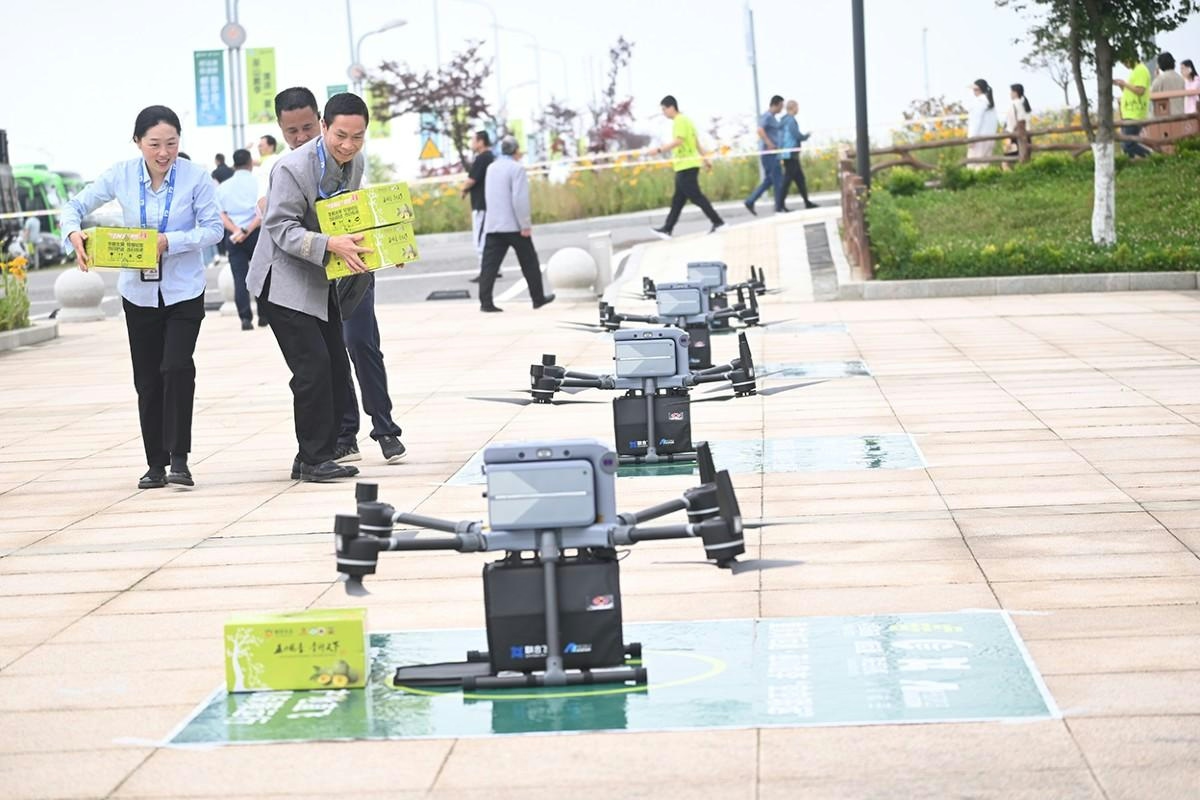
China’s forthcoming 15th Five-Year Plan (2026-2030) marks a significant strategic shift by elevating the low-altitude economy to an independent priority alongside other emerging sectors such as new energy, new materials, and aerospace. Previously subsumed under the broader category of strategic emerging industries during the 14th Five-Year Plan (2021-2025), the low-altitude economy is now recognized for its distinct potential and the need for coordinated, large-scale development efforts.
Strategic Importance and Technological Foundations
The low-altitude economy represents a new frontier of productive forces, integrating cutting-edge technologies from aerospace, smart manufacturing, new energy, and artificial intelligence. Its extensive industrial chains and diverse application scenarios position it to exceed one trillion yuan (approximately $145 billion) in market size within the next five years, fostering regionally diversified economic growth. However, realizing this ambitious target requires systematic planning focused on breakthroughs in core technologies, talent development, and the construction of a robust industrial ecosystem.
Indigenous innovation is critical to enhancing resilience amid global uncertainties and to sustaining high-quality growth. The sector’s advancement hinges on rapid technological progress in unmanned aerial vehicles (UAVs) and electric vertical takeoff and landing aircraft (eVTOLs). These technologies depend on continued improvements in flight control systems, high-energy-density batteries, and reliable electric propulsion. Recent advancements in lithium metal batteries, which offer significant gains in energy density and performance, exemplify the technological strides that could reshape the global low-altitude economy.
Institutional Challenges and Policy Imperatives
Despite promising technological developments, the growth of the low-altitude economy faces structural challenges that require strong institutional support. Experiences from other markets, such as Brazil, where aviation industry leaders have pointed to regulatory and infrastructural barriers, highlight the risks of underdeveloped frameworks impeding sectoral expansion. This underscores the necessity for China to establish robust institutional mechanisms and policy frameworks to unlock the full potential of the low-altitude economy.
To maintain global competitiveness, China must increase investment in indigenous research and consolidate resources to build a secure, coordinated innovation system. Addressing critical bottlenecks—such as redundant flight control chips, high-precision LiDAR, and advanced battery materials—is essential. Accelerating the commercialization of technological achievements and enhancing self-reliance across the entire industry chain will be pivotal in this regard.
Green Development and Innovation Ecosystem
Green development remains a central pillar of China’s strategy, aligned with its dual-carbon goals. The international race to develop green aviation technologies has intensified, with traditional lithium battery systems facing inherent energy density limitations. Consequently, the pursuit of both electrification and hydrogen-based solutions is imperative. Promoting higher-density batteries, advancing airworthiness certification, and commercializing electric aircraft for urban mobility, emergency rescue, and logistics are critical steps forward. Concurrently, intensified research into hydrogen storage, transportation, and utilization is necessary to support sustainable growth.
An effective technology transfer mechanism is equally vital. Establishing a demand-driven, full-chain innovation model through testing bases and demonstration zones can facilitate the integration of new technologies into practical applications. Data-driven feedback loops will help shorten commercialization cycles and refine business models. Collaboration between universities and enterprises can tailor research to regional needs, accelerating scalable and sustainable development.
Workforce Development and Infrastructure Preparation
The sector’s success also depends on cultivating a workforce of composite, innovative, and highly skilled professionals. Addressing talent gaps in aerospace engineering, intelligent control, and airspace management requires closer integration between industry and education, updated curricula, and diversified training mechanisms. Preparing traditional infrastructure, including vertiports and energy supply stations, alongside fostering a coordinated innovation ecosystem, will be essential for the sustainable expansion of China’s low-altitude economy.
Market responses to emerging technologies remain cautious, as evidenced by significant outflows from Bitcoin ETFs, reflecting institutional hesitancy toward new markets. This further highlights the critical role of strong institutional support in nurturing confidence and stability within the low-altitude economy.

Etihad Airways Suspends Airbus A380 Flights on Key Route

Aditya Birla Group Seeks Approval for Aircraft Leasing in GIFT City

Qatar Airways Highlights Innovation and Connectivity at Arabian Travel Market 2026

Hong Kong's Five-Year Plan Includes Andrew Fan's Aircraft Parts Processing Hub Proposal

ACIA Aero Leasing Delivers ATR72-600 to Air Nostrum

RTX Appoints Jill Albertelli as Head of Pratt & Whitney

TAT Technologies Joins Beyond Aero Hydrogen Aircraft Program

AURAK Study Highlights Barriers to Air Taxi Adoption in Emerging Economies

Xiamen Air Selects Altitude for 787 Maintenance at Heathrow

Etihad and Swissport Extend Global Partnership
