
将人工智能洞察转化为可执行行动

热门趋势
Categories
NASA Armstrong Advances Flight Research for 2025
NASA Armstrong Advances Flight Research for 2025
In 2025, NASA’s Armstrong Flight Research Center in Edwards, California, continued to spearhead advancements in aeronautics, Earth science, exploration technologies, and emerging aviation systems. As a principal NASA test site, Armstrong’s multidisciplinary teams progressed projects from initial concept evaluations to comprehensive flight test campaigns. Their efforts focused on refining measurement instruments, enhancing safety protocols, and generating essential data to support NASA’s diverse mission portfolio.
Situated in the Mojave Desert, Armstrong’s engineers, technicians, pilots, and mission support personnel applied rigorous engineering principles to address real-world performance challenges. Their work not only informed current aircraft operations but also laid a foundation for the next generation of aviation and exploration systems. The center’s achievements in 2025 highlighted the commitment of its workforce, who successfully navigated complex testing environments while upholding stringent safety and professionalism standards amid demanding conditions.
Brad Flick, director of NASA Armstrong, emphasized the team’s dedication, stating, “We executed our mission work safely, including flight of the first piloted NASA X-plane in decades, while under challenging conditions. It tells me our people embrace the work we do and are willing to maintain high levels of professionalism while enduring personal stress and uncertainty. It’s a testimony to the dedication of our NASA and contractor workforce.”
Armstrong also strengthened its partnerships with industry leaders, small businesses, and academic institutions, expanding opportunities for students and early career professionals. These collaborations reinforced the center’s reputation as a hub where innovation is validated through flight and research continues to shape the future of aviation and space exploration.
Quiet Supersonic Flight and the Quesst Mission
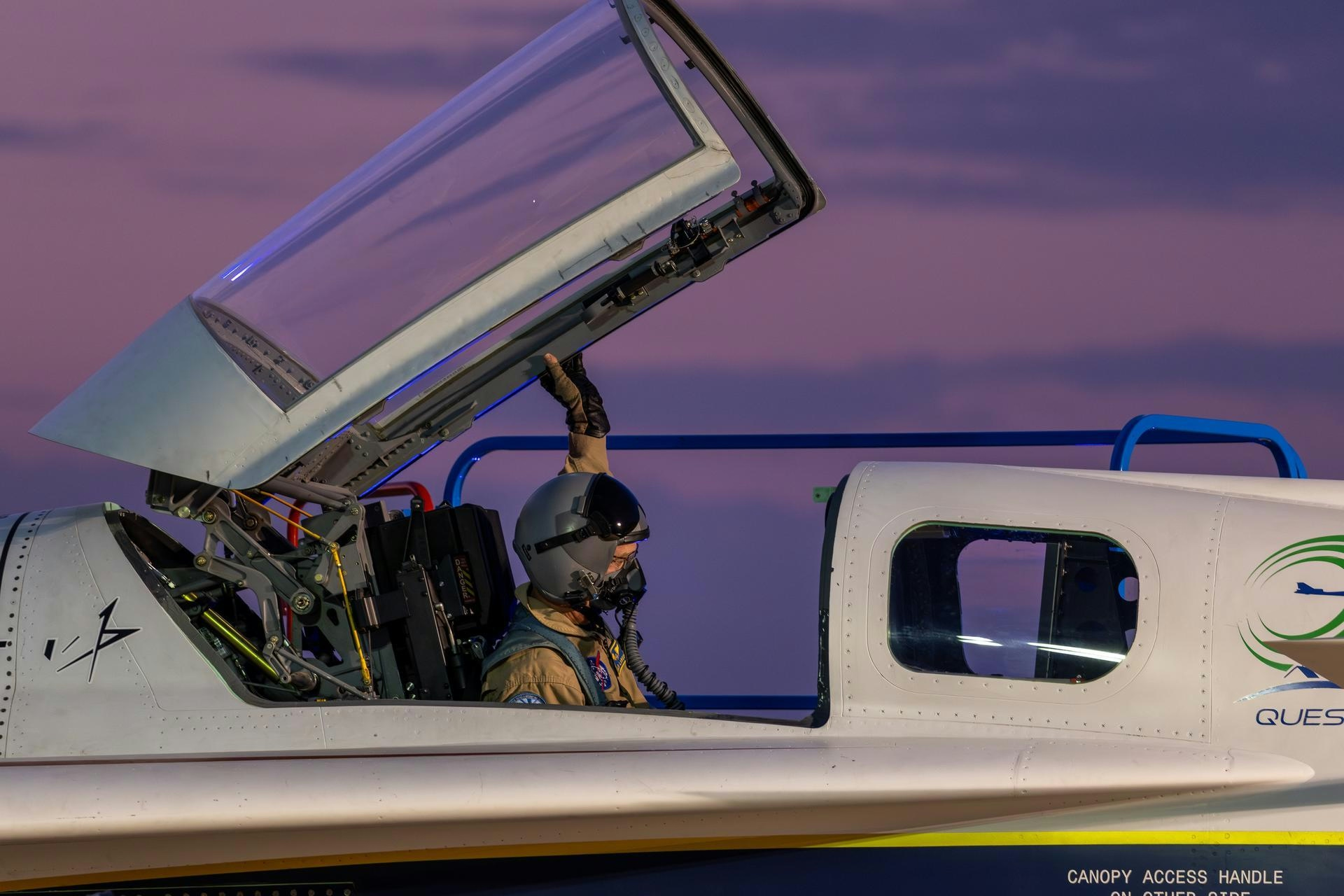
A central focus for Armstrong in 2025 was quiet supersonic research supporting NASA’s Quesst mission. The team prepared the X-59 quiet supersonic research aircraft for its inaugural flight by conducting electromagnetic interference tests, engine evaluations, and taxi preparations. The Schlieren, Airborne Measurements, and Range Operations for Quesst (SCHAMROQ) team completed aircraft integration and calibration flights using a shock-sensing probe, enhancing tools designed to characterize shock waves generated by the X-59.
These efforts culminated in the X-59’s historic first flight on October 28, marking its arrival at Armstrong for continued testing. Concurrently, the Commercial Supersonic Technology (CST) team validated airborne measurement systems aboard NASA F-15 aircraft, establishing the technical groundwork for forthcoming community response studies. These studies aim to evaluate whether quieter supersonic sonic booms could facilitate the future of commercial supersonic travel.
Navigating Technical and Market Challenges
Looking forward, Armstrong faces significant challenges in ensuring the precision of new navigation systems and the reliability of advanced sensor technologies, particularly those related to supersonic parachute deployments. Overcoming these technical obstacles is critical as NASA pursues applications for future planetary missions and commercial space communications.
The center’s advancements have attracted considerable attention within the broader aerospace sector. Industry observers are closely monitoring the implications of Armstrong’s innovations, while competitors—including other research institutions and commercial aerospace firms—are expected to intensify their development efforts in response.
Through its sustained research initiatives and collaborative partnerships, NASA Armstrong remains at the forefront of aeronautics and space technology, actively shaping the trajectory of future exploration and commercial aviation.

Etihad Airways Suspends Airbus A380 Flights on Key Route

Aditya Birla Group Seeks Approval for Aircraft Leasing in GIFT City

Qatar Airways Highlights Innovation and Connectivity at Arabian Travel Market 2026

Hong Kong's Five-Year Plan Includes Andrew Fan's Aircraft Parts Processing Hub Proposal

ACIA Aero Leasing Delivers ATR72-600 to Air Nostrum

RTX Appoints Jill Albertelli as Head of Pratt & Whitney

TAT Technologies Joins Beyond Aero Hydrogen Aircraft Program

AURAK Study Highlights Barriers to Air Taxi Adoption in Emerging Economies

Xiamen Air Selects Altitude for 787 Maintenance at Heathrow

Etihad and Swissport Extend Global Partnership
