
将人工智能洞察转化为可执行行动

热门趋势
Categories
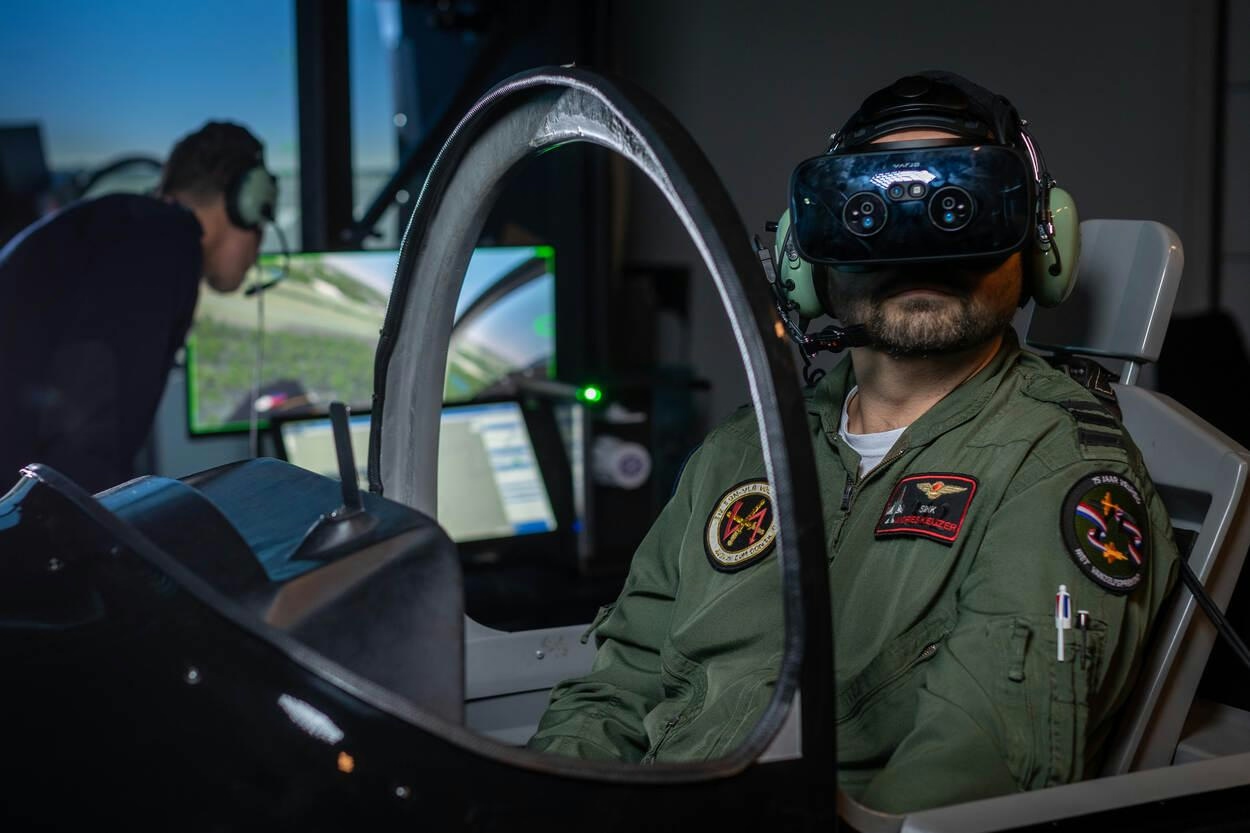
Royal Netherlands Air Force Trials AI to Monitor Fighter Pilots’ Brain Activity
Royal Netherlands Air Force Trials AI to Monitor Fighter Pilots’ Brain Activity
Innovative Approach to Pilot Training
The Royal Netherlands Air Force is pioneering a novel training system that employs artificial intelligence to monitor the brain activity of trainee fighter pilots, adjusting virtual missions in real time based on cognitive workload. This initiative represents a significant shift from traditional military flight training, which typically follows fixed lesson plans and predetermined difficulty levels. Instead, the Dutch system offers a personalized training experience that dynamically responds to the pilot’s mental state, aiming to optimize learning by maintaining an ideal level of challenge.
Led by Dr. Evy van Weelden at the Royal Netherlands Aerospace Centre in Amsterdam, the project utilizes a brain–computer interface (BCI) to capture electrical signals from electrodes placed on the scalp. As pilots engage in virtual reality (VR) missions, an AI model analyzes these signals to estimate cognitive workload, identifying patterns associated with mental strain or ease rather than interpreting specific thoughts. When the AI detects cognitive overload, it reduces the difficulty of subsequent missions; conversely, if the workload is low, it increases the challenge to maintain engagement.
Trial Results and Challenges
Fifteen trainee pilots participated in the study, each completing multiple VR missions under two conditions: a conventional, pre-programmed progression and an AI-driven adaptive system that adjusted difficulty across five levels based on real-time brain data. Initial feedback indicates a preference among pilots for the adaptive training style. However, the research also uncovered a notable limitation: despite the positive reception, the adaptive system did not yet lead to measurable improvements in flying performance.
The trials further revealed challenges in interpreting brain data accurately. For example, six pilots exhibited minimal variation in difficulty level adjustments, raising concerns about the system’s sensitivity and reliability. These findings reflect broader skepticism within the industry regarding the dependability of AI-driven solutions. Experts emphasize the need for robust, coherent AI applications rather than experimental demonstrations that may lack practical efficacy.
Broader Context and Future Implications
The demand for adaptive simulators is intensifying as pilot training remains costly and resource-intensive, with every hour of flight consuming valuable fuel, airframe life, and maintenance resources. Simulators and VR environments have become central to training, covering everything from basic handling to complex combat scenarios. Yet, maintaining trainees within an optimal mental “sweet spot” remains a persistent challenge. Tasks that are too simple risk complacency, while overly difficult exercises can overwhelm and impede learning.
Traditionally, instructors have managed this balance through fixed-stage scenario designs, irrespective of individual progress. The Dutch initiative seeks to automate this process by leveraging real-time brain data to tailor training to each pilot’s cognitive state. Meanwhile, other air forces, including the United States, are also investing in AI technologies to reduce pilot workload, reflecting a broader trend toward integrating AI in aviation training and operations.
This movement is part of a wider AI arms race, with technology firms such as Anthropic and xAI competing for leadership in the field. The outcomes of the Royal Netherlands Air Force’s trials may influence not only the future of pilot training but also the broader adoption of AI in high-stakes environments. The central challenge remains ensuring that adaptive AI systems are both innovative and reliable, delivering tangible improvements in operational effectiveness.

Etihad Airways Suspends Airbus A380 Flights on Key Route

Aditya Birla Group Seeks Approval for Aircraft Leasing in GIFT City

Qatar Airways Highlights Innovation and Connectivity at Arabian Travel Market 2026

Hong Kong's Five-Year Plan Includes Andrew Fan's Aircraft Parts Processing Hub Proposal

ACIA Aero Leasing Delivers ATR72-600 to Air Nostrum

RTX Appoints Jill Albertelli as Head of Pratt & Whitney

TAT Technologies Joins Beyond Aero Hydrogen Aircraft Program

AURAK Study Highlights Barriers to Air Taxi Adoption in Emerging Economies

Xiamen Air Selects Altitude for 787 Maintenance at Heathrow

Etihad and Swissport Extend Global Partnership
