
image

AeroGenie — 您的智能副驾驶。

询问一切。分析一切。立即行动。

热门趋势

Categories

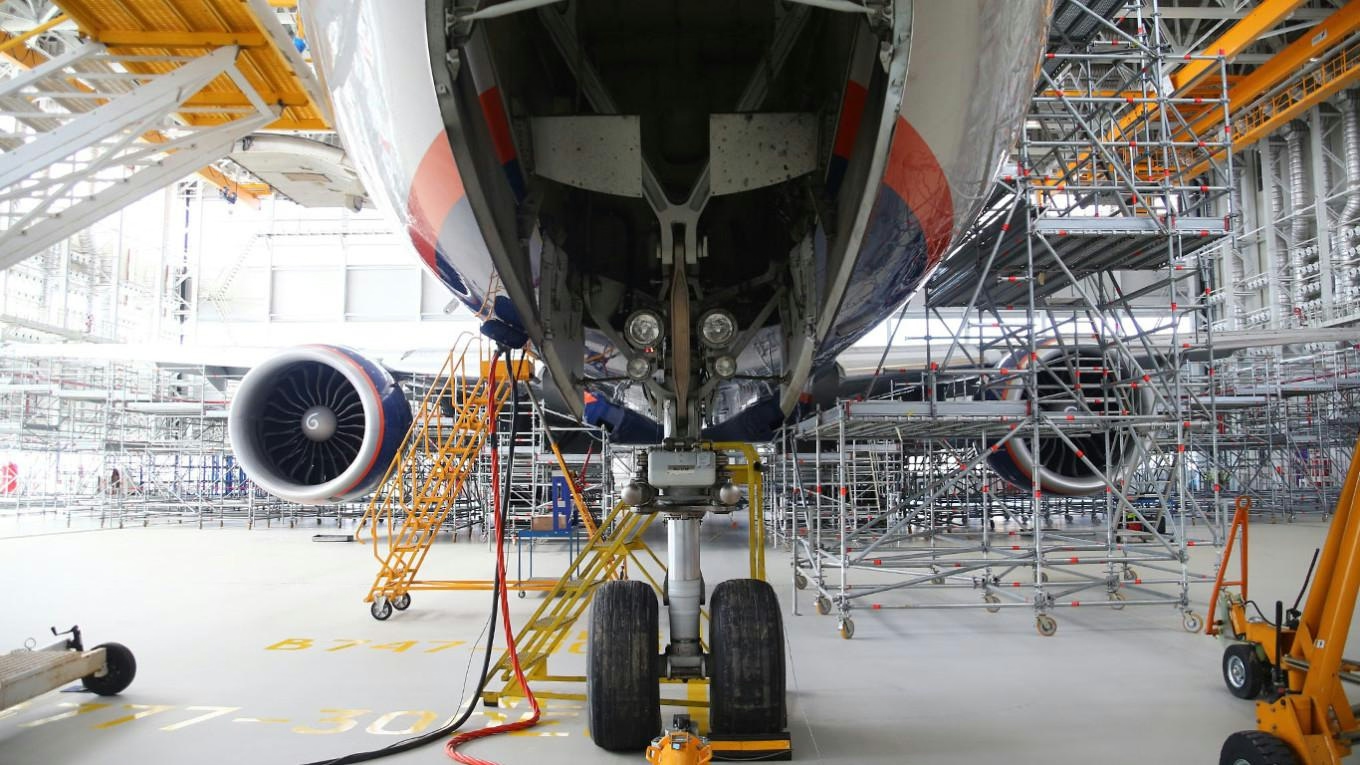
Russian Airlines Report Nine Engine Failures in One Week
December 19, 2025By ePlane AI
Russian Airlines Report Nine Engine Failures in One Week
0
0
Engine Failure
Russian Airlines
Aircraft Maintenance

Russian Airlines Report Nine Engine Failures in One Week

Russian airlines have come under intensified scrutiny following the report of nine separate engine failures and malfunctions within a single week, according to the Federal Air Transport Agency, Rosaviatsiya. These incidents, currently under investigation, have raised significant concerns regarding the reliability and maintenance of Russia’s aging civil aviation fleet. The market reacted cautiously, with airline stock prices experiencing a slight decline amid growing investor apprehension. Industry competitors are expected to leverage their own safety records in response to this troubling series of failures.

A Week Marked by Multiple Engine Failures

The first reported incident involved a Boeing 737 (RA-73231) operating as Pobeda Flight DP-6532 from Barnaul to Moscow-Sheremetyevo. Pilots were forced to shut down an engine after it failed to respond to thrust adjustments. Although the aircraft landed safely, a post-flight inspection uncovered oil leakage on the left engine’s outer cowling, signaling potential mechanical issues.

On December 11, an IrAero Superjet 100 (RA-89001) experienced an uncommanded shutdown of its right engine during climb-out from Antalya, Turkey, en route to Sochi. The flight crew successfully restarted the engine and completed the journey without further incident.

The only crash during this period occurred on December 13, when a Cessna 172 lost thrust at Novinki airfield, resulting in injury to one of the two occupants. Investigations revealed that the aircraft lacked both a certificate of airworthiness and authorization to operate in the airspace, raising questions about regulatory compliance.

On December 14, a Boeing 757 (RA-73072) operated by AZUR Air suffered a right-engine failure while landing at Barnaul Airport after a flight from Thailand. The engine automatically shut down at an altitude of 460 meters, but the crew managed a safe landing on a single engine. Later that day, an Azimut Superjet 100 (RA-89094) was compelled to shut down an engine following a thrust-reverser malfunction message after landing at Tbilisi Airport in Georgia.

Four Engine-Related Incidents in One Day

December 16 was particularly alarming, with four separate engine-related incidents reported. At Moscow’s Sheremetyevo Airport, a Nordwind Boeing 777 (RA-73340) aborted its takeoff after a surge and flame burst in the right engine, accompanied by a loud explosion. The aircraft came to a safe stop on the runway without further complications.

Two Sukhoi Superjets operated by Rossiya were also affected on the same day. One aircraft (RA-89134), flying from Yerevan to Sochi, landed safely despite experiencing engine vibration. Subsequent inspection revealed a missing fairing on a fan blade, damage to acoustic panels, and five damaged stator vanes. The other aircraft (RA-89124) displayed a thrust reverser malfunction message, further highlighting mechanical vulnerabilities.

Industry Response and Safety Implications

This cluster of engine failures has intensified calls for more rigorous maintenance protocols and enhanced safety inspections across the Russian aviation sector. The incidents highlight the challenges faced by airlines operating older fleets, particularly in the context of international sanctions that have restricted access to spare parts and technical support. As competing airlines emphasize their own safety records, Russian carriers face mounting pressure to restore confidence through transparent investigations and strengthened regulatory oversight.

More news
KAEMS Expands MRO Services with Tadpole Partnership

KAEMS Expands MRO Services with Tadpole Partnership

KAEMS Expands MRO Services with Tadpole Partnership Strategic Collaboration to Enhance Global Presence Korea Aviation Engineering & Maintenance Service (KAEMS) has entered into a strategic partnership with aviation advisory firm Tadpole & Co., aiming to accelerate its growth and expand its footprint in the global maintenance, repair, and overhaul (MRO) market. This alliance represents a pivotal move in KAEMS’ broader strategy to diversify its maintenance capabilities, extend its operational reach, and attract a more extensive international clientele. Supported by strong backing from the Korean government, KAEMS has been actively enhancing its technical offerings and market presence. The partnership with Tadpole is intended to strengthen KAEMS’ position in the competitive MRO landscape and increase its appeal to airlines and aviation customers worldwide. Initially, the collaboration will concentrate on line maintenance, capitalizing on KAEMS’ existing operational strengths. Over time, the scope is expected to broaden to include selected heavy maintenance activities, with a focus on higher-value services such as cabin modifications and interior upgrades. Integrating Technical Expertise with Passenger Experience The advanced maintenance packages planned under this partnership complement Tadpole’s expertise in developing comprehensive passenger experience solutions for airlines. By combining KAEMS’ technical MRO capabilities with Tadpole’s commercial and customer experience insights, the two companies aim to offer a more integrated and differentiated service portfolio to the market. Tadpole will play a key role in supporting KAEMS’ business development and capability enhancement efforts, leveraging its industry experience, specialized knowledge, and extensive global network that spans airlines, lessors, original equipment manufacturers, and other aviation stakeholders. Both parties describe the collaboration as mutually beneficial, merging KAEMS’ robust infrastructure and technical proficiency with Tadpole’s strategic and commercial strengths. Challenges and Competitive Landscape Despite the promising outlook, KAEMS faces several challenges in executing this expansion. Integrating new processes and technologies, ensuring supply chain reliability, and managing the complexities associated with maintaining aging aircraft fleets will require meticulous oversight. Furthermore, the partnership is expected to intensify competition within the MRO sector. Established players such as Safran, ST Engineering, and Delta TechOps may respond by enhancing their own service capabilities and adopting advanced technologies, including artificial intelligence and predictive maintenance, to sustain their competitive advantage. Nonetheless, KAEMS and Tadpole remain confident that their combined expertise and resources will unlock sustainable growth opportunities and deliver enhanced value to customers and stakeholders throughout the aviation ecosystem.
AI's Role in the Holiday Season

AI's Role in the Holiday Season

AI’s Expanding Role in the Holiday Season: Transforming Aviation and Retail As millions of travelers take to the skies this holiday season, artificial intelligence (AI) is quietly reshaping the aviation industry, with its influence rapidly extending into retail. While AI is often heralded as a revolutionary force, industry leaders emphasize that its true value lies in targeted, practical applications that yield measurable results. AI in Aviation: Enhancing Efficiency and Passenger Experience Simon Lomas, Chief Information Officer of Technology & Engineering at SITA, the air transport industry’s IT provider, highlights AI’s most significant impact as addressing real-world challenges. The aviation sector faces an annual cost of approximately $5 billion due to mishandled baggage, encompassing returns, essentials, compensation, and logistics. AI-driven platforms are already contributing to reducing mishandling rates and improving recovery times, translating into tangible savings for airlines and reduced frustration for passengers. A prominent example of this progress is the collaboration between Apple’s AirTag technology and SITA’s WorldTracer® system, which has led to a 90 percent reduction in truly lost bags. Airlines utilizing Apple’s Find My Share Item Location have also reported a 26 percent decrease in recovery time for delayed luggage. Lomas underscores that the opportunity lies not in adopting technology for its own sake but in applying it with clear purpose. In an industry characterized by tight margins and stringent regulation, success depends on focusing AI on well-defined business outcomes. This pragmatic approach gains further importance as global air travel is projected to surpass 10 billion passengers for the first time in 2025, according to Airports Council International, with numbers expected to reach 12 billion by the end of the decade. Amid such unprecedented volumes, efficiency becomes paramount. AI’s capacity to analyze vast datasets promises to be transformative for operations and passenger experience alike. From baggage handling to biometric boarding, AI is set to streamline journeys, accelerate aircraft turnarounds, and support more sustainable practices. AI in Retail: Navigating Challenges and Enhancing Consumer Engagement The aviation sector is not alone in harnessing AI during the holiday rush. Retailers are increasingly deploying AI to manage a season complicated by supply chain disruptions, tariff challenges, and elevated fraud risks. Many brands are adjusting strategies by reducing discount scales to offset tariff impacts and extending delivery windows to accommodate logistical constraints. At the same time, competitors are leveraging AI at scale to personalize shopping experiences, while technology companies race to develop seamless AI-powered tools that enhance consumer engagement. This holiday season represents a pivotal moment as consumers widely adopt AI-assisted shopping for the first time. Brands are investing heavily in AI-driven shelf optimization and embracing AI-native operating models to maintain competitiveness. The convergence of these trends underscores AI’s expanding role not only in aviation but across the broader holiday economy. Lomas advises caution against perceiving AI as an abrupt revolution. He draws parallels to earlier technological shifts, such as mobile technology and the internet, noting that the most significant gains arise when AI is applied with clear intent and measurable outcomes. The true value of AI lies in delivering innovation that translates into real benefits for businesses and consumers alike.
Three Decades of Global Tourism Influenced by the Boeing 777

Three Decades of Global Tourism Influenced by the Boeing 777

Three Decades of Global Tourism Influenced by the Boeing 777 Over the past thirty years, the Boeing 777 has fundamentally transformed global air travel and long-haul tourism, reshaping the way continents connect and how people experience the world. Since its commercial debut, the aircraft has served as both a technological and economic bridge, linking regions and cultures across the United States, United Kingdom, Japan, Australia, Canada, and beyond. Developed during a period of rapid globalization, the 777 was engineered to meet airlines’ increasing demands for efficiency, extended range, and enhanced passenger comfort on intercontinental routes. Nearly four billion travelers have flown aboard the Boeing 777 family, facilitating unprecedented levels of leisure tourism, business travel, diaspora connections, and cultural exchange. The aircraft’s consistent operational performance and adaptability have strengthened major tourism corridors between North America, Europe, and Asia, while also enabling new long-haul routes to previously remote destinations. As international airports expanded and destination cities evolved into global hubs, the 777 became a cornerstone of worldwide mobility. A Milestone in Aviation and Tourism Marking thirty years since its entry into commercial service, the Boeing 777 has become the best-selling widebody aircraft family in aviation history. Its inaugural passenger flight, operated by United Airlines between London Heathrow and Washington Dulles, heralded a new era of efficient long-haul travel. Over three decades, the aircraft has transported nearly four billion passengers, reinforcing tourism links and supporting the expansion of international travel networks. This immense scale of movement underscores not only the aircraft’s popularity among airlines but also its deep integration into the global tourism infrastructure. Scale, Connectivity, and Industry Impact Currently, the Boeing 777 fleet operates nearly 1,800 flights daily, connecting major tourism gateways, financial centers, and remote regions. Its presence on routes linking North America with Europe, Asia-Pacific, and the Middle East has allowed destination cities to flourish as global tourism hubs. The cumulative number of travelers carried by the 777 over thirty years would fill a major U.S. sports stadium every day for more than a century, a testament to its enduring significance in the travel and tourism ecosystem. The aircraft’s development was distinctive, shaped through close collaboration with eight major airlines worldwide. This cooperative approach ensured the 777 would bridge the capacity and range gap between the Boeing 767-300ER and the 747-400, effectively meeting the diverse needs of a global market. Navigating Industry Challenges and Future Prospects Despite its success, Boeing continues to face significant challenges. High engine maintenance costs, the anticipated doubling of the global commercial fleet by 2044, and the aviation industry’s shift toward sustainable propulsion present ongoing hurdles. Market reactions to Boeing have been mixed; while the company’s stock has surged following a 2026 cash-flow pledge and positive analyst ratings, volatility remains due to delivery data fluctuations and regulatory scrutiny. Competitors such as Airbus have responded by trimming delivery goals amid technical issues, while Boeing’s acquisition of Spirit AeroSystems aims to strengthen production quality and supply chain resilience. Looking ahead, confidence in the Boeing 777 remains robust. Emirates’ commitment to the next-generation 777X, even as certification processes continue, underscores the aircraft’s enduring role in shaping the future of global tourism and connectivity.
Managing Technical Risk to Improve Returns for Aircraft Lessors

Managing Technical Risk to Improve Returns for Aircraft Lessors

Managing Technical Risk to Improve Returns for Aircraft Lessors René Armas Maes, an international consultant specializing in airline and business aviation restructuring, outlines a significant transformation in the aviation industry over the past fifty years. The sector, once dominated by government-backed national carriers owning their fleets, has evolved into a highly competitive, privately financed global market. Today, flexibility, liquidity, and fleet agility are paramount. Aircraft leasing has expanded dramatically, growing from less than 10% of the global fleet in the 1970s to nearly 60% currently. This surge is driven by airlines’ demand for capital-light operations, access to fuel-efficient aircraft, simplified cross-border financing, and reduced residual-value risk. Lessors, supported by sophisticated financing mechanisms and extensive global networks, now provide the backbone of the industry’s fleet. However, this structural shift has introduced new challenges, particularly an increase in technical risk as aircraft change hands more frequently and operate across diverse regions. Each transition exposes lessors to potential discrepancies such as missing maintenance records, undocumented repairs, misaligned maintenance tasks, incomplete compliance with service bulletins or airworthiness directives, inconsistent engine documentation, and cabin or structural issues that often surface late in the transition process. Engineering-Led Oversight and Early Intervention In this evolving environment, engineering-led oversight has become essential rather than optional. It plays a central role in protecting assets, ensuring operational continuity, and enhancing financial performance for lessors. The traditional view that airlines and ACMI (Aircraft, Crew, Maintenance, and Insurance) operators are solely responsible for technical integrity, while lessors focus exclusively on finance, is no longer valid. As lessors’ portfolios expand and the pace of aircraft transitions accelerates, a more active technical role is imperative. Engineering-led oversight offers a structured and proactive framework to identify and mitigate risks early, well before they escalate into costly redelivery disputes or delays. The redelivery timeline highlights the critical importance of safeguarding asset value and ensuring remarketing readiness, with transition risk peaking in the final nine to twelve months of a lease. Early intervention through continuous monitoring and technical consultancy reduces financial exposure and improves the predictability of transitions. A combined approach involving technical consultancy and Continuing Airworthiness Management Organization (CAMO) support has become indispensable. Continuous asset monitoring throughout the lease term ensures that deviations, record gaps, and maintenance inconsistencies are promptly addressed. Integrated continuing airworthiness management (CAM) and lease-transition management solutions can streamline the most complex phase of the lease cycle, significantly minimizing the risk of failed redeliveries. Navigating Regulatory and Market Challenges Managing technical risk is further complicated by regulatory challenges, particularly in emerging sectors such as urban air mobility. Certification through internationally recognized authorities is critical, and the requirement for globally validated certifications can substantially influence lessors’ returns. Additionally, lessors must maintain agility in responding to competitor strategies, which often involve balancing cost, schedule, and technical risks to accelerate deployment—a tactic inspired by military acquisition reform. Market dynamics are also shaped by external factors, including legal and policy developments. Recent Supreme Court rulings on tariffs, for example, may affect revenue streams, adding complexity to risk management. Moreover, the rapid pace of technological innovation introduces new technical challenges, compelling lessors to stay ahead of evolving standards and certification requirements. As the aircraft leasing landscape becomes increasingly complex, prioritizing engineering-led oversight and early intervention is essential for safeguarding asset value and maximizing returns. Successfully navigating regulatory, technical, and market risks through a proactive and integrated approach is now a prerequisite for success in the modern aviation industry.
AI Advances Predict Aircraft Engine Failures

AI Advances Predict Aircraft Engine Failures

AI Advances Predict Aircraft Engine Failures Transforming Maintenance Through Predictive Analytics In contemporary airline operations control centers, predictive maintenance systems are revolutionizing the management of aircraft engine health. By harnessing real-time data streams, these AI-driven platforms can now identify early warning signs when an engine is projected to exceed its performance limits within a defined timeframe. This capability enables maintenance planners to proactively adjust flight schedules, coordinate the availability of spare parts, and schedule necessary shop visits. What was once a reactive process—often involving emergency responses or unscheduled groundings—has evolved into a planned, data-informed intervention. The outcome is a marked improvement in operational reliability, cost efficiency, and the preservation of stringent safety standards. From Intuition to Data-Driven Precision Fifteen years ago, aircraft maintenance was predominantly guided by scheduled inspections, technician experience, and routine checks based on flight hours or cycles. Subtle indicators of engine performance degradation, such as variations in exhaust gas temperature or vibration levels, were typically recorded manually and communicated through calls to technical operations. This often led to conservative decisions, including grounding aircraft or ferrying them to maintenance bases as a precaution. While this approach prioritized safety, it was inefficient, resulting in unnecessary maintenance visits, costly emergency interventions, and expensive logistics for parts replacement. Data remained fragmented, sensor outputs were noisy, and no comprehensive system existed to translate complex telemetry into actionable timelines, such as predicting when an engine would require servicing within a specific number of days. The Emergence of Data Integration, Digital Twins, and AI The paradigm shift began with enhanced instrumentation and data integration. Modern engines now provide richer telemetry encompassing temperature, pressure, and vibration metrics, alongside consistent logging of flight context and connections to maintenance histories and environmental conditions. Engine manufacturers and maintenance organizations have invested heavily in digital twins—virtual replicas of engines that run physics-based simulations in parallel with live data. These digital twins allow engineers to interpret sensor anomalies within a broader operational context and to conduct “what if” analyses without physical intervention. Industry leaders such as Rolls-Royce have pioneered these digital twin programs. Building on this robust data infrastructure, airlines have started deploying AI models to forecast the remaining useful life (RUL) of engine components and, importantly, translate these predictions into actionable calendar timelines. Initial models were largely statistical and explainable but lacked flexibility. Today’s advanced prognostic systems combine physics-based constraints with deep learning architectures, including convolutional neural networks (CNN) and long short-term memory (LSTM) networks enhanced with attention mechanisms. These hybrid models excel at capturing long-range dependencies in noisy telemetry data while integrating maintenance and environmental variables. Recent academic studies have demonstrated that such approaches significantly improve the accuracy of RUL predictions for aeroengines. Industry Challenges and Responses Despite these technological advances, several challenges persist. Ensuring the reliability and accuracy of AI models remains paramount, alongside addressing concerns related to data privacy and cybersecurity. Resistance from traditional maintenance cultures can impede adoption, and the aviation sector’s inherently cautious stance—driven by rigorous regulatory scrutiny and the necessity for extensive validation and certification—means that widespread implementation may proceed gradually. In response, airlines and defense contractors are increasing investments in AI capabilities, while competitors develop proprietary solutions to secure strategic advantages. Case Study: Air France–KLM’s AI Integration Air France–KLM’s recent efforts to accelerate AI adoption across its operations exemplify the industry’s ongoing transformation. By embedding predictive AI into maintenance planning, the airline seeks to reduce operational disruptions, optimize resource allocation, and enhance safety outcomes. This initiative also highlights the complexities of navigating regulatory compliance and managing technological change within a highly regulated environment. As artificial intelligence continues to advance, its role in predictive maintenance is set to reshape aviation, balancing innovation with the sector’s unwavering commitment to safety.
How AI and Global Connectivity Are Shaping Air Travel in 2026

How AI and Global Connectivity Are Shaping Air Travel in 2026

How AI and Global Connectivity Are Shaping Air Travel in 2026 As the air travel industry advances in 2026, it is undergoing a significant transformation driven by enhanced global connectivity, the integration of artificial intelligence, and an increasing demand for personalized travel experiences. A recent report by CheapOAir highlights how airlines are expanding their international networks, adopting sophisticated AI technologies, and offering unprecedented levels of customization, collectively ushering in a new era of intelligent and convenient travel. Expanding Global Connectivity The year 2026 marks a pivotal moment for global air connectivity, with airlines worldwide significantly expanding their route networks. The International Air Transport Association (IATA) forecasts a 5% increase in global airline capacity, led predominantly by the Asia-Pacific region, which is expected to grow by 7 to 8 percent. The Middle East and Latin America are also projected to experience substantial growth, with increases of 9% and 6 to 7% respectively. This expansion will provide travelers with access to a broader array of destinations and richer cultural experiences, reflecting a rising global appetite for exploration. Despite these promising developments, the rapid expansion of connectivity faces notable challenges. The integration of advanced technologies, such as AI-driven trip planning and the certification of electric aircraft, encounters regulatory complexities and intense competition from established connectivity providers like Starlink and Gogo. As airlines strive to enhance their service offerings, the market response is expected to be varied. While certain sectors will benefit from the shift toward personalized and sustainable travel options, others may find it difficult to keep pace with evolving technological standards. The Transformative Role of Artificial Intelligence Artificial intelligence is poised to revolutionize the way travelers plan and book their journeys. According to Accenture’s Consumer Pulse survey, AI-powered tools are anticipated to influence more than half of all flight bookings in 2026. These technologies facilitate streamlined research, itinerary planning, and destination discovery by providing real-time suggestions and tailored recommendations. AI’s impact extends beyond the initial planning stages. Travelers can expect automated itinerary updates, personalized flight alerts, and seamless management of travel schedules. Airlines are leveraging AI not only to optimize operational efficiency but also to enhance connectivity and customer service. This technological adoption allows carriers to differentiate themselves by delivering smarter, more responsive travel experiences. Evolving Booking Behaviors Booking patterns among travelers are also undergoing significant change. IATA’s global travel survey indicates a clear shift toward digital-first, self-directed booking methods. More than half of passengers now prefer using mobile applications and integrated digital tools rather than relying on traditional travel agents or websites. Data from Google Flights reveals that domestic flights are typically booked approximately six weeks in advance, while international trips tend to be planned around seven weeks ahead. This digital transformation is prompting airlines and service providers to invest heavily in user-friendly platforms and advanced connectivity solutions. The ability to rapidly integrate new technologies and adapt to shifting traveler expectations will be crucial for industry players aiming to maintain a competitive edge. Navigating Challenges and Opportunities The convergence of expanding global connectivity, AI innovation, and evolving consumer behaviors is reshaping the landscape of air travel in 2026. While these developments offer significant opportunities for more personalized and efficient journeys, the industry must also contend with technological, regulatory, and competitive challenges. As airlines and technology providers compete to establish new standards, travelers can anticipate a future marked by smarter, more connected experiences in the skies.
Valo eVTOL: The 150 MPH Electric Air Taxi with an Unusual Sound

Valo eVTOL: The 150 MPH Electric Air Taxi with an Unusual Sound

Valo eVTOL: The 150 MPH Electric Air Taxi with an Unusual Sound A New Contender in Urban Air Mobility The landscape of urban transportation is witnessing a significant shift with the arrival of another electric vertical takeoff and landing (eVTOL) aircraft, this time from the United Kingdom. Traditionally, flying has been synonymous with loud engines, long runways, and the unmistakable roar that leaves passengers with ringing ears. However, the future envisions skies filled with electric air taxis, operating quietly and efficiently like advanced household appliances. Among these emerging vehicles, the Vertical Valo distinguishes itself with unique features and ambitions. Developed by Vertical Aerospace, the Valo is the successor to their VX4 flight-testing prototype. Unlike many experimental models, the Valo is designed as a production-ready aircraft intended to revolutionize urban travel. The company’s CEO has dubbed it the “people’s air taxi,” though initial users are expected to be predominantly investment bankers and affluent early adopters rather than the general commuting public. Performance and Challenges Ahead The Valo boasts an impressive top speed of 150 miles per hour and a distinctive acoustic signature that sets it apart from other eVTOL competitors. Despite these technological advancements, the path to widespread adoption remains fraught with challenges. Regulatory approval is a major obstacle, as aviation authorities around the world continue to develop frameworks for safely integrating eVTOLs into increasingly congested urban airspace. Additionally, the high costs associated with development and production raise questions about the timeline for making these air taxis affordable and accessible to a broader population. Intensifying Competition and Market Sentiment The eVTOL sector is becoming increasingly competitive. Initiatives such as Bristow’s UK eVTOL air taxi network and UrbanLink’s preorder of MD Aircraft’s eViator are aggressively pursuing their share of the emerging market. These competitors are likely to accelerate their development schedules and increase investment in response to Vertical Aerospace’s latest announcement. Market reactions to the Valo and similar projects remain mixed. While the concept of electric air taxis generates excitement, skepticism persists regarding safety, noise pollution, and practical implementation in real-world urban environments. As the technology continues to evolve, public acceptance will be as critical as the engineering milestones achieved. For now, the Valo represents a significant advancement in the quest to redefine urban mobility. Whether it ultimately fulfills its promise as the “people’s air taxi” or remains a niche luxury transport option will depend on how Vertical Aerospace and its rivals address the complex challenges that lie ahead.
Study Finds Equipment Failures Remain Leading Cause of General Aviation Fatalities

Study Finds Equipment Failures Remain Leading Cause of General Aviation Fatalities

Study Finds Equipment Failures Remain Leading Cause of General Aviation Fatalities For decades, efforts to improve safety in general aviation (GA) have primarily focused on enhancing pilot training, decision-making, and proficiency. However, a recent study reveals that equipment failures continue to pose a significant and persistent threat, remaining the leading cause of fatal accidents in GA over the past 30 years. Persistent Risks Despite Advances in Safety Researchers Douglas D. Boyd of Embry-Riddle Aeronautical University and Linfeng Jin of Eastern Michigan University conducted a comprehensive analysis of National Transportation Safety Board (NTSB) accident data alongside Federal Aviation Administration (FAA) fleet-hour records spanning from 1989 to 2023. Their findings indicate that while fatal accidents from other causes have declined, the rate of fatal accidents attributed to mechanical failures has remained largely unchanged. Although equipment failures represent a relatively small proportion of overall GA accidents, their consistency is notable. The study differentiates between type-certificated aircraft and experimental-amateur-built (EAB) aircraft, highlighting distinct patterns in failure modes. In type-certificated aircraft, 67 percent of fatal equipment-related accidents were linked to propulsion system failures. Conversely, in EAB aircraft, 36 percent of fatal accidents resulted from airframe failures, frequently associated with builder or manufacturer errors. A particularly concerning discovery was that most engine failures in type-certificated aircraft occurred well before reaching the manufacturer’s recommended time between overhaul (TBO). Over 90 percent of these failures involved internal components such as crankshafts, pistons, and camshafts—parts that are not accessible during standard annual inspections. Fatigue and corrosion accounted for 60 percent of propulsion failures, while inadequate maintenance was responsible for 23 percent. In EAB aircraft, manufacturing or builder errors contributed to 55 percent of airframe failures, with fatigue and corrosion causing an additional 20 percent. Implications for Pilots and the Aviation Industry The study highlights a sobering reality: adherence to current annual inspection protocols and low engine hours do not guarantee immunity from catastrophic mechanical failure. Pilots are therefore advised to consistently prepare for the possibility of engine failure, regardless of maintenance history. Risk mitigation strategies recommended by the researchers emphasize maintaining a glide option by staying within gliding distance of suitable landing areas whenever possible. This is particularly important given that most internal failures are undetectable and can occur well inside the TBO limits. Pilots are also encouraged to avoid hazardous routes, such as night flights over terrain unsuitable for emergency landings, crossings over large bodies of water without sufficient altitude, and routes that could result in being “terrain-trapped.” Additionally, awareness of environmental factors that accelerate fatigue and corrosion—such as coastal regions, high humidity, and prolonged periods of inactivity—is critical. Broader Industry Impact and Regulatory Response The persistence of equipment-related fatalities is prompting heightened regulatory scrutiny and calls for enhanced safety measures within the GA sector. Operators may face increased insurance premiums and potential operational delays due to mandatory equipment upgrades. The market is responding accordingly, with investors showing a preference for companies that demonstrate strong safety records and employ advanced technologies. In response, industry competitors are accelerating the development of safer equipment, engaging in collaborative safety initiatives, and, in some cases, consolidating as smaller operators struggle to meet evolving safety standards. The study’s findings underscore the necessity for continued vigilance across all stakeholders—including pilots, mechanics, manufacturers, regulators, and investors—to address the enduring risks posed by equipment failures in general aviation.
Corsair Completes First In-House C Check on Airbus A330neo at Paris-Orly

Corsair Completes First In-House C Check on Airbus A330neo at Paris-Orly

Corsair Completes First In-House C Check on Airbus A330neo at Paris-Orly Corsair has achieved a significant milestone by successfully completing its first in-house C check on an Airbus A330-900neo at Paris-Orly Airport. The French airline’s technical teams conducted the comprehensive maintenance visit over two and a half weeks within the HN7 hangar, highlighting the carrier’s expanding internal maintenance capabilities. Transition to Internalized Heavy Maintenance This development occurs at a critical juncture for Corsair and the broader aviation sector. During a November 2024 visit to Corsair’s maintenance, repair, and overhaul (MRO) facilities, it was evident that the airline’s maintenance organization was shifting focus. Having recently concentrated on fleet renewal and aircraft transitions—such as returning A330ceo aircraft to lessors—Corsair is now moving toward internalizing major maintenance operations. Technical Director Bertrand Vitet has spearheaded efforts to bring key tasks, including Trent 7000 engine removals and C1 and C2 checks, under the airline’s direct control. Historically, these heavy maintenance checks were outsourced to third-party providers. By internalizing C checks, Corsair aims to bolster its technical expertise, improve operational oversight, and optimize maintenance expenditures. This strategic move also enhances flexibility amid ongoing supply chain disruptions, including delays in parts delivery and rising component costs. For this inaugural in-house C check, Corsair implemented a suite of digital maintenance tools designed to enhance work traceability, increase team productivity, and eliminate reliance on paper-based processes, thereby modernizing its technical operations. Industry Context and Implications Corsair’s progress unfolds amid heightened scrutiny of Airbus, following recent quality concerns affecting the A320 family that have unsettled investors and led to a sharp decline in Airbus shares. Although Airbus has sought to reassure the market that the impact of the A320 recall may be less severe than initially feared, the industry remains cautious. Confidence in Airbus products endures, as demonstrated by competitor activity: Aerolíneas Argentinas is planning a major fleet renewal incorporating the Airbus A330neo alongside Boeing 737 MAX aircraft, while Etihad Airways has placed orders for both the A330-900neo and A350-1000 models. In this environment, Corsair’s ability to independently manage heavy maintenance on its A330neo fleet not only represents a significant advancement in operational resilience but also reflects broader industry trends toward in-house technical capabilities and digital transformation. As airlines contend with supply chain challenges and evolving fleet strategies, Corsair’s initiative positions the carrier to respond more agilely to future demands while maintaining confidence in the Airbus widebody platform.
Pegasus Airlines Finalizes Deal for Up to 300 CFM LEAP-1B Engines

Pegasus Airlines Finalizes Deal for Up to 300 CFM LEAP-1B Engines

Pegasus Airlines Secures Agreement for Up to 300 CFM LEAP-1B Engines Pegasus Airlines, based in Türkiye, has finalized a significant contract with CFM International for up to 300 LEAP-1B engines. These engines are intended to power the airline’s forthcoming Boeing 737-10 fleet, marking a critical component of Pegasus’s largest aircraft order to date, initially announced in December 2024. The agreement encompasses not only the engines themselves but also spare units and comprehensive long-term maintenance services, underscoring the airline’s commitment to operational reliability and efficiency. Strategic Partnership and Sustainability Goals Since commencing operations in 1990, Pegasus Airlines has relied heavily on CFM engines to build a dependable and efficient fleet. Güliz Öztürk, CEO of Pegasus Airlines, emphasized the airline’s satisfaction with the LEAP engine family’s performance, expressing confidence that the LEAP-1B will deliver similar benefits to the Boeing 737-10 fleet. Öztürk highlighted the engines’ lower emissions and improved fuel efficiency as key factors that will support Pegasus’s environmental objectives, including its 2030 CO₂ reduction target and alignment with the aviation industry’s broader goal of achieving net-zero CO₂ emissions by 2050. Industry Context and Maintenance Infrastructure The deal arrives amid heightened scrutiny of engine reliability within the aviation sector. The U.S. Federal Aviation Administration (FAA) recently expanded dust-related inspections for the LEAP-1A variant, prompting concerns about potential implications for the LEAP-1B’s operational dependability and maintenance requirements. Although the LEAP-1B differs from the LEAP-1A, industry analysts anticipate increased attention from investors and customers regarding engine performance. This environment may also provide competitors with opportunities to promote alternative engine options and operational efficiencies to airlines evaluating new aircraft acquisitions. Despite these challenges, Pegasus’s collaboration with CFM is reinforced by ongoing investments in maintenance, repair, and overhaul (MRO) capabilities. Safran, CFM’s co-parent company, has recently enhanced its MRO facilities for LEAP engines in India, a development expected to strengthen maintenance support and operational readiness for carriers such as Pegasus. Gaël Méheust, president and CEO of CFM International, described the agreement as a milestone in the longstanding partnership with Pegasus. He underscored the advantages of the LEAP-powered 737 MAX 10, citing its extended range, reduced emissions, superior fuel efficiency, and exceptional reliability as critical assets for Pegasus’s continued growth. Pegasus’s Legacy with CFM Engines Pegasus Airlines was the first operator worldwide to deploy LEAP engines commercially, initiating service in July 2016 on the Istanbul-Antalya route. The airline’s fleet history includes various CFM engine models, such as the CFM56-3, CFM56-5B, and CFM56-7B, and it now advances with the latest generation of aircraft powered by both LEAP-1A and LEAP-1B engines. As Pegasus pursues its ambitious fleet expansion, the airline remains focused on sustainability and operational efficiency, navigating the evolving technical and regulatory landscape of the aviation industry.
Ask AeroGenie









