
图像

AeroGenie — 您的智能副驾驶。

问任何问题。分析一切。立即行动。

热门趋势

Categories

Singapore Airport to Serve as Test Site for CFM’s Advanced Open Fan Engines
February 2, 2026By ePlane AI
Singapore Airport to Serve as Test Site for CFM’s Advanced Open Fan Engines
0
0
CFM International
Open Fan Engines
Sustainable Aviation Technology

Singapore Airport to Serve as Test Site for CFM’s Advanced Open Fan Engines

Pioneering Aviation Innovation in Singapore

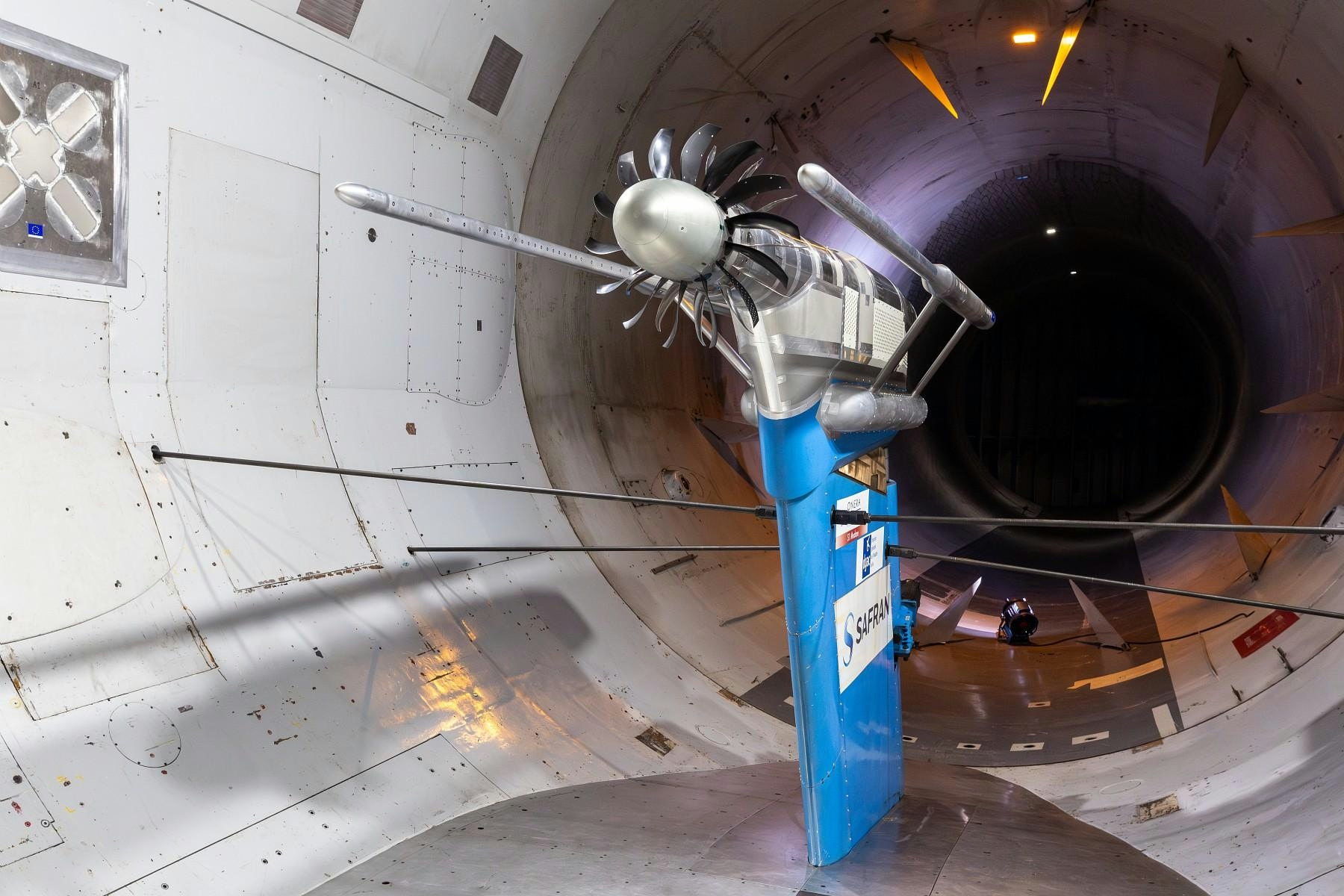
Singapore is set to become the first country in the world to establish an airport test site for advanced open fan aircraft engines developed by CFM International, marking a significant milestone in global aviation technology. The Civil Aviation Authority of Singapore (CAAS) formalized this initiative by signing a memorandum of understanding with Airbus and CFM at the Changi Aviation Summit on February 2. This agreement positions Singapore as a key proving ground for CFM’s Revolutionary Innovation for Sustainable Engines (Rise) program, which aims to revolutionize aircraft propulsion.

The next-generation engines under development promise to enhance fuel efficiency and reduce emissions by up to 20 percent compared to current jet engines. The collaboration seeks to create a comprehensive framework for integrating these engines into airport operations, with research focusing on their effects on infrastructure, operational procedures, safety protocols, and regulatory compliance.

Han Kok Juan, director-general of CAAS, emphasized Singapore’s strategic role as an integrated air hub with strong regulatory capabilities. He noted that the partnership enables companies to test and refine technologies while developing real-world protocols for global deployment. Although the timeline for engine testing remains undecided, Han indicated that trials could be conducted at either Changi or Seletar airports and may extend over several years.

The Rise Program and Open Fan Technology

Launched in 2021, CFM’s Rise program centers on open fan turbine technology, which combines elements of propeller and turbofan engines. Unlike traditional jet engines enclosed within a casing, open fan designs increase airflow and reduce noise levels. These engines are also being engineered to support hybrid-electric propulsion systems and alternative fuels, including hydrogen and sustainable aviation fuel. CFM aims to bring these engines to market by the mid-2030s.

Singapore’s selection as a test site aligns with its broader ambition to establish itself as a global aerospace innovation hub. This initiative is expected to attract further investment and technological advancements within the sector. However, integrating open fan engines presents challenges, such as ensuring regulatory compliance, adapting airport infrastructure, and maintaining stringent safety standards.

Industry Impact and Future Prospects

Market response to the announcement has been positive, with airlines expressing growing interest in adopting advanced open fan engines to meet sustainability targets. The progress made by CFM may also prompt competitors to accelerate their own engine development programs.

Han highlighted the potential of this technology, stating, “If it works, it will be a cornerstone technology for the future of air travel, especially for the next generation of commercial narrow-body aircraft.” Narrow-body jets, which constitute over 60 percent of the global airliner fleet, are expected to benefit most from these advancements.

CFM International, a joint venture between France’s Safran and US-based GE Aerospace, is a leading manufacturer of aircraft engines. The Changi Aviation Summit, held on February 1 and 2 ahead of the Singapore Airshow 2026, convened approximately 350 government and industry leaders from more than 50 countries to discuss the future trajectory of aviation.

More news
APS Subang MRO Certified by Nepal and the Philippines for Aircraft Maintenance

APS Subang MRO Certified by Nepal and the Philippines for Aircraft Maintenance

APS Subang MRO Certified by Nepal and the Philippines for Aircraft Maintenance Certification Enhances Regional ATR Propeller Maintenance Capabilities Aircraft Propeller Services (APS) has secured certification from the Civil Aviation Authority of Nepal (CAAN) and the Civil Aviation Authority of the Philippines (CAAP) for its maintenance, repair, and overhaul (MRO) facility located in Subang, Malaysia. This approval authorizes APS Subang to service Collins Aerospace 568F propeller systems installed on ATR turboprop aircraft, a development poised to streamline maintenance operations for operators in both countries. Historically, airlines in Nepal and the Philippines have been compelled to send their propellers to North America or Europe for repairs and overhauls, resulting in extended turnaround times and complex logistical arrangements. With the new certification, ATR operators can now dispatch their components to APS Malaysia, significantly reducing downtime and enhancing fleet availability. Fergus Lopez, Managing Director of APS Asia Pacific, emphasized the benefits of regional servicing, stating that keeping propellers within the region simplifies logistics and shortens maintenance cycles. Strategic Importance and Market Context APS Malaysia distinguishes itself as the sole MRO provider in the Asia Pacific region licensed by the original equipment manufacturer (OEM) to service the 568F propeller systems, employing OEM-approved processes and materials. The Philippines operates a fleet of 26 ATR aircraft, while Nepal has 23 in service. Both nations depend heavily on turboprop aircraft to maintain domestic connectivity, given Nepal’s challenging mountainous terrain and the Philippines’ extensive archipelago comprising over 7,000 islands. ATR aircraft, recognized for their capability to operate on short runways and manage steep approaches, play a critical role in linking remote communities across these regions. Despite the promising prospects, APS Subang faces several challenges as it enters the regional MRO market. The company must adhere to stringent regulatory compliance standards and contend with competition from well-established MRO providers. Additionally, servicing aircraft across diverse geographic locations introduces logistical complexities. Industry analysts suggest that the growing momentum in this market segment may invite increased scrutiny from aviation authorities and influence customer preferences, potentially favoring incumbent service providers. Competitors are anticipated to respond with intensified marketing efforts, pricing strategies, and enhanced service offerings to maintain or expand their client base. As the MRO sector in Asia Pacific continues to evolve, APS Subang’s certification represents both an opportunity to capture new business and a test of its capacity to meet the demands of a dynamic and competitive environment. This development marks a significant milestone for regional aviation, promising improved operational efficiency for ATR operators in Nepal and the Philippines while signaling heightened competition and shifting dynamics within the Asia Pacific MRO landscape.
Yingling Completes 192-Month Inspection of G550 Aircraft

Yingling Completes 192-Month Inspection of G550 Aircraft

Yingling Completes Landmark 192-Month Inspection of Gulfstream G550 Yingling Aviation has announced the successful completion of its inaugural 192-month inspection on a Gulfstream G550, marking the largest and most complex project in the company’s history. This comprehensive heavy maintenance inspection was followed by an extensive refurbishment, which included the complete replacement of soft goods, restoration of veneer surfaces, and significant avionics upgrades. The culmination of these efforts delivered a fully modernized aircraft experience tailored to the customer’s specifications. Collaborative Effort and Technical Excellence The project demanded meticulous coordination among multiple stakeholders, including the broker, the Director of Maintenance, and the aircraft principal. All parties expressed high satisfaction with the final outcome. Vinnie Venditto, Executive Vice President and General Manager at Yingling Aviation, emphasized the exceptional level of communication, teamwork, and technical expertise required. He stated, “Our team truly came together and demonstrated the depth of talent and experience we have at Yingling. Completing a project of this scale represents a major achievement for our organization.” Industry Challenges and Market Position As Yingling expands its capabilities to include complex inspections such as the 192-month G550 check, the company continues to navigate challenges related to maintaining rigorous quality standards and ensuring compliance with evolving aviation regulations. The competitive landscape is intensifying, with other avionics providers enhancing their cabin interiors and electronic systems to attract Gulfstream clientele. Market attention is expected to focus on the reliability and advanced features of installations like the Alto GV/G550, which have set a new benchmark for aircraft modernization. Yingling’s accomplishment not only highlights its technical proficiency and dedication to quality but also strengthens its position as a formidable competitor in the Gulfstream maintenance and upgrade market.
FAA Unveils Plans to Modernize U.S. Airspace and Aviation

FAA Unveils Plans to Modernize U.S. Airspace and Aviation

FAA Unveils Plans to Modernize U.S. Airspace and Aviation The Federal Aviation Administration (FAA) has announced an extensive restructuring initiative aimed at modernizing the United States’ airspace and fostering innovation within the aviation sector. This comprehensive overhaul, the most significant in the agency’s history, seeks to upgrade airspace systems, incorporate emerging technologies, and streamline operational processes to sustain the nation’s leadership in aviation safety and efficiency. Establishing New Offices to Lead Modernization Efforts At the core of the FAA’s plan is the establishment of the Airspace Modernization Office, tasked with overseeing the enhancement of the National Airspace System (NAS). This office will coordinate planning, research, systems engineering, and portfolio management to ensure that air traffic control systems evolve in response to the increasing complexity of the aviation environment. The creation of this office follows the FAA Reauthorization Act of 2024, which mandated its formation to consolidate modernization efforts and improve interdepartmental coordination. Simultaneously, the FAA is launching the Office of Advanced Aviation Technologies, which will focus on integrating innovative technologies such as drones, electric vertical takeoff and landing (eVTOL) aircraft, and other advanced air mobility (AAM) vehicles into U.S. airspace. This office will also play a critical role in shaping regulations and safety standards for unmanned aircraft systems (UAS) and supersonic flights, ensuring these emerging technologies are safely incorporated into the NAS. Enhancing Safety and Operational Efficiency To bolster safety oversight, the FAA plans to create a centralized Aviation Safety Management System (SMS) Organization. This new entity will unify safety management activities that were previously dispersed across five divisions, enabling the agency to more effectively monitor and mitigate risks throughout the aviation ecosystem. The consolidation is expected to improve the FAA’s capacity to manage safety data, facilitate information sharing, and cultivate a strong safety culture vital for the industry’s continued growth. Challenges and Industry Response Despite the ambitious nature of the restructuring, the FAA faces considerable challenges. A recent government watchdog report underscored ongoing safety concerns and the pressing need to update the air traffic control (ATC) system. The agency’s ability to address these issues remains under scrutiny, particularly following the recent grounding of nearly 800 aircraft due to invalid registrations. Industry groups, including the National Business Aviation Association (NBAA), have urged the FAA to expedite efforts to resolve operational and regulatory obstacles. Concerns have also been raised regarding proposed changes to medication requirements for pilots, which could affect workforce readiness. Moreover, the FAA’s management of high-profile events—such as air traffic control during the Super Bowl and slot restrictions for general aviation flights—continues to shape perceptions of the agency’s operational effectiveness. Outlook for the Future As the U.S. aviation sector approaches a transformative period, the FAA’s restructuring aims to equip the agency to manage rapid technological advancements and evolving safety requirements. While the modernization plan is ambitious, its ultimate success will depend on the FAA’s capacity to overcome persistent challenges and maintain the trust of industry stakeholders and the flying public.
New Tower and MRO Facility Support Growth at KOJC and KIXD

New Tower and MRO Facility Support Growth at KOJC and KIXD

New Tower and MRO Facility Support Growth at KOJC and KIXD Major Infrastructure Investments at Johnson County Airports Johnson County Executive Airport (KOJC) in Kansas and New Century AirCenter (KIXD) in Olathe are undergoing significant transformations, marked by major infrastructure projects and economic milestones. In 2025, the Johnson County Airport Commission (JCAC) announced the advancement of a $20 million maintenance, repair, and overhaul (MRO) facility at KIXD, signaling a strategic effort to enhance the region’s aviation capabilities. The Dream Air New Century project, situated on an eight-acre site, will include a new terminal and two hangars, positioning New Century AirCenter as a prominent aviation hub. Bryan Johnson, JCAC’s executive director, emphasized the importance of the development, stating that it represents a decisive move to build capacity for future growth. In response to increasing demand in business aviation, the commission also finalized a five-acre lease for a 20,000-square-foot corporate jet hangar at KIXD, further expanding the airport’s infrastructure. Upgrades and Funding at Johnson County Executive Airport At KOJC, the final phase of T-hangar renovations is underway, focusing on the reconstruction of rows Mike and November. The airport is poised for accelerated infrastructure improvements following the receipt of a record $21 million grant from the Federal Aviation Administration (FAA). This funding is designated for the complete reconstruction of Runway 18-36, which is the second-longest runway in the Kansas City metropolitan area. Additionally, KOJC secured $15 million in federal funds to replace its existing 80-year-old air traffic control tower. The new tower is projected to be operational by early 2028, enhancing operational safety and efficiency. Market Dynamics and Economic Impact The expansion at KIXD coincides with a growing MRO market, driven by strong global air traffic and increased demand for aftermarket support for older aircraft models. This growth is expected to attract heightened investor interest and may prompt competitors to intensify marketing efforts and develop new facilities to capture market share. Despite these opportunities, KOJC and KIXD face challenges related to maintaining competitive pricing, adapting to evolving regulatory frameworks, and managing potential supply chain disruptions. JCAC officials highlighted the broader economic significance of these developments, noting that the airports collectively contribute more than $1.1 billion annually to the local and regional economy and support nearly 5,000 jobs. These investments underscore the airports’ roles as vital engines of economic growth in the region. For further details, visit JoCoGov.org.
Budget 2026-27: Tax Relief for Aviation Amid UDAN Uncertainty

Budget 2026-27: Tax Relief for Aviation Amid UDAN Uncertainty

Budget 2026-27: Tax Relief for Aviation Amid UDAN Uncertainty The Union Budget for 2026-27 has introduced notable tax relief measures aimed at invigorating India’s aviation sector. Key among these are exemptions from basic customs duty on aircraft components and parts used in the manufacture of civilian and training aircraft. Defence establishments engaged in maintenance, repair, and overhaul (MRO) activities will also benefit from duty-free imports of raw materials. Additionally, the government has unveiled incentives to promote seaplane manufacturing alongside a Viability Gap Funding (VGF) scheme designed to support seaplane operations, reflecting a strategic push to enhance last-mile connectivity. Incentives and Limitations in Regional Connectivity Despite these positive steps, the budget notably sidesteps the pressing issue of the Regional Connectivity Scheme (UDAN), which remains mired in uncertainty. The allocation for UDAN has been maintained at ₹550 crore for the fiscal year 2026-27, a marginal increase from ₹540 crore last year but a significant reduction from ₹789 crore in FY25. This funding level appears insufficient to meet the scheme’s ambitious targets of connecting 120 new destinations and serving 40 million passengers over the next decade. Since its inception in 2017, UDAN has operationalised 657 routes connecting 93 airports, including 15 heliports and two water aerodromes, facilitating travel for approximately 16 million passengers across more than 327,000 flights. The government points to the expansion of operational airports—from 70 in 2014 to over 160 today—as evidence of progress. However, a 2023 audit by the Comptroller and Auditor General (CAG) reveals persistent challenges. Of the 774 routes awarded in the first three phases of UDAN, only about 400 (52%) commenced operations. Furthermore, just 112 routes completed the full three-year subsidy period, and a mere 54 routes (7% of all awarded) continued beyond the subsidy window. Since 2017, the government has disbursed roughly ₹4,500 crore in viability gap funding. Despite this substantial investment, less than half of the subsidised routes remain operational once subsidies expire, underscoring the scheme’s limited sustainability. Economic Challenges and Industry Response The fundamental challenge facing UDAN lies in its economic model. Airlines bid for routes by proposing the minimum subsidy required to bridge the gap between operating costs and a capped fare of ₹2,500 per flight hour. The government subsidises half the seats on these routes, assuming airlines can sell the remaining seats at market rates. However, demand in many tier-2 and tier-3 cities remains insufficient to sustain operations. For instance, the cost to airlines for a Delhi-Shimla flight ranges between ₹5,000 and ₹7,000 per passenger, while passengers pay only ₹2,500. Even with subsidies, low demand frequently results in unfilled seats, rendering routes economically unviable. Seasonal demand fluctuations—such as surges during festivals on pilgrimage routes and downturns during off-peak tourism periods—further complicate profitability. The aviation industry’s reaction to the budget has been mixed. While the tax relief measures have been welcomed by some investors, concerns persist regarding the long-term viability of UDAN. Larger airlines may capitalise on the new tax benefits to consolidate their market positions, but smaller carriers face ongoing operational uncertainties and the risk of subsidy discontinuation. As the government relies on tax incentives and targeted subsidies to stimulate growth in the aviation sector, the unresolved structural issues within UDAN continue to cast doubt on the sustainability of regional connectivity efforts. Without addressing the fundamental mismatch between demand and supply, the sector’s expansion may remain precarious.
First Parsec to Produce SHOOM-20 Engines for Drone Testing

First Parsec to Produce SHOOM-20 Engines for Drone Testing

First Parsec to Manufacture SHOOM-20 Engines for Drone Testing Ukrainian technology company First Parsec has announced a contract to produce its SHOOM-20 pulse jet engine (PJE), as revealed on the firm’s official Telegram channel. The agreement involves the delivery of a batch of engines intended for both flight and technical testing of unmanned aerial vehicles (UAVs). Engine Capabilities and Market Position The SHOOM-20 engine is engineered to generate 20 kilograms of thrust, enabling drones to achieve speeds of up to 400 kilometers per hour. Currently, the engine supports continuous operation for approximately 17 minutes, with development efforts underway to extend this endurance to two hours. Such an improvement would allow UAVs powered by the SHOOM-20 to cover distances nearing 800 kilometers. The unit price is set at $750, with First Parsec expressing readiness to reduce the cost to $500 for bulk orders, signaling a competitive approach to market penetration. Industry Challenges and Supply Chain Concerns Despite the promising specifications, the production of advanced propulsion systems like the SHOOM-20 is confronted by significant industry-wide challenges. Recent disruptions in supply chains, particularly involving critical materials and chemicals essential for jet engine manufacturing, have raised concerns. These issues have been exacerbated by reports of a major chemical supplier withdrawing from the market, prompting manufacturers and investors to intensify efforts to identify alternative sources and develop new technologies aimed at reducing supply vulnerabilities. Competitive Responses and Market Trends In response to these challenges, competitors within the drone engine sector are increasingly forming partnerships with startups specializing in resilient and automated chemical synthesis. These collaborations are designed to secure a reliable supply of vital components and diminish reliance on single-source suppliers. Concurrently, the market focus is shifting toward manufacturing readiness and production scalability, especially among defense-oriented venture capital investors. This evolving emphasis prioritizes industrial execution and capacity expansion over purely technical innovation, potentially altering the competitive landscape of the drone engine industry. As First Parsec advances with the SHOOM-20 project, its capacity to manage supply chain complexities and scale production effectively will be closely monitored by industry analysts and defense stakeholders.
Testing a New Air Taxi Service Potentially Cheaper Than Uber

Testing a New Air Taxi Service Potentially Cheaper Than Uber

Testing a New Air Taxi Service Potentially Cheaper Than Uber Revolutionizing Urban Commutes with Electric Air Taxis Vertical Aerospace is developing the Valo, an electric vertical takeoff and landing (eVTOL) aircraft designed to transform urban transportation by significantly reducing commute times. Promising to cut journeys from hours to mere minutes, the Valo aims to offer fares comparable to premium Uber services such as Uber Black or Comfort. With a potential launch as early as 2028, subject to regulatory approval, the Valo is poised to operate in congested metropolitan areas including Manhattan and London. This new mode of transport seeks to provide a faster, quieter, and more environmentally sustainable alternative to traditional ground travel. The Valo targets short, high-value trips between key urban points, such as airport transfers or quick connections between city heliports. Unlike conventional helicopters, it employs electric propulsion, enabling vertical takeoff and landing before transitioning to efficient forward flight at speeds up to 150 miles per hour and a range of approximately 100 miles. This innovative design reduces noise pollution and emissions, offering passengers a smoother and quieter experience while minimizing disruption to communities below. Industry Interest and Market Positioning Vertical Aerospace has reported around 1,500 pre-orders for the Valo from customers spanning four continents, including prominent airlines such as American Airlines and Japan Airlines. This level of demand indicates strong industry confidence and suggests that the Valo could evolve into a mainstream commercial platform rather than remaining a niche offering. Cost competitiveness remains a crucial consideration. Current helicopter transfers, for example with operators like BLADE, start at roughly $195 per seat for routes such as Manhattan to JFK Airport. Vertical Aerospace aims for an operating cost near $2 per passenger mile for the Valo, potentially undercutting helicopter fares significantly. By comparison, a typical UberX ride from Manhattan to JFK ranges between $65 and $130, with prices often surging during peak periods. While the Valo may not immediately be cheaper than every Uber trip, it promises substantial time savings and a competitive price point, particularly when measured against helicopter services. Challenges and Competitive Dynamics Launching a new air taxi service involves considerable challenges. Regulatory approval remains a significant barrier, as aviation authorities must rigorously assess the safety and reliability of these novel aircraft. Community concerns may also arise regarding noise levels, flight paths, and the impact on urban airspace congestion. Furthermore, established ride-hailing and autonomous vehicle companies such as Uber and Waymo may respond aggressively through pricing strategies or technological advancements to protect their market positions. The competitive environment is already intense, underscored by ongoing legal disputes like the trade-secrets lawsuit between Archer Aviation and Joby Aviation. These conflicts reflect the high stakes and rapid pace of innovation within the emerging urban air mobility sector. Consumer reactions are expected to be mixed. While some may harbor skepticism about the safety and dependability of air taxis, others could be attracted by the prospect of faster, greener urban commutes. Ultimately, the success of services like the Valo will hinge not only on technological innovation and pricing but also on effectively navigating regulatory frameworks, community acceptance, and competitive pressures.
Flydubai Launches Leadership Initiatives to Drive Growth and Innovation in UAE

Flydubai Launches Leadership Initiatives to Drive Growth and Innovation in UAE

Flydubai Launches Leadership Initiatives to Drive Growth and Innovation in UAE Flydubai, a prominent Dubai-based airline, has introduced two comprehensive leadership development programs aimed at enhancing its internal talent pool, strengthening leadership capabilities, and cultivating a high-performance, value-driven organizational culture. These initiatives are designed to accelerate the growth of leaders within the company, enabling Flydubai to meet its strategic goals and sustain a competitive advantage in the rapidly evolving aviation industry. Dual-Track Leadership Development Framework The airline’s new leadership framework comprises two distinct tracks: the Executive Leadership Programme, tailored for senior leaders, and the Management Training Programme, designed for mid-level managers. Both programs span nine months and employ a blended learning approach that integrates in-person workshops, personalized coaching, and digital learning modules. The objective is to equip participants with the necessary skills to translate strategic priorities into measurable business outcomes, thereby supporting Flydubai’s operational performance and expansion. The Executive Leadership Programme targets vice presidents and senior vice presidents, focusing on strategic leadership, innovation, and executive presence. Through immersive sessions and one-on-one coaching, senior leaders are prepared to spearhead organizational transformation and effectively navigate the complexities of the dynamic aviation sector. Conversely, the Management Training Programme is aimed at mid-level managers, emphasizing leadership transformation and operational ownership. This track encourages managers to shift their focus from routine task execution to broader team leadership, fostering improved communication and collaboration across departments. Addressing Industry Challenges and Supporting Dubai’s Economic Vision Flydubai’s commitment to leadership development emerges amid intensifying competition within the UAE aviation market, where major carriers such as Emirates are expanding their fleets and services. The airline also contends with broader challenges, including economic uncertainties and the critical need to attract and retain skilled personnel in a fast-changing environment. These factors have heightened scrutiny from investors and analysts regarding Flydubai’s growth and innovation strategies. In response, the airline’s leadership initiatives aim not only to build internal capabilities but also to ensure organizational agility and resilience. By nurturing talent from within, Flydubai seeks to establish a sustainable leadership pipeline capable of adapting to market fluctuations and competitive pressures. These programs align closely with the Dubai Economic Agenda D33, underscoring Flydubai’s dedication to supporting the emirate’s vision of becoming a global hub for business, innovation, and quality of life. By investing in its workforce, the airline is laying a foundation for long-term success while contributing to Dubai’s broader economic objectives. Flydubai’s comprehensive approach addresses the leadership needs at both senior and mid-management levels, fostering a culture of collaboration, innovation, and transparency. This balanced strategy is intended to create a robust and sustainable leadership structure that can effectively support the airline’s strategic ambitions in an industry marked by rapid change. As regional competitors pursue fleet modernization and capacity expansion, Flydubai’s focus on leadership development positions it to navigate industry challenges and drive continued growth and innovation within the UAE aviation sector.
India's Sustainable Aviation Components Market: Trends and Forecast

India's Sustainable Aviation Components Market: Trends and Forecast

India’s Sustainable Aviation Components Market: Trends and Forecast to 2035 India’s sustainable aviation components market stands at a pivotal moment, influenced by stringent environmental regulations, ambitious growth targets in the aviation sector, and a global transition toward greener aerospace supply chains. What began as a compliance-driven niche is rapidly evolving into a strategic cornerstone of India’s aerospace and defense industries, setting the stage for profound transformation through 2035. Market Dynamics and Structure The market comprises a wide array of products and subsystems designed to minimize the environmental footprint of aircraft operations. Central to this are lightweight advanced composites, high-efficiency turbine blades compatible with sustainable aviation fuel (SAF) blends, advanced aerodynamic kits, energy-efficient auxiliary power units (APUs), and emerging technologies such as hybrid-electric propulsion systems and hydrogen fuel cells. Alongside these components, specialized Maintenance, Repair, and Overhaul (MRO) services tailored to next-generation technologies are anticipated to grow in tandem. India’s market is distinctly divided between commercial aviation—where global original equipment manufacturer (OEM) standards are adopted by carriers like IndiGo and Air India—and the defense sector, which is driven by indigenization objectives and specific military requirements. This dual structure creates unique opportunities for suppliers capable of adapting technologies to meet the needs of both segments. Demand Drivers and Policy Support The demand for sustainable aviation components is propelled by the modernization and expansion of airline fleets, as well as the Indian Air Force and Ministry of Defence’s commitment to operational sustainability. Government initiatives such as the Production-Linked Incentive (PLI) scheme for aviation and drones, alongside the UDAN regional connectivity program, are generating a strong policy-driven impetus. These measures are expected to accelerate investment, facilitate technology adoption, and scale the production of advanced materials. Challenges and Competitive Landscape Despite promising growth prospects, the sector faces several significant challenges. Regulatory hurdles, including complex certification and compliance requirements, can impede market entry and slow innovation. The high initial capital investment required for advanced manufacturing and research and development presents another barrier. Additionally, bridging the gap in advanced clean technology capabilities remains a critical priority. In response, industry players are increasingly pursuing strategic partnerships to enhance capabilities and localize production. A notable example is the collaboration between Adani Defence and Aerospace and Embraer to manufacture regional transport aircraft in India. This partnership aims to expand regional connectivity, reduce costs, and promote technology transfer. Such alliances are expected to generate employment, reduce import dependence, and align with India’s broader manufacturing and sustainability objectives. Outlook and Opportunities Looking ahead to 2035, the market’s evolution will be shaped by the localization of core propulsion technologies, the scaling of advanced materials, and India’s deeper integration into the global sustainable aviation value chain. The rising demand for sustainable aviation fuel is particularly significant, with the bio-based SAF market projected to reach USD 4.77 billion by 2032, underscoring the industry’s shift toward low-carbon solutions. As India positions itself as a key player in sustainable aviation, stakeholders will need to navigate evolving regulatory frameworks, invest in cutting-edge technologies, and forge strategic partnerships to fully capitalize on emerging opportunities. The sector’s expansion promises not only environmental benefits but also substantial economic gains through job creation and enhanced domestic manufacturing capabilities.
BLR Airport unveils ‘Gate Z’ – a Gen Z inspired social lounge with intuitive AI-led features

BLR Airport unveils ‘Gate Z’ – a Gen Z inspired social lounge with intuitive AI-led features

BLR Airport Launches ‘Gate Z’: A Gen Z-Inspired Social Lounge Featuring AI-Driven Innovation Kempegowda International Airport Bengaluru (BLR Airport) has introduced Gate Z, a groundbreaking social lounge designed to transform the airport experience for contemporary travelers. Drawing inspiration from the values and lifestyle preferences of Generation Z, the lounge is open to all passengers and emphasizes dwell time as an essential part of the journey. Gate Z integrates community-oriented spaces, lifestyle-focused design, sustainability, and advanced AI-enabled personalization to create a unique environment within the airport. A Lounge Designed Around Mindset and Experience Unlike conventional airport lounges, Gate Z is conceived around a mindset rather than a specific age group. The space fosters an atmosphere that is intuitive, social, and aligned with modern lifestyles. Its design incorporates fluid pathways and interactive layouts that encourage both social interaction and moments of solitude. The lounge features curved seating arrangements, ambient lighting, and dedicated zones that accommodate working, relaxing, or socializing. The aesthetic balances global influences with local cultural elements, reflected in the choice of food, art, and design motifs. A warm color palette of cyan and burnt orange, streetlamp-inspired lighting, and the use of sustainable materials contribute to a contemporary and inviting ambiance. Central to Gate Z’s appeal are its AI-driven features, which facilitate intuitive navigation, personalized experiences, and enhanced passenger convenience. However, the integration of such advanced technology presents challenges. BLR Airport must ensure that these AI capabilities align with Gen Z’s expectations for authenticity, personalization, and empathy, delivering meaningful value without appearing intrusive or overly controlling. While some travelers may welcome the seamless, technology-enhanced environment, others might find it overwhelming, underscoring the need for a careful balance in both design and implementation. Amenities and Community Engagement Gate Z offers a variety of amenities designed to cultivate a sense of community and engagement among travelers. These include Bubble & Brew, a café-bar intended for pre-flight relaxation; The Sipping Lounge, a casual space for downtime or conversation; Subway Diner, a retro-inspired eatery featuring live counters; and The Amphizone, a modern amphitheatre hosting screenings, pop-up events, and gatherings. The name “Gate Z” itself was selected through a nationwide contest that invited young creatives from across India to participate, reflecting the lounge’s commitment to inclusivity and co-creation. As airports globally compete to attract younger travelers, Gate Z establishes a new standard for experience-led innovation. This initiative may prompt other airports to develop similar offerings, intensifying competition to capture the loyalty of Gen Z passengers. Nevertheless, the potential risk of over-reliance on AI remains, as this generation values technology that enhances their experience without dictating it. George Bennet Kuruvilla, CEO of Bangalore Airport Services Limited, emphasized the vision behind Gate Z: “Gate Z reflects BLR Airport’s intent to design spaces that respond to how travel is experienced today, as part of a broader lifestyle rather than a moment in transit. Inspired by values of inclusivity, authenticity, and connection, the lounge brings together comfort, culture, and technology.” With the launch of Gate Z, BLR Airport aims to redefine the terminal as a vibrant social, cultural, and digital hub, setting a new benchmark for airport experiences in the era of Generation Z.
line









