
图像

AeroGenie — 您的智能副驾驶。

问任何问题。分析一切。立即行动。

热门趋势

Categories

Singapore Airshow 2026 Showcases Innovation and Sustainable Aviation
February 3, 2026By ePlane AI
Singapore Airshow 2026 Showcases Innovation and Sustainable Aviation
0
0
Singapore Airshow
Sustainable Aviation
Aviation Innovation

Singapore Airshow 2026 Highlights Innovation and Sustainable Aviation

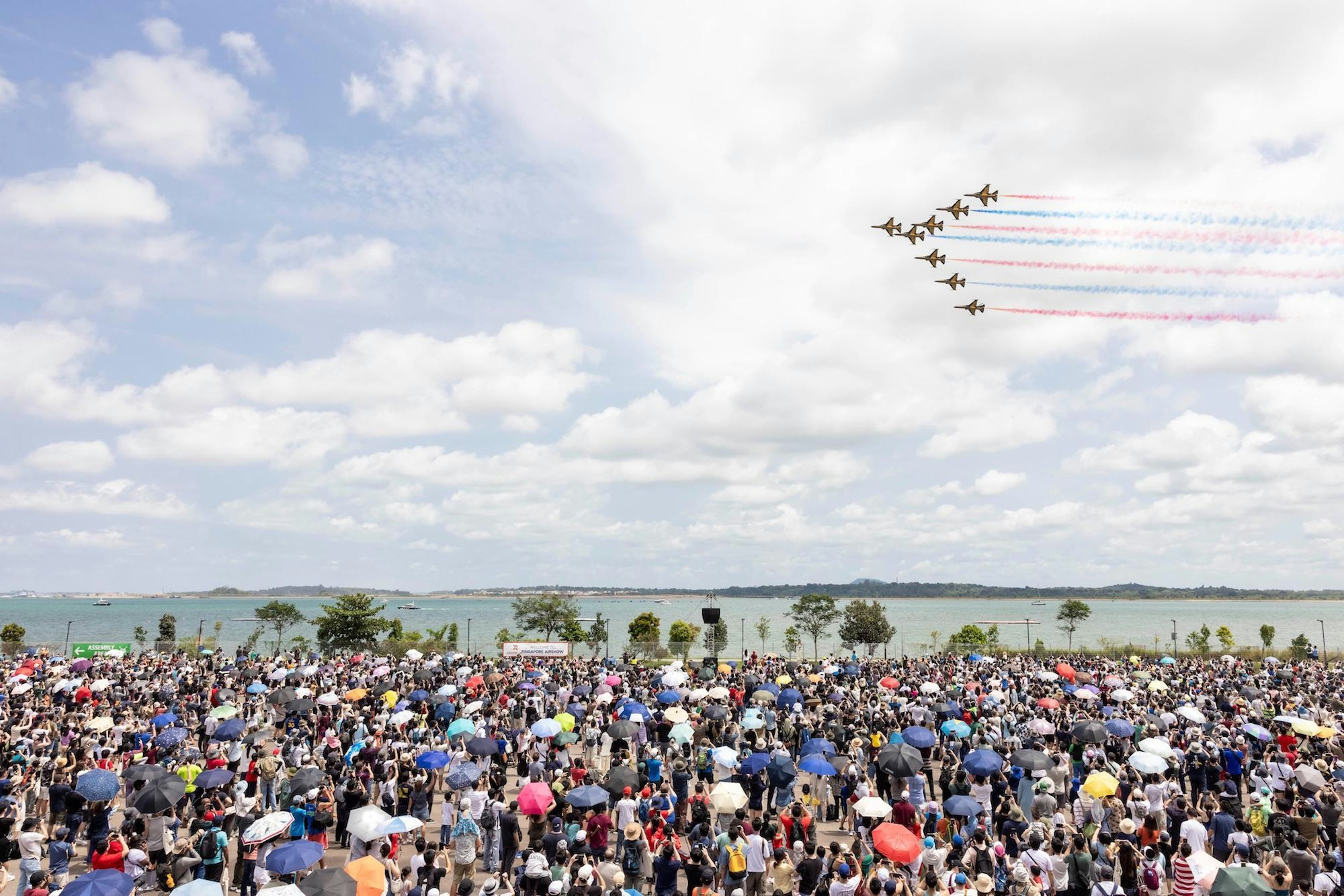
The Singapore Airshow 2026 commenced today at the Changi Exhibition Centre, attracting over 1,000 companies and delegations from across the globe. As the largest aerospace event in the Asia-Pacific region, the six-day exhibition underscores the sector’s strong recovery and an intensified focus on innovation and sustainability.

Regional Growth and Industry Recovery

The event takes place amid a surge in air travel demand throughout Asia-Pacific, with airlines expanding their capacity and network reach following the disruptions caused by the pandemic. Robust growth projections for passenger traffic, particularly from India, China, and Southeast Asia, emphasize the region’s pivotal role in shaping the future of global aviation. For economies reliant on tourism, these developments promise enhanced connectivity and economic growth, supported by expanded airline networks and technological advancements that foster resilient travel markets.

Commitment to Sustainable Aviation

A central theme of the 2026 Airshow is the aviation industry’s commitment to sustainability. At a pre-show ceremony, the Civil Aviation Authority of Singapore (CAAS), Airbus, and CFM International signed a memorandum of understanding to establish Singapore as the world’s first operational airport testbed for next-generation propulsion technologies under CFM’s RISE programme. This initiative will enable Singapore’s airports, including Changi and Seletar, to serve as real-world proving grounds for advanced open-fan engine technologies. The RISE programme aims to achieve more than a 20% improvement in fuel efficiency compared to current jet engines, targeting significant reductions in carbon emissions and noise—critical milestones in meeting the industry’s environmental objectives.

This agreement is among several forged at the Changi Aviation Summit, which also highlighted initiatives in sustainable aviation fuel (SAF) procurement and collaborative efforts on human capital development and technological innovation. Industry stakeholders are increasingly addressing long-term sustainability challenges, including the transition to cleaner fuels and more efficient aircraft operations. Interest in SAF and electric vertical take-off and landing (eVTOL) aircraft is growing, with companies such as Honeywell and SkyDrive leading advancements in these areas.

Challenges and Competitive Dynamics

Despite its prominence, the Airshow faces challenges, including competition from other major global aviation events and the imperative to maintain leadership in innovation and sustainability amid evolving market conditions. The successful integration of emerging technologies, such as advanced propulsion systems and eVTOL aircraft, remains a key priority for both organizers and participants.

Competitive responses are intensifying as aerospace firms expand their presence in the defense market and invest in advanced uncrewed aircraft systems. Honeywell’s expansion in the Asia-Pacific defense sector and Archer Aviation’s establishment of a new aerospace engineering hub in the United Kingdom exemplify this trend. Concurrently, demand for business aircraft in Asia continues to be strong, as demonstrated by Textron Aviation’s robust regional sales.

As the Singapore Airshow 2026 progresses, it functions not only as a platform for showcasing cutting-edge aerospace technology but also as a forum for strategic discussions on the industry’s future. The event highlights the interconnectedness of aviation, travel, and economic growth in the Asia-Pacific region while emphasizing the sector’s ongoing transformation toward greater innovation and sustainability.

More news
Vertical Aerospace Partners with Marubeni to Launch Electric Air Taxi Routes in Japan

Vertical Aerospace Partners with Marubeni to Launch Electric Air Taxi Routes in Japan

Vertical Aerospace and Marubeni Collaborate to Launch Electric Air Taxi Routes in Japan Vertical Aerospace [NYSE: EVTL], a prominent figure in electric aviation, has announced a strategic partnership with Marubeni Corporation, one of Japan’s largest trading and investment firms, to accelerate the deployment of electric air taxi services in Japan. The collaboration aims to establish a network of electric air taxi routes, with piloted demonstration flights planned for the Osaka Bay area by 2026. This initiative represents a significant advancement in the development of Advanced Air Mobility (AAM) within the country. Developing a Network for Advanced Air Mobility Unveiled at the Singapore Airshow, the partnership between Vertical Aerospace and Marubeni focuses on creating scalable air taxi corridors, with a flagship route under consideration in the Kansai region. The companies project that these routes could reduce travel times by up to 80 percent compared to traditional ground transportation, while providing quiet, zero-emission operations. The envisioned AAM network is designed to serve multiple use cases, including premium tourism, airport shuttles, and essential services. For premium tourism and major events, the air taxi routes will facilitate rapid connections from urban centers such as Osaka to scenic destinations like Awaji Island and Shodoshima. Additionally, the service aims to support international exhibitions and large-scale events by offering efficient air transport options. The network will also provide fast first- and last-mile connections to major transport hubs and airports, including routes between Izumisano, Osaka, and Kobe. Furthermore, the initiative plans to address time-critical medical and logistics transport needs, such as emergency response coverage in the Osaka-Hyogo districts. This effort builds on momentum generated by the 2025 Osaka World Expo, which attracted over 29 million visitors and featured an immersive cabin experience of Vertical’s upcoming Valo aircraft, simulating commercial flight routes across the Kansai region. Technological and Regulatory Progress Vertical Aerospace’s Valo aircraft is engineered to fly up to 160 kilometers at speeds of 240 kilometers per hour, operating with zero emissions. The aircraft is designed to meet airliner-level safety standards, and the company is also developing a hybrid-electric variant to enhance range and operational flexibility. In 2023, the Japan Civil Aviation Bureau (JCAB) accepted Vertical’s application into its type validation program, marking a critical step toward certification. Vertical is targeting airliner-level safety certification for the Valo with the UK Civil Aviation Authority by 2028. Marubeni has demonstrated its commercial commitment by making a pre-delivery payment to secure early delivery slots for a conditional pre-order of 200 Valo aircraft. This financial commitment underscores the seriousness of the partnership’s ambitions in the Japanese market. Challenges and Market Outlook Despite the promising outlook, the partnership faces several challenges. Regulatory frameworks for electric vertical takeoff and landing (eVTOL) operations in Japan are still evolving, and significant infrastructure development will be necessary to support widespread air taxi services. This includes the construction of vertiports and charging facilities. The partnership also enters a competitive environment, with established aviation companies and other eVTOL manufacturers actively pursuing market opportunities in Japan. Market reactions are expected to vary. While traditional aviation stakeholders may express skepticism, urban areas struggling with congestion could demonstrate strong interest in these new mobility solutions. The regulatory landscape and competitive dynamics will be crucial in shaping the future trajectory of electric air taxis in Japan. If successful, the Vertical Aerospace and Marubeni partnership could position Japan as a global leader in advanced air mobility, providing a model for urban air transport that may be replicated in other international markets.
Vertical Aerospace Partners with Marubeni to Develop Electric Air Taxi Routes in Japan

Vertical Aerospace Partners with Marubeni to Develop Electric Air Taxi Routes in Japan

Vertical Aerospace and Marubeni Collaborate to Launch Electric Air Taxi Routes in Japan Vertical Aerospace has entered into a strategic partnership with Japanese conglomerate Marubeni to develop electric air taxi routes throughout Japan, marking a pivotal advancement in the integration of electric vertical take-off and landing (eVTOL) aircraft within the country’s urban transportation framework. This collaboration seeks to establish a comprehensive network of electric air taxis by combining Vertical Aerospace’s cutting-edge eVTOL technology with Marubeni’s extensive expertise in infrastructure and mobility services. Japan has been identified as a critical market for the early adoption of sustainable urban air mobility solutions, reflecting growing demand for innovative and environmentally friendly transportation options. Challenges and Market Dynamics Despite the promising outlook, the initiative faces several significant challenges. Regulatory approval remains a foremost concern, as Japan’s aviation authorities must develop new certification frameworks and oversight mechanisms tailored to eVTOL operations. The integration of technology also presents hurdles, particularly in the development of charging infrastructure and ensuring seamless connectivity with existing transportation systems. Furthermore, Vertical Aerospace and Marubeni will encounter competition from established aviation companies, many of which are accelerating their own eVTOL projects or advocating for regulations that may favor traditional aircraft manufacturers. Market responses to the partnership have been varied. While some industry experts view the collaboration as a bold and necessary step toward the future of urban mobility, others remain cautious about the practical feasibility and safety of electric air taxis. Persistent concerns include battery life, flight range, and adherence to operational safety standards, even as technological advancements continue to progress. Strategic Outlook and Future Prospects Vertical Aerospace maintains an optimistic stance regarding its expansion in the Asia-Pacific region, having already secured customers such as Japan Airlines and Air Asia, which underscores the region’s potential as a leading market for eVTOL aircraft. Both Vertical Aerospace and Marubeni are positioning themselves at the forefront of this emerging sector, with the ambition to revolutionize urban travel in densely populated environments. Moving forward, the partnership will prioritize pilot projects, regulatory engagement, and public outreach initiatives aimed at fostering confidence in electric air taxi services. The success of these efforts could significantly influence the trajectory of urban air mobility not only in Japan but across the broader Asia-Pacific region.
India and Asia-Pacific Drive Global Aviation Growth in 2026

India and Asia-Pacific Drive Global Aviation Growth in 2026

India and Asia-Pacific Drive Global Aviation Growth in 2026 For decades, the global aviation industry was predominantly centered in North America and Europe. However, as 2026 unfolds, the sector’s focal point is shifting decisively towards the east. A recent whitepaper by Alton Aviation Consultancy reveals that eight of the ten fastest-growing air travel markets over the next twenty years will be located in India, China, and Southeast Asia. This transformation is fundamentally altering the movement of people and goods on a global scale. India: At the Forefront of Aviation Expansion India is leading this aviation surge, propelled by robust economic growth, an expanding middle class, and proactive government initiatives such as the UDAN scheme aimed at modernizing airports. These factors have generated unprecedented demand for air travel within the country. Domestic airlines are rapidly expanding their fleets, with a significant increase in aircraft orders reflecting the nation’s growing appetite for connectivity. Projections indicate that India will remain the world’s fastest-growing aviation market through 2044, attracting considerable interest from investors and aircraft manufacturers alike. Asia-Pacific’s Widening Growth Landscape While China continues to be a major player, the aviation growth story across Asia-Pacific has broadened considerably. According to Mabel Kwan, Managing Director of Alton’s Singapore office, the region’s air travel expansion is no longer solely driven by China. Countries such as Indonesia, Vietnam, and the Philippines are experiencing rapid urbanization alongside a critical need for connectivity across their extensive archipelagos. Aviation is emerging as the most practical solution for national integration, with both new entrants and established carriers competing vigorously to capture market share. This rapid expansion presents challenges for aircraft manufacturers like Airbus and Boeing, who face fluctuating production rates and strategic decisions regarding future aircraft models. Boeing, in particular, is under pressure to reclaim its narrow-body market share amid delivery delays and intensifying competition. Despite these obstacles, industry leaders maintain a positive outlook, with market responses to Asia-Pacific’s growth largely optimistic. The Narrow-Body Aircraft Revolution and Competitive Pressures A significant technical development underpinning the region’s growth is the adoption of longer-range, narrow-body aircraft. These jets enable airlines to operate direct “point-to-point” routes between secondary cities, circumventing traditional hubs such as Singapore or Dubai. Since 2015, more than 600 new routes have been launched across Asia-Pacific, connecting previously underserved destinations and enhancing both passenger convenience and operational efficiency. Competition within the region is intensifying. Carriers like Scoot are pursuing aggressive expansion strategies in Southeast Asia, while demand for leased aircraft is rising as airlines seek greater operational flexibility. Korean Air has highlighted concerns over increased competition and geopolitical volatility, reflecting the complex environment regional players must navigate. Meanwhile, chief executives of major Indian airlines, including IndiGo and Air India, have come under scrutiny following notable operational setbacks in 2025. Air Cargo Growth and Emerging Technologies Beyond passenger travel, Asia-Pacific now accounts for approximately 40% of global air freight demand, solidifying its role as the “world’s factory.” This dominance in air cargo is driven by the rapid growth of e-commerce and strengthening intra-Asia trade, fostering a self-sustaining logistics ecosystem. Looking forward, the region is also positioned to lead in next-generation aviation technologies. Companies such as Vertical Aerospace anticipate that Asia-Pacific will become the primary market for electric vertical takeoff and landing (eVTOL) aircraft, marking the advent of a new phase in aviation innovation. As 2026 progresses, India and the broader Asia-Pacific region are not merely participants in global aviation growth—they are shaping its future trajectory.
New Facility to Advance Aviation Innovation

New Facility to Advance Aviation Innovation

New Facility to Advance Aviation Innovation Cranfield University has inaugurated a cutting-edge research centre dedicated to accelerating advancements in clean aviation technologies and facilitating the transition to net-zero flight. The newly established Cranfield Power & Propulsion Laboratories (CPPL), situated adjacent to Cranfield Airport near Milton Keynes, significantly enhances the university’s capacity for sustainable energy research and the development of specialised skills within the sector. A Hub for Sustainable Aviation Research The 1,000-square-metre CPPL building forms a key component of the Cranfield Hydrogen Integration Incubator (CH2i) project. It comprises ten laboratory spaces equipped with control rooms and a dedicated workshop designed for advanced testing. Constructed by Lindum in partnership with Influence Landscape Planning and Design, the facility is purpose-built to support research focused on decarbonising aviation. This includes the integration of advanced aircraft power systems and the development of sustainable aviation fuels, both critical to reducing the environmental impact of air travel. Professor Vassilios Pachidis, head of the Centre for Propulsion and Thermal Power Engineering at Cranfield University, emphasised the laboratory’s transformative potential. He stated, “The new Cranfield Power and Propulsion Laboratories will help shape the future of flight. By solving the challenges around the aerodynamic and thermodynamic integration of advanced power and propulsion systems into aircraft, we will make aviation cleaner and more efficient.” Collaboration and Environmental Commitment Beyond its research mandate, the CPPL will serve as a vital training ground for the next generation of industry experts, including master’s and doctoral candidates. Kathryn Dunk, principal landscape architect at Influence, highlighted the project’s environmental achievements, noting that the development exceeded biodiversity and net gain targets. The landscape design not only integrates the facility seamlessly with the existing campus but also creates valuable habitats for local wildlife. Darren King, managing director of Lindum Peterborough, underscored the collaborative nature of the project. He remarked, “Meeting the tight programme and the high sustainability standards set for the project was a real team effort. We’re delighted that the finished building and surrounding landscape now provide an excellent environment for world-leading research.” The project also involved contributions from architect Anotherkind, project manager 3CProjects, cost advisor Gardiner Theobald, engineer DICE Consult, and mechanical and electrical engineer Chord Consult, reflecting a broad coalition of expertise. Industry Implications and Future Challenges While the CPPL is poised to drive significant progress in clean aviation, it faces potential challenges including regulatory compliance, supply chain vulnerabilities, and the integration of rapidly evolving technologies. The facility’s launch is expected to stimulate increased investor interest in sustainable aviation and related industries. This development may prompt competitors such as GE Aerospace to intensify their research and development efforts and pursue new partnerships to maintain competitive advantage. Strategic investments in similar technologies by industry rivals are anticipated as the aviation sector responds to mounting pressure for decarbonisation and innovation. Cranfield University’s new facility, with its emphasis on research excellence, skills development, and environmental sustainability, represents a pivotal advancement in the global pursuit of cleaner, more efficient aviation.
INFORM Aviation Appoints New Senior Vice President

INFORM Aviation Appoints New Senior Vice President

INFORM Aviation Appoints Dr. Johannes Richenhagen as Senior Vice President INFORM, a global leader in AI-driven optimization software, has announced the appointment of Dr. Johannes Richenhagen as Senior Vice President of its Aviation business unit, effective immediately. Dr. Richenhagen, who previously served as Executive Lead Transformation, will now oversee the unit’s operations and strategic direction. This leadership change represents a key milestone in INFORM Aviation’s ongoing transformation, which has been closely guided by Dr. Jörg Herbers, CEO of INFORM GmbH. Since June 2025, Dr. Richenhagen has been instrumental in shaping the division’s product strategy and development, collaborating with engineering and leadership teams to drive innovation. He brings extensive management experience from complex software organizations and deep expertise in mobility-related industries, including aviation. His leadership is expected to ensure continuity in INFORM Aviation’s strategic direction while reinforcing the operational foundations of its GroundStar software suite. Central to his approach is fostering transparent and collaborative dialogue with customers and partners. Dr. Richenhagen emphasized the company’s commitment to customer-centric innovation, stating, “Our priority is to create even greater benefits for our customers. We will continue building solutions that make aviation operations more efficient, reliable, and sustainable—always in close partnership with our customers to address their evolving needs and challenges.” Strategic Focus Amid Industry Challenges The appointment comes at a time of heightened competition and rapid change within the aviation technology sector. INFORM Aviation faces the challenge of integrating Dr. Richenhagen’s strategies smoothly while maintaining market confidence amid industry shifts. Market reactions to the leadership change may vary, with some investors viewing the move as a catalyst for growth, while others may express caution over potential disruptions. Competitors are likely to monitor INFORM Aviation’s strategic moves closely and may respond by strengthening their own leadership teams. Dr. Richenhagen’s leadership will focus on continuous innovation and adaptation to evolving market demands, deeper integration of cloud and AI technologies, and the refinement of a modular, cutting-edge product portfolio. Meanwhile, Dr. Herbers will continue to support INFORM Aviation through overarching strategic initiatives, ensuring alignment with the company’s broader vision. Founded in 1969 and headquartered in Aachen, Germany, INFORM develops software that optimizes business processes using artificial intelligence and advanced operations research. Serving over 1,000 customers worldwide, INFORM’s solutions are tailored to industry-specific requirements, promoting resilience and sustainable value creation across sectors such as aviation, automotive, finance, logistics, manufacturing, transportation, telecommunications, and wholesale. The company remains committed to ethical AI practices, sustainable customer relations, and an increasing focus on cloud-based solutions. For further information, visit www.inform-software.com.
Air India and IndiGo Aircraft Wings Collide at Mumbai Airport

Air India and IndiGo Aircraft Wings Collide at Mumbai Airport

Air India and IndiGo Aircraft Wings Collide at Mumbai Airport Incident Overview On Tuesday, a minor collision occurred between an IndiGo aircraft and an Air India plane at Mumbai’s Chhatrapati Shivaji Maharaj International Airport. The incident took place when IndiGo flight 6E 791, arriving from Hyderabad, was taxiing after landing and its wingtip made contact with the wing of Air India flight AI 2732, which was stationary on the taxiway awaiting departure to Coimbatore. Both aircraft sustained minor damage, but no passengers or crew were injured. Airline Responses and Safety Measures Both IndiGo and Air India issued statements confirming the incident. IndiGo emphasized that all passengers were safe and had disembarked after the aircraft was parked. The airline noted that the affected aircraft was undergoing maintenance inspections and that authorities had been promptly informed. IndiGo reiterated that the safety and security of its customers, crew, and aircraft remain its highest priority, and an investigation is currently underway. Air India reported damage to its aircraft’s wingtip, resulting in the grounding of the plane for technical checks as a precautionary measure. The airline confirmed that all passengers were safely disembarked and that alternative travel arrangements were being made. The incident was formally reported to the Directorate General of Civil Aviation (DGCA), which has since launched an investigation. Context and Implications This collision occurs amid ongoing challenges for IndiGo, which has experienced significant operational disruptions over the past year, including a major system breakdown in 2025 and regulatory penalties. The latest incident is expected to intensify scrutiny from the DGCA and may lead to further fines, raising concerns about IndiGo’s operational resilience and management effectiveness. The airline’s leadership is under increasing pressure to address these issues and restore confidence among regulators and passengers. Air India may also face heightened demands to review and enhance its safety protocols and operational efficiency. The aviation market is likely to monitor both carriers’ safety records closely following the incident, with potential implications for investor confidence and stock performance. Competitors may leverage the situation to underscore their own safety standards, potentially influencing passenger preferences and altering market dynamics as stakeholders reassess airline reliability. The DGCA’s ongoing investigation aims to determine the cause of the collision and implement measures to prevent similar incidents in the future. Both airlines are cooperating fully with regulatory authorities as the inquiry progresses.
Boeing Forecasts 141,000 New Aviation Jobs in Asia by 2044

Boeing Forecasts 141,000 New Aviation Jobs in Asia by 2044

Boeing Forecasts 141,000 New Aviation Jobs in Asia by 2044 Rapid Growth in Aviation Employment and Services Boeing has projected a significant expansion in aviation employment across India and South Asia, anticipating the creation of approximately 141,000 new jobs by 2044. This growth is driven by the region’s rapidly increasing fleet size and air traffic volumes, which will require substantial investment in aviation services estimated to exceed $195 billion. The company’s 2025 Pilot and Technician Outlook, released on February 2, 2026, highlights the rising demand for pilots, technicians, and cabin crew, alongside a broad expansion in maintenance, repair, and overhaul (MRO), digital services, and training sectors. The report specifies a need for around 45,000 pilots, 45,000 technicians, and 51,000 cabin crew members to support the burgeoning aviation market in India and South Asia. Boeing emphasizes that this growth will not only benefit airlines but also create opportunities for service providers and infrastructure development. Ashwin Naidu, Boeing’s Managing Director of Commercial Marketing for Eurasia and the Indian Subcontinent, noted that as air travel becomes increasingly integral to the movement of people and goods, airlines will expand their networks and fleets while investing heavily in technical personnel and services to sustain long-term growth. Industry Challenges and Competitive Landscape Despite the optimistic projections, the aviation sector in Asia faces several immediate challenges. Supply chain disruptions and delays in aircraft deliveries, as underscored by the outgoing chief of the Association of Asia Pacific Airlines (AAPA), continue to affect operations. Nevertheless, industry leaders remain confident in the region’s long-term potential, particularly in markets such as the Philippines and India, where a growing middle class is driving increased demand for air travel. Competition within the region is intensifying, with Airbus maintaining dominance in single-aisle aircraft sales, while Embraer seeks to expand its market share through increased sales of its E2 jets. These competitive dynamics may influence Boeing’s position as airlines diversify their fleets. Additionally, geopolitical tensions add complexity to the market environment. For instance, recent calls by former U.S. President Donald Trump to revoke certificates for Bombardier aircraft have introduced further uncertainty. Global Aviation Employment Outlook On a global scale, Boeing forecasts a substantial increase in aviation employment over the next two decades. Between 2025 and 2044, the company anticipates a demand for 2.37 million new aviation workers worldwide, including approximately 660,000 pilots, 710,000 technicians, and one million cabin crew members. North America is expected to require 435,000 new workers, while Eurasia leads with 550,000. China and Southeast Asia are also identified as key growth regions, each projected to generate hundreds of thousands of new jobs. Other regions, including Africa, Latin America, the Middle East, South Asia, and Oceania, are expected to experience steady, albeit smaller, increases in aviation employment. While supply chain constraints, competitive pressures, and geopolitical uncertainties present ongoing challenges, Boeing’s forecast underscores the robust long-term growth prospects for the aviation sector in Asia and beyond.
Bahrain’s Aviation Safety Week Addresses Key Challenges and Innovations

Bahrain’s Aviation Safety Week Addresses Key Challenges and Innovations

Bahrain’s Aviation Safety Week Addresses Key Challenges and Innovations Bahrain Airport Company (BAC), the operator of Bahrain International Airport (BIA), has inaugurated its annual Aviation Safety Week at the Mövenpick Hotel, emphasizing the paramount importance of safety across all facets of airport operations. This initiative reaffirms BAC’s dedication to maintaining the highest safety standards, including rigorous compliance with Safety Management System (SMS) regulations essential for aerodrome certification. Emphasizing Human Factors in Aviation Safety The central theme of this year’s Safety Week, “Human Factors in Aviation Safety,” underscores the critical role of human performance alongside technological and infrastructural elements in preventing incidents and ensuring seamless airport operations. BAC’s focus on human factors aims to elevate awareness and enhance decision-making among all stakeholders, cultivating a culture where safety is recognized as a collective responsibility spanning from frontline personnel to senior management. Collaboration and Knowledge Exchange Across the Industry The event convenes aviation professionals, regulatory authorities, and industry partners for a series of technical sessions and collaborative discussions. BAC’s Aerodrome Safety and Compliance team led a session addressing operational challenges and ongoing improvements at BIA, highlighting the airport’s proactive stance in tackling local safety concerns and refining operational processes. A presentation by the Arabian Petroleum Supply Company (APSCO) expanded the discourse by examining global best practices in human performance and risk management. This session aligned Bahrain’s safety protocols with international standards, reinforcing the airport’s adherence to evolving global aviation requirements. A panel discussion featuring representatives from Bahrain Airport Services (BAS), Bapco Refining, Bahrain Health and Safety Society, GPIC, and Alba explored common safety challenges across various industries. The dialogue emphasized the importance of cross-sector learning and a unified approach to safety management, aiming to foster a safer environment for both airport personnel and travelers. Engaging Stakeholders Through Practical Initiatives Complementing the week’s discussions, BAC organized an exhibition at Bahrain International Airport to engage key stakeholders and educate staff, visitors, and the public on best practices and innovative safety measures. The exhibition highlighted the significance of safety awareness and proactive hazard identification in daily operations. Additional activities, including a Foreign Object Debris (FOD) Walk on the runway, reinforced the practical aspects of maintaining a secure airport environment. Contextualizing Within Global Aviation Trends Bahrain’s Aviation Safety Week arrives at a critical juncture for the global aviation sector, which faces significant changes and challenges in the near future. The event’s emphasis on safety and innovation reflects broader industry trends, as major manufacturers such as Airbus and Boeing navigate increased production demands and strategic decisions regarding future aircraft models. Boeing is actively working to regain its position in the narrowbody market, while Airbus continues to lead in single-aisle aircraft sales. These developments, alongside anticipated shifts in the aviation aftermarket and ongoing modernization of air traffic control systems, illustrate the industry’s commitment to continuous improvement—a priority echoed by regulatory bodies including the U.S. Federal Aviation Administration (FAA). By addressing both local and international challenges, Bahrain’s Aviation Safety Week reinforces the country’s role in advancing aviation safety and modernization, ensuring that Bahrain International Airport remains at the forefront of industry standards and innovation.
China’s 'Flying Aircraft Carrier' Highlights Strategic Supply Chain Shift

China’s 'Flying Aircraft Carrier' Highlights Strategic Supply Chain Shift

China’s ‘Flying Aircraft Carrier’ Highlights Strategic Supply Chain Shift A Vision Beyond Technological Feasibility China’s recent unveiling of a near-space “flying aircraft carrier,” known as *Luanniao*, has captured international attention. This ambitious concept envisions a vast, triangular platform capable of launching swarms of unmanned fighters and hypersonic missiles from the edge of the atmosphere. Despite the dramatic nature of the announcement, defense experts largely regard the project as technologically unfeasible and more a tool of propaganda than a practical military development. The challenges are formidable: no current propulsion system can sustain flight near the Kármán line, and China lacks the reusable rocket technology necessary to realize such a platform. The project is projected on a 20- to 30-year timeline, placing it firmly in the realm of speculation. Nevertheless, the *Luanniao* serves a strategic purpose beyond its technical plausibility. It acts as a cinematic demonstration of China’s long-term ambitions to integrate advanced manufacturing, logistics, and military capabilities. This narrative is crafted to resonate both domestically and internationally, condensing decades of research and development aspirations into a single, striking announcement. The Underlying Strategic Supply Chain Advantage Beneath the futuristic imagery of the *Luanniao* lies a more immediate and tangible reality: China’s commanding position in the supply chains critical to modern defense technologies. The development of hypersonic weapons, stealth platforms, and autonomous systems depends heavily on rare earth elements such as neodymium, dysprosium, and terbium. These materials are essential for producing high-performance magnets and advanced alloys. China’s dominance extends across rare earth separation, magnet manufacturing, and downstream component production, establishing a formidable supply chain monopoly. This control over critical materials and manufacturing processes is the true engine driving China’s military modernization. While the “flying aircraft carrier” may remain a conceptual spectacle, the industrial infrastructure supporting such ambitions is well established and actively reshaping global defense and technology markets. Global Repercussions Amid Shifting Supply Chains The announcement of the *Luanniao* project comes at a time when global supply chains face persistent challenges, including tariffs, trade uncertainties, labor shortages, rising material costs, and infrastructure vulnerabilities. These pressures are compelling nations to reconsider the resilience and security of their supply networks. The *Luanniao* concept, speculative as it may be, highlights China’s broader intent to incorporate automation and artificial intelligence into its supply chain operations, further consolidating its role as a critical hub in advanced manufacturing. This evolving landscape is prompting strategic responses from global competitors, particularly the United States, which is increasing investments in defense logistics and infrastructure security. As supply chains adapt, new regional hubs and international partnerships are emerging, with compliance and performance becoming central to navigating an increasingly complex and competitive environment. Conclusion While China’s “flying aircraft carrier” may ultimately be more theatrical than threatening, the underlying narrative reveals a significant strategic reality. China’s upstream control over the essential materials and technologies that enable advanced defense systems is both concrete and consequential. For policymakers and investors alike, the focus must remain on this critical supply chain dominance rather than the spectacle itself.
Virgin Australia Implements Embraer’s AHEAD System

Virgin Australia Implements Embraer’s AHEAD System

Virgin Australia Implements Embraer’s AHEAD System for E2 Fleet Embraer has formalized an agreement with Virgin Australia to equip the airline’s E2 fleet with its advanced Aircraft Health Analysis and Diagnosis (AHEAD) system. This initiative represents a significant advancement in digital predictive maintenance for Virgin Australia’s E-Jet aircraft. The AHEAD platform utilizes real-time data to continuously monitor critical aircraft systems, including the auxiliary power unit (APU), fuel, pneumatics, hydraulics, avionics, engines, navigation, air conditioning, and flight controls, both during flight and on the ground. By employing sophisticated analytics and predictive algorithms, the system is designed to detect and anticipate potential technical issues before they escalate, thereby enabling proactive maintenance interventions. Enhancing Operational Efficiency and Sustainability The integration of the AHEAD system is expected to substantially reduce unscheduled downtime, optimize fleet availability, and lower operational costs for Virgin Australia. Additionally, by minimizing avoidable fuel consumption associated with maintenance-related disruptions, the airline anticipates a reduction in CO₂ emissions. Nathan Miller, Executive General Manager at Virgin Australia Regional Airlines, emphasized the transformative potential of the E2 jets, describing them as “a game-changer” that delivers enhanced reliability, efficiency, and passenger comfort. He further noted that the AHEAD tool will be instrumental in preempting maintenance challenges, thereby maximizing aircraft performance and strengthening operational resilience across the airline’s network. Virgin Australia currently holds firm orders for eight E2 jets and has already taken delivery of two aircraft. The E190-E2 fleet is based in Perth and operated by Virgin Australia Regional Airlines (VARA). Challenges and Industry Implications Despite the anticipated benefits, the implementation of Embraer’s AHEAD system presents several challenges. Integrating this new digital maintenance platform with existing aircraft systems may involve complex technical hurdles, potentially delaying full operational deployment. Moreover, the transition will necessitate comprehensive training programs for both pilots and maintenance personnel to ensure the effective utilization of the technology. The initiative has attracted considerable attention from aviation regulators and industry competitors alike. Regulatory authorities are expected to closely monitor the integration process to ensure compliance and safety standards. Meanwhile, rival airlines may accelerate their own development and adoption of advanced aircraft health monitoring systems to maintain competitive parity. This growing focus on predictive maintenance technologies is poised to influence industry standards and stimulate further innovation within the sector. Embraer’s broader strategic priorities—including efforts to increase E2 sales and expand into defense and electric vertical take-off and landing (eVTOL) markets—may also impact the pace and extent of support provided for Virgin Australia’s AHEAD system rollout. As Embraer manages these multiple objectives, the success of this partnership could serve as a critical benchmark for future digital transformation initiatives in commercial aviation.
line









