
image

AeroGenie — 您的智能副驾驶。

询问一切。分析一切。立即行动。

热门趋势

Categories

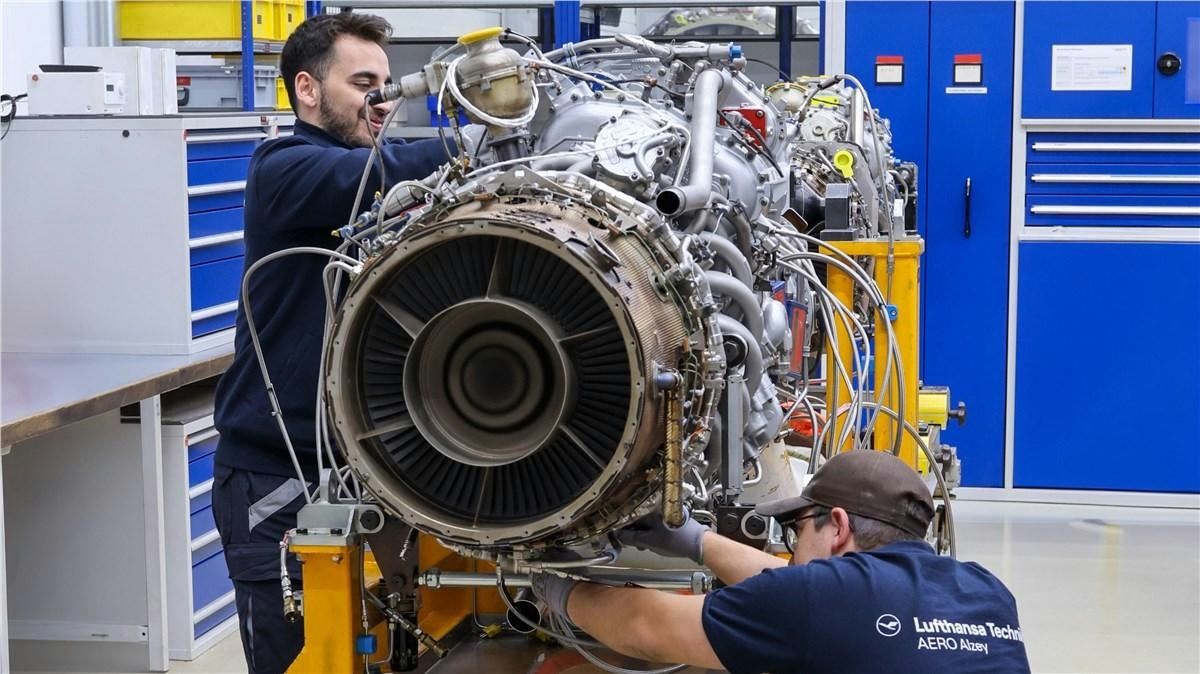
SunExpress Partners with Lufthansa Technik for CFM56 and LEAP Engine Maintenance
January 15, 2026By ePlane AI
SunExpress Partners with Lufthansa Technik for CFM56 and LEAP Engine Maintenance
0
0
SunExpress Airlines
Lufthansa Technik
CFM56 Engine Maintenance

SunExpress Partners with Lufthansa Technik for CFM56 and LEAP Engine Maintenance

European leisure airline SunExpress has formalized two extensive five-year maintenance, repair, and overhaul (MRO) agreements with Lufthansa Technik, encompassing the entire engine fleet of its Boeing 737 aircraft. These contracts cover both the CFM56-7B engines powering SunExpress’s current Boeing 737-800s and the advanced CFM LEAP-1B engines installed on its growing fleet of 737-8 models.

Strengthening Capabilities Across Engine Generations

The collaboration marks a strategic advancement for Lufthansa Technik, reinforcing its stronghold in the established CFM56 market while expanding its presence in the rapidly developing LEAP-1B segment. The majority of maintenance activities will be carried out at Lufthansa Technik’s Hamburg facilities, supplemented by additional capacity and operational flexibility through the XEOS joint venture with GE Aerospace in Poland.

Cemil Sayar, Chief Operating Officer at SunExpress, highlighted the significance of the partnership in maintaining operational excellence, stating, “This strategic partnership reinforces our commitment to maintaining the highest standards of reliability and performance across our Boeing 737 fleet.” Harald Gloy, Chief Operations Officer at Lufthansa Technik, underscored the importance of supporting both legacy and next-generation engine technologies. He noted, “The rollover to the latest-generation types such as the LEAP-1B engine is progressing steadily, but its venerable CFM56-7B predecessor is also still going strong… we are pleased that we can offer SunExpress our enormous expertise for both generations.”

Navigating Industry Challenges and Future Outlook

As SunExpress continues its expansion, the airline faces the dual challenge of sustaining competitive pricing while ensuring the reliability and cost-efficiency of its engine maintenance. Industry analysts suggest that this partnership could establish a new benchmark for service quality in the sector, potentially prompting competitors to seek similar alliances or to invest in their own MRO capabilities to maintain market competitiveness.

The aviation industry’s growing emphasis on engine durability and stringent regulatory inspections—particularly for LEAP engines operating in harsh, dusty environments—may shape SunExpress’s maintenance strategies under the new agreements. Furthermore, ongoing delays in engine deliveries and the extended timeline for certifications across various engine platforms, expected to continue into 2026, could influence the airline’s operational planning and maintenance demands.

By aligning with Lufthansa Technik, SunExpress aims to effectively address these evolving challenges while supporting its fleet growth and upholding high operational standards.

More news
Commercial Aerospace in 2026: Advances from Self-Healing Parts to Space-Based MRO

Commercial Aerospace in 2026: Advances from Self-Healing Parts to Space-Based MRO

Commercial Aerospace in 2026: Advances from Self-Healing Parts to Space-Based MRO As the commercial aerospace industry approaches 2026, it finds itself navigating a complex landscape shaped by rapid digital transformation and expanding operational frontiers. The sector is simultaneously reinforcing its digital infrastructure on the ground and exploring innovative maintenance and logistics solutions in space. This dual evolution reflects the industry's response to emerging challenges and opportunities, positioning it for a new era of resilience and growth. Strengthening Digital Resilience Amid Rising Cyber Threats The aviation sector’s critical infrastructure, responsible for the global movement of people and goods, has become an increasingly attractive target for cyberattacks. Recent data from Thales reveals a dramatic 600% increase in ransomware incidents between 2024 and 2025. A notable example occurred in September 2025, when a cyberattack disrupted check-in systems at major European airports including Brussels, London, and Berlin, underscoring the vulnerability of current systems. A significant weakness lies within the “middle section” of the industry’s technology stack, where airline, aircraft, and ground systems remain only partially modernized. In response, airlines and regulatory bodies are expected to enforce comprehensive digital upgrades aimed at closing these security gaps. Maintenance, Repair, and Overhaul providers (MROs), along with operators, will be required to collaborate closely with software partners to ensure a proactive cybersecurity posture. This will involve frequent software updates and a design philosophy focused on eliminating vulnerabilities from the outset, thereby enhancing the sector’s overall digital resilience. Innovations in Supply Chain and Materials Technology Persistent supply chain disruptions, particularly in the availability of spare parts, continue to challenge aviation maintenance. Traditional approaches, such as reliance on Parts Manufacturer Approval (PMA) components, often encounter resistance from lessors and incur significant costs during lease returns, limiting airlines’ flexibility and maintaining dependence on primary suppliers. In 2026, however, 3D printing is expected to become a mainstream solution, enabling airlines to manufacture critical components on demand and reduce their reliance on conventional supply chains. The integration of digital thread technologies will further improve traceability and operational efficiency, allowing operators to maintain readiness despite ongoing disruptions. Concurrently, the industry is witnessing a materials revolution with the introduction of self-healing components, including advanced polyurethane topcoats. These materials offer enhanced durability and potential cost savings, with market forecasts indicating substantial growth in their adoption. While some resistance from traditional maintenance practices is anticipated, competitive pressures and positive market responses are likely to accelerate widespread implementation. This shift will compel competitors to prioritize innovation and operational efficiency to sustain their market positions. Industry Consolidation and the Emergence of Space-Based MRO The commercial aerospace sector is also experiencing increased private equity activity, driven by consolidation opportunities and the pressing need to address supply chain bottlenecks and aging fleets. This trend is expected to intensify as companies seek greater scale and resilience in a rapidly evolving market environment. Beyond terrestrial operations, the rise of reusable launch vehicles is opening new avenues for space-based Maintenance, Repair, and Overhaul (MRO) and logistics services. Initiatives such as Amazon’s Low Earth Orbit (LEO) space communications network and SpaceX’s in-orbit refueling capabilities are reshaping the technological landscape. These developments hold the potential to redefine operational models and market dynamics, further blurring the boundaries between commercial aviation and the space sector. In 2026, the commercial aerospace industry will thus be characterized by a delicate balance of urgent digital modernization, innovative supply chain strategies, and the adoption of next-generation materials, all while extending its operational reach into space. The sector’s capacity to adapt to these multifaceted challenges will be critical to its resilience and competitiveness in the years ahead.
Ground Handling Challenges and Innovations in the Nordic Region

Ground Handling Challenges and Innovations in the Nordic Region

Ground Handling Challenges and Innovations in the Nordic Region In the demanding aviation environment of Scandinavia, ground handling plays a critical role in maintaining flight schedules despite harsh winters, tight turnaround times, and evolving market pressures. Operating across Denmark, Sweden, Norway, and Finland, Aviator Airport Alliance, a division of Avia Solutions Group, has established itself as a leader in managing this complex logistical operation with precision and adaptability. Precision and Speed in Turnaround Operations Ground crews in the Nordic region typically have just 25 minutes to complete a full aircraft turnaround, which includes unloading, reloading, refueling, restocking, and preparing the aircraft for its next flight. This rapid process is further complicated during winter months by the necessity of de-icing procedures, where every second is critical. The operation resembles the choreography of a Formula 1 pit stop, with each team member and piece of equipment synchronized to perform dozens of tasks immediately upon the aircraft’s arrival. Speed and accuracy are essential not only to adhere to tight schedules but also to maintain stringent safety standards. Serving a Diverse Range of Clients Aviator supports a wide array of airlines, from major carriers such as SAS, Ryanair, Wizz Air, and Turkish Airlines to charter and special flights. Their portfolio also includes unique assignments, such as handling aircraft for film productions and managing high-security flights like those of Air Force One. These varied operations underscore the adaptability required to meet diverse client demands and highlight the responsibility that extends beyond routine ground handling. The Role of Ground Handling Teams as Airline Representatives Ground handling personnel act as the frontline representatives of airlines, managing check-in, boarding, and passenger interactions. This role carries significant trust and responsibility, requiring seamless customer service that aligns with each airline’s standards. Safety remains paramount, as even minor errors can disrupt schedules or result in grounded aircraft. To secure and maintain contracts, Aviator competes by demonstrating operational excellence, particularly in safety and customer experience. Addressing Market and Supply Chain Pressures The Nordic ground handling sector faces additional challenges stemming from global supply chain disruptions. Recent issues in business aviation, including temporary fuel shortages and potential tariffs on aircraft components, have prompted airlines and service providers to adopt strategies such as increasing fuel reserves, diversifying supply chains, and investing in local infrastructure. These measures are vital as the market remains sensitive to policy shifts and economic volatility, including internal divisions within the Federal Reserve and elevated market valuations. Commitment to Safety, Training, and Competitive Excellence In highly regulated airports where multiple ground handlers compete, maintaining an impeccable safety record is essential. Aviator invests heavily in training both new recruits and experienced staff to ensure reliability even under the harshest conditions. Their competitive advantage lies in delivering flawless service without compromising safety or operational efficiency. Innovation and Sustainability Initiatives With flight schedules becoming increasingly volatile and airline demands evolving rapidly, operational flexibility has become more important than ever. Aviator customizes its services for each client and employs technology to manage unpredictable workloads while maintaining workforce stability. The company is also a regional pioneer in environmental sustainability, having been among the first to introduce electric ground service equipment. This innovation reduces both emissions and noise pollution on the apron, aligning with broader industry goals for greener operations. In a region where operational excellence, adaptability, and sustainability are paramount, Aviator and its peers continue to push the boundaries of ground handling, ensuring that Nordic aviation remains resilient amid seasonal challenges and global uncertainties.
African Airlines Experience 15.6% Increase in Holiday Cargo Demand

African Airlines Experience 15.6% Increase in Holiday Cargo Demand

African Airlines Lead Global Growth in Holiday Cargo Demand African airlines experienced a remarkable 15.6% year-on-year increase in air cargo demand in November 2025, the highest growth rate among all global regions, according to the latest figures from the International Air Transport Association (IATA). This surge was driven primarily by heightened activity during the holiday season and was accompanied by an 18.1% rise in cargo capacity across the continent. Expansion in Passenger and Cargo Capacity The festive period also highlighted significant developments within Africa’s aviation sector. Ethiopian Airlines retained its status as the continent’s largest carrier by scheduled seat capacity, while South African Airways recorded the fastest growth among Africa’s top ten airlines, expanding its capacity by 33.5% compared to the previous year. Cairo International Airport emerged as Africa’s busiest airport by scheduled seats, reflecting Egypt’s dominant position in the regional aviation market, which accounted for approximately three million seats during the holiday season. Overall, airline capacity across Africa reached 25.2 million seats in December 2025, marking a 6.8% increase from December 2024. This growth in both cargo and passenger capacity underscores Africa’s expanding role in global air transport. However, it also raises concerns about potential pressures on operational efficiency and infrastructure as the industry scales rapidly. Global Context and Market Dynamics On a global scale, air cargo demand grew by 5.5% year-on-year in November, as shippers prioritized timely deliveries ahead of the year-end holidays. Willie Walsh, IATA’s Director General, attributed this resilience to strong emerging market demand and selective growth in the Middle East, which offset softness in the Americas amid ongoing adjustments to the new US tariff regime. He emphasized that the robust performance in the fourth quarter, shaped by strategic trade re-routing, bodes well for the industry’s outlook entering 2026. Several factors influenced the operating environment in November. Global goods trade expanded by 3.2% year-on-year in October. Despite falling crude oil prices, jet fuel prices rose by 5.9% due to refinery disruptions, European Union restrictions on Russian products, and limited refining capacity, pushing crack spreads to nearly double those of the previous year. Meanwhile, global manufacturing sentiment improved, with the Purchasing Managers’ Index (PMI) rising for the fourth consecutive month to 51.17. However, new export orders remained cautious, registering slightly below the 50-point threshold at 49.87, reflecting ongoing uncertainties related to tariffs. Regional Variations and Industry Outlook Regional performance varied considerably. Asia-Pacific airlines saw a 10.3% increase in cargo demand alongside an 8.4% rise in capacity. European carriers experienced a 5.8% growth in cargo demand with a 4.1% increase in capacity. Middle Eastern airlines reported a 7.4% rise in cargo demand and an 11.0% increase in capacity. In contrast, North American carriers faced a 1.6% decline in cargo demand and a 2.3% reduction in capacity, while Latin American and Caribbean airlines recorded decreases of 4.8% in cargo demand and 3.0% in capacity. Looking ahead to 2026, the air transport industry anticipates intensified competition. Major carriers such as Delta and United Airlines are expected to lead in profitability, whereas lower-cost airlines may encounter greater vulnerability to economic fluctuations. For African airlines, the challenge will be to sustain rapid growth while maintaining operational resilience and efficiency amid evolving market conditions.
Launch Acquires JMC Aviation to Expand Global Operations

Launch Acquires JMC Aviation to Expand Global Operations

Launch Acquires JMC Aviation to Expand Global Operations LAUNCH Technical Workforce Solutions, a prominent provider of technical workforce services within the aviation industry, has announced the acquisition of JMC Aviation, a global engineering solutions and aviation recruitment specialist headquartered in Exeter, United Kingdom. JMC Aviation operates extensively across the UK, European Union, Canada, and other international markets, offering a wide array of technical solutions. Strategic Expansion and Market Positioning This acquisition merges two complementary organizations, forming one of the largest specialized providers of technical aviation solutions worldwide. By integrating LAUNCH’s robust presence in the U.S. market with JMC Aviation’s established international footprint, the combined entity is positioned to become a global leader in workforce solutions and technical services. Their expanded portfolio will serve diverse sectors including manufacturing, maintenance, repair and overhaul (MRO)/aftermarket, commercial aerospace, business and general aviation, defense, and rotary-wing aviation. The consolidation enhances LAUNCH’s capabilities, enabling the company to offer an expanded suite of modification services alongside a mobile repair team. This development underscores LAUNCH’s commitment to building a comprehensive global technical services platform. Furthermore, the acquisition significantly enlarges LAUNCH’s pool of technical talent, bolstering its capacity to deliver workforce solutions at scale. Challenges and Market Implications Despite the promising growth prospects, the expanded global operations introduce new challenges. The increasing frequency of private space launches is intensifying regulatory scrutiny and complicating airspace management in the United States, issues that LAUNCH will need to address as it extends its international reach. Additionally, ongoing disruptions in business aviation supply chains—attributable to supply constraints and potential tariffs—pose risks that could affect the company’s broader market strategy. Market observers anticipate that the acquisition will attract heightened investor interest in LAUNCH’s global expansion. Competitors may respond by strengthening their own international strategies or advocating for stricter regulatory frameworks to safeguard their market positions. Some industry players, such as LAM with its recent Embraer 190 fleet renewal, may prioritize fleet modernization and operational efficiency to maintain competitiveness. Financial Backing and Leadership LAUNCH is a portfolio company of Capitol Meridian Partners, a private equity firm with extensive expertise in the aviation sector. The transaction was financed through equity provided by Capitol Meridian Fund I, L.P. and its affiliates, with participation from management teams of both companies. Debt financing was secured from LAUNCH’s existing lenders, MidCap Financial and Marathon Asset Management. Financial terms of the deal have not been disclosed. Following the acquisition, Jeff Martin, LAUNCH’s Executive Chairman, will assume the role of Chief Executive Officer for both organizations. With over 33 years of experience in aviation and a strong background in senior executive and board-level leadership, Martin is well-positioned to steer the company through its next phase of innovation, growth, and international expansion, while shaping its long-term strategic vision.
Pratt & Whitney Celebrates 100 Years in New Delhi, Highlights India Partnership and Future Aviation Innovations

Pratt & Whitney Celebrates 100 Years in New Delhi, Highlights India Partnership and Future Aviation Innovations

Pratt & Whitney Celebrates 100 Years in New Delhi, Emphasizes India Partnership and Future Innovations In December 2025, Pratt & Whitney, a business unit of RTX, commemorated its centennial anniversary in New Delhi, marking a century since Frederick Rentschler revolutionized aviation with the introduction of the air-cooled R-1340 Wasp radial engine. This 1925 innovation shifted the industry away from liquid-cooled engines and established foundational engineering principles that continue to guide the company’s operations today. Strengthening Ties with India’s Expanding Aviation Market At the centennial event, Pratt & Whitney President Shane Eddy highlighted the company’s enduring partnership with India, which has spanned over seventy years. Eddy emphasized the company’s philosophy that “the best airplanes are designed around the best engines,” linking this approach to broader themes of economic growth and national security. He noted that Pratt & Whitney’s customers play a vital role in connecting people, fostering economic development, and defending freedom. India’s aviation sector has emerged as the world’s third largest by passenger traffic, experiencing annual growth rates between 7 and 10 percent. The domestic market is dominated by single-aisle aircraft, while government initiatives aimed at enhancing regional connectivity have increased demand for turboprops and smaller planes. In response to this growth, Pratt & Whitney and its parent company RTX have significantly expanded their footprint in India, employing over 8,000 people across engineering, supply chain, manufacturing, digital capabilities, and training functions. Approximately 900 of these employees work directly for Pratt & Whitney. RTX currently sources more than half a billion dollars annually from Indian suppliers, a figure expected to increase in the coming years. Over the past five years, the company has invested around $250 million in developing training, engineering, operations, and digital centers throughout India. Notable facilities include the Collins India Operations Center in Bengaluru and a Customer Training Center in Hyderabad, which serves clients across Asia and the Middle East. Engineering and digital teams distributed across the country support Pratt & Whitney’s global engine programs. Eddy also praised the maturity of India’s aerospace supply base, describing it as a self-sustaining engine of growth. He pointed to collaborations with Indian startups that have enhanced Pratt & Whitney’s digital capabilities, citing the co-development of “Percept,” an AI-based tool that supports operational efficiency. Navigating Industry Challenges Amidst Global Competition Pratt & Whitney’s centennial celebration coincides with a period of intensified competition and evolving market dynamics. Airbus, a major competitor, has raised concerns regarding the availability of Pratt & Whitney engines for future aircraft, highlighting potential supply chain constraints. These challenges are compounded by forecasts in the global business aviation engine market, where significant deliveries are expected from the Williams FJ44, Honeywell HTF7000, and Pratt & Whitney Canada PT6 series. Such trends may impact Pratt & Whitney’s market position and influence its strategic partnerships both within India and internationally. Despite these headwinds, Pratt & Whitney remains steadfast in its commitment to innovation and collaboration in India. Eddy underscored the importance of the company’s highly skilled technical teams in the country, which provide a strong foundation for expanding its presence and strengthening the supply chain. Looking ahead, Pratt & Whitney aims to leverage its deep-rooted partnerships in India and ongoing technological advancements to navigate the rapidly evolving global aviation landscape as it embarks on its next century.
Ignite Aero Engines Marks a New Era in Aviation

Ignite Aero Engines Marks a New Era in Aviation

Ignite Aero Engines Marks a New Era in Aviation Ignite Aero Engines has unveiled a new brand identity and leadership structure, marking a significant transformation for one of South Florida’s foremost commercial jet engine maintenance, repair, and overhaul (MRO) providers. With decades of industry experience, the company continues to offer comprehensive MRO solutions to global commercial operators from its South Florida headquarters. It holds both FAA and EASA certifications and maintains full capabilities across the CFM56 engine series, underscoring its technical proficiency and regulatory compliance. Strategic Leadership and Vision Central to this evolution is the appointment of Juan Pantoja as President. Pantoja brings a wealth of operational and regulatory expertise, developed through senior roles within the aviation MRO sector. He emphasized that Ignite Aero Engines represents more than a rebranding effort; it signals a renewed commitment to the core values that customers prioritize. These include modular maintenance solutions, predictable turnaround times, technical excellence, and an unwavering focus on safety and quality. According to Pantoja, the company’s new identity reflects a forward-looking organization poised to scale in tandem with its customers’ growth trajectories. Ignite Aero Engines operates as part of TXG (The Xtreme Group), a vertically integrated aviation services platform that combines MRO capabilities with cargo airline operations. This integration enhances the company’s ability to respond swiftly to shifting market demands and technological advancements, positioning it advantageously within a competitive and evolving industry. Navigating Industry Challenges and Innovation The company’s transformation occurs against the backdrop of a rapidly changing aviation landscape. The sector continues to grapple with persistent supply chain disruptions, which have posed significant challenges for MRO providers worldwide and necessitate agile adaptation to sustain service reliability. Concurrently, the industry is exploring new propulsion technologies, including electric and eVTOL aircraft, prompting regulators and customers to intensify scrutiny of the reliability and performance of both established and emerging engine solutions. Competition is accelerating the development and deployment of alternative propulsion systems, driving a heightened pace of innovation across the sector. Additionally, cost pressures in private aviation—exacerbated by increased taxation and a growing emphasis on operational efficiency—are influencing demand for new engine technologies and maintenance approaches. Ignite Aero Engines’ renewed focus on modular, efficient maintenance and its dedication to technical excellence are designed to address these evolving market dynamics. As Ignite Aero Engines embarks on this new chapter, it aims to balance its longstanding commitment to quality and safety with the agility required to navigate industry disruptions and shifting customer expectations. With its refreshed identity and leadership, the company is strategically positioned to confront the challenges and seize the opportunities shaping the future of aviation MRO.
Air India Flight from Delhi to New York Suffers Engine Damage After Container Incident at IGI Airport

Air India Flight from Delhi to New York Suffers Engine Damage After Container Incident at IGI Airport

Air India Flight from Delhi to New York Grounded After Engine Damage at IGI Airport Incident Overview An Air India Airbus A350, operating flight AI 101 from Delhi to New York, was grounded on Thursday morning following significant engine damage caused by an unsecured baggage container at Indira Gandhi International Airport (IGIA). The aircraft, registered VT-JRB, sustained damage to its right engine while taxiing to its parking bay amid dense fog conditions. This incident has intensified concerns regarding airside safety protocols at Indian airports. The flight, carrying over 250 passengers, had already experienced disruption earlier in the day. Shortly after its 2:36 am departure from Delhi, the aircraft was compelled to return due to the sudden closure of Iranian airspace, which formed part of its planned route. This closure also resulted in the cancellation of two other Air India flights operating between Delhi-Newark and Mumbai-JFK. Details of the Incident and Response Upon returning to Delhi, the aircraft encountered dense fog while taxiing. During this time, an improperly secured baggage container was inadvertently drawn into the right engine, causing substantial damage. All passengers and crew were safely disembarked, and the aircraft was subsequently moved to a designated parking stand for inspection. An Air India spokesperson confirmed the sequence of events, stating, “Flight AI101 was forced to return to Delhi due to the unexpected closure of Iranian airspace. Upon landing, the aircraft encountered a foreign object while taxiing in dense fog, resulting in damage to the right engine. The safety of all passengers and crew was ensured, and the aircraft is now grounded for a thorough investigation and repairs.” Implications for Air India and Indian Aviation The grounding of one of Air India’s six A350 aircraft exacerbates the airline’s existing widebody fleet shortage, potentially leading to further disruptions on select long-haul routes. The incident has also raised broader concerns about operational safety and reliability within both Air India and the wider Indian aviation sector. Previous occurrences involving vehicles or unattended containers on the airside have underscored persistent vulnerabilities, particularly under adverse weather conditions. Industry analysts have noted that such operational setbacks could adversely affect Air India’s reputation amid intensifying competition among international carriers. Rival airlines may capitalize on any perceived lapses in safety standards, potentially influencing passenger preferences and market share. Moreover, the event highlights wider supply chain and operational challenges confronting the aviation industry, with similar disruptions reported across business aviation and other sectors. Regulatory authorities are expected to enhance oversight following this incident, with increasing calls for strengthened safety protocols and emergency response measures at Indian airports to prevent recurrence. Air India has committed to assisting affected passengers with alternative travel arrangements and refunds. The airline emphasized that safety remains its paramount priority and reaffirmed its dedication to supporting passengers during this period. The timeline for the damaged A350’s return to service has not yet been announced.
Airbus Delivers 793 Aircraft Despite Supply Chain Challenges

Airbus Delivers 793 Aircraft Despite Supply Chain Challenges

Airbus Delivers 793 Aircraft Despite Supply Chain Challenges Airbus delivered a total of 793 commercial aircraft to 91 customers worldwide in 2025, surpassing its revised annual target of 790 and representing a 4% increase compared to the previous year. This performance highlights the European manufacturer’s operational resilience amid ongoing supply chain disruptions that continue to affect the aerospace sector’s recovery. Operational Performance Amid Supply Chain Strains Despite persistent industrial challenges and concerns over engine supplies, Airbus maintained its position as the world’s largest aircraft manufacturer. The company’s delivery figures were supported in part by several dozen orders from China secured in December, enabling it to exceed its own projections. Nevertheless, the broader supply chain remains fragile, still grappling with the lingering effects of the COVID-19 pandemic, which has complicated procurement and logistics across the industry. In 2025, Airbus reported 1,000 gross orders from 57 customers, resulting in 889 net orders after cancellations. This strong demand increased the company’s total order backlog to a record 8,754 aircraft by the end of the year. The growing backlog underscores the critical need for meticulous capacity planning, vendor management, and materials flow coordination throughout the aerospace supply network. The book-to-bill ratio remaining above one signals sustained demand for both single-aisle and widebody models as the industry works to restore production levels to those seen before the pandemic. Christian Scherer, the outgoing Chief Executive Officer of Airbus’s Commercial Aircraft division, remarked in a company statement that “the overall situation is much brighter now with a great deal fewer bottlenecks,” reflecting gradual improvements in the industrial environment. Industry Context and Competitive Landscape Meanwhile, Boeing delivered 600 aircraft in 2025, marking its highest annual total in seven years and demonstrating progress despite similar industry challenges. Boeing recorded net orders for 1,173 airplanes, surpassing Airbus in sales for the first time since 2018. Both manufacturers continue to face a supply chain weakened by pandemic-era disruptions, highlighting the ongoing operational difficulties confronting global aerospace production. As Airbus and Boeing navigate these complexities, their 2025 results illustrate both the resilience and vulnerabilities of an industry striving to meet strong demand while managing persistent supply chain constraints.
Challenges in Aircraft Leasing in Trinidad and Tobago

Challenges in Aircraft Leasing in Trinidad and Tobago

Challenges in Aircraft Leasing in Trinidad and Tobago Aircraft leasing in Trinidad and Tobago is characterized by a complex interplay of regulatory, financial, and operational challenges that can prove difficult even for seasoned entrepreneurs. Several years ago, a prominent local business owner embarked on establishing a new airline by incorporating a local company and applying to the Civil Aviation Authority for an Air Operator Certificate (AOC). This certification, mandatory for commercial air transport operations, involves a stringent five-phase process aligned with International Civil Aviation Organization (ICAO) standards. Regulatory and Technical Hurdles in Leasing Agreements To assemble the airline’s fleet, the entrepreneur entered into a dry lease agreement with a U.S.-based leasing company for a used Airbus A321-131 jet. Dry leases require the lessee to provide crew, maintenance, and insurance, making them a common choice for airlines expanding into new markets or launching new routes. These agreements typically range from three to twelve years. However, midway through the certification process, the entrepreneur withdrew the AOC application and decided to return the aircraft. This action activated the lease’s “Return Conditions,” which mandated that the aircraft meet the U.S. 14 CFR Part 121 certification standards. Compliance required the aircraft to undergo all necessary modifications and inspections under a continuous airworthiness maintenance program (CAMP), including the FAA-mandated Supplemental Structural Inspection Programme (SSIP). By the time of return, the aircraft had reached maintenance thresholds necessitating costly compliance work. The lessee was compelled to liquidate substantial business and personal assets to satisfy these obligations, underscoring the critical importance of fully understanding the technical and regulatory requirements embedded in leasing contracts. This case is not isolated. During aircraft acquisitions at BWIA, a Trinidad and Tobago airline, an acceptance inspection in Orlando, Florida, revealed that a leased MD83 twinjet had an engine barely meeting performance standards and exhibited minor structural defects. The airline’s refusal to accept the aircraft until the lessor addressed these issues resulted in a week-long standoff, highlighting the necessity of thorough pre-delivery inspections and clearly defined contractual terms to avoid operational disruptions. Broader Market and Operational Challenges Beyond individual leasing difficulties, broader regional and global factors further complicate aircraft leasing in Trinidad and Tobago. Persistent uncertainty across Latin America and the Caribbean affects airline operations and profitability, complicating strategic planning for local carriers. Additionally, airline executives face prolonged waiting periods for new aircraft deliveries, limiting their ability to adapt swiftly to evolving market demands. Operational challenges extend into the private aviation sector, where anticipated changes in taxation—expected to impact charter services by 2026—pose additional pressures on operators. Although the U.S. charter market is projected to grow, industry participants must remain agile and cost-conscious amid shifting regulatory and economic conditions. Moreover, the aviation industry remains vulnerable to potential volatility in the U.S. stock market, influenced by internal divisions within the Federal Reserve and elevated market valuations. Such economic fluctuations could have significant ripple effects on financing and investment within the aviation sector, both regionally and globally. In this complex environment, a comprehensive understanding of aircraft leasing agreements, regulatory frameworks, and broader market dynamics is indispensable for aviation stakeholders in Trinidad and Tobago seeking to navigate the sector’s multifaceted challenges.
Advances in Aircraft Nacelle Systems Support Sustainable Aviation

Advances in Aircraft Nacelle Systems Support Sustainable Aviation

Advances in Aircraft Nacelle Systems Support Sustainable Aviation Aerospace Dynamics Innovations has announced significant breakthroughs in aircraft nacelle systems designed to enhance fuel efficiency and reduce environmental impact across both commercial and general aviation sectors. These next-generation nacelle systems incorporate lightweight composite materials and advanced aerodynamic designs, establishing new benchmarks as the aviation industry intensifies its commitment to sustainability. Market Growth Driven by Efficiency and Modernization The global aircraft nacelle systems market is expected to expand at a compound annual growth rate (CAGR) of approximately 5.5% through 2031, driven by increasing air passenger traffic and ongoing fleet modernization efforts. A prominent trend within the industry is the adoption of lightweight composites and hybrid materials, which can reduce nacelle weight by up to 20%, thereby directly improving fuel economy for narrowbody and widebody aircraft alike. Recent developments highlight this momentum. In late 2025, Safran and Collins Aerospace unveiled upgraded nacelle designs for the Boeing 737 MAX, focusing on enhancing thrust reverser efficiency amid strong demand for narrowbody jets. Spirit AeroSystems introduced advanced composite nacelles for regional jets, targeting a 15% weight reduction to support the growth of low-cost carriers in the Asia-Pacific region. At the 2025 Paris Air Show, Leonardo S.p.A. showcased noise-reduction technologies aligned with the European Union’s Green Deal regulations. Meanwhile, GKN Aerospace advanced hybrid-electric nacelle prototypes in preparation for urban air mobility fleets anticipated by 2030. Challenges and Industry Response Despite these technological advances, the transition to sustainable aviation faces significant challenges. High development and implementation costs, slow adoption of sustainable aviation fuel (SAF), and complex regulatory environments continue to impede progress. The long service life of aircraft and the sluggish uptake of SAF—issues underscored by figures such as Bill Gates and the International Air Transport Association—highlight the sector’s difficulty in rapidly reducing emissions. In response, industry leaders are accelerating research and development, forging partnerships to develop next-generation nacelles, and investing in SAF infrastructure. These initiatives have attracted growing investor interest, as stakeholders recognize the urgent need for innovation and stronger government policies to reduce aviation emissions. The Strategic Role of Nacelle Systems Aircraft nacelle systems play a critical role in shaping an aircraft’s aerodynamic profile, directly influencing fuel savings and emissions reductions. Engineers at Aerospace Dynamics Innovations have collaborated closely with pilots and maintenance crews to ensure these systems meet practical operational requirements. The industry is increasingly moving away from traditional metal nacelles toward carbon-fiber reinforced polymers, which offer superior strength-to-weight ratios. In modern fleets equipped with high-bypass turbofan engines, advanced nacelle systems optimize airflow to minimize drag, a crucial factor as airlines prioritize efficiency in the post-pandemic recovery period. Recent approvals by the Federal Aviation Administration (FAA) for acoustic metamaterials are also enabling quieter takeoffs, an important development for operations at urban airports. Regional and Global Outlook Commercial aviation remains the primary driver of nacelle system demand, with narrowbody aircraft such as the Airbus A320neo leading due to their high production volumes. Military applications are also growing steadily, particularly in the development of stealth nacelle designs for next-generation fighter aircraft. North America dominates the market with well-established supply chains, while Europe emphasizes sustainability initiatives. The Asia-Pacific region is the fastest-growing market, propelled by airline expansions in India and China. Emerging markets, including Brazil, contribute through retrofit programs. Looking forward, forecasts indicate sustained market growth, with electric propulsion nacelles expected to disrupt the sector by 2028. Key industry players include Cadence Aerospace, Du Pont, GE Aviation, Gulfstream Aerospace, Kawak Aviation, Melrose Industries, Raytheon Technologies, Safran SA, and ST Engineering. As the aviation industry confronts the challenges of sustainability, innovation in nacelle systems remains central to achieving cleaner and more efficient skies.
Ask AeroGenie









