
image

AeroGenie — 您的智能副驾驶。

询问一切。分析一切。立即行动。

热门趋势

Categories

TAT Technologies Consolidates Global Operations Under Single Brand
September 17, 2025By ePlane AI
TAT Technologies Consolidates Global Operations Under Single Brand
0
0
TAT Technologies
Aerospace MRO
Brand Consolidation

TAT Technologies Consolidates Global Operations Under Single Brand

Strategic Unification to Enhance Global Cohesion

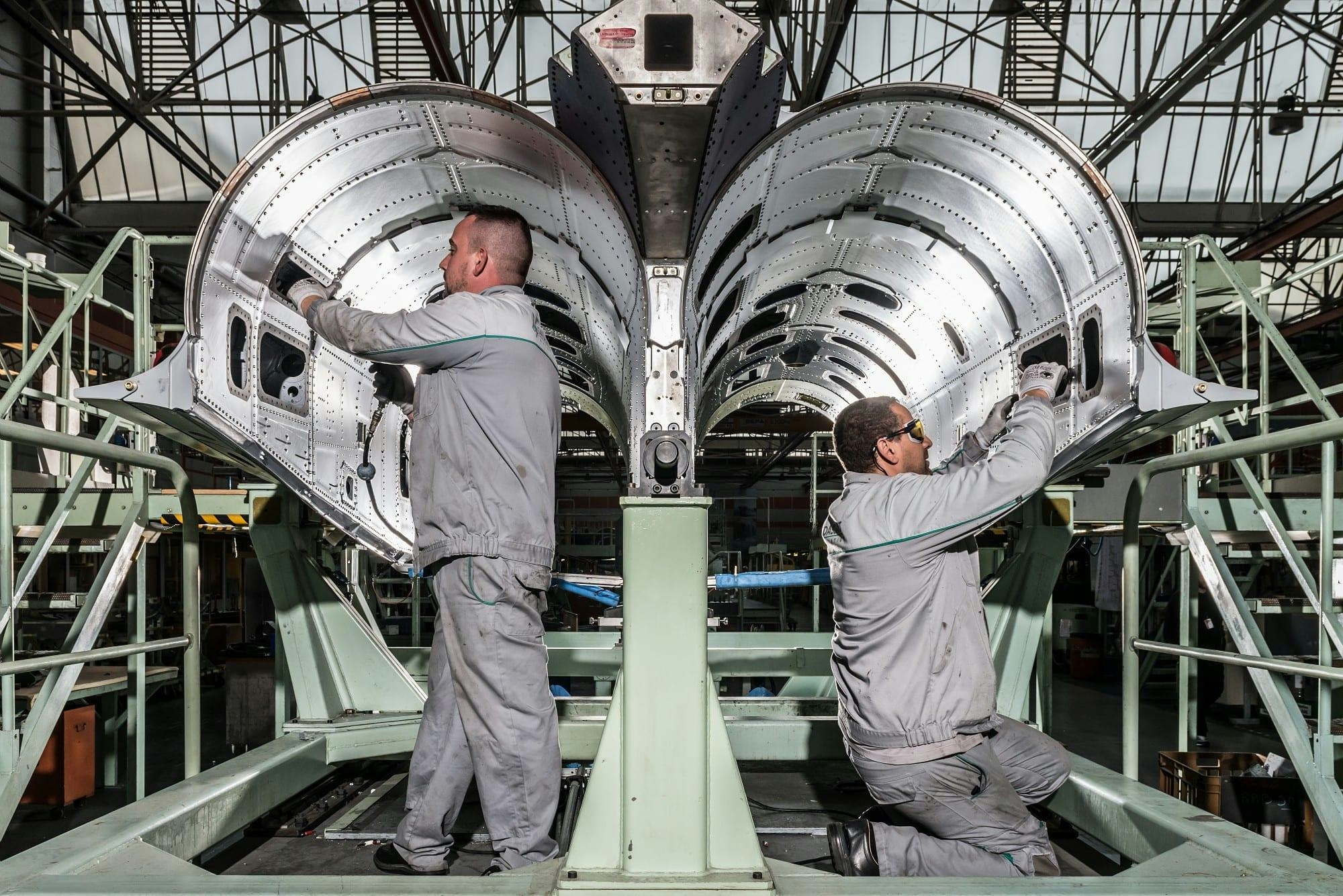
TAT Technologies has announced the consolidation of its three distinct business units—TAT Limco, TAT Piedmont, and TAT Israel—into a single, unified brand under the name TAT Technologies. This strategic initiative aims to strengthen operational cohesion, streamline communication, and provide a more integrated experience for customers across the globe. By uniting its expertise in thermal solutions, landing gear, and auxiliary power unit (APU) maintenance, repair, and overhaul, the company seeks to foster enhanced collaboration throughout its international network.

The consolidation is intended to ensure a consistent approach to quality and reliability while expanding the company’s capabilities and service offerings within the aerospace sector. Chief Executive Officer Igal Zamir emphasized that this move transcends a mere rebranding effort. He stated, “Aligning our strengths across different regions and business units will allow TAT Technologies to deliver even greater value to our partners worldwide.” Zamir further highlighted that the transformation is designed to make the organization stronger, more agile, and more innovative in addressing the evolving demands of the aerospace industry.

Challenges and Market Response

Despite the anticipated benefits, the consolidation presents several challenges. Integrating operations across diverse geographic locations will require meticulous management to maintain consistency in brand messaging and service standards. Additionally, the company must navigate potential resistance from regional management teams accustomed to operating independently. Ensuring a smooth transition will be critical to achieving the intended advantages of the unified brand.

Market reactions to the announcement have been mixed. Some investors have expressed skepticism regarding the effectiveness of the consolidation strategy, while others remain optimistic that a centralized approach to aerospace innovation could drive significant advancements and cost efficiencies. The move is also expected to prompt competitors, particularly within the aerospace thermal management sector, to enhance their innovation centers and refine their market positioning to maintain competitiveness.

Commitment to Quality and Innovation

Despite these challenges, TAT Technologies remains confident in its strategic direction. The company has reassured its partners that its core values, expertise, and commitment to high-quality service will remain steadfast. The new organizational structure is anticipated to improve operational efficiency, accelerate technological innovation, and foster greater internal collaboration, thereby enabling faster and more responsive service delivery.

This transition marks a pivotal chapter in TAT Technologies’ evolution, reinforcing its position as a trusted global partner and underscoring its dedication to progress and innovation within the aerospace industry.

More news
Trump Administration Plans to Expand Flying Taxi Programs

Trump Administration Plans to Expand Flying Taxi Programs

Trump Administration Advances Plans to Integrate Flying Taxis into U.S. Airspace The Trump administration has announced a comprehensive framework designed to accelerate the integration of flying taxis into American airspace, signaling a significant step toward transforming what was once a futuristic concept into a tangible reality. Unveiled by Transportation Secretary Sean Duffy, the initiative forms part of a broader strategy to foster innovation within the aviation sector and to ensure that the United States remains competitive in the rapidly evolving global market. Strategic Competition and Industry Momentum Secretary Duffy emphasized the urgency of the initiative by highlighting the competitive landscape, particularly with China, which has made notable progress in flying taxi technology. Chinese companies such as EHang have already conducted public test flights and advanced regulatory approvals, intensifying the race for dominance in urban air mobility. In response, U.S. firms including Archer, Joby, and Beta Technologies are accelerating their development efforts. The economic stakes are high, as demonstrated by Beta Technologies’ recent 9% stock increase following a $1 billion motor deal with Eve Air Mobility, reflecting strong investor confidence in the sector’s growth potential. Regulatory and Public Challenges Despite the enthusiasm surrounding flying taxis, significant obstacles remain. Regulatory agencies face the complex task of establishing comprehensive safety standards and operational guidelines to govern these novel aircraft. Additionally, public concerns regarding safety, noise pollution, and potential airspace congestion must be carefully managed to facilitate widespread acceptance. These challenges underscore the delicate balance between fostering innovation and ensuring rigorous oversight. Military Interest and Dual-Use Implications The Pentagon’s interest in hybrid and autonomous air taxis for military applications introduces an additional layer of complexity and opportunity. This dual-use potential could accelerate technological development but also raises important questions about regulatory oversight and the implications of deploying such technology in defense contexts. As the Trump administration advances its agenda to bring flying taxis to market, industry leaders and policymakers recognize that the success of this endeavor will hinge on harmonizing rapid innovation with stringent safety and regulatory frameworks. The coming years will be critical in determining whether the United States can sustain its leadership in this dynamic and competitive field.
SWAPA Backs Bipartisan Aviation Funding Solvency Act

SWAPA Backs Bipartisan Aviation Funding Solvency Act

SWAPA Endorses Bipartisan Aviation Funding Solvency Act to Protect National Airspace Stability DALLAS, Dec. 17, 2025 — The Southwest Airlines Pilots Association (SWAPA) has publicly endorsed the bipartisan Aviation Funding Solvency Act (H.R. 6086), legislation designed to preserve the stability and safety of the National Airspace System (NAS) during potential government shutdowns. The act aims to establish a permanent funding mechanism that would allow the Federal Aviation Administration (FAA) to access the Aviation Insurance Revolving Fund in the event of a lapse in government appropriations. Introduced by House Transportation and Infrastructure Committee Chairman Sam Graves and Ranking Member Rick Larsen, the bill seeks to ensure that critical aviation personnel, including air traffic controllers, continue to receive pay and that essential safety operations remain uninterrupted. SWAPA President Captain Jody Reven emphasized the importance of maintaining continuous operations, stating, “Maintaining the highest safety standards demands a system that can operate without interruption. SWAPA firmly believes that Congress has a responsibility to safeguard the stability of our airspace by guaranteeing that the FAA’s mission is never compromised by political volatility.” Addressing Vulnerabilities Exposed by Recent Shutdown The urgency of the legislation is underscored by the recent 43-day government shutdown, which revealed significant weaknesses within the aviation sector. The shutdown placed increased operational strain on air traffic controllers, Transportation Security Administration (TSA) and Customs and Border Protection (CBP) officers, as well as FAA system specialists, all while workforce shortages persisted. Additionally, modernization programs and safety-critical infrastructure upgrades were delayed, contributing to widespread flight delays and cancellations that affected travelers nationwide. Although the Aviation Funding Solvency Act has received broad support from aviation groups and industry stakeholders, its progression through Congress may encounter obstacles. Competing legislative priorities could delay its enactment, and concerns remain regarding whether the Aviation Insurance Revolving Fund will be sufficient to cover all necessary expenses during prolonged shutdowns. Nevertheless, the bill’s introduction has already bolstered confidence among airlines and aviation professionals that essential services and compensation will be protected in future funding lapses. Industry Implications and Congressional Appeal Industry observers suggest that the legislation could encourage greater collaboration among airlines and aviation organizations, as uninterrupted air traffic control services represent a shared priority. Many competitors and aviation groups are expected to support efforts that ensure operational continuity, potentially paving the way for broader industry backing of related legislative initiatives. With the busy holiday travel season approaching and the ongoing risk of government shutdowns, SWAPA is urging Congress to prioritize air safety by passing H.R. 6086. The association commended the leadership of Chairman Graves and Ranking Member Larsen for advancing a solution that places air safety above political disputes. About SWAPA Based in Dallas, the Southwest Airlines Pilots Association represents more than 11,000 Southwest Airlines pilots. The non-profit organization advocates for pilots’ contractual rights, professionalism, and safety, working to ensure secure and rewarding careers for its members and their families. For further information, visit www.swapa.org.
Lufthansa to Sell Two Boeing 747-8s to U.S. Government

Lufthansa to Sell Two Boeing 747-8s to U.S. Government

Lufthansa to Sell Two Boeing 747-8s to U.S. Government German carrier Lufthansa has announced the sale of two Boeing 747-8 Intercontinental (747-8I) aircraft to the United States government, scheduled for completion next year. This transaction forms part of a broader restructuring of Lufthansa’s long-haul fleet, which includes the retirement of four older Boeing 747 models. While the phase-out of the aging 747-400s aligns with the airline’s modernization efforts, the decision to part with two of its 19 newer 747-8Is represents a notable shift, reducing its 747-8I fleet to 17 aircraft. U.S. Air Force Acquisition and Strategic Needs The U.S. Air Force (USAF) has confirmed the purchase, highlighting the critical need for additional 747-8Is to support pilot training and maintenance operations. With Boeing having ceased production of the passenger 747-8, acquiring suitable airframes for training and spare parts has become increasingly difficult. The two Lufthansa aircraft involved, registered D-ABYD and D-ABYG and delivered in 2012 and 2013 respectively, will serve distinct purposes: one will remain operational for training, while the other will be dismantled to provide spare components. This acquisition occurs against the backdrop of ongoing delays in the USAF’s flagship program to replace the current VC-25A “Air Force One” fleet. The new VC-25B, also based on the 747-8I platform, is now projected to enter service no earlier than mid-2028, marking a four-year delay. These setbacks have raised concerns about the continuity and readiness of presidential air transport, prompting the Air Force to explore interim solutions. Further complicating the situation, the U.S. accepted a Boeing 747-8I donated by Qatar Amiri Flight last year, reportedly at the request of former President Donald Trump. The intended role of this aircraft remains unclear, and its integration into the presidential fleet has sparked debate over legal, ethical, and security considerations. Broader Pentagon Interests and Lufthansa’s Fleet Strategy The Pentagon’s interest in the 747-8I extends beyond the Air Force One replacement program. The Air Force is also advancing the Survivable Airborne Operations Center (SAOC) initiative, aimed at replacing the aging E-4B “Doomsday Plane” fleet. As part of this effort, five 747-8Is were acquired last year from Korean Air by Sierra Nevada Corporation for extensive modification. For Lufthansa, the sale of two relatively young 747-8Is may influence its fleet management and long-haul operational strategy. Industry analysts suggest that the U.S. government’s offer was financially compelling, particularly given the limited global demand for large, four-engine passenger aircraft. As the U.S. Air Force contends with program delays and seeks interim solutions for its next-generation presidential and command aircraft, Lufthansa’s decision reflects evolving dynamics in both commercial aviation and government aerospace procurement.
Hawaiian Airlines, Alaska Airlines, Par Hawaii, and Pono Energy Collaborate on Sustainable Aviation Fuel in Hawai‘i

Hawaiian Airlines, Alaska Airlines, Par Hawaii, and Pono Energy Collaborate on Sustainable Aviation Fuel in Hawai‘i

Hawaiian Airlines, Alaska Airlines, Par Hawaii, and Pono Energy Collaborate on Sustainable Aviation Fuel in Hawai‘i Advancing Sustainable Aviation Fuel Production HONOLULU, Dec. 17, 2025 – Hawaiian Airlines and Alaska Airlines have joined forces with Par Hawaii and Pono Pacific to promote the development of sustainable aviation fuel (SAF) in Hawai‘i. This partnership seeks to reduce carbon emissions associated with aviation while enhancing the state’s energy independence. Central to the initiative is the production of SAF derived from locally cultivated agricultural feedstock, representing a significant move toward establishing a cleaner and more resilient fuel supply chain for the islands. Alanna James, sustainability innovation director for both Hawaiian Airlines and Alaska Airlines, emphasized the airlines’ commitment to environmental responsibility. She stated that as Hawai‘i’s primary carriers, they bear the responsibility of minimizing their environmental impact while maintaining vital air services that connect communities and bolster the economy. James highlighted that achieving net zero carbon emissions is a long-term goal, with sustainable aviation fuel playing a crucial role. She expressed gratitude for partners like Par Hawaii and Pono Pacific, who share the vision of fostering sustainability, creating a new fuel industry, and reinforcing Hawai‘i’s energy autonomy. The Role of Camelina and Local Agricultural Integration Sustainable aviation fuel, produced from renewable sources such as plant-based oils or recycled cooking oil, can reduce lifecycle carbon emissions by up to 80% compared to traditional jet fuel. The project will utilize Camelina sativa, a high-yield and pest-resistant cover crop, as the primary feedstock. Camelina’s rapid growth cycle of eight to nine weeks allows it to be cultivated in rotation with food crops, thereby supporting both fuel production and local agriculture. The oil extracted from Camelina seeds will be processed into renewable fuel, while the residual seedcake will serve as nutrient-rich animal feed, maximizing the crop’s utility. Pono Pacific, recognized as Hawai‘i’s largest private resource company, plans to launch Pono Energy, Inc. in early 2026 to accelerate the cultivation of Camelina and the production of SAF. Hawaiian Airlines and Alaska Airlines will serve as Par Hawaii’s initial SAF customers, with the first deliveries of locally produced sustainable fuel anticipated in the first quarter of 2026. Ed Sniffen, director of the Hawai‘i State Department of Transportation, underscored the economic and environmental benefits of the initiative. He noted that the introduction of this revenue-generating cover crop will create jobs, support local farmers, and reduce the aviation sector’s carbon footprint. Sniffen praised the collaboration for establishing a locally based, lower-emissions supply chain for aviation fuel that aligns with Hawai‘i’s clean energy objectives. Challenges and Industry Context While this partnership marks a significant advancement for Hawai‘i’s clean energy goals, the broader sustainable aviation fuel industry continues to face considerable obstacles. Fragmented and costly government policies, particularly in Europe, have hindered SAF production and contributed to elevated costs. Industry analysts remain cautious about the sector’s capacity to meet ambitious 2030 targets for sustainable fuel adoption. Furthermore, as airlines globally intensify their sustainability efforts, competitors with greater resources may overshadow regional collaborations such as the one in Hawai‘i. Despite these challenges, the alliance between Hawaiian Airlines, Alaska Airlines, Par Hawaii, and Pono Energy aims to position Hawai‘i as a leader in sustainable aviation. The partnership is designed to deliver both environmental and economic advantages while supporting the state’s long-term energy security.
Regulator Orders Inspections of Select Airbus A320s Over Fuselage Flaw

Regulator Orders Inspections of Select Airbus A320s Over Fuselage Flaw

Regulator Orders Inspections of Select Airbus A320s Over Fuselage Flaw European Aviation Authority Issues Inspection Mandate European aviation regulators have mandated inspections of fuselage panels on numerous Airbus A320-family aircraft following the identification of a production defect at a Spanish supplier. The European Union Aviation Safety Agency (EASA) has issued preliminary instructions requiring airlines to verify the thickness of specific panels located near the front of the aircraft. This inspection must be completed within six months, or sooner if the panels have previously undergone repairs. The directive applies to 177 aircraft currently in service and an additional 451 jets still in production at Airbus. EASA described the inspections as necessary to address a “potentially unsafe condition” related to panels exhibiting incorrect thickness combined with a history of repairs. Although Airbus has maintained that the industrial flaw does not compromise safety, the issue has nonetheless disrupted deliveries of A320neo jets and compelled the manufacturer to reduce its 2025 delivery target by approximately 4%, to around 790 aircraft. Industry Response and Delivery Challenges The safety directive follows Airbus’s own technical instructions and establishes a clear timeline for airlines to resolve the problem. Despite this, some carriers remain reluctant to accept new aircraft deliveries until the affected panels are replaced. Several airlines are reportedly seeking compensation or enhanced warranty terms in response to the defect. Lufthansa, for instance, has announced plans to inspect 11 recently delivered A320-family aircraft. The delivery delays have intensified the challenge for Airbus as it balances addressing the fuselage flaw with maintaining its financial forecasts. The company is currently evaluating the broader implications of the issue, amid concerns from investors and customers regarding the discrepancy between reduced delivery targets and financial projections. Despite these setbacks, Airbus has historically accelerated deliveries in the final weeks of the year. Industry sources indicate that while deliveries were below average in early December, they have recently gained momentum. Airbus declined to comment on ongoing commercial negotiations or delivery figures ahead of its full-year report, which is scheduled for release on January 12.
BizJet Interiors Zone to Highlight Innovation and Craftsmanship at AIX 2026

BizJet Interiors Zone to Highlight Innovation and Craftsmanship at AIX 2026

BizJet Interiors Zone to Highlight Innovation and Craftsmanship at AIX 2026 Aircraft Interiors Expo 2026 (AIX) has announced further details about its new BizJet Interiors Zone, which will make its debut at the Hamburg Messe, Germany, from 14 to 16 April 2026. Strategically located in a high-traffic central area, this dedicated zone reflects the growing importance of business aviation alongside the rapidly evolving electric vertical takeoff and landing (eVTOL) sector. A Dedicated Platform for Business Aviation Innovation The momentum within the BizJet interiors sector is evident, with this year’s AIX featuring 92 exhibitors focused on this market—a 53% increase compared to 2024. Archana Dharni, Event Director of AIX, emphasized the longstanding demand for a dedicated space to showcase the artistry and innovation inherent in business aviation. She noted that business jets often serve as industry testbeds where new ideas and solutions are first introduced before being adopted in commercial aircraft cabins. The BizJet Interiors Zone aims to immerse visitors in the cutting-edge developments shaping the future of aircraft interiors. This zone will act as a nexus for a diverse range of stakeholders, including business aviation operators, charter companies, completion and refurbishment specialists, designers, original equipment manufacturers (OEMs), and VIP procurement teams. It will present a carefully curated selection of innovators addressing the sophisticated and evolving expectations of high-net-worth travelers. Eric Beverage, Senior Director of Sales at CTT Systems, highlighted the increasing demand for cabins that offer seamless, wellbeing-focused environments tailored to individual lifestyles. He pointed to their cabin humidification system as an example of technology designed to enhance passenger comfort and health, underscoring the BizJet Interiors Zone as an ideal venue to demonstrate such expertise and engage with industry leaders shaping next-generation VVIP cabin experiences. Showcasing Craftsmanship and Advanced Technologies Attendees can anticipate encountering the finest materials, precision craftsmanship, and bespoke design solutions that define contemporary VVIP cabins. Jet Aviation will showcase tailored cabin completions, while Townsend Leather will present artisanal upholstery. High Tech Finishing is set to demonstrate innovative surface treatments, and PolyStone Creations will offer custom composite solutions. SNT-Group Oy will highlight premium seating and textile expertise, underscoring the central role of craftsmanship in business jet interiors. In addition to design and materials, the zone will spotlight technologies that enhance passenger comfort, convenience, and safety. Exhibitors such as SmartTray and Timetooth Technologies will demonstrate digital systems aimed at simplifying cabin controls and personalizing passenger experiences. CTT Systems will present advanced humidification and anti-condensation solutions, while Fokker Services B.V. will showcase maintenance and modification capabilities designed to keep cabins safe, efficient, and stylish. Navigating a Competitive and Evolving Market The launch of the BizJet Interiors Zone comes amid intensifying global competition. Emerging Chinese business jets, including Comac’s C919 and CBJ models, are gaining traction with distinctive cabin interiors. The increasing presence of innovative eVTOL aircraft from both Chinese and Western manufacturers—such as Yivtol and Honda’s hybrid-electric VTOL—may further influence market dynamics and visitor interest. In response, established industry players are expected to further differentiate their interior designs and technologies to maintain market share, particularly as business aviation continues to expand with rising deliveries and aircraft billings. Beyond the BizJet Interiors Zone, AIX 2026 will feature innovations spanning both business and commercial aviation sectors. Participants will include Airbus Urban Air Mobility (UAM), Air X, Embraer, Joby Aviation, JSX, K5-Aviation, and Springjet. A dedicated designer runway will provide a creative platform for leading designers to present BizJet-focused interior concepts, reinforcing AIX’s position as a premier showcase for the future of luxury cabin design.
Forged in innovation: The Wright Brothers’ legacy and the rise of the Flying Tigers

Forged in innovation: The Wright Brothers’ legacy and the rise of the Flying Tigers

Forged in Innovation: The Wright Brothers’ Legacy and the Rise of the Flying Tigers The Dawn of Aviation and Its Military Implications More than 120 years ago, Orville and Wilbur Wright initiated a transformative chapter in human history with their brief but groundbreaking 12-second flight on the dunes of Kitty Hawk, North Carolina. This pioneering achievement not only marked the birth of powered flight but also established a foundation of innovation and relentless pursuit of knowledge that would influence generations of aviators. The Wright Brothers’ legacy extended beyond technological breakthroughs, shaping the strategic mindset of American airpower and setting the stage for the evolution of military aviation. As the 20th century progressed and global tensions intensified, the United States began to reassess the role of aircraft in warfare. The rapid development of aviation technology after World War I prompted significant expansion of the U.S. Army Air Corps throughout the 1930s. By the outbreak of World War II, airpower had become a central pillar of American military strategy, underscoring the importance of innovation and adaptability—principles deeply rooted in the Wright Brothers’ pioneering spirit. The Emergence of the Flying Tigers The escalating conflict in Asia during the early 1940s, particularly the mounting pressure on China from Japanese forces, highlighted the urgent need for new combat tactics and rigorous pilot training. The concept of air superiority as a decisive factor in warfare gained traction, leading to the development of a skilled cadre of aviators prepared to serve in critical theaters. In response to China’s request for assistance, retired U.S. Army Air Corps officer Claire Lee Chennault proposed the creation of an American fighter unit to support Chinese forces. This initiative gave rise to the American Volunteer Group (AVG), famously known as the Flying Tigers. Historian Mark Godwin of the 23d Wing emphasizes Chennault’s pivotal role in challenging the prevailing U.S. Army Air Forces doctrine, which at the time favored high-altitude bombers over pursuit aviation. Chennault’s fighter-centric strategy, initially dismissed by military leadership, advocated for the essential role of fighters in defending bases, protecting bombers, and attacking enemy airfields. His innovative approach ultimately reshaped combat tactics and proved instrumental in the success of the AVG. After his departure from the military in 1937, Chennault became a key advisor to Chiang Kai-shek, contributing to the modernization of the Chinese Air Force. Upon returning to Washington in 1939, he secured support for the AVG, which was equipped with 100 P-40 aircraft—considered by some to be outdated. Employing tactics overlooked by the Army Air Forces, Chennault trained both Chinese pilots and the AVG, achieving remarkable combat effectiveness that solidified the Flying Tigers’ legendary reputation. Enduring Influence on Modern Aviation The intertwined legacies of the Wright Brothers and the Flying Tigers highlight the lasting impact of early aviation pioneers on contemporary technological and military landscapes. Their shared emphasis on knowledge, innovation, and adaptability continues to inform modern aviation and strategic doctrines. In today’s competitive and rapidly evolving environment, organizations draw inspiration from these historical narratives to drive technological advancement and data-driven decision-making. The story of the Wright Brothers and the Flying Tigers remains not only a significant historical account but also a guiding framework for navigating the complexities of innovation in the modern world.
Lunar Blessing Airlines Enters Middle East Air Mobility Market

Lunar Blessing Airlines Enters Middle East Air Mobility Market

Lunar Blessing Airlines Enters Middle East Air Mobility Market Lunar Blessing Airlines, a Dubai-based startup, is preparing to enter the Middle East air mobility sector with a focus on light-aircraft charter flights and an on-demand air taxi service. Embracing a philosophy centered on elegance and reliability, the company aims to provide flexible, private flights catering to both sightseeing and urgent business travel across the UAE and neighboring regions. Operating under the motto inspired by a “Moon Blessing,” Lunar Blessing seeks to establish itself as a smart and dependable aircraft operator within Dubai’s competitive aviation landscape. Strategic Positioning and Fleet Composition Distinct from traditional commercial airlines, Lunar Blessing targets passengers who prioritize privacy, flexibility, and access to smaller or remote airfields often underserved by larger carriers. The airline will operate from Dubai Al Maktoum International Airport (DWC), initially deploying a fleet centered on the twin-engine Piper Seneca V PA-34-220T. This propeller-driven aircraft accommodates up to five passengers and offers a range of approximately 1,300 kilometers, enabling the airline to serve short- and mid-range routes, including destinations with limited infrastructure. This strategic choice allows Lunar Blessing to bridge the gap between ground transportation, scheduled airline services, and business aviation by offering the convenience and confidentiality of private jets at a cost closer to commercial flights. Regulatory and Market Challenges Despite its promising business model, Lunar Blessing faces significant challenges in entering the Middle East air mobility market. Securing the Air Operator Certificate (AOC) remains a critical hurdle, as this regulatory approval is essential for commercial flight operations. The company is actively progressing through the certification process, aiming to complete it by the first quarter of 2026. Achieving this milestone will confirm compliance with stringent safety and operational standards and enable the launch of full commercial services. The competitive environment is intensifying, with established players such as Archer and Sarla already operating in the region. These incumbents may respond to Lunar Blessing’s market entry by forming strategic partnerships or accelerating their own commercial deployments. Furthermore, the sector’s growth is closely linked to broader trends, including the expansion of the lunar space economy and increasing demand for advanced logistics and transport services. Market Reception and Future Prospects Market response to Lunar Blessing’s announcement has been largely positive. The recent Dubai Airshow underscored strong momentum for advanced air mobility, with industry stakeholders expressing optimism about new entrants like Lunar Blessing. The company’s planned participation in the 2025 Dubai Airshow is expected to enhance its visibility and attract potential partners. Looking forward, Lunar Blessing intends to expand its fleet by acquiring additional Piper Seneca V aircraft in the near term, with plans to introduce larger, potentially jet-powered models in the future. Negotiations with leasing companies are underway to support this growth strategy, positioning the airline for a broader role in business aviation and tourist charter services. As Lunar Blessing Airlines advances toward regulatory approval and fleet expansion, it emerges as a promising new entrant poised to reshape private air travel within the UAE and the wider Middle East region.
AELF Acquires Two Boeing 737-800 Aircraft from ICBC Aviation Leasing

AELF Acquires Two Boeing 737-800 Aircraft from ICBC Aviation Leasing

AELF Acquires Two Boeing 737-800 Aircraft from ICBC Aviation Leasing Aircraft Engine Lease Finance Inc. (AELF) has completed the acquisition of two Boeing 737-800 aircraft, both manufactured in 2015, from ICBC Aviation Leasing (ICBC). These aircraft are currently leased to Aerolíneas Argentinas, marking AELF’s first assets placed with the Argentine national carrier. This transaction also represents the inaugural collaboration between AELF and ICBC, underscoring the complementary nature of their business models. AELF’s focus on mid-life aircraft aligns with the objectives of large leasing platforms and Chinese counterparties, who seek to trade, recycle, or phase out assets at specific points in their lifecycle. Industry Context and Strategic Implications The acquisition occurs amid notable shifts within the aerospace sector. Boeing’s recent $4.7 billion purchase of Spirit AeroSystems has driven a surge in its stock price and signals a strategic push toward greater vertical integration. This move is expected to impact production timelines and costs across the industry, potentially intensifying competition among aircraft manufacturers as they adjust to evolving supply chain dynamics. For lessors such as AELF, these developments highlight the growing importance of supply chain resilience and production quality—critical factors for airlines when considering fleet expansion and renewal. Market responses to these industry changes often depend on how effectively companies maintain operational flexibility and asset quality amid shifting conditions. Competitors may pursue strategic acquisitions or modify production approaches to safeguard their market positions. For AELF, vigilant monitoring of these trends and competitor strategies will be vital to sustaining growth and diversifying its portfolio. AELF’s Position and Future Outlook By incorporating two highly sought-after narrow-body aircraft with established operators, AELF continues to strengthen the resilience and adaptability of its leasing platform. Headquartered in the United States, AELF is a seasoned commercial aircraft lessor with over a decade of experience. The company offers tailored and flexible capital solutions to airlines, lessors, banks, and non-traditional aircraft owners. Its operations include acquiring aircraft and engines on long-term leases, as well as purchasing dormant or short-term leased assets, which it returns to service through targeted maintenance and remarketing initiatives. This latest acquisition aligns with AELF’s ongoing strategy to expand a diversified portfolio of aircraft leased to airlines worldwide, positioning the company to navigate the evolving global aviation market.
Spirit Unveils Restructuring Plans

Spirit Unveils Restructuring Plans

Spirit Airlines Secures Additional Financing Amid Restructuring Efforts Spirit Airlines has reached a revised agreement with its senior secured noteholders, resulting in an amendment to its debtor-in-possession (DIP) credit facility that unlocks a third tranche of incremental financing totaling $100 million. Of this amount, $50 million—net of the original issue discount—is immediately accessible, while the remaining funds are contingent upon further progress toward either a standalone reorganization plan or a strategic transaction. The airline is actively pursuing both options as it navigates a critical juncture in its restructuring process. The amended DIP agreement arrives as Spirit confronts a crucial financing deadline. Industry analysts warn that failure to secure the necessary funding could force the airline to shift from an operating reorganization to a rapid shutdown. Competitors have already begun preparing contingency flight schedules and rescue fares to accommodate potentially stranded Spirit passengers, highlighting the broader market implications of the airline’s financial difficulties. Operational Stability and Labor Agreements In response to these pressures, Spirit has abandoned plans to furlough up to 365 pilots and has reduced the scale of captain downgrades, signaling a commitment to maintaining operational stability. The airline also announced that its Pilot and Flight Attendant groups ratified new labor agreements last week, which are expected to support the company’s restructuring objectives. Spirit’s management emphasized that the continued support from lenders reflects confidence in the airline’s transformation and recent progress. Over the past two months, the company has repositioned its fleet and improved its cost structure while developing a diverse range of product offerings—from economical to premium—to enhance value for travelers. Market Impact and Future Outlook Despite these efforts, the airline’s future remains uncertain. Deutsche Bank analysts have noted that Spirit’s restructuring is likely to benefit competitors in most markets, as rivals stand ready to absorb Spirit’s market share should disruptions occur. Meanwhile, Spirit’s stock (SAVEQ) remains highly speculative and disconnected from the company’s legal recovery prospects. Under the proposed restructuring plan, existing equity holders are not expected to receive any recovery. Spirit reaffirmed its commitment to providing high-value travel options for American consumers and maintaining strong operational performance through the holiday season and beyond. The ongoing restructuring efforts, supported by the amended DIP financing, aim to secure the airline’s long-term viability amid a rapidly evolving competitive landscape.
Ask AeroGenie









