
将人工智能洞察转化为可执行行动

热门趋势
Categories
The Aircraft That Replaced American Airlines’ Smaller Widebodies
The Aircraft That Replaced American Airlines’ Smaller Widebodies
The Rise of the A321T on Transcontinental Routes
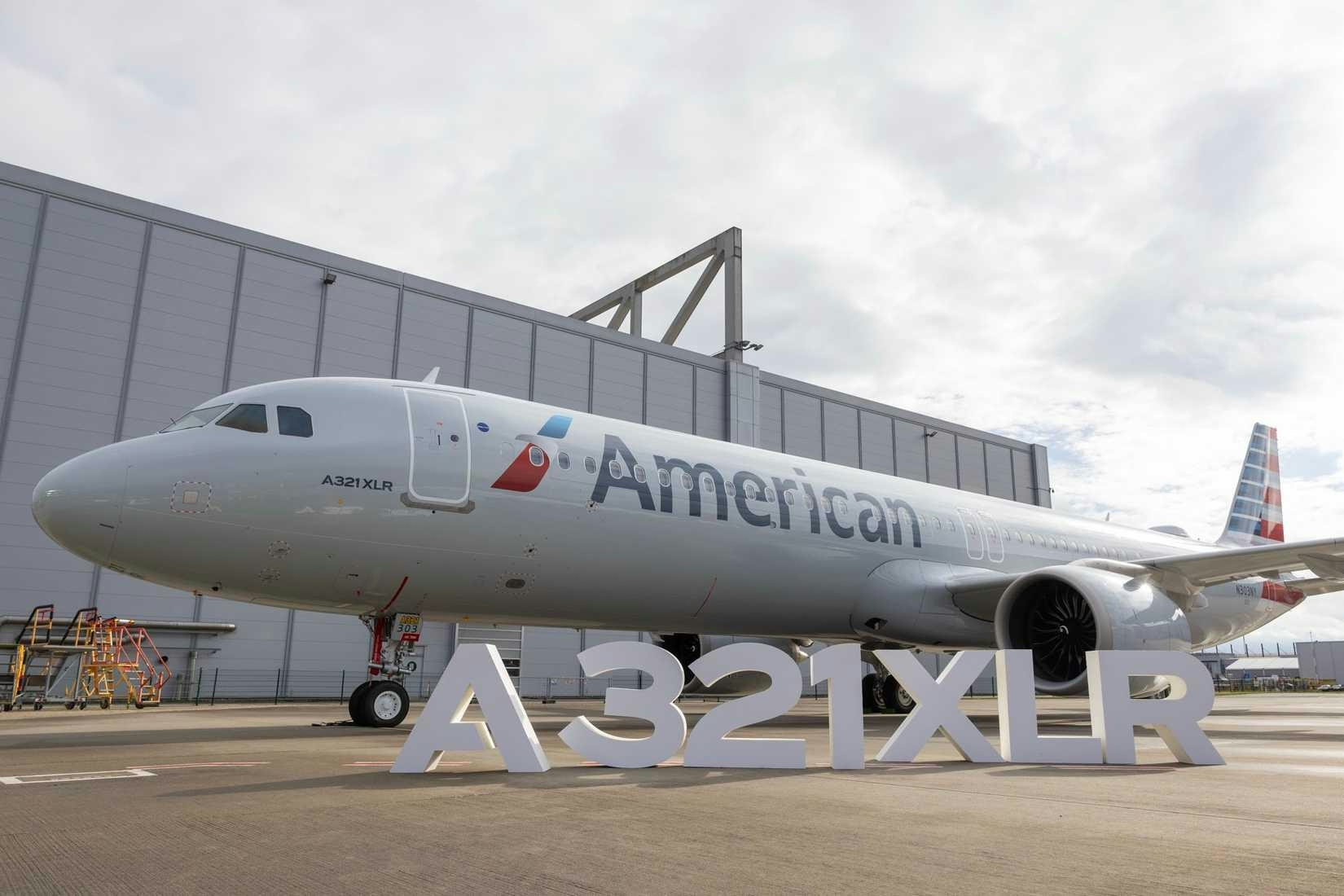
American Airlines has distinguished itself with its unique Airbus A321-200 subfleet, known as the A321T, where the "T" denotes Transcontinental service. This fleet, limited to just 15 aircraft, was purpose-built for the airline’s most profitable coast-to-coast routes, including New York to Los Angeles and San Francisco, as well as Los Angeles to Boston. The A321T is powered by IAE V2533-A5 engines and features sharklets, but its defining characteristic is its exceptionally low-density, three-class cabin layout. With only 102 seats—comprising 10 Flagship First, 20 Flagship Business, and 72 Main Cabin seats—this configuration is among the most premium-heavy for any A321 variant. This design underscores American’s strategic focus on catering to high-yield business travelers on these key routes.
The introduction of the A321T marked a pivotal shift in American’s transcontinental service model, effectively replacing the Boeing 767-200ER, a smaller widebody that had long been the backbone of these premium routes. The 767-200ER, with a 168-seat layout including 10 first class, 30 business, and 128 economy seats, was a staple on flights such as New York JFK to LAX and SFO, as well as LAX to Boston. Over its operational history, American flew 27 of these aircraft—17 originally ordered and 10 acquired through the US Airways merger. Initially deployed for both long-haul international and premium domestic flights, the 767-200ER gradually became dedicated primarily to transcontinental service as the fleet evolved.
Fleet Evolution and Industry Trends
By 2008, American had retired the 767-200ER from its fleet, having transitioned most long-haul operations to the larger 767-300ER. The A321T emerged as the narrowbody successor, delivering a comparable premium experience with fewer seats and enhanced operational efficiency. This transition was part of a broader fleet modernization strategy, highlighted by a landmark 2011 order for 460 narrowbody aircraft, including 130 Airbus A320 family jets. Of these, 16 were delivered as A321Ts (with one subsequently written off), while the remainder supported American’s expanding domestic and international narrowbody network.
This shift reflects a wider trend among North American carriers, including Delta Air Lines and United Airlines, which are modernizing their widebody fleets by phasing out older models such as the A330s, 767s, and some 777s. Airlines are increasingly investing in next-generation aircraft like the Boeing 787 and Airbus A350, which offer improved fuel efficiency and enhanced passenger comfort. However, the delivery pace of widebodies, particularly from Airbus, remains slow; for instance, only one A330-900 has been delivered to Air Algerie so far this year.
Simultaneously, other carriers are making notable changes to their fleet strategies. Brazilian airline GOL, historically an all-Boeing 737 operator, has begun introducing Airbus A330 widebodies for transatlantic routes, signaling a significant shift in its approach. As American and its competitors continue to modernize, the era of smaller widebodies such as the 767-200ER is gradually giving way to more efficient, passenger-focused aircraft designed to meet the demands of today’s competitive aviation market.

Etihad Airways Suspends Airbus A380 Flights on Key Route

Aditya Birla Group Seeks Approval for Aircraft Leasing in GIFT City

Qatar Airways Highlights Innovation and Connectivity at Arabian Travel Market 2026

Hong Kong's Five-Year Plan Includes Andrew Fan's Aircraft Parts Processing Hub Proposal

ACIA Aero Leasing Delivers ATR72-600 to Air Nostrum

RTX Appoints Jill Albertelli as Head of Pratt & Whitney

TAT Technologies Joins Beyond Aero Hydrogen Aircraft Program

AURAK Study Highlights Barriers to Air Taxi Adoption in Emerging Economies

Xiamen Air Selects Altitude for 787 Maintenance at Heathrow

Etihad and Swissport Extend Global Partnership
