
حوّل رؤى الذكاء الاصطناعي إلى أفعال منسّقة

الرائج الآن
Categories
Flying Cars Arrive, Poised to Transform Travel
Flying Cars Arrive, Poised to Transform Travel
The long-envisioned era of flying cars, electric air taxis, and autonomous electric vertical takeoff and landing (eVTOL) aircraft is rapidly approaching reality. For decades, the concept of airborne personal vehicles—popularized by films such as Back to the Future—remained a distant dream. However, after years of technological challenges, setbacks, and intense speculation, a new generation of flying vehicles is transitioning from experimental prototypes to commercial production.
Leading aviation firms, automakers, and investors are heavily investing in the development of eVTOL aircraft, autonomous air taxis, and road-legal vehicles capable of vertical flight. Unlike the sleek, futuristic designs often depicted in popular culture, most of these emerging vehicles rely on propeller-driven technology and are engineered to transport passengers or cargo above congested urban roads. This approach requires significantly less ground infrastructure compared to traditional aviation, potentially revolutionizing urban mobility.
The market potential for these innovations is substantial. Morgan Stanley projects the personal autonomous aircraft sector could reach a valuation of $1.5 trillion. Meanwhile, Tomohiro Fukuzawa, CEO of SkyDrive, anticipates that flying taxi fares could decrease to roughly twice the cost of conventional taxi rides by 2030. Companies such as Joby Aviation, Ehang, and Alef are actively competing to make aerial commuting a practical and accessible option, though considerable obstacles remain.
The Latest Vehicles Taking Flight
Joby Aviation, in collaboration with Delta Airlines and Uber, is at the forefront of electric commuter aircraft development. In a recent demonstration, Joby’s eVTOL aircraft reduced the typical hour-long car journey from JFK Airport to central Manhattan to just seven minutes. The company’s ambition extends beyond serving affluent customers; it aims to democratize aerial mobility by offering pricing comparable to premium ground transportation services like Uber Black. Joby envisions transforming daily commuting by alleviating traffic congestion and reducing reliance on traditional rail systems.
Ehang’s EH216-S distinguishes itself as a fully autonomous air taxi, having recently become the first self-flying air taxi to receive regulatory approval for commercial operations in China. Currently offering sightseeing flights, Ehang is conducting pilot projects across 19 countries, emphasizing the efficiency and scalability of autonomous flight. Nevertheless, public acceptance of pilotless air travel remains an open question, posing a potential barrier to widespread adoption.
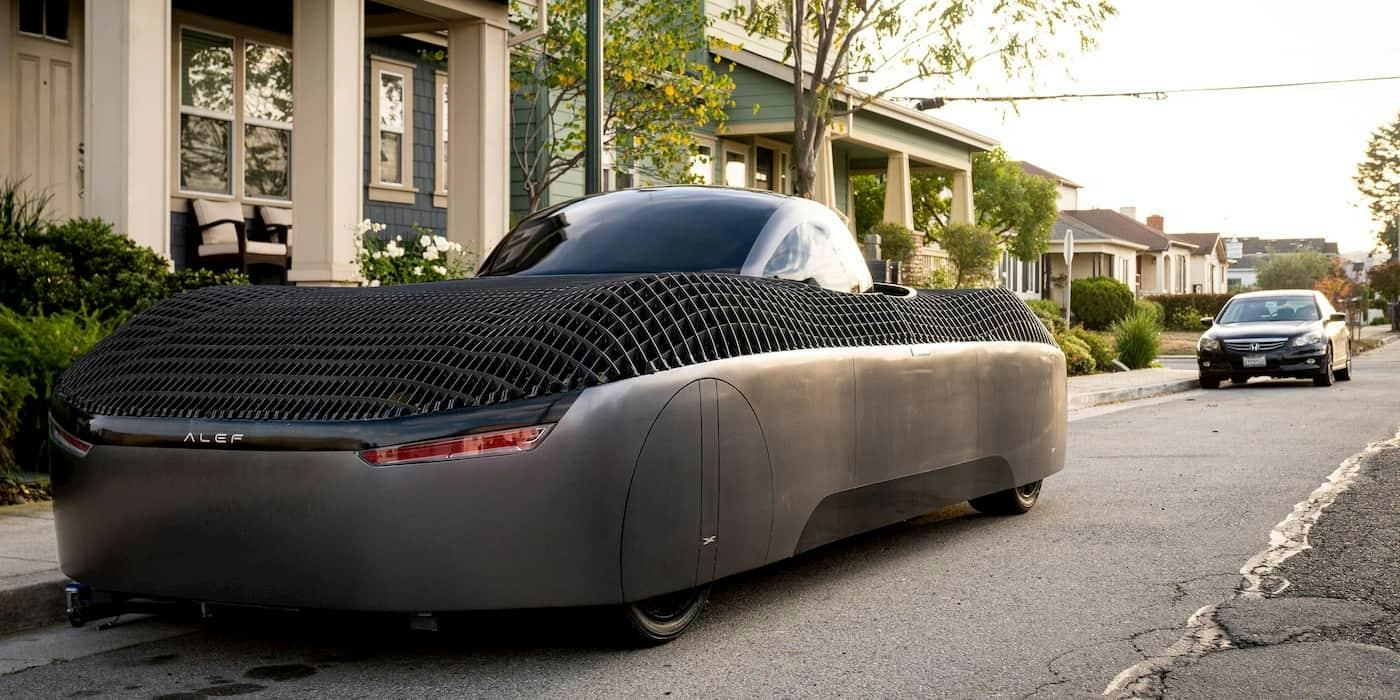
The Alef Model A represents the closest realization of the classic “flying car” concept. Although it does not resemble the iconic DeLorean, this road-legal electric vehicle fits within a standard garage, operates on conventional roads, and is capable of vertical takeoff. This dual functionality positions the Alef Model A as a versatile option bridging ground and air transportation.
Challenges and the Road Ahead
Despite growing enthusiasm and strong investor interest, the path to mainstream adoption of flying cars and eVTOL aircraft is fraught with challenges. Regulatory approval, particularly certification from agencies such as the Federal Aviation Administration, remains a significant hurdle. Additionally, the development of new charging infrastructure will be essential to support the anticipated fleets of electric aircraft.
Concerns over noise pollution and public acceptance also present substantial uncertainties. While technological advancements continue at a rapid pace, it is unclear whether communities will welcome the presence of numerous low-flying vehicles in urban airspace.
Although flying cars appear poised to enter the transportation landscape, their successful integration into everyday life will depend on overcoming regulatory, technical, and societal obstacles. The coming years will be critical in determining whether this long-anticipated vision of the future can truly take flight.

Etihad Airways Suspends Airbus A380 Flights on Key Route

Aditya Birla Group Seeks Approval for Aircraft Leasing in GIFT City

Qatar Airways Highlights Innovation and Connectivity at Arabian Travel Market 2026

Hong Kong's Five-Year Plan Includes Andrew Fan's Aircraft Parts Processing Hub Proposal

ACIA Aero Leasing Delivers ATR72-600 to Air Nostrum

RTX Appoints Jill Albertelli as Head of Pratt & Whitney

TAT Technologies Joins Beyond Aero Hydrogen Aircraft Program

AURAK Study Highlights Barriers to Air Taxi Adoption in Emerging Economies

Xiamen Air Selects Altitude for 787 Maintenance at Heathrow

Etihad and Swissport Extend Global Partnership
