
حوّل رؤى الذكاء الاصطناعي إلى أفعال منسّقة

الرائج الآن
Categories
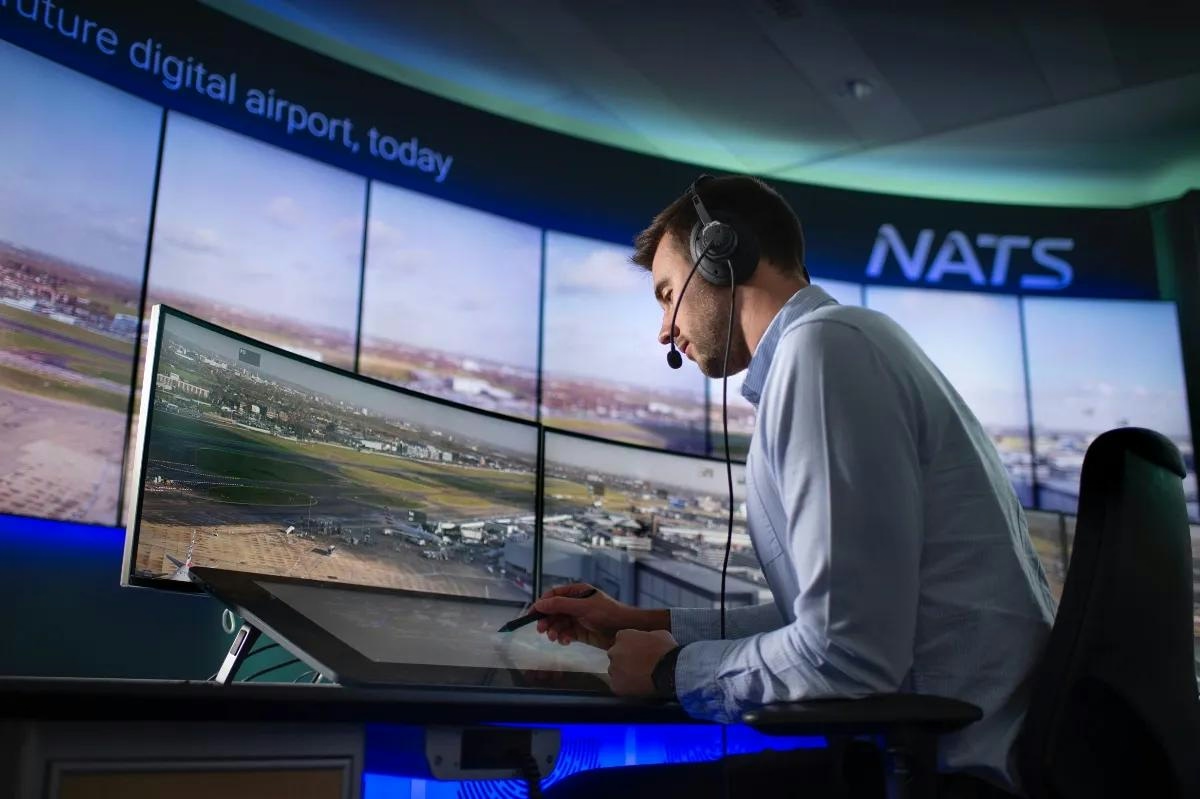
The Digital Transformation of Air Traffic Control
The Digital Transformation of Air Traffic Control
As global aviation recovers from the pandemic, the complexity and volume of air traffic have increased dramatically. Passenger numbers are rising, new airlines are entering the market, and airspace now accommodates a diverse range of vehicles, including commercial jets, business aircraft, drones, air taxis, and even space launches. This rapid expansion presents both significant opportunities and formidable challenges for air traffic management (ATM).
Simon Hocquard, President and CEO of the Civil Air Navigation Services Organisation (CANSO), stresses that while the traditional foundations of ATM remain strong, they must evolve to address the demands of this new era. The solution lies in digitalisation and automation—technologies that have transitioned from futuristic concepts to essential, proven tools for managing airspace safely, efficiently, and sustainably.
Digitalisation as a Catalyst for Change
Digitalisation is driving unprecedented levels of automation and enhancing system performance across ATM operations. Cloud-based data services, artificial intelligence (AI), machine learning, and advanced automation technologies are being integrated into ATM systems worldwide. These innovations enable adaptive intelligence, predictive analytics, and operational efficiencies that are transforming airspace management.
Automation has long been embedded in aviation, from early autopilot systems to modern radar and flight-data technologies. Today, automation contributes to improved safety, predictability, and capacity, while also supporting environmental goals through optimized flight paths and reduced delays. The aviation industry’s rigorous assurance processes—including requirements traceability, verification, and operational trials—ensure that new technologies are deployed safely and transparently, always maintaining defined human oversight.
From Automation to Intelligent Systems
The current transformation is marked by a shift from basic automation to intelligent, interconnected systems. Digitalisation facilitates seamless data exchange among platforms and stakeholders, while AI introduces adaptive decision-making capabilities. This integration provides unprecedented situational awareness and operational efficiency.
AI applications are already enhancing traffic flow management by predicting weather impacts, detecting potential conflicts, and assisting with capacity balancing. Machine learning is being used to refine airspace design, optimize runway utilization, and identify trends that improve safety and resilience. In Europe, SESAR partners are developing AI-based decision support tools for controllers, while globally, air navigation service providers (ANSPs) are experimenting with digital twins—virtual replicas of airspace that enable real-time testing without risking live traffic. These advances, combined with interoperable data exchanges, are steering the industry toward a connected, service-oriented ATM network.
Challenges and Industry Response
Despite these advances, the digital transformation of air traffic control faces significant challenges. In the United States, the Federal Aviation Administration (FAA) contends with high attrition rates among trainee controllers and ongoing capacity constraints, underscoring the need for substantial investment in radar modernization and controller training. Market scrutiny is intensifying regarding operational efficiency and the pace of technological adoption.
Globally, industry players are responding through strategic partnerships and the deployment of advanced technologies. Companies such as Thales and Aireon are collaborating to improve air traffic flows in the Asia-Pacific region, while Collins, Indra, and Peraton are securing radar contracts and integrating next-generation air traffic control upgrades. The broader push for AI adoption across transportation agencies highlights the critical importance of securing funding and addressing cybersecurity risks as digital systems become increasingly integral to airspace management.
Central to this transformation is CANSO’s Complete Air Traffic System (CATS) Global Council, which is guiding the industry toward a safer, more efficient, and digitally optimized future for managing the world’s skies.

Etihad Airways Suspends Airbus A380 Flights on Key Route

Aditya Birla Group Seeks Approval for Aircraft Leasing in GIFT City

Qatar Airways Highlights Innovation and Connectivity at Arabian Travel Market 2026

Hong Kong's Five-Year Plan Includes Andrew Fan's Aircraft Parts Processing Hub Proposal

ACIA Aero Leasing Delivers ATR72-600 to Air Nostrum

RTX Appoints Jill Albertelli as Head of Pratt & Whitney

TAT Technologies Joins Beyond Aero Hydrogen Aircraft Program

AURAK Study Highlights Barriers to Air Taxi Adoption in Emerging Economies

Xiamen Air Selects Altitude for 787 Maintenance at Heathrow

Etihad and Swissport Extend Global Partnership
